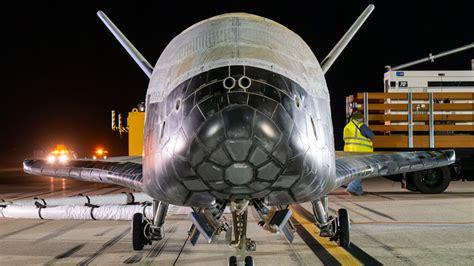
The Boeing X-37, often referred to as the Orbital Test Vehicle (OTV), represents a pinnacle of aerospace engineering—a reusable robotic spaceplane that has captivated and perplexed observers since its first orbital mission in 2010. Boosted into the cosmos atop conventional launch vehicles, this autonomous spacecraft re-enters Earth’s atmosphere and lands horizontally on a runway, much like the iconic Space Shuttle, yet on a significantly smaller and uncrewed scale. Operated by the Department of the Air Force Rapid Capabilities Office in close collaboration with the United States Space Force, the X-37B’s primary mandate is to demonstrate and validate reusable space technologies, pushing the boundaries of what’s possible in orbital operations. Its development journey, shrouded in varying degrees of secrecy, and its progressively longer missions have fueled intense speculation about its ultimate purpose and capabilities, making it one of the most intriguing assets in the U.S. military’s space arsenal.
The X-37 program is not a recent invention; its lineage traces back to 1999 when NASA initiated the project, selecting Boeing Integrated Defense Systems to design and develop this ambitious orbital vehicle. The initial vision was for a craft that could potentially service satellites or deploy small payloads. Boeing’s renowned Phantom Works division in California undertook the construction. Over a four-year span, the project consumed approximately $192 million, a sum jointly funded by NASA ($109 million), the U.S. Air Force ($16 million), and Boeing itself ($67 million). This early investment underscored the perceived strategic value of a reusable spaceplane. By late 2002, NASA’s commitment deepened with a new $301 million contract awarded to Boeing under the umbrella of the Space Launch Initiative, signaling a significant step forward in the vehicle’s development. The aerodynamic blueprint of the X-37 was heavily influenced by the Space Shuttle orbiter, resulting in a similar lift-to-drag ratio. However, this design choice also meant it possessed a lower cross-range capability at higher altitudes and Mach numbers when compared to more specialized hypersonic designs like DARPA’s Hypersonic Technology Vehicle. An early, ambitious performance requirement for the X-37 stipulated a total mission delta-v of 7,000 miles per hour (approximately 3.1 km/s) for extensive orbital maneuvering, hinting at complex mission profiles. Originally, the X-37 was conceived to be transported into orbit within the cavernous cargo bay of the Space Shuttle. However, practical and economic considerations, particularly in the wake of evolving launch strategies, led to a redesign. The vehicle was adapted for launch compatibility with expendable rockets such as the Delta IV or similar launch systems, a decision that ultimately proved more versatile. A pivotal shift occurred on September 13, 2004, when NASA transferred the X-37 program to the Defense Advanced Research Projects Agency (DARPA). This transition marked a significant turning point, as the program subsequently became classified, reflecting its increasing alignment with military applications and national security interests. DARPA championed the X-37 as a cornerstone of the independent space policy pursued by the Department of Defense, a strategic direction that gained momentum following the tragic Challenger disaster in 1986, which highlighted the vulnerabilities of relying on a single launch system.
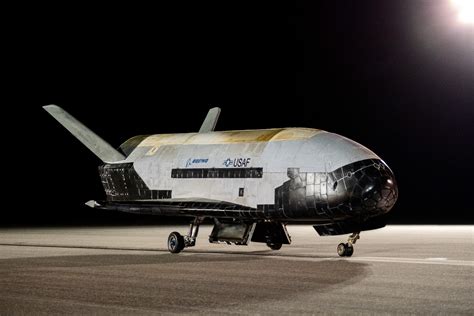
Before the X-37B embarked on its orbital journeys, its atmospheric flight characteristics were rigorously tested using the X-37A variant. This precursor vehicle, specifically designed as an atmospheric drop test glider, lacked an operational propulsion system. Instead of the payload bay doors found on the orbital version, the X-37A featured an enclosed and reinforced upper fuselage. This structural modification was crucial for mating it securely with a mothership aircraft for high-altitude release. In September 2004, DARPA announced a key partnership: the X-37A’s initial atmospheric drop tests would be conducted using the Scaled Composites White Knight, a specialized high-altitude research aircraft renowned for its role in the Ansari X Prize-winning SpaceShipOne program. The first tangible step in this testing phase occurred on June 21, 2005, when the X-37A successfully completed a captive-carry flight beneath the White Knight, taking off from the Mojave Spaceport in Mojave, California. This flight, while not involving a release, was vital for assessing the integrated aerodynamics and handling of the combined aircraft system. The latter half of 2005 saw the X-37A undergo further structural enhancements, including the reinforcement of its nose wheel supports, critical for ensuring robust landing capabilities. The public debut of the X-37A’s first free flight was eagerly anticipated and scheduled for March 10, 2006. However, an untimely Arctic storm forced a cancellation. A subsequent attempt on March 15, 2006, was also scrubbed due to persistently high winds, underscoring the challenges of flight testing. On March 24, 2006, the X-37A took to the skies again, but a datalink failure during the flight prevented a free flight, compelling the vehicle to return to the ground still attached to its White Knight carrier. Finally, on April 7, 2006, the X-37A achieved its milestone first free glide flight. While the glide itself was a success, the vehicle overran the runway during landing, sustaining minor damage. This incident necessitated a period of repairs and prompted a relocation of the program from Mojave to Air Force Plant 42 in Palmdale, California, for the remainder of the flight test campaign. The White Knight continued to be based at Mojave but was ferried to Plant 42 for scheduled test flights. It is believed that five additional flights were performed, with two of these culminating in successful X-37A releases and smooth landings on August 18, 2006, and September 26, 2006, respectively, providing invaluable data on the vehicle’s atmospheric handling and autonomous landing systems.
The Genesis of the X-37B Orbital Test Vehicle
Building upon the foundations laid by NASA and DARPA, the U.S. Air Force officially announced on November 17, 2006, its intention to develop its own distinct variant of the X-37A. This new iteration was designated the X-37B Orbital Test Vehicle (OTV). The OTV program became a collaborative endeavor, amalgamating the expertise and efforts of DARPA, NASA, and the Air Force, all under the strategic leadership of the Air Force Rapid Capabilities Office (RCO), with the Air Force Research Laboratory providing crucial technical support. Boeing continued its role as the prime contractor for this advanced OTV program. A key design parameter for the X-37B was its ability to remain in orbit for extended periods, initially specified for up to 270 days, a significant leap in endurance for a reusable spaceplane. The then-Secretary of the Air Force articulated the OTV program’s core objectives: to focus on “risk reduction, experimentation, and operational concept development for reusable space vehicle technologies, in support of long-term developmental space objectives.” This statement highlighted the X-37B’s role as a testbed for next-generation space capabilities. Similar to its predecessor, the X-37B was initially slated for launch within the Space Shuttle’s payload bay. However, the tragic loss of the Space Shuttle Columbia in 2003 necessitated a re-evaluation of launch strategies. Consequently, the X-37B was adapted for launch on a Delta II 7920 rocket. Further refinements led to its current launch configuration, enclosed within a protective payload fairing atop an Atlas V rocket, a measure taken to mitigate concerns about the unshrouded spacecraft’s aerodynamic stability during the intense ascent phase. For its return journey, X-37B spacecraft primarily utilize the runway at Vandenberg Space Force Base, California, with Edwards Air Force Base serving as a designated secondary landing site. In a significant logistical move, NASA confirmed in October 2014 that X-37B vehicles would be housed and processed at Kennedy Space Center in Florida, specifically in Orbiter Processing Facilities (OPF) 1 and 2. These were the very hangars previously used to service the Space Shuttle fleet. Boeing had indicated plans to use OPF-1 as early as January 2014, and the Air Force had been considering consolidating X-37B operations, then based at Vandenberg, closer to the primary launch site at Cape Canaveral. NASA also verified that the program had successfully completed tests to ascertain whether the X-37B, roughly one-fourth the size of a Space Shuttle orbiter, could safely land on the former Shuttle Landing Facility (SLF) runways. Renovations of the two hangars were completed by the end of 2014, with the main doors of OPF-1 proudly displaying the message “Home of the X-37B.”
Decoding the X-37B: Speculation on its Covert Missions
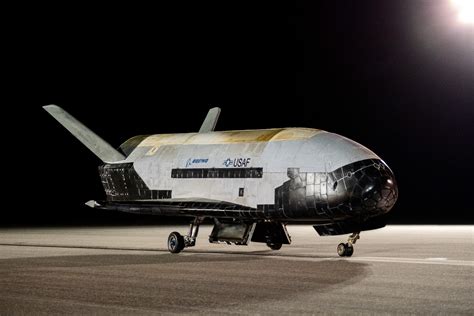
The veil of secrecy surrounding most X-37B project activities has inevitably led to widespread speculation regarding its true purpose. The official Air Force line maintains that the project is “an experimental test program to demonstrate technologies for a reliable, reusable, uncrewed space test platform for the U.S. Air Force.” The stated primary objectives are twofold: advancing reusable spacecraft technologies and conducting on-orbit experiments whose results and hardware can be returned to Earth for detailed analysis. According to Air Force statements, these experiments encompass testing advanced avionics, flight systems, guidance and navigation, robust thermal protection systems, innovative insulation materials, cutting-edge propulsion systems, and re-entry systems. However, the classified nature of its missions and its extended stays in orbit have fueled a range of theories. In May 2010, Tom Burghardt, writing for Space Daily, speculated that the X-37B could be employed as a sophisticated spy satellite or, more alarmingly, as a platform for delivering weapons from space. The Pentagon promptly and firmly denied any claims that the X-37B’s test missions were in support of developing space-based weaponry. Further intrigue arose in January 2012 with allegations that an X-37B was being used to conduct surveillance on China’s Tiangong-1 space station module. This claim was later refuted by former U.S. Air Force orbital analyst Brian Weeden, who pointed out that the significantly different orbits of the two spacecraft would preclude any practical or effective surveillance flybys. In October 2014, The Guardian newspaper reported assertions from security experts suggesting the X-37B was primarily tasked with “testing reconnaissance and spy sensors, particularly how they hold up against radiation and other hazards of orbit.” Another fascinating, albeit unconfirmed, theory emerged in November 2016 when the International Business Times speculated that the U.S. government might be testing a version of the controversial EmDrive, an electromagnetic microwave thruster, on the fourth flight of the X-37B. This speculation was linked to a 2009 EmDrive technology transfer contract with Boeing, facilitated via a State Department TAA and a UK export license approved by the UK Ministry of Defence. Boeing has since stated it is no longer pursuing this particular area of research. More concretely, the U.S. Air Force has confirmed that the X-37B has been involved in testing a Hall-effect thruster system developed by Aerojet Rocketdyne, a type of advanced electric propulsion. Adding another layer to the operational capabilities, in July 2019, former United States Secretary of the Air Force Heather Wilson explained that when an X-37B operates in an elliptic orbit, it could utilize the thin upper atmosphere at its perigee to execute an orbit change. This maneuver could temporarily prevent observers from accurately determining its new orbital path, thereby enabling periods of covert activity.
Mastering the Final Frontier: The X-37B’s Advanced Design and Technology
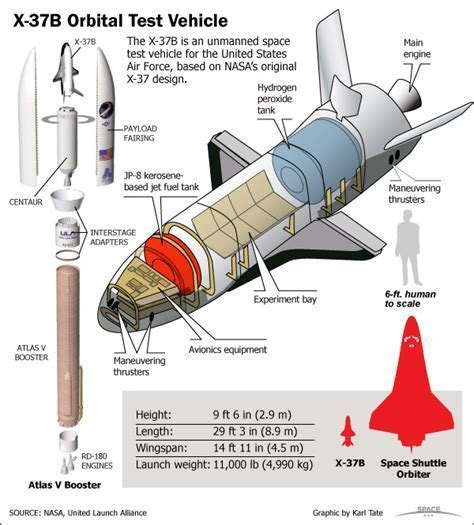
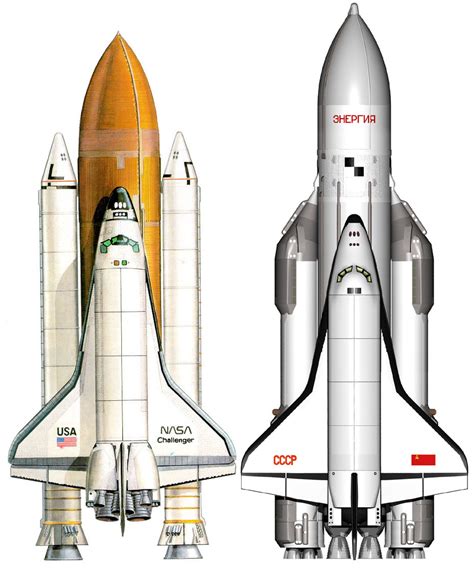
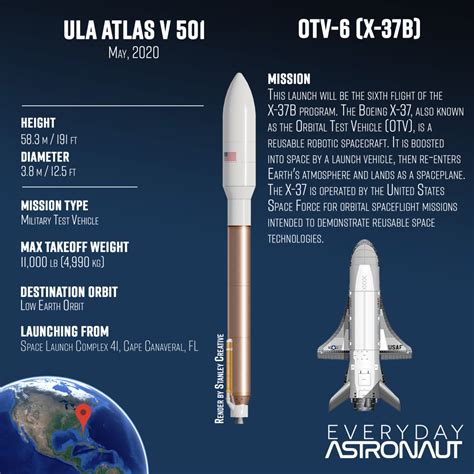
The X-37B Orbital Test Vehicle stands as a marvel of aerospace engineering, a reusable robotic spaceplane that is an approximately 120-percent-scale derivative of its atmospheric test predecessor, the Boeing X-40. Measuring over 29 feet (approximately 8.9 meters) in length and featuring distinctive, sharply angled twin tail fins, the X-37B is a compact yet highly capable platform. It embarks on its orbital missions atop powerful launch vehicles such as the Atlas V 501, or more recently, SpaceX’s Falcon 9 and Falcon Heavy rockets. Upon completing its mission and re-entering Earth’s atmosphere, the spaceplane is designed to withstand and operate in a blistering speed range of up to Mach 25. The core of the X-37B’s mission lies in demonstrating a suite of advanced technologies. These include an improved thermal protection system (TPS), significantly enhanced avionics, a highly sophisticated autonomous guidance system, and an advanced airframe designed for durability and reusability. The TPS is a critical component, built upon the knowledge gleaned from previous generations of atmospheric re-entry spacecraft, such as the Space Shuttle. It incorporates advanced silica ceramic tiles capable of enduring the extreme temperatures encountered during re-entry. The state-of-the-art avionics suite developed for the X-37B has also proven beneficial for other Boeing projects; for instance, it was leveraged by Boeing in the development of its CST-100 Starliner crewed spacecraft, demonstrating a valuable cross-pollination of technology. According to an early NASA fact sheet, the development of the X-37 was intended to “aid in the design and development of NASA’s Orbital Space Plane, designed to provide a crew rescue and crew transport capability to and from the International Space Station.” The original NASA version of the X-37 was envisioned to be powered by a single Aerojet AR2-3 engine, utilizing storable propellants (hydrogen peroxide/JP-8) and providing a thrust of 6,600 pounds-force (29.4 kN). This human-rated AR2-3 engine had a proven track record, having been used on the dual-power NF-104A astronaut training vehicle. However, reports suggest this was later changed to a hypergolic nitrogen-tetroxide/hydrazine propulsion system for the X-37B, offering different performance characteristics and handling requirements. A key feature of the X-37B is its ability to land automatically upon returning from orbit. It is the third reusable spacecraft to possess such a capability, following the Soviet Buran shuttle (which performed one uncrewed automated landing in 1988) and the U.S. Space Shuttle (which had autoland capability developed by the mid-1990s but never operationally tested it with a crew onboard). The X-37B holds the distinction of being the smallest and lightest orbital spaceplane flown to date, with a launch mass of approximately 11,000 pounds (around 5,000 kg). Its diminutive size, roughly one-quarter that of a Space Shuttle orbiter, contributes to its operational flexibility and comparatively lower launch costs. In recognition of its groundbreaking achievements, the Space Foundation awarded the X-37B team the prestigious 2015 Space Achievement Award “for significantly advancing the state of the art for reusable spacecraft and on-orbit operations, with the design, development, test and orbital operation of the X-37B space flight vehicle over three missions totaling 1,367 days in space.”
From Launch Pad to Landing Strip: X-37B Processing and Operations
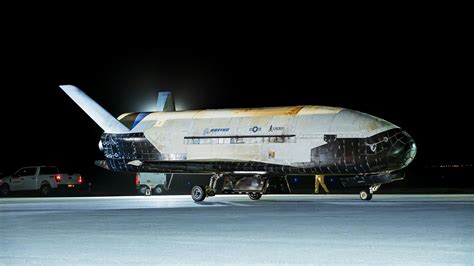
The intricate process of preparing the X-37B for its demanding missions and recovering it post-flight is a meticulously orchestrated affair, primarily centered at NASA’s Kennedy Space Center in Florida. The critical pre-flight processing, including the careful loading of its classified and experimental payloads into its 7-foot by 4-foot payload bay, takes place inside Bays 1 and 2 of the Orbiter Processing Facility (OPF). These facilities, steeped in the history of the Space Shuttle program, have been repurposed to support the X-37B’s unique requirements. Once the vehicle is fully integrated with its payload and has undergone exhaustive system checks, it is encapsulated within a protective payload fairing, along with its stage adapter. This entire assembly is then carefully transported to the designated launch site. Historically, X-37B missions have lifted off from Cape Canaveral Space Force Station’s Space Launch Complex 41 (SLC-41) using the Atlas V rocket, and more recently from Kennedy Space Center’s historic Launch Complex 39A (LC-39A) utilizing SpaceX’s Falcon 9 and Falcon Heavy rockets. Upon completion of its orbital duties, the X-37B executes an autonomous re-entry and landing at one of three pre-designated sites across the United States: the Shuttle Landing Facility (SLF) at Kennedy Space Center, Vandenberg Space Force Base in California, or Edwards Air Force Base, also in California. If the landing occurs at a West Coast site like Vandenberg and the vehicle is destined for processing at Kennedy Space Center, it is carefully placed into a specialized payload canister and loaded into the capacious cargo hold of a Boeing C-17 Globemaster III cargo plane for air transport. Once it arrives back at Kennedy, the X-37B is unloaded and towed to the OPF, where highly skilled technicians commence the detailed work of preparing it for its next flight. This post-flight processing involves thorough inspections, data retrieval, payload removal, and any necessary maintenance or refurbishment. A critical safety protocol during ground operations, particularly after landing, involves technicians wearing specialized protective suits. This precaution is necessary due to the potential presence of toxic hypergolic propellant residues, such as hydrazine and nitrogen tetroxide, which are used by the spacecraft’s orbital maneuvering and reaction control systems. These substances are highly corrosive and hazardous, necessitating stringent safety measures to protect ground personnel.
A Legacy in Orbit: The X-37B’s Operational Missions
The two operational X-37B vehicles have, to date, successfully completed seven orbital missions, collectively amassing an astonishing 4,208.66 days (which translates to over 11.5 years) in space. Each mission has pushed the envelope of endurance and capability, providing invaluable data for future space endeavors.
OTV-1 (USA-212): The Maiden Voyage
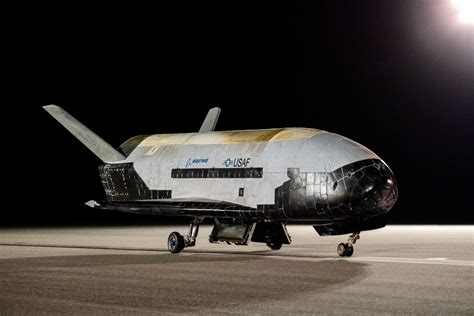
The inaugural mission of the X-37B, designated OTV-1 (also known as USA-212), commenced on April 22, 2010, at 23:52 UTC, lifting off from Cape Canaveral’s SLC-41 aboard an Atlas V 501 rocket. This launch was also notable as the first flight of the Atlas V 501 configuration. The spacecraft was inserted into low Earth orbit for a comprehensive series of systems tests. While official details from the U.S. Air Force were sparse, a dedicated global network of amateur satellite trackers successfully identified and monitored the spacecraft. By May 22, 2010, OTV-1 was observed in an orbit with an inclination of 39.99 degrees, at an altitude of approximately 249 by 262 miles (401 by 422 km), circling the Earth roughly every 90 minutes. Its orbital pattern, passing over the same point on Earth every four days, and its operational altitude were typical of some military surveillance satellites, though also common for many civilian LEO spacecraft and similar to that of the International Space Station. After 224 days, 9 hours, and 24 minutes in space, OTV-1 successfully de-orbited and executed the first American autonomous orbital runway landing at Vandenberg Air Force Base on December 3, 2010, at 09:16 UTC. This was a landmark achievement, the first such landing by a U.S. spacecraft and the first globally since the Soviet Buran shuttle’s automated landing in 1988. During the landing, OTV-1 experienced a tire blowout and sustained some minor damage to its underside, but the mission was overwhelmingly hailed as a success.
OTV-2 (USA-226): Extending Endurance
The second X-37B vehicle embarked on its first mission, OTV-2 (USA-226), on March 5, 2011, at 22:46 UTC, also launched by an Atlas V rocket from Cape Canaveral SLC-41. This classified mission was described by the U.S. military as an effort to test new space technologies. Initially designed for a 270-day mission, the Air Force announced in November 2011 that OTV-2’s duration would be extended. General William L. Shelton of Air Force Space Command lauded the mission as a “spectacular success” in April 2012. OTV-2 landed autonomously at Vandenberg AFB on June 16, 2012, after spending a remarkable 468 days, 14 hours, and 2 minutes in orbit, nearly doubling the endurance of its predecessor and demonstrating the platform’s robustness.
OTV-3 (USA-240): A Record-Breaking Return
The third X-37B mission, OTV-3 (USA-240), marked the second flight of the first X-37B vehicle (the same one used for OTV-1). After a slight delay due to an engine issue with its Atlas V launch vehicle, it was successfully launched from Cape Canaveral SLC-41 on December 11, 2012, at 18:03 UTC. OTV-3 further pushed the boundaries of long-duration spaceflight for a reusable vehicle. It concluded its mission with a landing at Vandenberg AFB on October 17, 2014, at 16:24 UTC, having spent an impressive 674 days, 22 hours, and 21 minutes in orbit, setting a new endurance record for the program at the time.
OTV-4 (USA-261/AFSPC-5): Testing New Frontiers and Landing at KSC
The fourth mission, OTV-4 (AFSPC-5, designated USA-261 in orbit), utilized the second X-37B vehicle for its second flight. Launched on an Atlas V from Cape Canaveral SLC-41 on May 20, 2015, at 15:05 UTC, this mission had several publicly disclosed objectives. These included testing Aerojet Rocketdyne’s XR-5A Hall-effect thruster, an advanced electric propulsion system, in support of the Advanced Extremely High Frequency (AEHF) communications satellite program. Additionally, it carried a NASA investigation to study the performance of various materials in the harsh space environment for at least 200 days. OTV-4 significantly surpassed this minimum, spending a then-record 717 days, 20 hours, and 42 minutes in orbit. A notable first for this mission was its landing: on May 7, 2017, at 11:47 UTC, OTV-4 became the first X-37B to land at the Kennedy Space Center’s Shuttle Landing Facility (Runway 15), marking a shift in primary landing operations to Florida.
OTV-5 (USA-277): Riding a Falcon to Higher Inclinations
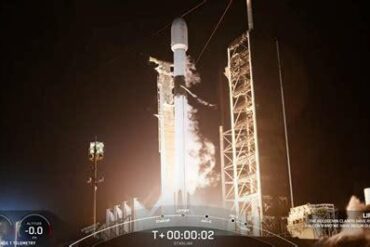
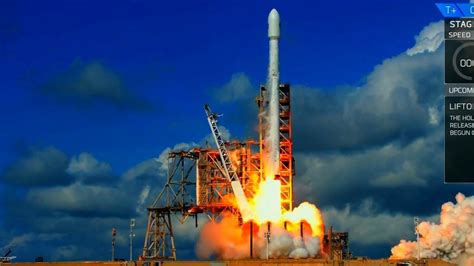
The fifth X-37B mission, OTV-5 (USA-277), marked a significant milestone by being the first to launch aboard a SpaceX Falcon 9 Block 4 rocket. Liftoff occurred from Kennedy Space Center’s Launch Complex 39A on September 7, 2017, at 14:00 UTC, just ahead of Hurricane Irma’s arrival. This mission also saw the X-37B inserted into a higher inclination orbit than previous flights, further expanding its operational envelope and testing its capabilities in different orbital regimes. During its flight, the spacecraft demonstrated its maneuverability by modifying its orbit using its onboard propulsion system. While the full payload remained classified, the Air Force did announce one experiment: the Advanced Structurally Embedded Thermal Spreader II (ASETS-II), designed to measure the performance of an oscillating heat pipe in microgravity. OTV-5 concluded after another record-breaking flight, landing at the Shuttle Landing Facility (Runway 33) on October 27, 2019, at 07:51 UTC, after 779 days, 17 hours, and 51 minutes in space.
OTV-6 (USA-299/USSF-7): A Service Module and a New Space Force
The sixth X-37B mission, OTV-6 (designated USA-299, also known as USSF-7), was launched by an Atlas V 501 rocket from Cape Canaveral SLC-41 on May 17, 2020, at 13:14 UTC. This mission was historic as the first X-37B launch under the banner of the newly established U.S. Space Force, which assumed responsibility for launch, on-orbit operations, and landing. OTV-6, the third flight of the first X-37B vehicle, was also the first to feature a service module, a ring-like structure attached to the rear of the vehicle, significantly increasing the payload capacity and allowing for more experiments. This mission hosted the most experiments to date, including two for NASA: one evaluating the reaction of various materials to space conditions and another studying the effects of space radiation on seeds. A notable experiment from the Naval Research Laboratory (NRL) aimed to transform solar power into radio frequency microwave energy and study the feasibility of transmitting that energy to Earth. During this mission, on approximately May 28, 2020, the X-37B deployed a small, 136 kg satellite named FalconSat-8 (USA-300). Developed by U.S. Air Force Academy cadets in partnership with the Air Force Research Laboratory (AFRL), FalconSat-8 carried five experimental payloads, including a novel electromagnetic propulsion system and low-weight antenna technology. OTV-6 set yet another endurance record, landing at the Shuttle Landing Facility (Runway 33) on November 12, 2022, at 10:22 UTC, after an extraordinary 908 days, 21 hours, and 8 minutes in orbit.
OTV-7 (USSF-52): Reaching New Heights with Falcon Heavy
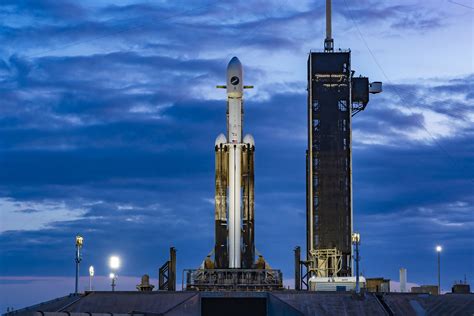
The seventh X-37B mission, OTV-7 (USSF-52), marked the fourth flight of the second X-37B vehicle and the first to be launched by the powerful SpaceX Falcon Heavy rocket. After a reschedule, it successfully launched from Kennedy Space Center’s LC-39A on December 28, 2023, at 01:07 UTC (December 29 UTC). This mission is particularly noteworthy as it placed the X-37B into a highly elliptical, high Earth orbit (HEO), reaching altitudes far greater than any previous spaceplane mission. This new operational domain will test the X-37B’s systems in a more challenging radiation environment and demonstrate its ability to operate across diverse orbital regimes. The mission includes experiments operating in these new orbital parameters. OTV-7 is planned to conduct aerobraking maneuvers in October 2024 to safely dispose of its service module before its eventual landing, projected for March 7, 2025, at Vandenberg Space Force Base, after an expected duration of 434 days.
Evolution of the X-37: Variants of the Platform
The X-37 program has seen a few distinct iterations, each serving a specific phase of its development and operational deployment.
- X-37A: This was the initial NASA version, known as the Approach and Landing Test Vehicle (ALTV). It was an unpowered glider used exclusively for atmospheric drop tests conducted in 2005 and 2006 to validate the aerodynamic design and autonomous landing capabilities.
- X-37B: The X-37B is the operational orbital vehicle, a modified and enhanced version of the NASA X-37A, developed and operated by the U.S. Department of the Air Force and U.S. Space Force. Two such vehicles have been built, and they have collectively undertaken the seven orbital missions to date, demonstrating remarkable reusability and endurance.
- X-37C: In 2011, Boeing unveiled ambitious plans for a significantly scaled-up variant of the X-37B, tentatively named the X-37C. This proposed spacecraft was envisioned to be between 165% and 180% larger than the X-37B. Such an increase in size would allow it to transport up to six astronauts inside a pressurized compartment housed within its cargo bay, potentially serving roles in crew transport or rescue. The powerful Atlas V rocket was identified as the proposed launch vehicle for this larger variant. In this crew-carrying capacity, Boeing’s X-37C could have potentially competed with the corporation’s own CST-100 Starliner commercial space capsule. However, with NASA’s selection of the Starliner and SpaceX’s Crew Dragon for its Commercial Crew Program, and no further public announcements regarding its development since 2011, the X-37C remains a concept, its future uncertain as of 2024.
Technical Specifications: Boeing X-37B
The X-37B’s design incorporates a blend of established and cutting-edge technologies, making it a unique asset in space operations.
-
General Characteristics:
- Crew: None (robotic/autonomous)
- Capacity (Payload): Approximately 227 kg (500 lbs)
- Length: 29 ft 3 in (8.92 m)
- Wingspan: 14 ft 11 in (4.55 m)
- Height: 9 ft 6 in (2.90 m)
- Maximum Takeoff Weight: 11,000 lb (4,990 kg)
- Electrical Power: Gallium arsenide solar cells with lithium-ion batteries
- Payload Bay Dimensions: 7 ft × 4 ft (2.1 m × 1.2 m)
-
Performance:
- Orbital Speed: Approximately 17,426 mph (28,044 km/h)
- Orbit: Low Earth Orbit (LEO) to High Earth Orbit (HEO)
-
Orbital Time:
- Design: 270 days
- Demonstrated: Over 908 days (OTV-6 mission)
The Boeing X-37B continues to be a pathfinder for reusable space technologies and rapid capabilities in orbit. While much of its operational purpose remains under wraps, its consistent success, progressively longer missions, and evolving capabilities underscore its importance to U.S. space objectives. Each flight yields invaluable data, refining the technologies and operational concepts for future reusable space systems, ensuring that the lessons learned from this enigmatic spaceplane will shape the next generation of orbital platforms. Its ability to test new hardware in the harsh environment of space and return it to Earth for inspection provides an unparalleled advantage in the development and maturation of advanced space systems for both military and potentially civilian applications in the decades to come.