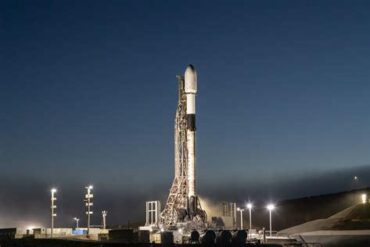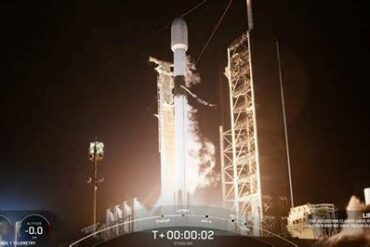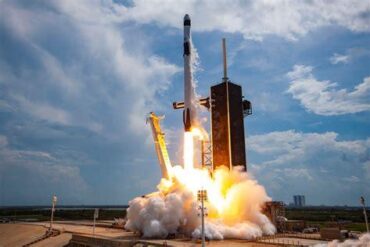
Spaceflight used to follow a predictable rhythm: rockets launched once, burned up or fell into the ocean, and engineers spent months preparing the next mission. That old model treated rockets like disposable fireworks. SpaceX changed the equation by treating rockets more like aircraft—machines designed to fly again and again. At the center of this transformation is the Falcon 9, a two-stage orbital rocket whose reusable first stage has redefined how frequently missions can launch.
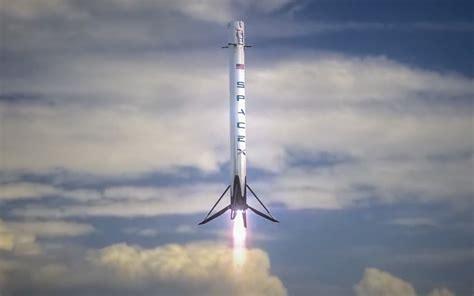
The idea is simple in principle but astonishing in practice. After delivering payloads to orbit, the Falcon 9 first-stage booster returns to Earth, landing either on a drone ship at sea or a landing pad near the launch site. Engineers then inspect, refurbish, and prepare the booster for another mission. The question that fascinates both space enthusiasts and aerospace engineers is straightforward: how quickly can that same rocket fly again?
The answer reveals just how dramatically reusable rocketry has advanced. Under typical operational conditions, SpaceX can prepare a Falcon 9 booster for relaunch in less than two weeks. That turnaround speed places reusable rockets in a category closer to commercial aviation than traditional expendable launch vehicles.
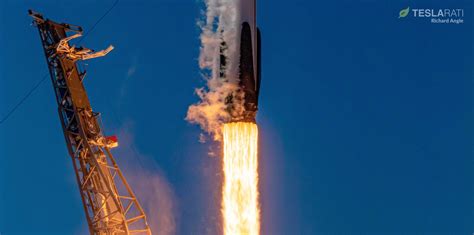
The Engineering Behind Falcon 9 Reusability
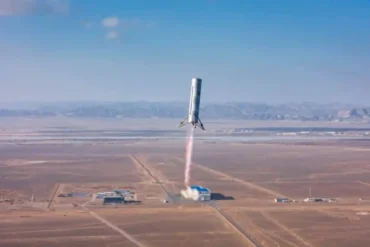
The Falcon 9 was designed from the start with rapid reusability in mind. Its first stage houses nine Merlin engines, powerful kerosene-fueled engines arranged in a configuration that allows both reliability and controlled descent after launch. Once the upper stage separates and continues toward orbit, the booster performs a complex sequence of burns to slow down, orient itself, and guide its descent.
Grid fins deploy to steer the booster through the atmosphere, while landing legs extend shortly before touchdown. These components must survive enormous thermal and mechanical stresses, which makes the turnaround process a fascinating engineering challenge.
After landing, teams inspect the vehicle carefully. Key checks include:
- Engine integrity and combustion chamber condition
- Thermal protection surfaces
- Landing leg and structural stress points
- Fuel system and avionics diagnostics
Although the rocket is designed for reuse, safety margins remain strict. Every booster must pass rigorous testing before returning to the launch pad.
Record-Breaking Turnaround Times
While routine relaunch operations usually take longer, SpaceX has pushed the limits of turnaround speed several times. Two of the most impressive records demonstrate how far reusable launch technology has progressed.
One notable benchmark recorded a booster relaunch after 13 days, 12 hours, 44 minutes, and 20 seconds. That was already an extraordinary pace compared to traditional rockets, which historically required months to build and launch.
But the true standout occurred in March 2025, when a Falcon 9 booster completed two missions within just nine days.
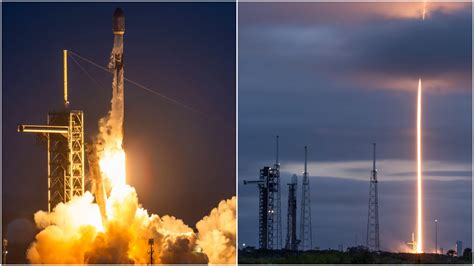
The booster responsible carried the tail number B1088. Its first mission launched NASA’s SPHEREx and PUNCH satellites on March 12, 2025. After successfully completing the mission and returning to Earth, the same booster underwent inspection and preparation before launching again on March 21, 2025.
Nine days between launches is a remarkable feat when one considers the complexity of orbital rockets. In earlier eras of spaceflight, such a turnaround would have sounded closer to science fiction than engineering reality.
Why Rapid Reuse Matters
Speedy turnaround isn’t just a technological stunt. It directly affects the economics and cadence of spaceflight.
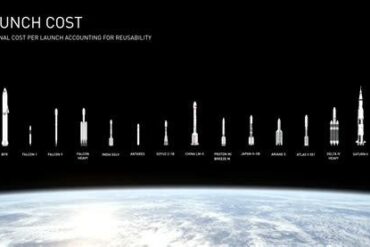
Reusable boosters dramatically reduce launch costs because the most expensive portion of the rocket—the first stage—can fly many times. Faster turnaround means each booster can support more missions per year, effectively increasing launch capacity without building new rockets.
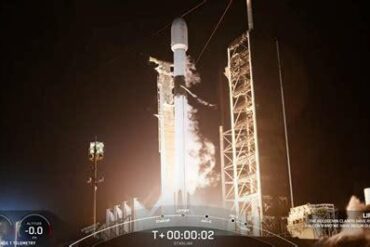
This capability has been particularly important for large-scale deployments such as Starlink satellite constellations, which require frequent launches. By rotating boosters through missions efficiently, SpaceX maintains one of the highest launch rates in the history of spaceflight.
The Future of Rocket Turnaround
Even nine days may not represent the final limit. Earlier in the Falcon 9 program, engineers discussed a bold ambition: relaunching a booster within 24 hours of landing. That goal remains extremely challenging, as inspections and safety procedures cannot be rushed recklessly.
Still, the direction is clear. Each record demonstrates how reusable launch vehicles are evolving toward a model where rockets operate with the rhythm of aircraft fleets.
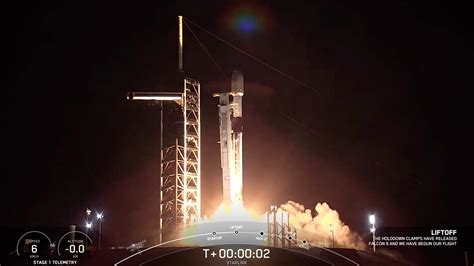
If that trajectory continues, future launch operations may look radically different from the slow, ceremonial launches of the past. Rockets could become high-frequency transportation systems, lifting satellites, cargo, and eventually people into orbit with unprecedented regularity. In the long arc of space exploration, rapid rocket reuse might prove to be one of the quiet revolutions that opened the door to a truly spacefaring civilization.