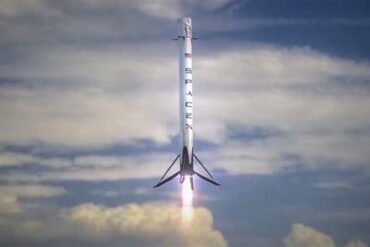
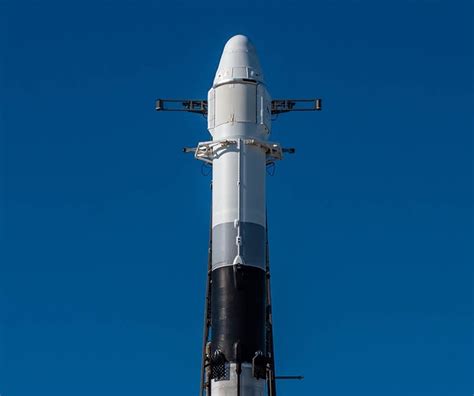
The Moon is about to receive an unexpected visitor at astonishing speed. A discarded upper stage from a SpaceX Falcon 9 rocket is now on a collision course with the lunar surface, and experts predict the impact will occur at more than 5,400 miles per hour, roughly equivalent to Mach 7. While the event may sound like the plot of a science-fiction thriller, astronomers and orbital tracking specialists insist it is a very real reminder of the growing challenge posed by humanity’s expanding presence in space.
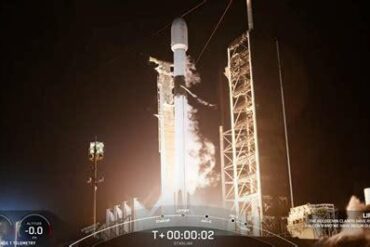
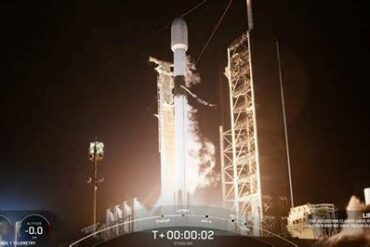
The object was identified and tracked by prominent astronomer Bill Gray, creator of the widely respected Project Pluto tracking software. Gray revealed that the rocket stage had originally been detected in September 2025 and was later confirmed to be on a direct trajectory toward the Moon. The hardware is believed to be the upper stage from a Falcon 9 mission launched on January 15, 2025, carrying lunar payloads for Firefly Aerospace and the Japanese company ispace.
The mission itself represented another milestone in the increasingly commercialized lunar race. Firefly Aerospace’s Blue Ghost Mission 1 successfully landed on the Moon, while ispace’s Hakuto-R Mission 2 unfortunately crashed during its landing attempt. Yet long after the spacecraft separated from the rocket, the Falcon 9 upper stage continued drifting silently through cislunar space, eventually becoming an uncontrolled object destined for impact.
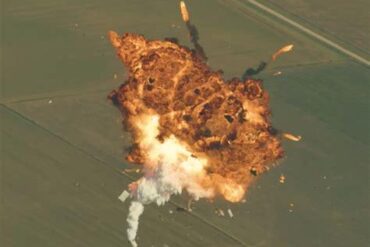
By August, scientists estimate the rocket component will collide with the Moon’s surface at incredible velocity. The impact will completely vaporize the structure upon contact, scattering debris and carving a relatively small crater into the lunar terrain. Although the collision poses no immediate threat to Earth or lunar operations, experts say it highlights a much larger issue that could define the future of space exploration.
Why The Falcon 9 Lunar Impact Matters
At first glance, a discarded rocket stage smashing into the Moon may seem harmless. After all, the Moon has been battered by asteroids and debris for billions of years. However, the concern among scientists is not about this specific impact alone but about what it represents for the future of lunar exploration.
Human activity around the Moon is increasing at a pace never before seen in history. Governments and private aerospace companies are launching missions more frequently, and plans for permanent lunar infrastructure are rapidly advancing. NASA’s Artemis program aims to establish a sustained human presence near the lunar south pole, while commercial firms continue developing cargo systems, landers, and lunar communications networks.
As traffic between Earth and the Moon intensifies, uncontrolled rocket stages and abandoned spacecraft could become serious hazards. A single accidental collision near operational lunar assets might damage landers, habitats, scientific instruments, or even future crewed missions. What currently appears to be an isolated event may soon become a recurring operational challenge.
Astronomers warn that proper disposal trajectories for rockets will eventually become as important around the Moon as they already are in Earth orbit. Controlled deorbit procedures, fuel reserves for redirection, and dedicated debris mitigation strategies may become mandatory for all future lunar missions.
Bill Gray And The Science Of Tracking Deep-Space Debris
Bill Gray’s tracking work has once again placed attention on the hidden complexity of monitoring objects beyond Earth orbit. Unlike satellites circling Earth, deep-space debris travels enormous distances and can be difficult to identify accurately.
Gray previously gained international attention in 2022 when he correctly predicted the impact of a Chinese Chang’e-5 T1 rocket stage with the Moon. That incident demonstrated how discarded hardware can wander through space for years before eventually colliding with celestial bodies.
Tracking these objects requires sophisticated mathematical modeling, continuous observations, and orbital predictions influenced by gravitational interactions from Earth, the Moon, and even the Sun. Small uncertainties can dramatically alter projected paths over time, making long-term predictions exceptionally difficult.
The Falcon 9 upper stage now approaching the Moon was initially cataloged through the U.S. Space Force tracking network, which monitors thousands of human-made objects in orbit. According to available tracking data, the object represented the fourth tracked component from the January 2025 launch.
Space Junk Is Becoming A Global Crisis
The looming lunar collision arrives during growing international concern over the worsening space junk problem. Earth orbit is becoming increasingly crowded with inactive satellites, fragmented rocket parts, and debris generated from accidental collisions.
A 2025 report from the European Space Agency (ESA) warned that orbital traffic has changed dramatically over the last decade, largely due to the explosive growth of commercial satellite constellations. SpaceX’s Starlink network, which surpassed 10,000 satellites in orbit earlier this year, represents one of the largest expansions of space infrastructure ever undertaken.
The increase in orbital congestion raises the probability of collisions that can generate even more debris. Experts fear a cascading scenario known as the Kessler Syndrome, where repeated impacts produce massive clouds of fragments that make certain orbital regions dangerously unusable.
The danger is not theoretical. The International Space Station (ISS) already performs periodic orbital maneuvers specifically designed to avoid space debris. Even tiny fragments traveling at orbital velocity can puncture spacecraft shielding or destroy sensitive systems instantly.
Several proposed cleanup technologies have emerged in recent years, including giant capture nets, magnetic retrieval systems, robotic servicing spacecraft, and harpoon-like recovery mechanisms. Despite promising demonstrations, none of these systems have yet scaled into a comprehensive operational solution.
The Hidden Risks Of Falling Rocket Debris
Space junk does not only threaten spacecraft in orbit. It also poses increasing risks to people and infrastructure on Earth. While most debris burns up during atmospheric reentry, larger components can survive and crash into populated areas unexpectedly.
One alarming example occurred on January 17, 2025, when unidentified debris reportedly fell into a village in Kenya. Investigators later suspected the object originated from an Indian rocket component reentering Earth’s atmosphere.
To reduce these dangers, space agencies often direct retired spacecraft toward a remote region of the South Pacific Ocean known as Point Nemo. Nicknamed the “spacecraft cemetery,” this isolated area has become the preferred destination for controlled reentries because it lies far from major shipping routes and populated landmasses.
Yet thousands of uncontrolled objects still remain in orbit today, many with unpredictable futures. As lunar missions become more common and deep-space traffic accelerates, experts believe humanity is entering a new era where orbital debris management will become one of the defining engineering and political challenges of space exploration.