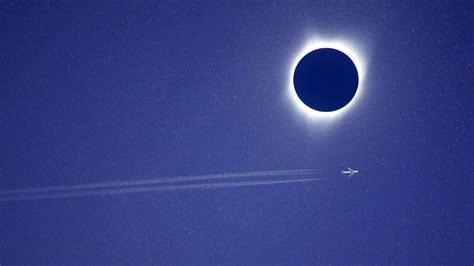
We remember few moments in aviation where pure speed, scientific ambition, and aeronautical elegance converged as perfectly as they did on 30 June 1973. On that day, Concorde did not merely fly faster than sound; we flew faster than night itself. By aligning a supersonic airliner with the Moon’s umbral shadow, we transformed an ephemeral celestial event into a sustained scientific observation. What unfolded over the skies of West Africa was neither spectacle alone nor experiment alone, but a deliberate fusion of both—an episode that remains unmatched in civil aviation history.
The idea was deceptively simple and mathematically audacious. A solar eclipse moves across Earth at extraordinary speed, often exceeding 1,500 kilometers per hour depending on latitude. From the ground, totality rarely lasts more than a few minutes. From Concorde, cruising comfortably at Mach 2, we could do something no observatory or rocket could do with such precision: enter the shadow and remain inside it. This single insight justified an entire mission and redefined what a passenger aircraft could be when stripped of commercial routine and repurposed for discovery.
The 1973 eclipse chase mattered because it revealed a deeper truth about Concorde. The aircraft was never just a transport solution; it was a flying research platform disguised as luxury. Its performance envelope—55,000 feet in the stratosphere, sustained supersonic cruise, and extraordinary navigational precision—opened doors that traditional aviation could not even approach. The eclipse flight was the most poetic demonstration of this latent potential.
From Treaty to Takeoff: The Political and Engineering Birth of Concorde
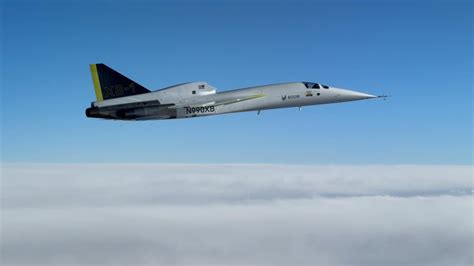
We cannot understand the eclipse chase without first understanding why Concorde existed at all. The aircraft emerged from a uniquely European context, where postwar ambition met Cold War competition. Britain and France recognized that neither nation alone could afford the cost or risk of supersonic transport development. The 1962 Anglo-French treaty was not simply an agreement to build an airplane; it was a commitment to shared sovereignty over one of the most complex engineering programs of the twentieth century.
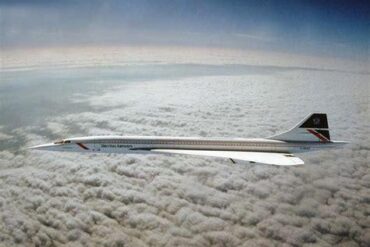
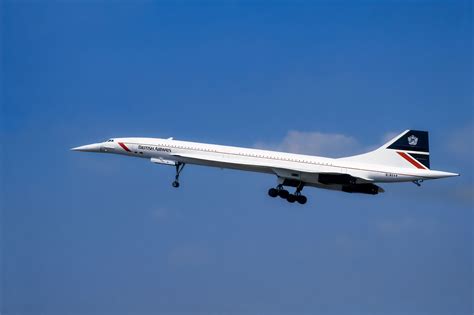
Behind Concorde’s unmistakable silhouette lay decades of aerodynamic research. Wind-tunnel studies confirmed that a slender ogival delta wing could generate stable vortex lift at low speeds while minimizing wave drag at supersonic cruise. This configuration allowed us to reconcile two seemingly incompatible requirements: safe operation from existing runways and sustained flight beyond Mach 2. The aircraft that resulted looked futuristic because it was shaped by physics rather than fashion.
The first flight in 1969 validated those theories in the air. By the time Concorde entered commercial service in 1976, it had already proven itself not only fast, but remarkably controllable, thanks to analog fly-by-wire systems and carefully managed center-of-gravity shifts using fuel transfer. These systems, developed out of necessity, quietly influenced generations of aircraft that followed.
The Physics of Supersonic Observation
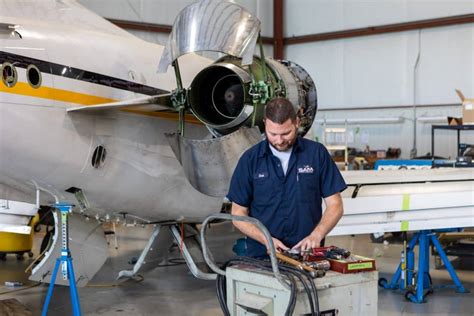
To chase a solar eclipse, speed alone was insufficient. What mattered was sustained, predictable performance at the exact velocity of the Moon’s shadow. Concorde delivered this through an integrated triad of propulsion, aerodynamics, and thermal engineering. Each element was essential, and none could have compensated for the absence of the others.
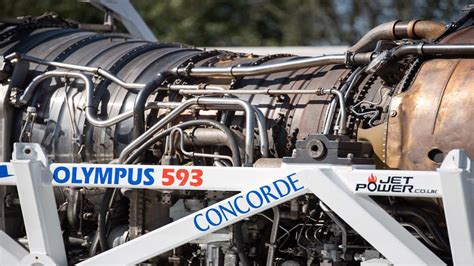
The Rolls-Royce/Snecma Olympus 593 engines provided the raw thrust required to accelerate through transonic drag and settle into supersonic cruise without continuous reheat. Unlike military interceptors, Concorde was designed to live at Mach 2, not merely dash there. Variable-geometry engine intakes slowed incoming airflow to subsonic speeds before compression, maintaining efficiency and stability across changing atmospheric conditions.
Aerodynamically, the delta wing reduced shock strength and distributed lift evenly across the airframe. At altitude, where air density drops and margins narrow, this stability was crucial. Thermally, engineers accepted that kinetic heating would be unavoidable. Aluminum alloys were selected and stress-tested for repeated heating cycles, accepting expansion as a design feature rather than a flaw. At cruise, the aircraft visibly lengthened, a reminder that speed reshapes matter itself.
Designing the 1973 Eclipse Mission
The eclipse flight was not an improvisation. It was a precision exercise in celestial mechanics and flight planning. Using astronomical predictions, meteorological data, and Concorde’s exact performance curves, planners computed a route that would intersect the umbra at precisely the right moment. Any deviation in speed, altitude, or heading would shorten totality or miss it entirely.
Concorde 001, the original prototype, was modified with observation windows and instrument mounts. The cabin was transformed into a narrow but functional laboratory, where scientists worked alongside flight crew in real time. The aircraft departed Las Palmas and climbed rapidly to operational altitude, positioning itself ahead of the advancing shadow. When totality began, the aircraft matched the shadow’s velocity almost exactly.
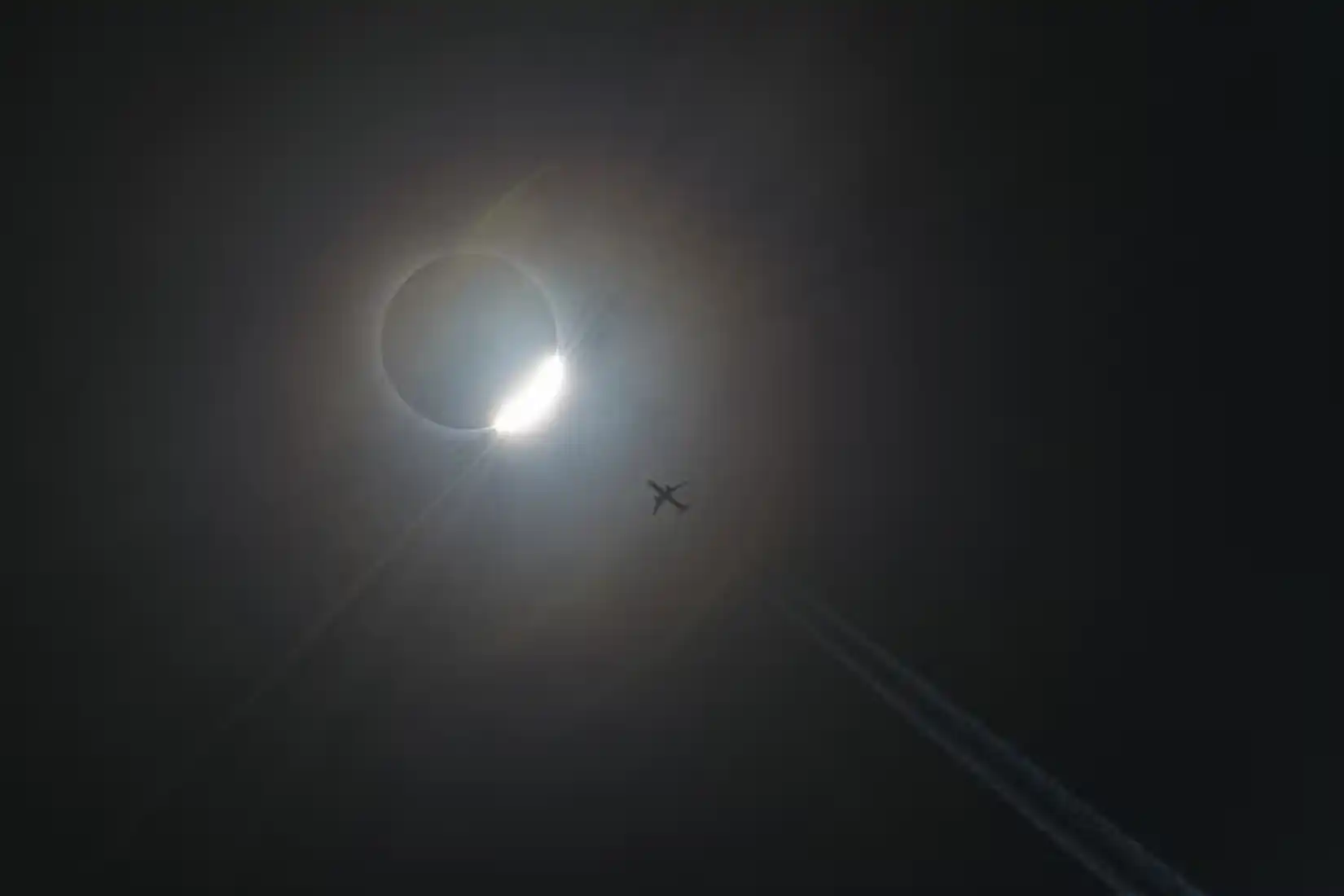
For 74 uninterrupted minutes, we remained inside the Moon’s darkness. This was not merely longer than any ground-based observation; it was an order of magnitude longer. Instruments studied the solar corona, chromosphere, and infrared emissions with unprecedented continuity. Atmospheric interference was minimal, and turbulence negligible. The eclipse became less an event and more a state of flight.
Scientific Yield and Symbolic Power
Measured purely by published data, the scientific returns of the eclipse mission were modest. Yet such an assessment misses the point. The true value lay in demonstration. We proved that transient astronomical phenomena could be pursued, intercepted, and extended using high-speed aviation. This concept reshaped how researchers thought about mobility, observation time, and experimental design.
Equally important was the symbolic resonance. Concorde became a bridge between public imagination and hard science. Newspapers covered the mission not because of obscure measurements, but because the image was irresistible: an airliner outrunning nightfall. In doing so, Concorde reminded the world that civil aviation could still inspire awe, not just efficiency.
This dual legacy—scientific feasibility and cultural impact—cemented the eclipse chase as one of Concorde’s defining moments, despite its brevity within the program’s overall timeline.
Records, Reputation, and the Weight of Expectation
Concorde was already a record-holder before 1973, and it continued to accumulate milestones afterward. Transatlantic crossings under three hours demonstrated that speed could redefine geography. More subtly, Concorde normalized the idea of supercruise for non-military aircraft, a concept that would later reappear in advanced fighter design and experimental platforms.
Yet records carried expectations. Concorde became synonymous with perfection, leaving little room for compromise or decline. Economic pressures, environmental opposition, and operational costs increasingly constrained what the aircraft could do. The eclipse chase stands out precisely because it was unconstrained—an instance where Concorde operated at the outer edge of its purpose, free from commercial calculation.
Human Precision at Supersonic Speed
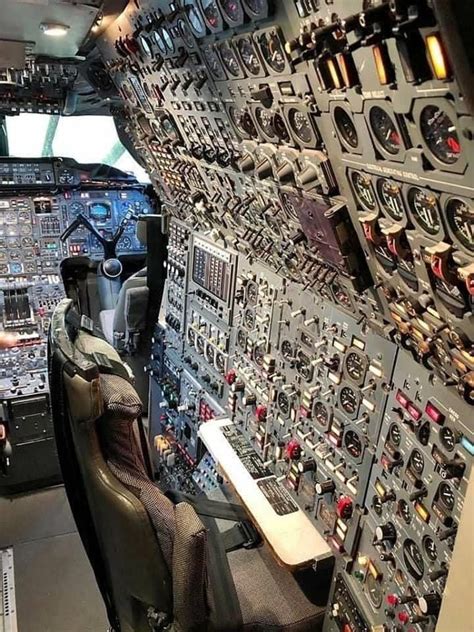
We often attribute Concorde’s achievements to technology, but the eclipse mission was fundamentally human. Pilots flew an exacting profile that demanded constant attention to navigation and energy management. Scientists adapted instruments to vibration, temperature, and limited viewing angles. Engineers trusted calculations that left no margin for error.
Inside the cabin, the contrast was surreal. Outside, the aircraft sliced through rarefied air at twice the speed of sound. Inside, voices were calm, instruments steady, and procedures methodical. The eclipse unfolded not as chaos, but as controlled inevitability—a testament to training and trust.
For those onboard, the experience transcended profession. It was not simply data collection or flight testing. It was participation in a moment where human planning aligned perfectly with cosmic motion.
Retirement and Enduring Influence
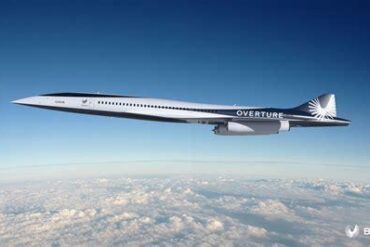
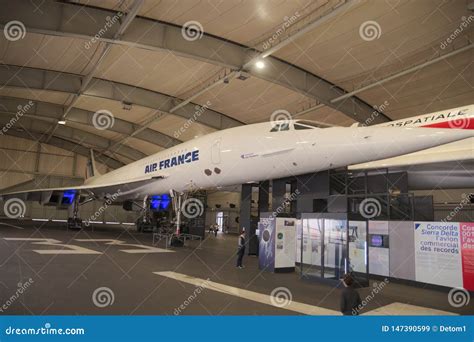
Concorde’s retirement in 2003 marked the end of an era, but not the end of its influence. The eclipse chase remains a case study in aerospace programs worldwide, illustrating how performance margins can be repurposed for unexpected goals. Modern supersonic projects, quieter and more efficient, still draw lessons from Concorde’s solutions to heating, intake control, and long-duration high-speed cruise.
Museums preserve the aircraft’s physical form, but the eclipse mission preserves its intellectual legacy. It reminds us that aviation advances fastest when ambition exceeds immediate utility. Concorde did not chase the eclipse because it was profitable or necessary. We chased it because we could—and because doing so expanded the horizon of what flight could mean.
Why the Eclipse Chase Still Matters
Half a century later, the image remains powerful: a slender white aircraft pacing the Moon’s shadow across Earth’s surface. It matters because it encapsulates a philosophy of engineering that values capability for its own sake, trusting that usefulness will follow. Concorde’s eclipse chase was not an anomaly; it was a revelation.
As we stand at the threshold of a new supersonic age, this story endures as both inspiration and benchmark. It challenges us to ask not only how fast we can fly, but why—and whether we are willing to use speed in service of knowledge, not just convenience. In that question, Concorde still flies ahead of us, forever chasing the edge of night.