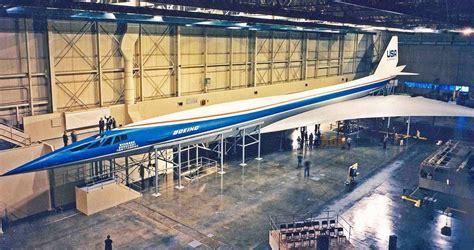
In the early 1960s, a technological race was unfolding far above the clouds. The Soviet Union and the United States were locked in the Space Race, nuclear tensions dominated international politics, and aviation engineers were pursuing what seemed like the next inevitable leap in transportation: routine supersonic passenger travel. When Britain and France joined forces to create the Concorde, American leaders feared that the United States might lose its position as the world’s aerospace leader. The response was immediate, ambitious, and extraordinarily expensive.
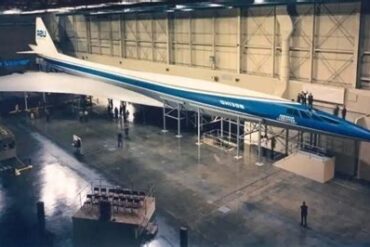
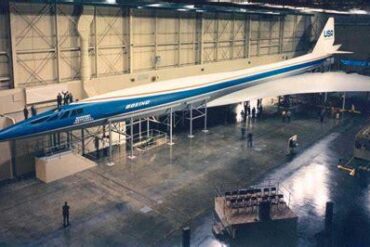
The result was the Boeing 2707, a giant supersonic airliner conceived with heavy government backing and intended to outperform every competitor in the sky. It promised unprecedented speed, enormous passenger capacity, and revolutionary technology. Yet despite billions of dollars in modern equivalents, years of development, and immense political support, the aircraft never flew. No prototype ever left the runway. No passenger ever purchased a ticket. The program collapsed before a single commercial flight could occur.
Today, the Boeing 2707 remains one of the most fascinating aviation projects ever conceived—a technological marvel that existed almost entirely on paper and became a cautionary tale about the limits of engineering ambition.
America’s Fear Of Falling Behind In The Supersonic Age
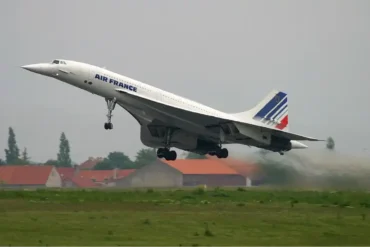
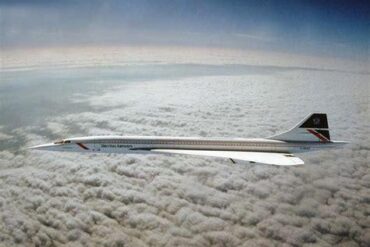
The origins of the Boeing 2707 can be traced directly to growing anxiety in Washington. In 1962, the United Kingdom and France signed an agreement to develop the Concorde, a sleek supersonic airliner that promised to shrink travel times between continents dramatically. The project represented far more than commercial aviation. It was a declaration that Europe intended to compete at the highest levels of aerospace innovation.
American concerns intensified in May 1963 when Pan American World Airways, one of the most influential airlines on the planet, announced options to purchase Concorde aircraft. The idea that major U.S. airlines might buy European-built supersonic transports alarmed policymakers and industry leaders alike.
President John F. Kennedy responded swiftly. On June 5, 1963, during a speech at the U.S. Air Force Academy, he launched the National Supersonic Transport Program. The initiative aimed to create an American aircraft that would not merely match Concorde but surpass it in virtually every measurable category.
The goal was simple: build the most advanced passenger aircraft ever imagined.
The reality would prove far more complicated.
Boeing Wins A High-Stakes Competition
The Federal Aviation Administration invited proposals from major aerospace companies. Two serious contenders emerged.
Lockheed proposed the L-2000, a sophisticated delta-wing design that shared certain aerodynamic principles with future supersonic aircraft. Boeing entered the competition with an even more radical concept that would eventually evolve into the Boeing 2707.
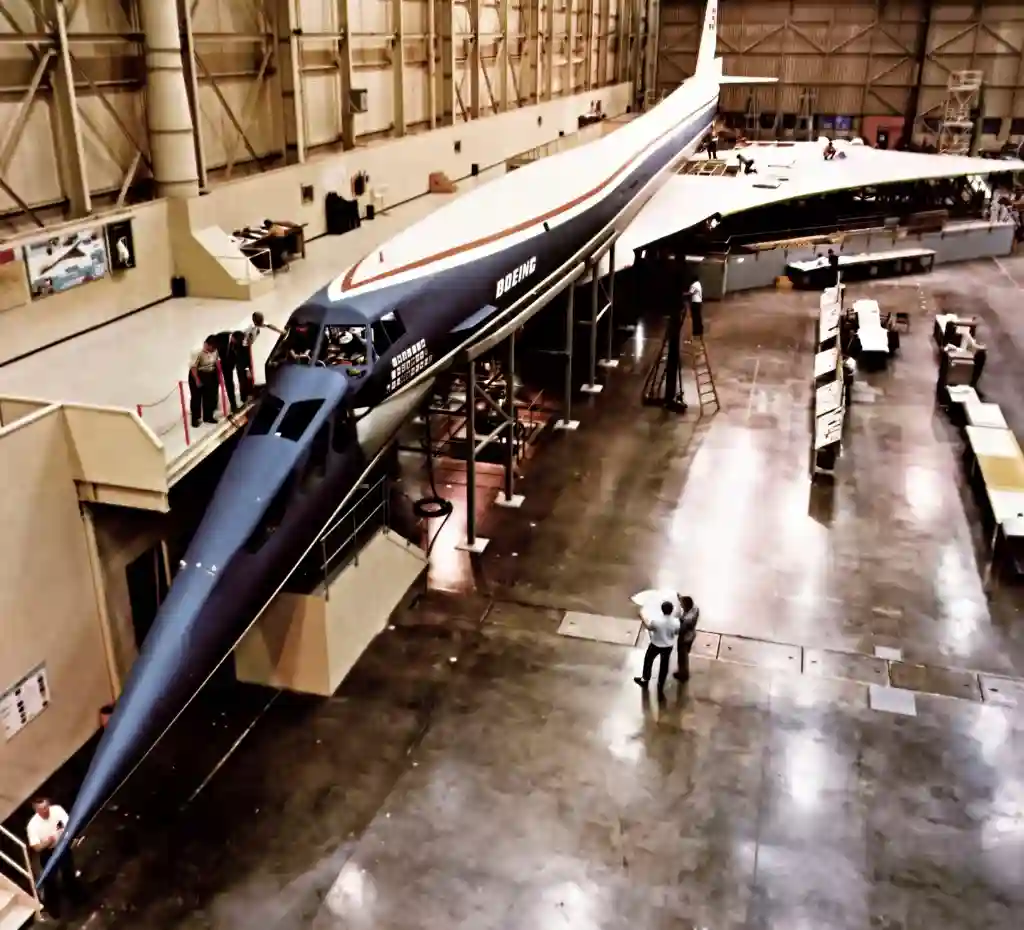
After extensive evaluation, Boeing secured the contract in 1966.
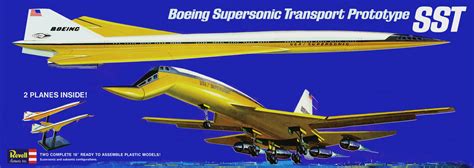
The decision reflected confidence in Boeing’s ambitious vision. Rather than pursuing a conventional configuration, Boeing proposed a variable-geometry aircraft featuring swing wings. Similar concepts were attracting attention in military aviation because they promised efficient performance across a wide range of speeds.
The idea was bold. During takeoff and landing, the wings would extend outward to maximize lift and stability. During supersonic cruise, they would sweep sharply backward to minimize drag and enable extraordinary speeds.
On paper, the concept appeared revolutionary.
In practice, it became the project’s greatest obstacle.
The Astonishing Performance Goals Of The Boeing 2707
The Boeing 2707 was not designed to compete directly with Concorde. It was designed to dominate it.
Concorde was expected to carry approximately 100 passengers at speeds around Mach 2.0. Boeing’s proposed aircraft aimed to transport between 250 and 300 passengers while cruising between Mach 2.7 and Mach 3.0.
These targets represented a massive leap in capability.
At Mach 3, passengers could theoretically cross the Atlantic in dramatically less time than any existing airliner. Routes that consumed much of a day could potentially be completed in mere hours. The aircraft’s size would also allow airlines to serve larger markets while maintaining the prestige of supersonic travel.
Boeing envisioned a future in which supersonic transportation would become the standard rather than the exception.
The company even viewed the newly developed Boeing 747 as a transitional aircraft. Many executives believed the jumbo jet would eventually give way to a new generation of faster SSTs.
History would unfold very differently.
The Swing-Wing Design That Became A Nightmare
The Boeing 2707’s variable-geometry wing system quickly exposed the enormous gap between theoretical design and practical engineering.
Creating movable wings for a passenger aircraft of unprecedented size required gigantic titanium pivots, complex hydraulic systems, and reinforced structural components capable of withstanding immense aerodynamic forces. Every mechanism added weight. Every pound reduced efficiency.
The engineering challenges multiplied rapidly.
Because the wings changed position during flight, the aircraft’s center of lift also shifted. Engineers therefore needed an intricate fuel-management system capable of moving fuel around the aircraft to maintain stability. The complexity introduced additional risk, cost, and maintenance requirements.
Meanwhile, concerns emerged regarding metal fatigue. The wing pivots would endure repeated stress cycles throughout the aircraft’s operational life. Guaranteeing long-term structural integrity became increasingly difficult.
Titanium offered the required strength and heat resistance but presented manufacturing challenges of its own. The aerospace industry had limited experience producing large titanium structures at the scale envisioned for the Boeing 2707.
By the late 1960s, engineers reached an uncomfortable conclusion.
The swing-wing concept was becoming too heavy to achieve the performance goals that justified its existence.
Why Mach 3 Passenger Travel Required Titanium Construction
One of the most demanding aspects of the program stemmed from physics itself.
At speeds approaching Mach 3, friction between the aircraft and the atmosphere generates tremendous heat. Conventional aluminum structures used in commercial aviation lose strength when exposed to sustained high temperatures.
To survive supersonic cruise, the Boeing 2707 required extensive titanium construction.
This requirement dramatically increased development complexity.
Titanium is strong, lightweight, and resistant to heat, but it is notoriously difficult to machine, shape, weld, and manufacture in large quantities. Even the legendary Lockheed SR-71 Blackbird, which also relied heavily on titanium, experienced significant production challenges despite being far smaller than Boeing’s proposed SST.
The Boeing 2707 would have demanded industrial capabilities beyond anything previously attempted in commercial aviation.
Factories, manufacturing processes, tooling systems, and quality-control procedures would all require substantial innovation.
The aircraft effectively demanded the creation of an entirely new industrial ecosystem.
Boeing Abandons The Swing Wings
By 1968, Boeing acknowledged that the original variable-geometry concept was becoming untenable.
The company made a dramatic decision.
The swing wings were abandoned entirely.
Engineers returned to the drawing board and redesigned the aircraft around a fixed delta-wing configuration resembling the aerodynamic approach used by Concorde. Although this solution eliminated many mechanical complications, it introduced new compromises.
The revised design remained enormous.
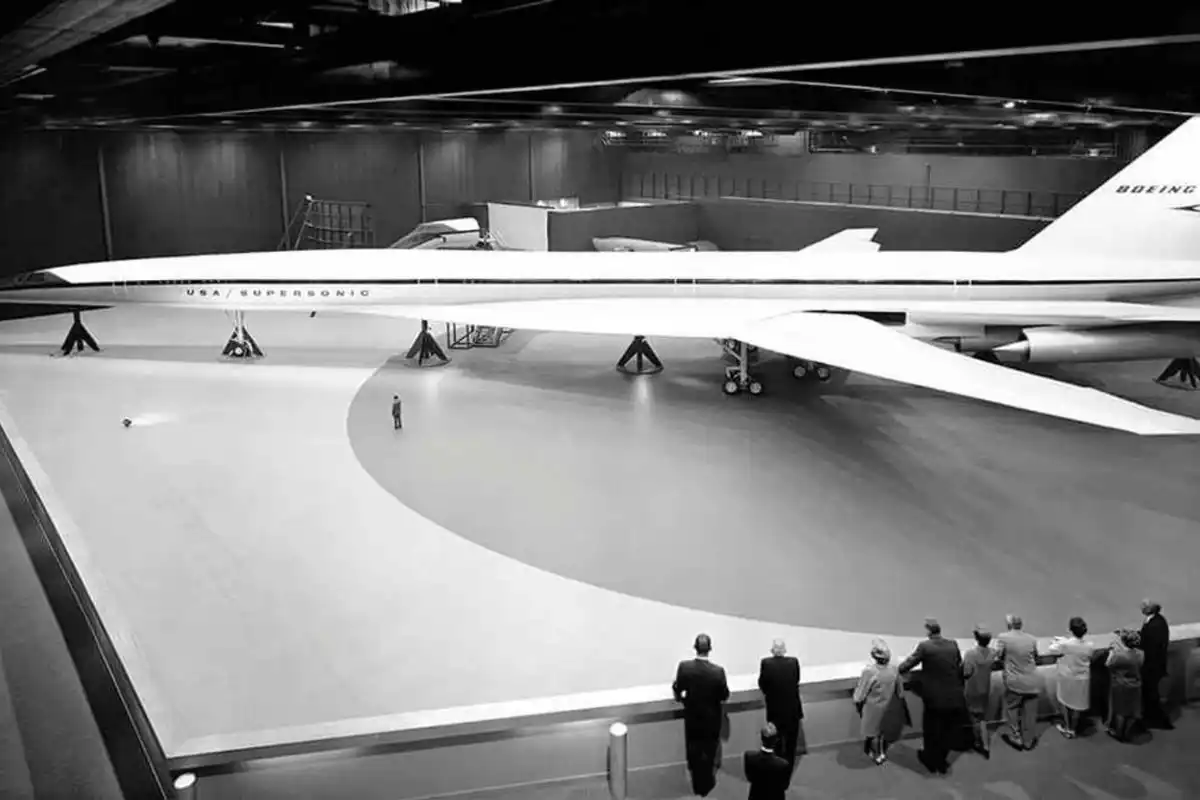
At approximately 318 feet in length, the aircraft would have exceeded the size of many contemporary airliners and even rivaled the dimensions of the Boeing 747. It featured a wingspan of roughly 174 feet and retained capacity for up to 300 passengers.
A particularly striking feature was the aircraft’s double-articulated droop nose. Like Concorde, the long pointed nose restricted pilot visibility during takeoff and landing. Boeing’s solution involved a sophisticated two-stage folding mechanism that lowered the nose to improve runway visibility.
The redesign solved certain problems but failed to rescue the project from escalating costs and technical uncertainty.
The Powerful Engines That Consumed Fuel At Extraordinary Rates
Powering the Boeing 2707 required engines unlike anything seen in commercial aviation.
The aircraft was expected to use four General Electric GE4 turbojet engines, each capable of producing approximately 68,600 pounds of thrust with afterburners engaged.
These engines traced their lineage to the canceled North American XB-70 Valkyrie strategic bomber program. Their immense power was essential for achieving the desired speeds, but that capability came at a cost.
Fuel consumption was staggering.
Operating an aircraft carrying hundreds of passengers at nearly three times the speed of sound demanded enormous quantities of fuel. Even before environmental concerns gained national attention, airlines were beginning to question whether such economics could ever become commercially sustainable.
As development continued, the financial assumptions underlying the entire SST concept became increasingly fragile.
The aircraft was becoming larger, heavier, more complex, and more expensive while offering diminishing confidence in profitability.
The Sonic Boom Problem No Engineer Could Eliminate
While structural challenges threatened the Boeing 2707, another obstacle proved even more significant.
The sonic boom.
Whenever an aircraft exceeds the speed of sound, pressure waves combine into a powerful shockwave that reaches the ground as an explosive boom. The larger and heavier the aircraft, the stronger the resulting disturbance.
This posed a serious problem for Boeing’s giant SST.
Because the 2707 would have been substantially larger and heavier than Concorde, analysts projected significantly stronger sonic booms. Researchers feared the pressure waves could break windows, crack plaster, disturb communities, and generate widespread public opposition.
These concerns were not theoretical.
Supersonic testing over Oklahoma City had already produced thousands of complaints. Residents reported shattered glass, damaged property, and repeated disturbances. Public reaction demonstrated that large-scale overland supersonic operations could become politically unacceptable.
No aerodynamic refinement could eliminate the fundamental physics.
The aircraft’s size guaranteed an exceptionally powerful sonic signature.
The Boeing 2707 was colliding with a reality that no amount of engineering could fully overcome.
Environmental Opposition Gains Momentum
By the late 1960s, environmental awareness was growing rapidly across the United States.
Concerns surrounding noise pollution, fuel consumption, atmospheric emissions, and community disruption transformed the Boeing 2707 into a target for activists and researchers.
Critics questioned whether taxpayers should continue funding a project that primarily benefited affluent travelers while potentially imposing environmental costs on millions of citizens.
At the same time, cost estimates continued rising.
What had begun as a prestigious national technology program increasingly resembled a financial black hole. Technical revisions, manufacturing challenges, engine development, and certification requirements pushed projected expenditures higher year after year.
Political support began to erode.
Members of Congress faced mounting pressure from constituents, environmental groups, economists, and budget watchdogs.
The question was no longer whether America could build the aircraft.
The question became whether it should.
Congress Ends The Dream In 1971
The decisive moment arrived in 1971.
After years of debate, Congress voted to terminate federal funding for the Supersonic Transport Program.
The decision effectively ended the Boeing 2707.
Despite billions of dollars invested in research, engineering studies, wind tunnel testing, and development work, no flying prototype was completed. The world’s most ambitious passenger aircraft remained confined to drawings, scale models, and engineering reports.
For Boeing, the cancellation represented one of the most significant setbacks in corporate history.
For American aviation, it marked the end of an era characterized by faith that faster always meant better.
The age of the supersonic airliner had suffered a devastating blow before it truly began.
How The Boeing 747 Became The Real Winner
Ironically, the failure of the Boeing 2707 helped pave the way for one of aviation’s greatest successes.
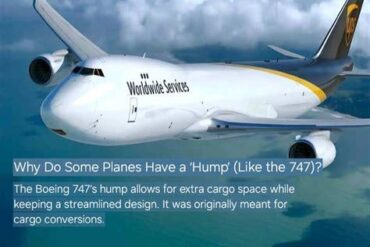
The Boeing 747.
While SST advocates focused on speed, airlines increasingly recognized the economic advantages of capacity, efficiency, and affordability. The 747 allowed carriers to transport hundreds of passengers simultaneously, dramatically lowering per-seat operating costs.
As ticket prices fell, international travel became accessible to millions who previously could not afford it.
The result was a transformation of global tourism, commerce, and cultural exchange.
Instead of shrinking travel times through extreme speed, the aviation industry expanded mobility through scale and efficiency.
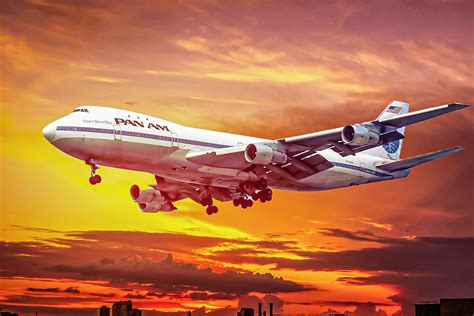
The Boeing 747 became the defining commercial aircraft of its generation, earning the nickname Queen of the Skies and serving airlines around the world for decades.
The future turned out to belong not to supersonic luxury but to mass accessibility.
The Legacy Of The Boeing 2707 And The Return Of Supersonic Dreams
Although the Boeing 2707 never flew, its legacy continues to influence modern aerospace development.
Many of the challenges identified during the program remain central to contemporary supersonic research. Engineers still confront issues involving sonic booms, fuel efficiency, thermal management, environmental impact, and commercial viability.
However, technology has evolved considerably.
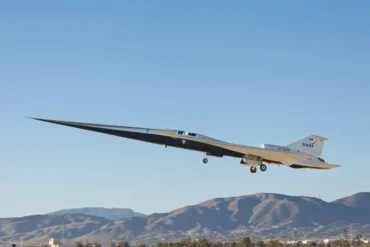
NASA and Lockheed Martin’s X-59 QueSST program seeks to address the sonic boom challenge through innovative aerodynamic shaping. Instead of producing a disruptive boom, the aircraft is designed to generate a much quieter sonic thump.
The objective is ambitious: gather data that could eventually support regulatory changes permitting overland supersonic flight.
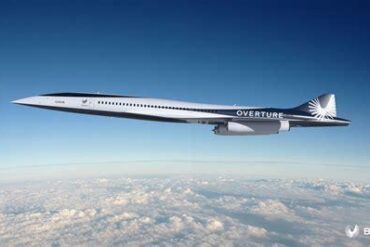
Private industry is also reentering the field. Boom Supersonic is pursuing a smaller, more practical aircraft designed for transoceanic routes. Rather than chasing Mach 3 speeds and hundreds of passengers, modern developers are emphasizing efficiency, manageable operating costs, and realistic market demand.
These projects reflect lessons learned from the Boeing 2707.
A Supersonic Giant That Never Left The Ground
The Boeing 2707 occupies a unique place in aviation history. It was simultaneously a symbol of technological confidence, geopolitical competition, engineering ambition, and economic miscalculation. Few aircraft have generated such excitement while remaining entirely earthbound.
Its creators imagined a world where massive Mach 3 airliners connected continents in record time. Instead, they discovered the unforgiving realities imposed by weight, heat, fuel consumption, noise, cost, and public acceptance.
The aircraft’s cancellation did not merely end a government program. It reshaped the priorities of an entire industry. Airlines, manufacturers, and governments gradually concluded that efficiency delivered greater value than raw speed.
Yet the dream never completely disappeared.
Every new supersonic project, from Concorde’s successors to NASA’s experimental X-59, traces part of its lineage back to the Boeing 2707. The aircraft never carried a passenger, but its story continues to shape the future of high-speed flight, reminding engineers that innovation succeeds not only when technology advances, but when physics, economics, and society move in the same direction.