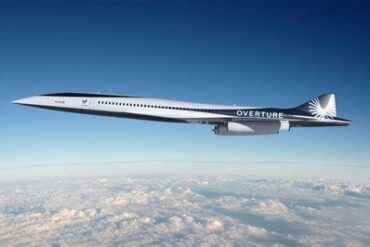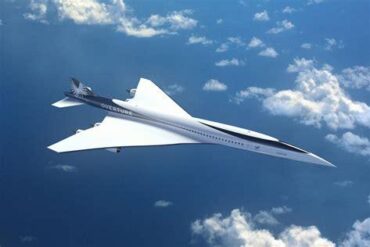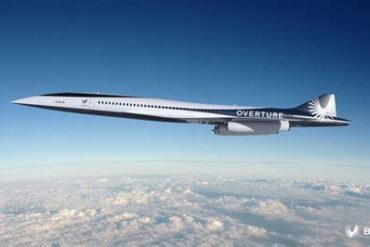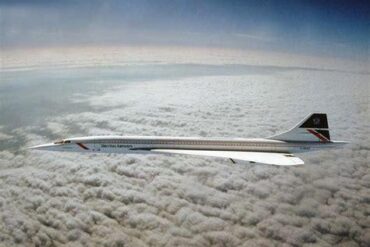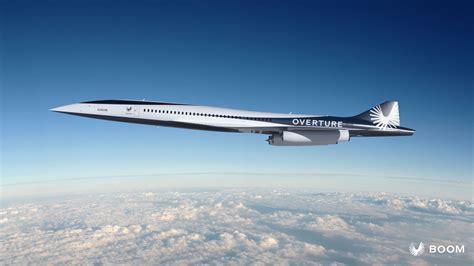
Supersonic passenger flight once felt like the inevitable future of aviation. In 1976, Concorde sliced across the Atlantic at more than twice the speed of sound, turning New York–London into a four-hour sprint and redefining what was technically possible in civil aviation. Then, in 2003, it vanished from the skies. Since then, commercial air travel has been trapped below Mach 1, constrained by economics, environmental pressures, and the physics of fuel burn. Now, Boom Supersonic’s Overture promises a return to that rarified realm. The question is direct and unavoidable: Will the Boom Overture truly fly as fast as Concorde?
The short answer is no—at least not on paper. Concorde cruised at Mach 2.02 to Mach 2.04 in regular service. Boom Overture is targeting a cruise speed of Mach 1.7 over water and up to Mach 1.3 over land using its proposed “Boomless Cruise” technology. That gap may look small in numerical terms, but in supersonic aerodynamics, the difference between Mach 1.7 and Mach 2 is not cosmetic. It represents a substantial change in thermal stress, engine performance, and fuel efficiency curves.
Understanding whether that difference matters requires stepping into the strange physics of supersonic flight itself.
The Physics Behind Mach 2: Why Concorde Was So Fast
The so-called “sound barrier” was never a literal wall. It was a regime shift. As aircraft approach Mach 1, shockwaves form across wings and fuselage surfaces. Airflow behaves differently. Drag spikes. Structural heating increases. Control surfaces must adapt to entirely new aerodynamic realities. Breaking through that regime demands radical design solutions.
Concorde embraced those demands unapologetically. Its slender fuselage minimized wave drag. Its iconic ogival delta wing provided lift efficiency at high speeds while maintaining manageable low-speed handling. Most critically, it used four Rolls-Royce/Snecma Olympus 593 turbojets, engines capable of sustaining supersonic cruise through a combination of afterburners during acceleration and true supercruise once at altitude.
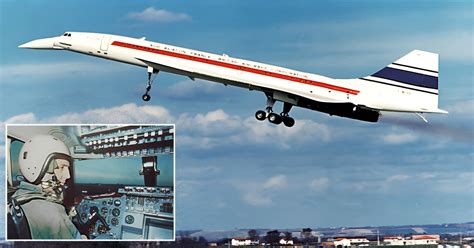
At cruise altitude—often above 60,000 feet—Concorde’s aluminum skin heated to around 127°C due to air friction. The aircraft literally expanded several inches in flight. Its systems were engineered to tolerate sustained Mach 2 operations. That speed was not marketing bravado; it was the core of its design philosophy.
Mach 2 offered a practical benefit beyond prestige. Flying well beyond the transonic drag rise meant Concorde could operate in a more aerodynamically stable regime, reducing fuel burn per mile relative to operating closer to Mach 1. The paradox of supersonic flight is that flying slightly faster can sometimes be more efficient than hovering near the sound barrier, where drag peaks.
Boom Overture’s planned Mach 1.7 cruise therefore sits in a different aerodynamic neighborhood.
Boom Overture’s Target Speed: Why Mach 1.7 Matters
Boom Supersonic has publicly stated that Overture will cruise at Mach 1.7 over water, roughly 1,300 miles per hour. That makes it dramatically faster than today’s subsonic widebody aircraft, which cruise around Mach 0.85. A New York–London flight could drop from roughly seven hours to about four and a half.
But Mach 1.7 is not Mach 2.
Why the reduction? Because the world Overture is entering is not the world Concorde was designed for. Concorde emerged in the 1960s, when environmental regulation was looser, jet fuel was cheap, and national prestige justified enormous expense. Overture is being built in a climate defined by carbon accounting, noise restrictions, and operating economics that are unforgiving.
Designing for Mach 2 today would mean higher structural heating, heavier materials, more powerful engines, and more fuel burn. Every increment in speed increases stress on the airframe and engines. By targeting Mach 1.7, Boom aims to strike a balance between performance and practicality. It is an optimization problem, not a nostalgia project.
The difference between Mach 1.7 and Mach 2 translates to about 15–20% less speed, but potentially significant gains in fuel efficiency, reduced thermal loads, and more manageable certification pathways.
The Symphony Engine: The Real Deciding Factor
Speed in aviation is never just about the airframe. It is about propulsion. Concorde’s Olympus engines were purpose-built powerplants derived from military turbojet architecture. They were loud, fuel-hungry, and optimized for thrust at high altitude.
Boom’s answer is the Symphony engine, a medium-bypass turbofan promising 40,000 pounds of thrust and supercruise capability without afterburners. Unlike Concorde’s pure turbojets, Symphony aims for a compromise between efficiency and supersonic capability.
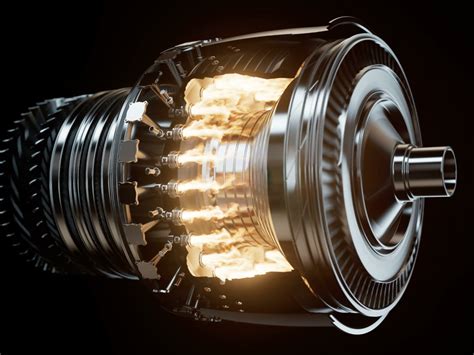
This is a daring move. Modern commercial aviation has been dominated by high-bypass turbofans for decades because they are vastly more fuel-efficient and quieter. But high-bypass designs are poorly suited for sustained supersonic speeds due to drag and intake complexity. Boom’s medium-bypass approach attempts to thread the needle: efficient enough to control ticket prices, powerful enough to sustain Mach 1.7.
The engine also promises compatibility with 100% Sustainable Aviation Fuel (SAF), aligning with contemporary environmental expectations. That matters because today’s regulatory landscape is far less forgiving than the 1970s.
Whether Overture can approach Concorde’s raw speed potential depends almost entirely on Symphony’s performance envelope. Engine development is historically the most difficult component of aircraft programs. Even established aerospace giants struggle with clean-sheet engine design. For an upstart company to succeed simultaneously in airframe and engine development is ambitious in the extreme.
Ambitious projects sometimes rewrite history. They also sometimes collapse under thermodynamics.
Boomless Cruise and the Sonic Boom Constraint
Concorde’s Mach 2 capability came with a political cost: sonic booms. Every supersonic aircraft produces a shockwave cone. On the ground, that manifests as a sharp double boom. The public did not love it. Governments responded by banning commercial supersonic flight over land.
Boom proposes a partial workaround called Boomless Cruise, targeting Mach 1.3 without an audible boom reaching the ground. The concept leverages atmospheric refraction—essentially allowing shockwaves to bend upward at certain altitudes and speeds. In theory, this could allow supersonic travel over land without the classic disruptive boom.
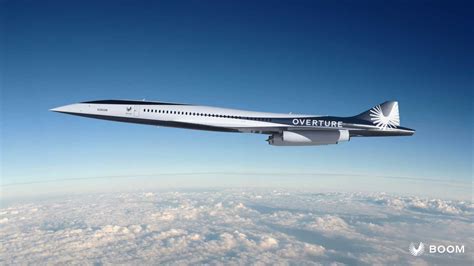
If this works, it changes route economics more than raw Mach number ever could. Concorde was largely confined to overwater routes such as the North Atlantic. Overture, if allowed to operate supersonically across continental interiors, would have access to far more commercially viable corridors.
Notice what this implies: speed alone is not the decisive metric. Operational flexibility may matter more than an extra 0.3 Mach.
Operational Economics: The Real Battlefield
Concorde was technically brilliant but economically fragile. Its fuel burn per seat was immense. Oil crises in the 1970s reshaped airline priorities. Environmental fears about high-altitude emissions lingered. Only 14 Concordes entered sustained commercial service.
By the 1980s, British Airways and Air France found profitability by repositioning Concorde as an ultra-premium experience. Ticket prices aligned with international first class. It was less mass transport and more airborne exclusivity.
Boom’s strategy diverges sharply. The company promises ticket prices closer to business class fares on subsonic aircraft. That is a radically different market positioning. To achieve it, Overture must deliver lower fuel burn per passenger than Concorde, improved maintenance cycles, and higher seat density.
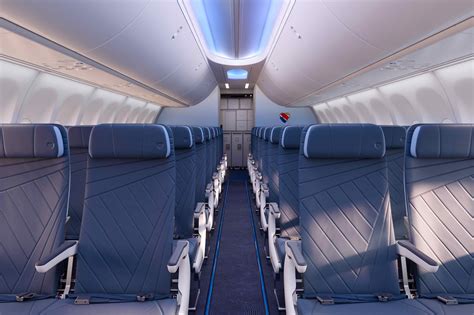
Here lies the trade-off: Concorde prioritized speed above all. Overture prioritizes viability. Mach 1.7 represents a compromise between aspiration and accounting.
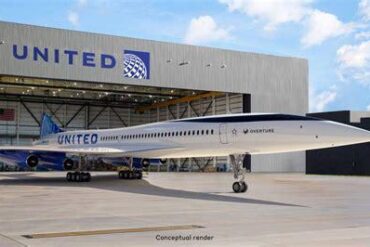
Airlines have expressed interest. American Airlines, United Airlines, and Japan Airlines have placed firm orders and options totaling dozens of aircraft. That indicates confidence in the concept, though orders are conditional on performance benchmarks being met.
Can Overture Ever Match Concorde’s Top Speed?
Technically, designing for Mach 2 today is possible. Aerospace engineering has not regressed. Materials science has advanced dramatically. Computational fluid dynamics offers modeling capabilities unimaginable in the 1960s.
But technical possibility does not equal commercial strategy.
Overture is not being built to match Concorde’s top speed. It is being built to revive supersonic travel in a sustainable and economically repeatable way. That is a different objective function.
Mach 2 requires more fuel, greater structural heating, and heavier engineering margins. Mach 1.7 reduces those burdens while preserving much of the time-saving advantage. The incremental travel-time difference between Mach 1.7 and Mach 2 on a transatlantic route is measured in minutes, not hours. From a passenger’s perspective, the distinction may be psychologically large but practically small.
In pure velocity terms, Concorde remains faster. In strategic alignment with modern constraints, Overture may be wiser.
The Broader Context: Why Speed Alone Is Not the Future
Supersonic travel exists at the intersection of physics, economics, and public acceptance. Concorde emerged in an era of technological optimism. Overture emerges in an era of environmental scrutiny.
If Overture succeeds, it will not be because it outruns Concorde. It will succeed because it harmonizes speed with sustainability, regulatory approval, and airline profitability. Its Symphony engine must deliver promised thrust without excessive fuel burn. Boomless Cruise must withstand real-world atmospheric variability. Manufacturing timelines must hold.
The return of commercial supersonic flight depends less on reclaiming Mach 2 glory and more on solving a multidimensional systems problem.
Concorde proved that Mach 2 passenger flight is possible. Boom Overture aims to prove that supersonic passenger flight can be practical.
The difference is subtle but profound.
In the end, the claim that Boom Overture will fly “as fast as Concorde” is not accurate if measured strictly by maximum cruise speed. Concorde retains the crown at Mach 2.02. Overture’s target Mach 1.7 places it in a slightly slower bracket. Yet the more meaningful comparison is not absolute speed, but adaptability to today’s aviation ecosystem.
Supersonic flight is not merely about outrunning the past. It is about reconciling ambition with constraints. If Boom achieves that balance, Mach 1.7 may prove more revolutionary than Mach 2 ever was.