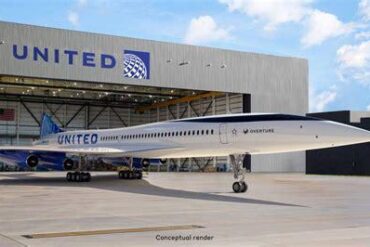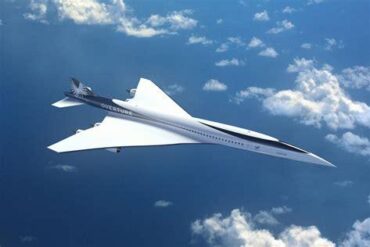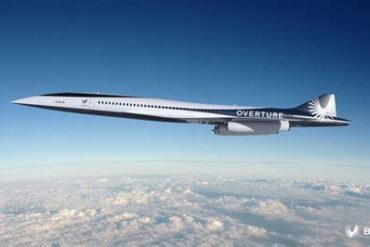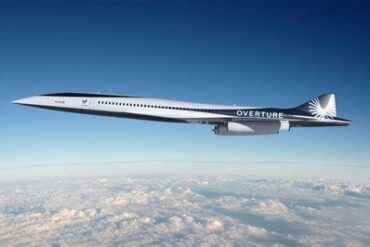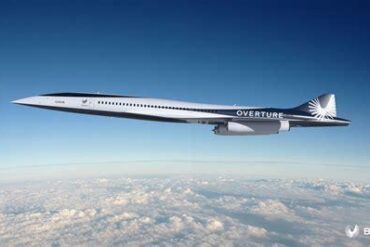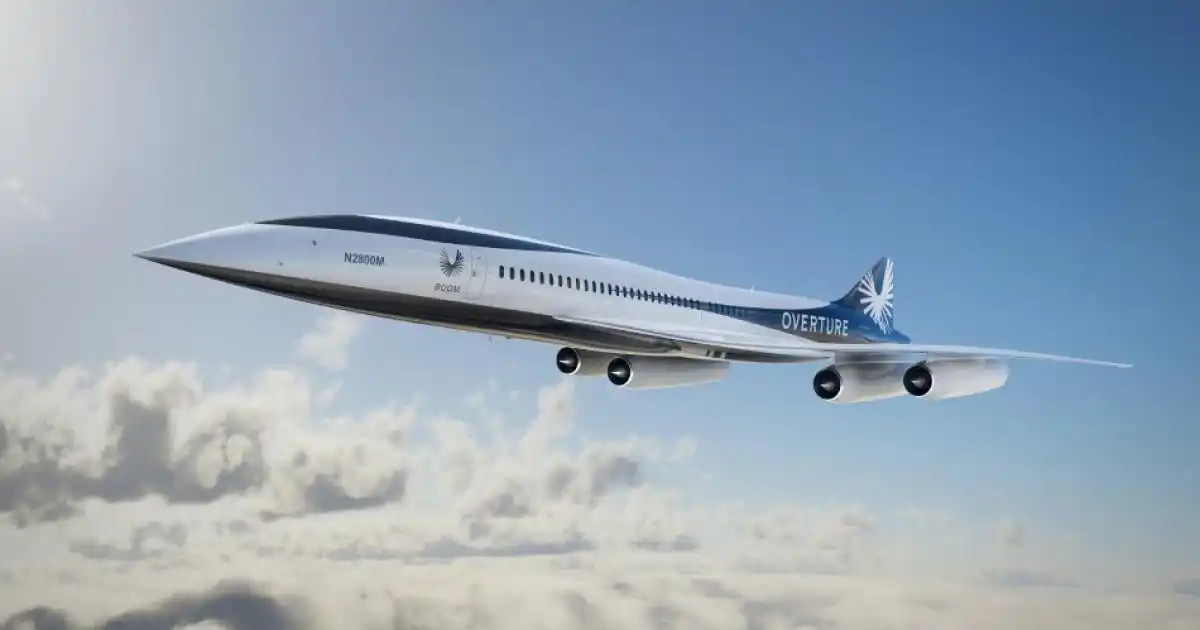
The Boom Overture is not merely a reimagining of supersonic flight — it is a declaration of ambition, a technological resurgence set to redefine long-haul aviation. Developed by Boom Technology in the United States, the Overture aims to bring back the elegance and speed of supersonic travel last seen in the era of the Concorde, but with contemporary engineering, environmental mindfulness, and commercial viability. With a planned debut in 2029, this aircraft is poised to be the most transformative leap in civil aviation in the 21st century.
A Supersonic Vision with Modern Precision
At its core, the Boom Overture is an aircraft engineered for speed, efficiency, and accessibility. Capable of cruising at Mach 1.7 — approximately 1,122 mph (1,806 km/h) — it promises to slash intercontinental travel times by half. This speed is not a hypothetical: it is a meticulously calculated performance benchmark, made possible by over a decade of aerodynamic refinement and engine innovation.
The aircraft will carry between 64 to 80 passengers, depending on interior configuration, and has a projected range of 4,250 nautical miles (7,870 km). These figures establish Overture as not just a technological marvel, but a practical, revenue-optimized platform designed to connect major global cities through 500 viable supersonic routes.
Delta Wings and Composite Strength
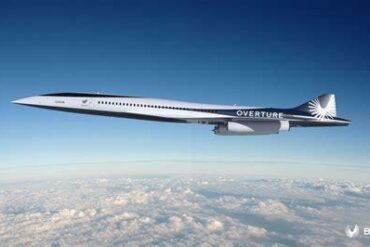
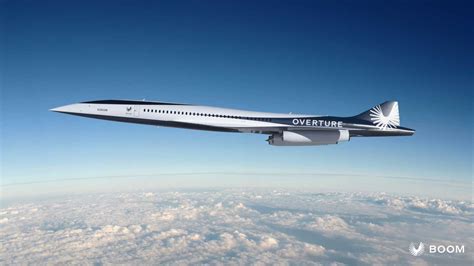
The design philosophy of the Boom Overture is rooted in aerodynamic efficiency and structural resilience. Drawing inspiration from the legendary Concorde, the aircraft features a tailed delta wing configuration. However, unlike its predecessor, Overture incorporates next-generation composite materials in the airframe, enabling a lighter structure with higher strength-to-weight ratios.
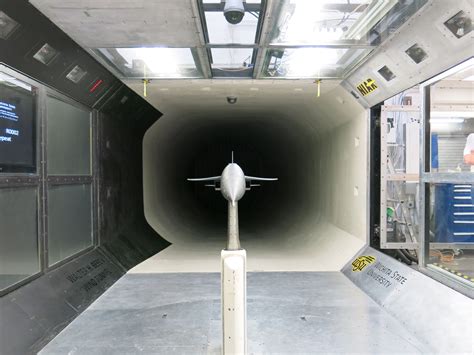
The result is a reduced drag profile at supersonic speeds and improved fuel efficiency. The aircraft’s gull-wing form, slender fuselage, and unique engine nacelle placements have been optimized through over 1,000 wind tunnel simulations, ensuring both low supersonic wave drag and operational stability.
From Trijet to Quadjet: The Engine Revolution
Boom initially envisioned a trijet design but transitioned to a quadjet configuration following comprehensive design and performance evaluations. The final design utilizes four dry turbofan engines, avoiding afterburners to comply with Stage 4 airport noise regulations and lower fuel burn.
Each engine will deliver up to 35,000 pounds of thrust, developed under Boom’s proprietary Symphony Engine Program. This engine is the result of a strategic collaboration between:
- Florida Turbine Technologies (FTT) – for core engine design
- GE Additive – for component production using advanced 3D printing
- StandardAero – for ongoing engine maintenance and support
This independence from legacy engine manufacturers such as Rolls-Royce and Pratt & Whitney has enabled Boom to tailor its propulsion system exclusively for sustained supercruise at Mach 1.7.
A Market-Driven Approach to Supersonic Revival
Boom has taken a data-driven approach to commercial viability. With ticket pricing aimed at around $5,000 for a round-trip between New York and London, Overture offers fares comparable to business class on subsonic aircraft — a massive leap from the Concorde’s inflation-adjusted $20,000.
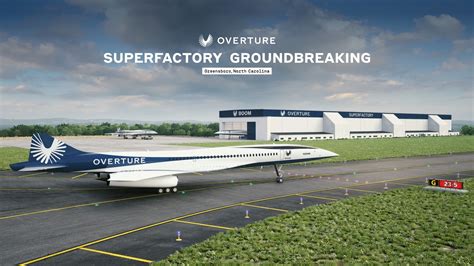
Boom estimates a potential market for 1,000–2,000 aircraft over the next two decades. The company’s production site — the Overture Superfactory in Greensboro, North Carolina — is planned to manufacture up to 100 aircraft per year, signaling strong confidence in the demand for high-speed, high-efficiency air travel.
Confirmed orders and options include:
- United Airlines: 15 orders + 35 options
- American Airlines: 20 orders + 40 options
- Japan Airlines: Up to 20 preorders
Time Compression: A Game-Changer for Global Travel
With Boom Overture, intercontinental flights are set to experience unprecedented time compression:
- Newark to London: 3 hours 30 minutes
- Newark to Frankfurt: 4 hours
- San Francisco to Tokyo: 6 hours (with a transpacific refueling stop)
These shortened durations are more than convenience—they redefine business logistics, emergency travel, and high-frequency international commuting.
The anticipated lie-flat first-class configurations for longer-haul routes like Los Angeles–Sydney introduce the possibility of luxury-level comfort married to previously unattainable speed.
Sonic Booms and Regulatory Headwinds
One of the most pressing challenges facing supersonic aviation is regulatory compliance, especially concerning sonic booms. The FAA and ICAO have historically banned supersonic flight over land due to the disruptive noise levels. However, initiatives such as NASA’s Low Boom Flight Demonstrator are paving the way for future legislation that could permit quiet supersonic overland travel.
Boom Overture is actively contributing to this effort by integrating predictive sonic boom software, helping optimize flight paths to minimize boom impact on populated areas.
Environmental Considerations and Sustainable Aviation Fuel
Boom Technology acknowledges that supersonic flight demands more fuel, particularly due to increased drag at higher speeds. To address this, the company mandates the use of Sustainable Aviation Fuel (SAF) or carbon removal credits for all Overture operations.
While SAF availability remains limited and true net-zero flight remains aspirational, Boom positions itself at the forefront of environmentally conscious innovation. The aircraft’s composite airframe, dry engines, and high-efficiency aerodynamics contribute to a net fuel burn lower than Concorde’s, even if not yet competitive with subsonic aircraft.
Development Timeline and Future Milestones
The development journey of Boom Overture has evolved over a decade:
- 2016–2019: Initial concept and trijet configuration
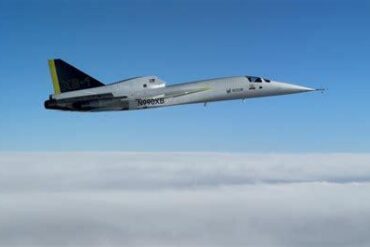
- 2020: XB-1 demonstrator revealed
- 2022: Redesign unveiled at Farnborough Airshow
- 2024: Initial engine development underway
- 2026: First Overture flight (planned)
- 2029: Type certification and entry into service
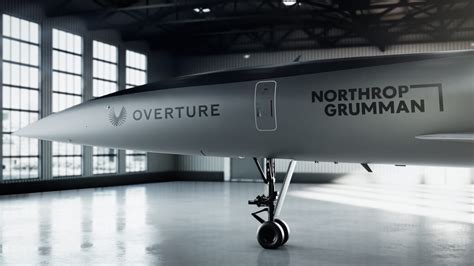
The partnership with Northrop Grumman to develop a “special mission” variant for U.S. government use and its selection by the U.S. Air Force’s AFWERX program further underline the aircraft’s versatility and dual-use potential.
Legacy, Limitations, and the Road Ahead
Despite the optimism, several limitations linger. The Overture’s lower passenger capacity compared to Concorde and high takeoff thrust requirement may impose operational constraints. Additionally, as engine testing and SAF scaling remain in development, the aircraft’s performance is still theoretical until the first flight confirms it.
Nevertheless, Boom’s commitment to open innovation, strategic partnerships, and an iterative design philosophy suggest a credible path forward. The Boom Overture is not just a revival of supersonic flight — it is an evolution of it.
FAQs
Will the Boom Overture be allowed to fly over land at supersonic speeds?
Currently, FAA regulations prohibit supersonic flight over land due to noise concerns. However, ongoing tests with NASA’s low-boom demonstrator and international regulatory discussions may open possibilities in the future. For now, Overture flights will prioritize transoceanic routes.
What makes the Boom Overture different from the Concorde?
Unlike the Concorde, the Overture will use non-afterburning engines, reducing both noise and fuel consumption. It will be built with composite materials, offer modern avionics, and target business-class pricing for broader market access.
How does Boom plan to address environmental concerns?
Boom mandates the use of Sustainable Aviation Fuel (SAF) and carbon removal credits. While SAF technology and availability remain nascent, Boom is working with industry leaders to ensure Overture meets future sustainability benchmarks.