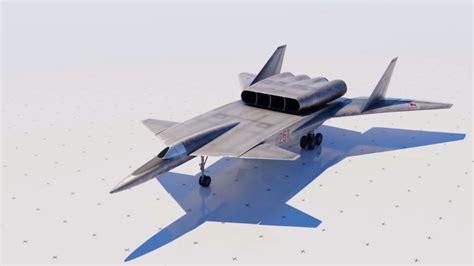
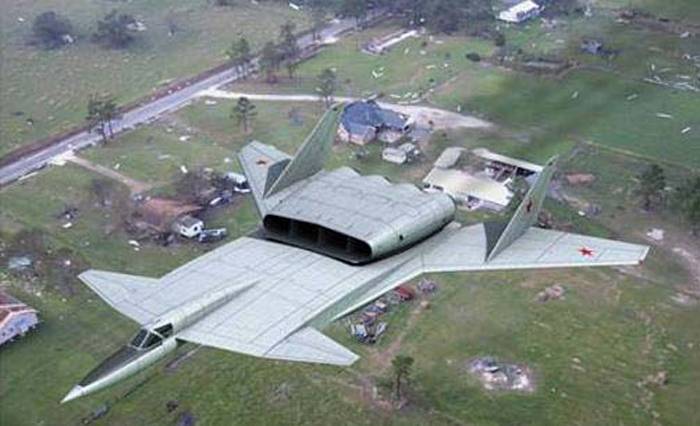
The Myasishchev M-25, also known as the Hell Reaper, stands as one of the most ambitious and unconventional aircraft designs to emerge from the Cold War. Developed between 1969 and 1972 by the Myasishchev Aircraft Construction Bureau in collaboration with the Institute of Theoretical and Applied Mechanics under Vladimir Vasilyevich Struminsky, the M-25 sought to weaponize the destructive potential of sonic booms—a radical departure from traditional air combat strategies.
Origins of the M-25 Project
The concept for the M-25 can be traced back to the late 1960s, when the Soviet military began exploring the possibility of using sonic booms as a weapon. This idea was sparked by a series of tests conducted with the MiG-21 S Fishbed over proving grounds in southwestern Russia. In 1968, these supersonic flight experiments demonstrated the potential for shockwaves to generate destructive ground effects, albeit on a modest scale. The tests confirmed that a low-flying supersonic aircraft could generate enough overpressure to shatter glass and potentially inflict damage on structures. However, the MiG-21, with its sleek aerodynamic form, produced only modest shockwaves, leading to the realization that a dedicated, less aerodynamic airframe would be required to fully exploit this concept.
In 1969, Struminsky, then director of the Institute of Theoretical and Applied Mechanics, presented a report to the Ministry of Aviation Industry. This report outlined the feasibility of creating a specialized ground-attack aircraft capable of using focused shockwaves as a primary weapon. This ambitious proposal was officially designated as “Theme 25” and quickly gained traction, leading to the collaboration between Struminsky’s team and the newly reformed Myasishchev Design Bureau in Moscow.

The Engineering Challenges of Sonic Boom Warfare
The fundamental engineering challenge of the M-25 project lay in generating a sufficiently powerful shockwave to achieve battlefield utility. Unlike conventional bombers or fighters, which prioritize speed and maneuverability, the M-25 required a design optimized for intense, focused shockwaves. According to Struminsky’s research, the key to achieving this was a flat, angular fuselage capable of concentrating sonic energy. Early designs incorporated a sharp, rectangular fuselage with a prominent “ledge” extending from the underbelly. This ledge, intended to protrude during attack runs, would dramatically increase the aircraft’s drag, focusing the resulting shockwave and amplifying its destructive power.
However, creating such a uniquely unaerodynamic structure capable of supersonic flight presented significant technical hurdles. To maintain stability and structural integrity at extreme speeds, the M-25 required colossal thrust and robust airframe materials. At the time, the most promising engine option was the Lyulka AL-21F, which, despite its power, could only sustain speeds up to Mach 1.15—far short of the Mach 1.4 required for the M-25’s envisioned shockwave effects. Some engineers proposed integrating rocket boosters for the critical moments of attack, but this concept faced insurmountable technical and logistical barriers.
The Human Factor – Myasishchev and Struminsky
The collaboration between Vladimir Myasishchev and Struminsky was a critical element of the M-25 project’s early momentum. Myasishchev, a legendary figure in Soviet aviation, had previously clashed with Struminsky, who had been partially responsible for the dissolution of his original design bureau in 1960. Despite this fraught history, the two engineers managed to put aside past conflicts in favor of advancing this groundbreaking project. According to memoirs from Stanislav Gavrilovich Smirnov, a senior engineer at Myasishchev’s bureau, their partnership was characterized by intense scientific debate and mutual respect, ultimately producing a series of innovative design proposals.

Design Proposals and Wind Tunnel Testing
By 1970, the M-25 team had developed several potential configurations for the aircraft. These included variations in fuselage shape, wing configuration (ranging from delta to conventional setups), and engine placement (including options within the fuselage, under the wings, or between the tail fins). The most advanced design was a 110-ton aircraft with a 39-meter fuselage and a 25-meter wingspan, optimized for maximum shockwave production. However, without a suitable engine, these designs remained largely theoretical.
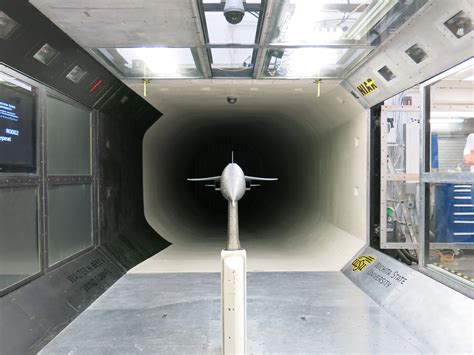
Wind tunnel tests conducted at the Central Aerohydrodynamic Institute (TsAGI) confirmed the potential for significant shockwave intensification using the proposed ledge structure, but also highlighted the extreme structural stresses such designs would encounter during actual flight. Despite these promising results, the project struggled to secure the necessary political and financial backing as Soviet bureaucrats grew increasingly skeptical of the M-25’s practical combat potential.
The Fall of the M-25 Project
Ultimately, the M-25 project was terminated in 1972, a casualty of political infighting and shifting military priorities. The Soviet government, concerned about the cost and questionable strategic value of the aircraft, withdrew support. According to Smirnov, the project’s demise was also hastened by internal power struggles and bureaucratic inertia, as well as a growing awareness of the physical limitations and unpredictable nature of focused shockwave attacks.
Legacy and Lessons Learned
Though it never flew, the M-25 remains a fascinating chapter in aviation history, a testament to the Soviet Union’s relentless pursuit of unconventional military technology. While the Hell Reaper may never have taken to the skies, its legacy lives on in the lessons learned about high-speed aerodynamics, structural engineering, and the limitations of theoretical weapon concepts.
In the decades since, other nations have explored similar ideas, though none have fully embraced the concept of shockwave weaponry. The M-25’s story stands as a powerful reminder of the challenges faced by engineers and scientists working at the bleeding edge of military technology.