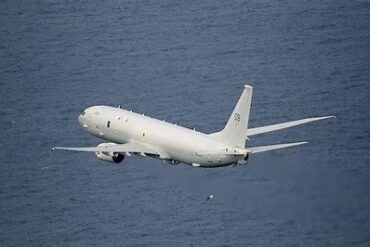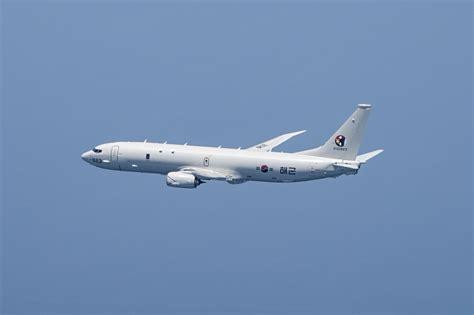
The Indo-Pacific maritime battlefield is undergoing a significant transformation as South Korea officially joins the elite club of nations operating the formidable P-8 Poseidon maritime patrol aircraft, designed to hunt, track, and neutralize enemy submarines. With the escalating security threats posed by North Korea’s submarine-launched ballistic missile (SLBM) programs and the growing presence of China’s PLA Navy in regional waters, Seoul’s induction of the P-8 Poseidon marks a critical step in fortifying its maritime defenses.
The Republic of Korea Navy (RoKN) declared on July 3, 2025, that all six of its newly acquired Boeing P-8 Poseidon aircraft have reached operational readiness. These cutting-edge “submarine hunters” will now undertake missions across the volatile waters of the Sea of Japan and the broader Indo-Pacific, a move that significantly enhances South Korea’s ability to counter stealthy subsurface threats.
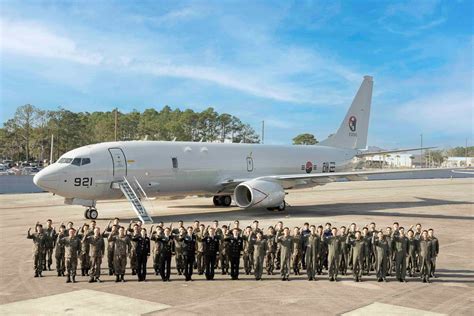
South Korea received all six of its P-8A Poseidons by June 2024, followed by extensive training and drills for pilots and maintenance crews. The aircraft, known for their versatility and advanced technological suite, will replace the aging P-3 Orions, a fleet that has struggled to keep pace with evolving submarine threats in the region.
P-8 Poseidon: The Indo-Pacific’s Most Feared Submarine Hunter
Developed by Boeing Defense, Space & Security, the P-8 Poseidon draws its lineage from the reliable Boeing 737-800 commercial airliner but has been extensively modified for military operations. The P-8A represents the pinnacle of anti-submarine warfare (ASW), anti-surface warfare (ASuW), maritime surveillance, and intelligence, surveillance, and reconnaissance (ISR) capabilities.
The aircraft boasts an operational range of approximately 7,500 kilometers, with a flight endurance of 10 hours, enabling extended patrols over contested regions like the South China Sea, the Taiwan Strait, and the East China Sea. Its onboard systems include:
- AN/APY-10 multi-mode radar with Synthetic Aperture Radar (SAR) and Inverse SAR (ISAR) for detecting surface vessels and submarines.
- High-resolution electro-optical (EO) and infrared (IR) sensors for all-weather surveillance.
- Electronic warfare systems and secure, real-time data links for integration with naval, aerial, and ground assets.
- A payload capacity exceeding 120 sonobuoys, essential for detecting submerged enemy submarines.
Perhaps the most significant advantage of the P-8 is its ability to conduct High-Altitude Anti-Submarine Warfare (HAAWC) operations. By deploying MK-54 lightweight torpedoes as glide bombs from altitudes up to 30,000 feet, the aircraft can engage submarines with precision while remaining outside the envelope of low-altitude threats.
South Korea’s Strategic Calculus: Eyes on Pyongyang and Beijing
Seoul’s acquisition of the P-8A is driven by both immediate and long-term security imperatives. North Korea’s advancing submarine capabilities, particularly its Sinpo-class submarines capable of launching SLBMs, pose an existential threat to South Korean and regional security. The P-8A’s advanced sensors, expansive coverage area, and rapid response ability are tailor-made for countering this threat.
Former South Korean Defense Minister Shin Won-sik underscored the aircraft’s significance, famously stating, “The P-8A Poseidon will turn the enemy’s submarine into a fish in a fishbowl. The sea will become a hell for enemy submarines.” This message reflects not just rhetoric, but a tangible enhancement of South Korea’s deterrence capabilities.
Beyond North Korea, China’s growing blue-water navy is a rising concern for Seoul. Beijing has dramatically expanded its fleet of nuclear-powered attack and ballistic missile submarines, with increasing patrols in the East China Sea, the Yellow Sea, and the South China Sea. The P-8A’s ability to detect, track, and if necessary, neutralize these subsurface threats provides a critical counterbalance to China’s ambitions.
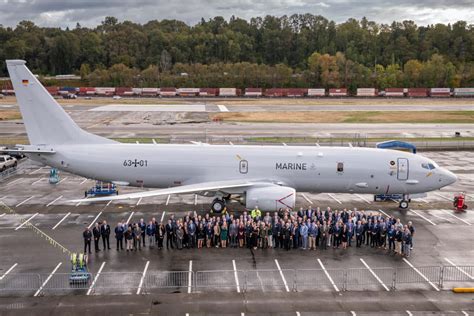
The P-8 is not just a weapon—it is a tool for enhancing regional cooperation. As an aircraft platform operated by the United States, Australia, New Zealand, India, and now South Korea, the P-8 fosters unprecedented levels of interoperability among like-minded Indo-Pacific nations.
The P-8 Poseidon Network: A Growing Challenge for China
China has consistently expressed unease over the P-8’s growing footprint across the Indo-Pacific. The aircraft’s role in monitoring contested maritime territories, especially the South China Sea and Taiwan Strait, has led to tense standoffs. Chinese fighter jets have frequently conducted unsafe interceptions of US, Australian, and Indian P-8 aircraft, underscoring Beijing’s sensitivity to their presence.
In 2023, following a US Navy P-8A Poseidon patrol over the Taiwan Strait, China scrambled 26 combat aircraft, demonstrating its determination to challenge allied surveillance efforts. Nevertheless, these deployments continue, with the P-8 providing real-time ISR capabilities that are critical for maintaining regional situational awareness.
India’s P-8I aircraft have been pivotal in monitoring Chinese activities not only in the maritime domain but also along the disputed Himalayan border regions. During the 2020 Galwan Valley conflict and the 2017 Doklam standoff, Indian P-8Is were reportedly used for overland ISR missions, tracking Chinese troop movements with precision.
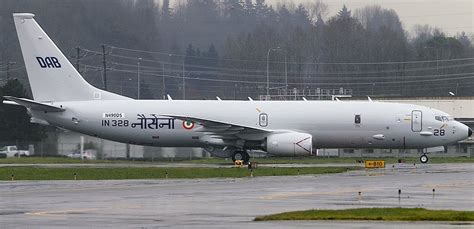
The collaborative nature of P-8 operations has been highlighted by joint exercises such as the 2023 Indo-Australian anti-submarine warfare drills. Royal Australian Air Force (RAAF) P-8s operated alongside Indian Navy P-8Is, exchanging vessel position data and integrating their operations under a broader Maritime Domain Awareness (MDA) framework.
Retired Vice Admiral Shekhar Sinha emphasized, “It becomes easier to conduct reconnaissance in a much larger area, even without each aircraft having to operate in two different areas. It gives force commanders a much larger picture in the MDA.”
This interoperability extends to broader defense initiatives such as QUAD and AUKUS, enabling real-time ISR data sharing and coordinated responses to maritime threats. In contrast, China, with its limited alliance network, faces increasing difficulties in countering this growing web of surveillance.
Future-Proofing Maritime Security: The P-8’s Long-Term Impact
The P-8 Poseidon is engineered for durability and adaptability, with an expected service life of 25 years or 25,000 flight hours. Its open mission architecture allows for upgrades in sensors, weapons, and electronic systems, ensuring the platform remains effective against evolving threats.
South Korea’s integration of the P-8 into its maritime defense strategy aligns with its broader goals of protecting sea lines of communication (SLOCs), safeguarding economic interests, and deterring regional adversaries. The aircraft’s ability to monitor critical choke points like the Strait of Malacca and conduct patrols over the Sea of Japan significantly bolsters Seoul’s security posture.
The inclusion of Link-16 data links and wideband satellite communications facilitates seamless integration with US Navy and allied forces, laying the groundwork for joint operations and coordinated regional responses.
As more Indo-Pacific nations acquire the P-8 Poseidon, a robust, interoperable surveillance network is emerging—one that China finds increasingly difficult to evade. With South Korea now fully operational with the P-8A, the waters of the Indo-Pacific are becoming a far more hostile environment for enemy submarines, just as envisioned by defense planners across the region.
The message is clear: for adversarial submarines lurking beneath the waves, the Indo-Pacific is rapidly transforming into “hell”—a domain where detection, tracking, and elimination are only a sonar ping away.