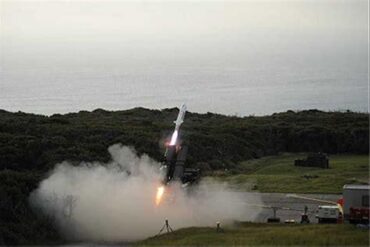
On July 28, 2025, South Korea officially announced the initial deployment of the Cheongung-II air defense system, a landmark development in the nation’s growing commitment to countering ballistic missile threats from North Korea. As Pyongyang accelerates its missile testing agenda, the Cheongung-II’s activation signals a critical evolution in South Korea’s integrated missile defense strategy, adding robust ballistic interception to what was once a purely aerial threat mitigation platform.
Originally developed as an enhancement of the Cheongung-I—also known as M-SAM Block 1—the Cheongung-II (or M-SAM Block 2) marks a significant leap in capability, fusing high-precision sensors, active radar guidance, and mobile modular deployment into one system. This upgraded air defense solution now offers interception capabilities for ballistic missiles at altitudes reaching 15 kilometers and within a range of up to 40 kilometers.
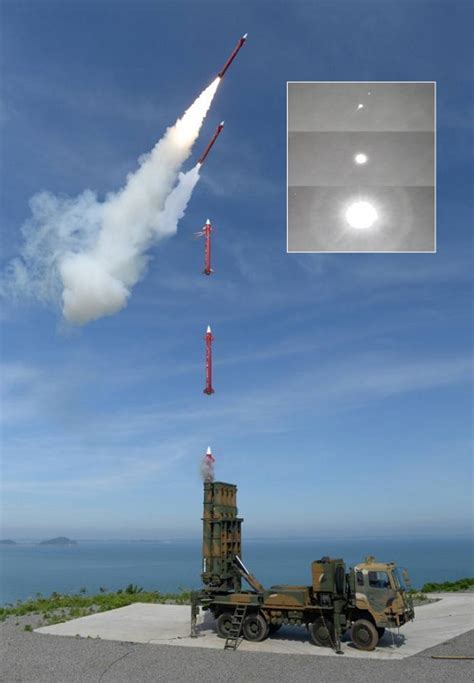
KAMD Integration and Strategic Role in National Defense
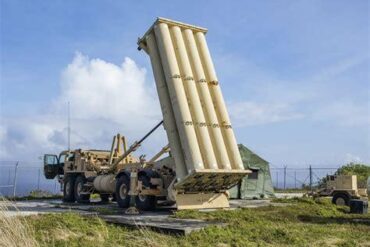
At the heart of South Korea’s missile defense lies the Korean Air and Missile Defense (KAMD) architecture—an intricate, multi-layered shield designed to safeguard the nation from growing regional threats. The Cheongung-II now serves as a core pillar of the KAMD, offering medium-range protection that complements long-range systems like the THAAD (Terminal High Altitude Area Defense) and shorter-range interceptors.
According to the Defense Acquisition Program Administration (DAPA), the system integrates a high-performance AESA (Active Electronically Scanned Array) multifunction radar that can detect, track, and engage multiple targets simultaneously. The radar’s low sidelobe emission makes it more resistant to electronic countermeasures, ensuring consistent detection and guidance even in hostile environments. This sensor guides the hit-to-kill interceptors, which are equipped with active radar seekers that independently home in on ballistic threats during the terminal phase.
The Cheongung-II’s role is not merely defensive—it also strengthens the strategic deterrence posture. By showcasing reliable, indigenous interception capability, South Korea sends a message to both adversaries and allies: its military forces are ready, autonomous, and technologically advanced.
Cheongung-III and the Next Evolution in Missile Interception
While the Cheongung-II is now entering service, its successor—the Cheongung-III (KM-SAM Block 3)—is poised to redefine medium-range missile defense even further. Drawing on design elements from Russia’s 9M96 missile (used in the S-400 system), and incorporating domestic advances from Hanwha Systems, Samsung Thales, and LIG Nex1, the Cheongung-III represents a synthesis of global and indigenous technologies.
With an interception ceiling of up to 30 kilometers, the Cheongung-III is capable of defending against more sophisticated and higher-altitude ballistic threats. It utilizes a solid-fueled interceptor guided by inertial navigation and active radar, reaching speeds of Mach 4.5, enabling it to engage multiple targets simultaneously at extreme velocity.
At the center of this system is an upgraded AESA radar, which provides 360-degree electronic beam steering, tracking up to 40 aerial and missile targets concurrently within a 100-kilometer range. This integrated sensor and guidance platform offers full interoperability with other KAMD assets and is slated for naval deployment via the Korean Vertical Launch System (K-VLS) on Daegu-class frigates, enhancing maritime defense.
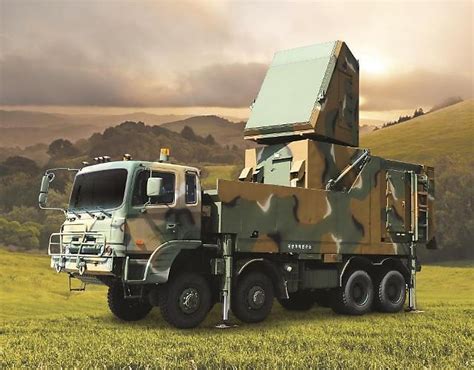
System Modularity and Tactical Deployment Flexibility
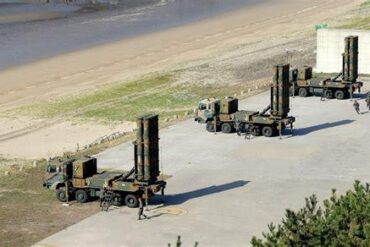
A critical advantage of both Cheongung-II and Cheongung-III is their modular, vehicle-based design. Each battery comprises 8-cell vertical launchers, a mobile command post, and the radar vehicle, allowing for rapid deployment and relocation. This architecture supports diversified defense layouts, from urban shielding to forward-operating base coverage.
Furthermore, the radar’s electronic counter-countermeasure (ECCM) capabilities enhance survivability against jamming attempts. This is increasingly crucial as North Korea develops more advanced decoys, chaff, and spoofing tactics.
From Domestic Defense to Global Export Success
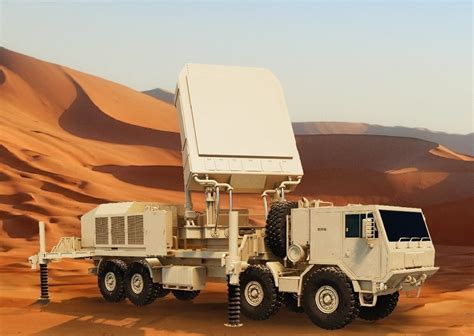
The Cheongung series is not only a strategic pillar for Seoul but also a symbol of South Korea’s ascent as a global defense exporter. The Cheongung-II gained international attention following a $3.5 billion contract with the United Arab Emirates in 2022, marking one of South Korea’s largest-ever defense deals. In 2024, Saudi Arabia signed a $3.2 billion contract for ten Cheongung-II units, solidifying Seoul’s standing in the Middle Eastern defense market.
These deals are not merely arms sales—they come with technology transfer and industrial cooperation agreements, bringing Hanwha Aerospace, LIG Nex1, and other Korean subcontractors into close collaboration with foreign counterparts. This bolsters South Korea’s domestic defense industry while promoting long-term strategic partnerships.
Modernization vs. Replacement: Strategic Cost Control
Rather than fully replacing the Cheongung-I with a different system, South Korea opted to modernize its proven infrastructure. This approach offers two-fold benefits: cost efficiency and accelerated fielding. With 645 billion won (approx. USD 467 million) invested in the Cheongung-II upgrade, Seoul ensured compatibility with existing systems, minimized training overhaul, and reduced logistical burdens.
This strategy is essential for maintaining readiness amid escalating North Korean missile launches, especially with Pyongyang increasingly showcasing maneuverable reentry vehicles (MaRVs), hypersonic glide vehicles (HGVs), and short-range ballistic missiles (SRBMs) optimized for evading older interception technologies.
Historical Context: From Cheongung-I to Cheongung-II
The Cheongung lineage traces back to the early 2010s, when South Korea fielded the Cheongung-I as a replacement for aging U.S.-supplied HAWK systems. Designed for aerial interception at 15–20 kilometers altitude, the Cheongung-I was the foundation for medium-range air defense.
However, as regional adversaries like North Korea adopted missile saturation and asymmetric warfare doctrines, it became evident that traditional anti-aircraft platforms were insufficient. The Cheongung-II, with hit-to-kill ballistic missile interception, rapid reaction time, and precision tracking, marked a vital transformation.
This shift was more than technological—it reflected Seoul’s policy pivot from reactive defense to proactive and layered deterrence.
Regional Implications and Forward Posture
The deployment of Cheongung-II arrives at a moment of heightened tensions on the Korean Peninsula. North Korea continues to defy international sanctions and diplomatic overtures, conducting frequent missile launches, including tests of short-range nuclear-capable systems aimed at South Korean and U.S. military targets.
The Cheongung-II helps neutralize these threats in the crucial mid-tier envelope, plugging gaps between long-range interceptors like THAAD and close-in systems like the K30 Biho or KM-SAM Block 1. Moreover, its interoperability with U.S. and allied assets supports greater coordination in regional missile defense strategies under frameworks such as U.S.-ROK Combined Forces Command and Japan-Korea trilateral security pacts.
Future Outlook: Toward a Fully Integrated National Shield
By 2027, South Korea expects full nationwide deployment of the Cheongung-II system. Parallel development of Cheongung-III will continue to elevate the national missile defense threshold, especially as regional threats grow more sophisticated.
In the long term, South Korea envisions a fully integrated, AI-supported missile defense network, leveraging machine learning for target prediction, automated fire control, and real-time battlefield data fusion across all services. Cheongung systems are a foundational step toward that vision.
The ongoing modernization of these systems also sets the stage for indigenous satellite-based early warning, further strengthening pre-launch and midcourse tracking capabilities. As Seoul continues to invest in space surveillance, maritime launch platforms, and quantum-resistant C4ISR, it positions itself not just as a regional power, but as a blueprint for small-to-mid-sized nations seeking defensive self-reliance without dependence on foreign air defense networks.
Conclusion: Technology, Strategy, and Sovereignty in Unison
The Cheongung-II’s deployment is more than a military event—it is a strategic signal that South Korea is building a defense ecosystem rooted in sovereignty, precision, and export potential. As Pyongyang advances its offensive capabilities, Seoul is responding not with reactionary measures, but with deliberate, scalable, and interoperable platforms that serve domestic, regional, and global security interests.
Through cutting-edge engineering, strategic export diplomacy, and a clear commitment to multi-layered national defense, the Cheongung series embodies South Korea’s ascent in the global defense landscape—not as a passive buyer of foreign systems, but as a confident builder of next-generation solutions.