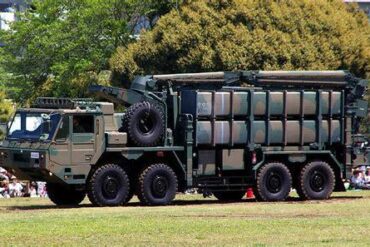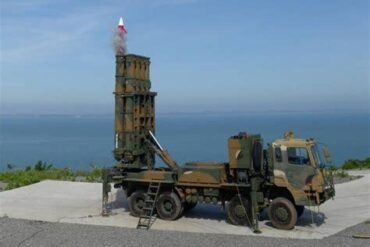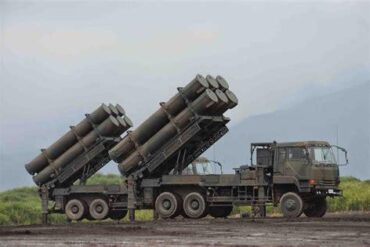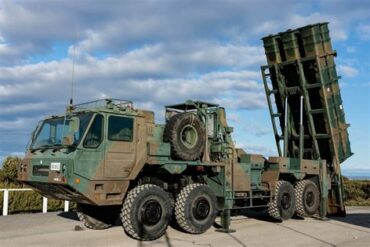
Japan has initiated a significant strategic shift by deploying its upgraded Type 12 surface-to-ship missile system at Camp Kengun in Kumamoto Prefecture, marking a bold response to growing Chinese military assertiveness in the East China Sea. This deployment is a direct implementation of Tokyo’s revised defense posture that embraces proactive deterrence, and it signals a new phase in Japan’s regional security calculus.
The upgraded Type 12 missile system, developed domestically, dramatically enhances Japan’s standoff strike capability. With a current range of approximately 900 kilometers—and an eventual target of 1,200 kilometers—this system places key Chinese coastal areas within reach. This expansion of operational range represents more than just a technological milestone; it’s a declaration of intent by Tokyo to reshape the balance of maritime deterrence in the Southwest Islands and surrounding waters.
Strategic Posture Reimagined: From Reactive to Deterrent
Japan’s deployment of the improved Type 12 missile follows its 2022 revision of national security strategy documents, which redefined the country’s traditional “defense-only” military doctrine. The shift enables the Japan Ground Self-Defense Force (JGSDF) to maintain a credible counterstrike option, even if only used for defensive purposes. In contrast to Japan’s previous limitations, which emphasized exclusively short-range, close-in defensive systems, the new doctrine empowers forward-positioned long-range assets that can challenge adversarial movements before they reach Japanese territory.
This revised doctrine has gained urgency amid rising Chinese naval activity, especially around the Senkaku Islands, which Beijing claims as part of its sovereign territory. The islands are administered by Japan but routinely experience incursions from Chinese coast guard and naval vessels. With the Type 12 missiles stationed at Kumamoto, Japan could theoretically strike adversarial vessels operating far from its shores, disrupting gray-zone activities or escalating conventional threats.
Missile Capabilities and Technical Innovations
The enhanced Type 12 surface-to-ship missile showcases numerous advancements that make it a versatile and deadly standoff weapon. Its guidance system integrates inertial navigation, GPS, and a Ka-band Active Electronically Scanned Array (AESA) radar, allowing precision targeting even in electronic warfare-heavy environments.
A standout feature is the Up to Date Command (UDTC) function, enabling real-time targeting updates via satellite link during mid-flight. This allows the missile to adjust its trajectory based on shifting battlefield conditions, a capability vital for tracking mobile maritime targets. Combined with its low radar cross-section thanks to redesigned aerodynamic shaping and control surfaces, the missile becomes harder to intercept.
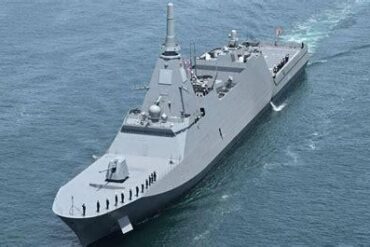
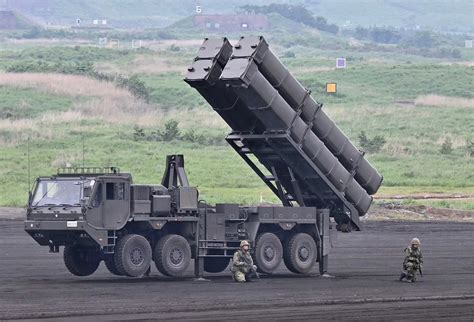
The mobile launch platforms offer an additional layer of tactical advantage. Vehicle-mounted systems ensure high mobility and survivability, particularly across Japan’s rugged and island-dotted southern territories. The missile is designed to operate across land, sea, and air platforms, enhancing its interoperability and cost-effectiveness. This modular deployment architecture reflects Japan’s broader strategic aim: to build a cohesive and multi-domain deterrence structure that can respond flexibly to various threats.
The Significance of Camp Kengun and Future Deployment Sites
The initial deployment at Camp Kengun is only the beginning. Situated in Kumamoto Prefecture, the base lies within strategic proximity to Japan’s southwestern archipelago while remaining inland enough to ensure relative security against missile strikes. This location offers a launch corridor that can cover not just the Nansei Islands, but also critical shipping lanes and forward-operating Chinese vessels in the East China Sea.
The Japanese Ministry of Defense has also identified Camp Yufuin in Oita Prefecture as a future deployment site, along with Vice Camp Katsuren in Okinawa Prefecture, which holds particular strategic weight due to its closeness to the Miyako Strait—a key maritime chokepoint used by the Chinese Navy during blue-water drills. Deploying long-range standoff assets in Okinawa could significantly improve Japan’s capacity to monitor and counter PLAN activities as they transition from coastal operations into the broader Pacific.
Mass Production and Testing Milestones
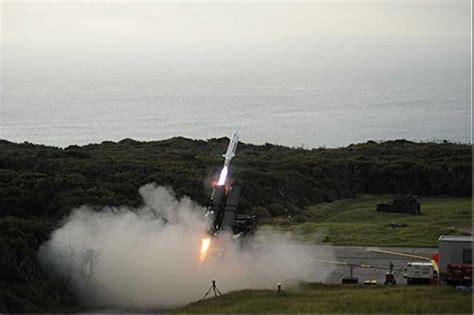
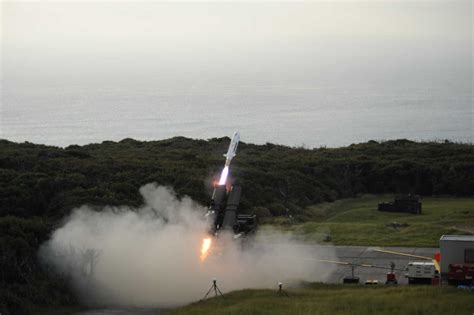
Mass production of the enhanced Type 12 missile began in fiscal year 2023, signaling a ramp-up in both industrial capacity and strategic readiness. Several successful test launches have been completed, most notably from Niijima Island, south of Tokyo, where live-fire drills validated both the guidance system and extended range capability. These trials demonstrated real-world targeting precision against simulated maritime threats under diverse environmental conditions.
This production cycle also reflects Tokyo’s commitment to indigenous defense technologies, reducing reliance on foreign systems while strengthening its domestic defense industrial base. The missile’s design philosophy also aligns with Japan’s inter-service modularity goals, allowing shared usage among the Ground, Maritime, and Air Self-Defense Forces.
Strategic, Legal, and Political Implications
Japan’s decision to field long-range missile systems has not gone unchallenged domestically. Article 9 of the Japanese Constitution prohibits the use of force as a means of settling international disputes and restricts military operations to strict self-defense. Critics argue that standoff strike capability blurs the line between defensive and offensive posturing, potentially violating Japan’s pacifist principles.
Opposition parties and constitutional scholars have raised concerns about the potential for escalation, particularly if Japan’s missile deployments provoke reciprocal actions from neighboring powers. These critics fear that bases such as Camp Kengun or Camp Katsuren could become early targets in a hypothetical conflict scenario. The government, however, maintains that the Type 12 missile is purely defensive, designed to deny access to foreign aggressors rather than initiate hostilities.
Public sentiment remains divided, though support for enhanced deterrence has grown, especially in communities near disputed maritime zones. Residents of Okinawa, long a flashpoint due to the presence of U.S. military bases, are watching the rollout of the Type 12 missile closely, wary of becoming further entangled in geopolitical crossfire.
Regional Context: Countering Chinese Maritime Expansion
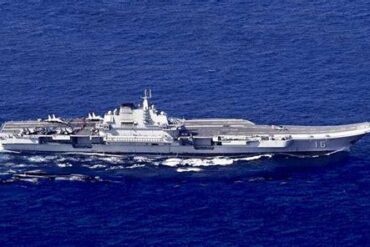
Beijing’s maritime strategy has grown increasingly assertive, especially in the East and South China Seas. The People’s Liberation Army Navy (PLAN) continues to expand its operational footprint, while the Chinese Coast Guard and maritime militia frequently challenge Japan’s sovereignty around the Senkaku Islands. Chinese vessels regularly operate in overlapping Exclusive Economic Zones (EEZs) and engage in shadowing or harassment of Japanese patrols and fishing fleets.
In this environment, Japan’s decision to deploy standoff missiles can be interpreted as a calibrated deterrence measure, meant to raise the cost of any hostile action while maintaining the legal cover of self-defense. The Type 12 system’s reach into Chinese littoral areas could complicate Beijing’s operational calculus, especially in scenarios involving grey-zone operations or limited-force projection.
Looking Ahead: The Future of Japan’s Missile Doctrine
With the successful deployment of the upgraded Type 12 missile at Kumamoto, Japan enters a new era of multi-domain defense capability. The system’s flexibility, precision, and strategic reach offer a credible deterrent against both conventional and unconventional threats. Yet, the broader question remains: how will this fit into Japan’s long-term defense posture?
Future iterations of the Type 12 may include networked swarm capabilities, improved stealth coatings, and artificial intelligence-assisted targeting, bringing Japan’s missile forces closer to cutting-edge global standards. There are also discussions within the Ministry of Defense about integrating U.S.-Japan missile defense cooperation, which could allow for better interoperability with systems like THAAD and Aegis Ashore.
For now, however, the deployment at Camp Kengun stands as a high-stakes test of Japan’s resolve to safeguard its maritime territory, project defensive power, and redefine the rules of engagement in a volatile regional theater. Whether this missile system can maintain peace through deterrence—or inadvertently increase the likelihood of confrontation—remains a matter of strategic foresight, political consensus, and regional diplomacy.