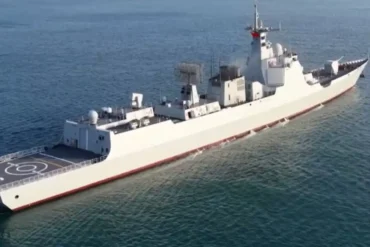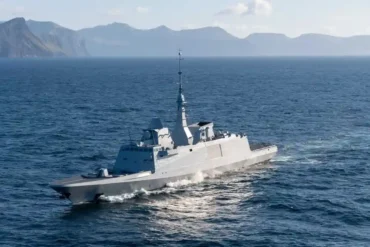
China’s People’s Liberation Army Navy (PLAN) has officially commissioned Linfen (hull 543), an upgraded Type 054A guided-missile frigate that underscores Beijing’s accelerating focus on escort dominance and anti-submarine warfare (ASW) in the Western Pacific and beyond. The new variant reflects a careful balance between evolutionary upgrades and operational continuity, reinforcing the Type 054A’s role as the backbone of China’s surface escort fleet while adapting it for a more complex, submarine-intensive maritime battlespace.
The commissioning of Linfen signals more than the induction of a single hull. It highlights a broader PLAN strategy aimed at sustaining blue-water operations, protecting high-value units, and ensuring that the navy’s most numerous surface combatants remain tactically relevant against increasingly capable undersea threats. As China’s carrier groups, amphibious task forces, and long-range deployments expand, the demand for modernized escorts has become critical.
The Type 054A has long been regarded as a workhorse frigate, bridging the gap between coastal defense vessels and larger multi-role destroyers. Displacing roughly 4,000 tons and measuring about 134 meters in length, the class was designed to deliver credible air defense, anti-surface strike capability, and ASW coverage within a compact and cost-effective hull. Linfen’s upgrades refine this formula rather than replace it, targeting the operational areas where experience and evolving threat assessments have exposed limitations.
One of the most visible enhancements is the expanded aviation facility, which includes a lengthened flight deck and a larger hangar. This modification directly supports the integration of a new generation of shipborne helicopters, widely assessed to be the Z-20 naval variant. Compared with the smaller Z-9 helicopters previously embarked on many Type 054A frigates, the Z-20 offers greater endurance, payload capacity, and sensor integration, dramatically improving the ship’s ASW reach and persistence.

In operational terms, aviation is now central to modern ASW doctrine. Submarines exploit stealth, mobility, and ambiguity, forcing surface escorts to search vast ocean areas under time pressure. A larger helicopter equipped with dipping sonar, sonobuoys, and lightweight torpedoes allows Linfen to push the ASW search perimeter outward, detecting and prosecuting threats before they can approach high-value units. Chinese military commentary has emphasized that this expanded helicopter capability is a decisive factor in countering submarine-heavy environments in the Western Pacific.
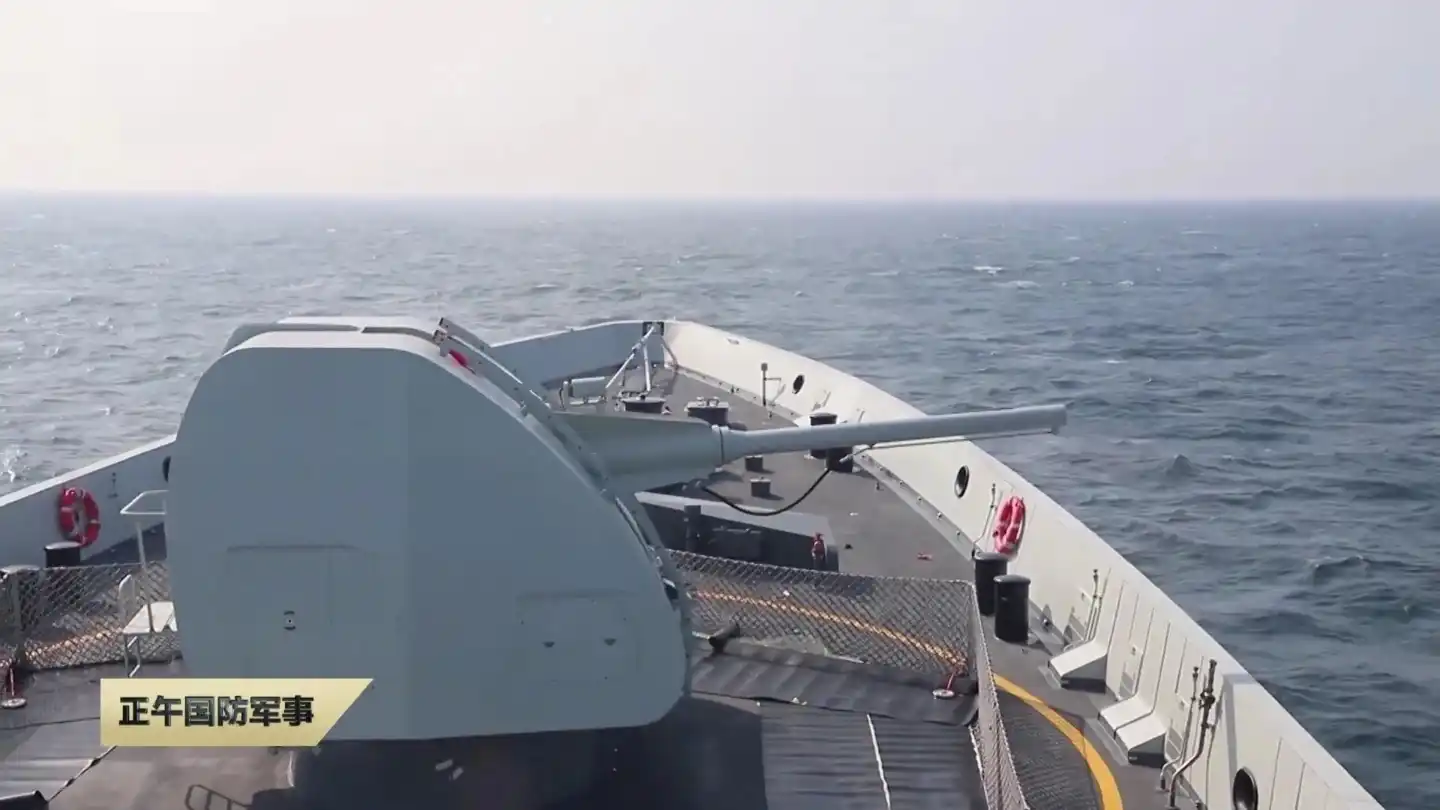
Complementing the aviation upgrade is the installation of a new 100 mm main gun, replacing the earlier 76 mm system carried by baseline Type 054A frigates. While missiles dominate naval warfare headlines, the PLAN’s decision to upgun the frigate reflects a continued appreciation for the flexibility of naval artillery. A modern medium-caliber gun provides greater range, improved accuracy, and enhanced lethality against surface targets, while retaining utility for maritime security missions, warning shots, and close-range engagements in congested littoral waters.
The new gun also aligns the Type 054A with trends seen on newer Chinese surface combatants, suggesting a drive toward fleet-wide standardization of weapons and fire-control systems. Such commonality simplifies logistics, training, and maintenance across a rapidly expanding navy, while enabling faster integration of improved ammunition types and targeting algorithms.
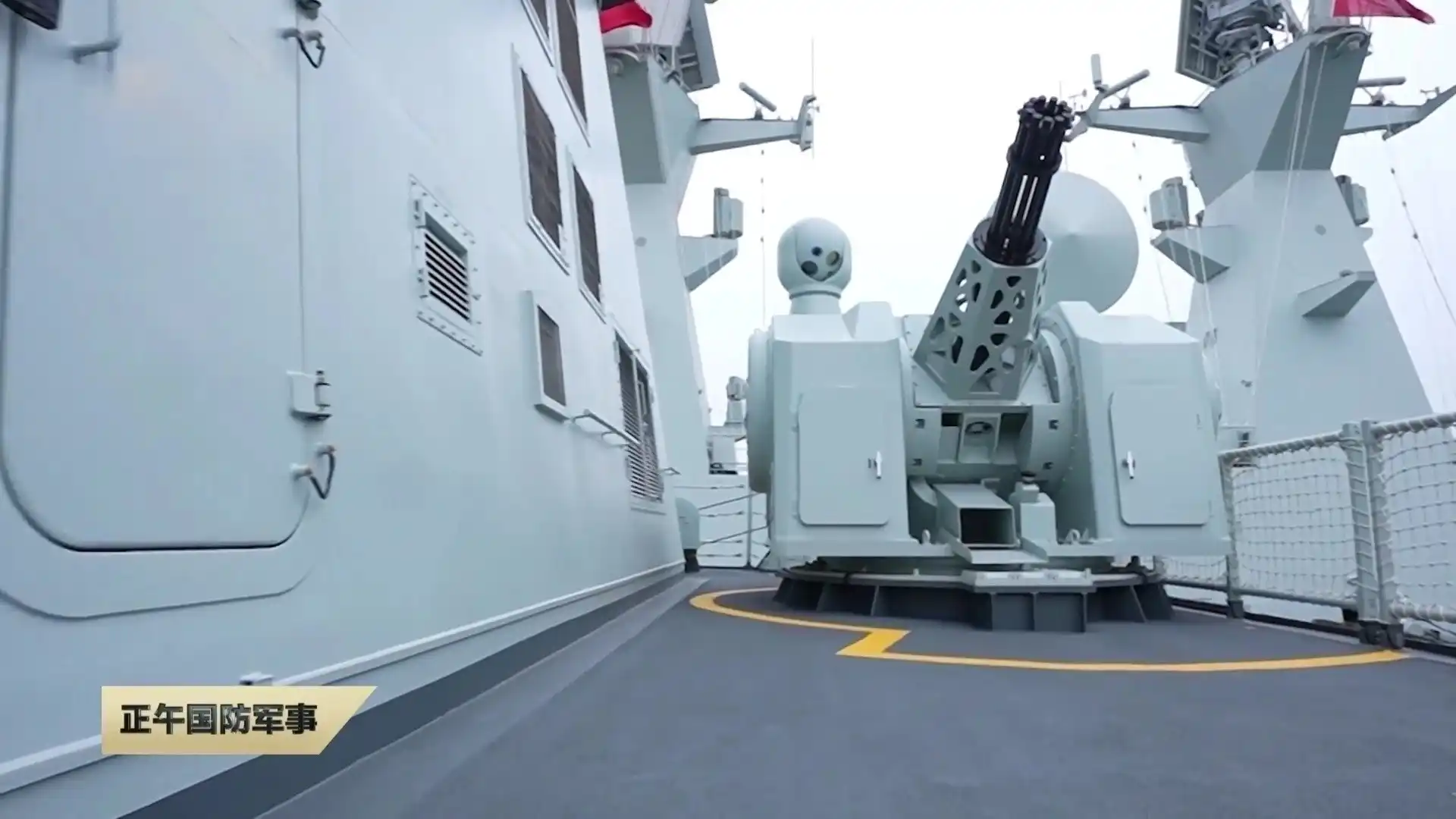
Beyond these visible changes, Linfen incorporates a series of less conspicuous but operationally critical enhancements. Chinese sources reference upgrades to sensors, combat management systems, and electronic warfare resilience, all aimed at ensuring effectiveness in “complex electromagnetic environments.” This phrase, frequently used in PLAN doctrine, points to scenarios characterized by heavy jamming, decoys, cyber interference, and contested data links.
In such conditions, the ability to maintain reliable sensor tracks, fuse data from multiple sources, and share targeting information across a task group can be decisive. Even as a frigate operating within the inner layers of a formation’s defense, Linfen’s improved systems contribute to collective survivability, ensuring that larger destroyers and capital ships can focus on long-range air defense and strike missions.
Strategically, the upgraded Type 054A addresses a structural challenge facing the PLAN: success has driven demand. As China fields aircraft carriers, large amphibious assault ships, and global replenishment capabilities, the need for capable escorts has grown at an industrial scale. High-end destroyers such as the Type 052D and Type 055 are invaluable but costly and limited in number. A modernized frigate like Linfen offers a cost-effective solution for maintaining escort density without sacrificing capability.
This approach also reflects China’s long-term naval planning. Since the mid-2010s, official defense guidance has emphasized a transition from near-sea defense to far-sea protection, requiring sustained operations along sea lines of communication and in distant theaters. Frigates optimized for escort and ASW are essential for convoy protection, replenishment group security, and the layered defense of expeditionary task forces.
The commissioning of Linfen does not diminish the significance of newer designs such as the Type 054B, which is expected to incorporate further stealth and systems upgrades. Instead, it illustrates a tiered force structure, where improved 054A variants continue to shoulder the bulk of routine escort duties while newer platforms gradually assume more specialized roles. Open-source imagery and reporting suggest that Linfen is not an isolated example, but part of a broader production run often referred to externally as the Type 054AG.
What distinguishes this variant is not a radical reimagining of the frigate, but a targeted refinement of its most critical limitations. By prioritizing aviation capacity, enhancing surface firepower, and incrementally improving survivability and electronic resilience, the PLAN has tailored the Type 054A to the precise operational challenges it expects to face in the coming decade.
In a maritime environment increasingly defined by undersea competition and contested information domains, the upgraded Type 054A represents a pragmatic and strategically coherent investment. Linfen’s entry into service reinforces the PLAN’s escort forces at a time when numbers, readiness, and adaptability matter as much as cutting-edge technology. As China continues to expand its naval footprint, ships like Linfen will quietly but decisively shape the balance of power across the Western Pacific and the world’s oceans.