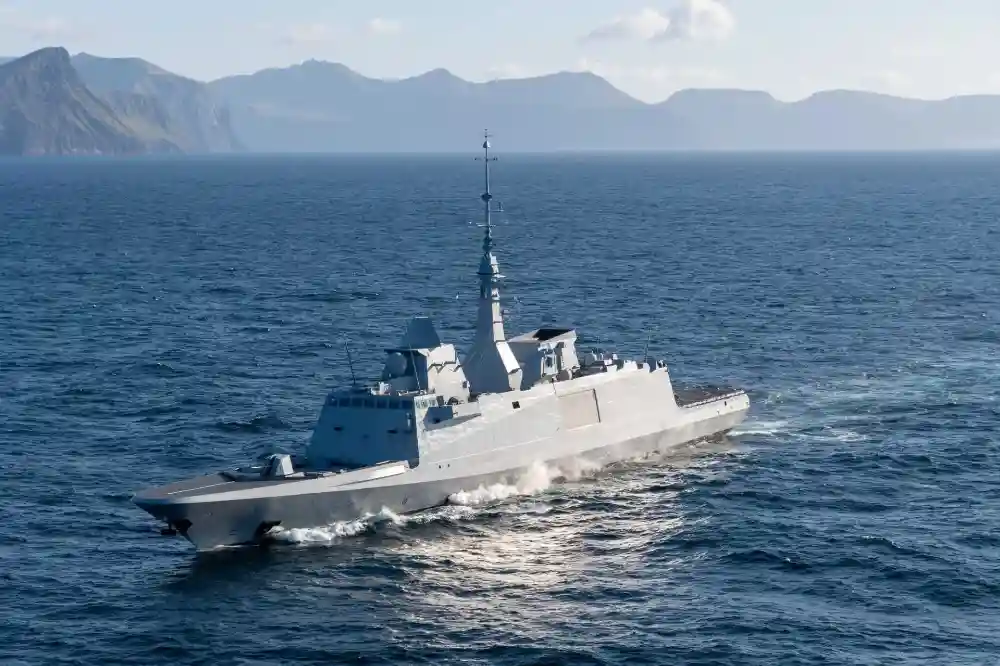
The modern underwater battlefield remains one of the most complex arenas in naval warfare, where detection ranges stretch across vast ocean basins and success often hinges on subtle acoustic signatures rather than visible force. In March 2026, the United States Navy’s Sixth Fleet formally recognized the French Navy’s multi-mission frigate Aquitaine for its exceptional anti-submarine warfare performance during operations in the North Atlantic. The distinction came in the form of the Hook ’Em Award, a prestigious recognition given to naval units demonstrating extraordinary operational effectiveness in submarine detection, classification, and tracking.
The award ceremony took place on March 11, 2026, in Naples, Italy, a key strategic hub for U.S. naval forces operating in Europe and the Mediterranean. During the event, Commodore Doug Sattler, commander of Task Force 69, presented the award to the commanding officer representing Crew B of the French frigate Aquitaine. The recognition highlighted the ship’s successful performance during a series of submarine monitoring missions conducted throughout 2025 in the North Atlantic, where NATO navies continue to maintain vigilant oversight of underwater activity.
The decision to award a French warship illustrates the deeply integrated nature of NATO maritime operations, where allied navies routinely cooperate to maintain situational awareness across critical maritime corridors. While the Hook ’Em Award is typically granted to U.S. naval units operating within the Sixth Fleet’s operational area, allied vessels that demonstrate exceptional capability during joint missions are also eligible for recognition.
The Hook ’Em Award and Its Strategic Importance in Anti-Submarine Warfare
The Hook ’Em Award carries significant historical and operational weight within the U.S. Navy. Established in December 1975 by Vice Admiral Frederick C. Turner, then commander of the U.S. Sixth Fleet, the award was designed to recognize naval units that demonstrated superior performance in anti-submarine warfare (ASW)—a discipline widely regarded as one of the most technically demanding missions at sea.
At its core, the award recognizes excellence across several critical operational criteria:
- Effective detection and classification of submarine contacts
- Sustained acoustic tracking of underwater targets
- Seamless coordination between ships, submarines, and aviation assets
- Tactical proficiency during real operational deployments
The Sixth Fleet’s area of responsibility includes Europe, the Mediterranean Sea, and key Atlantic approaches, regions that historically serve as transit routes for submarines moving between strategic maritime theaters. Because of this geography, the ability to track underwater vessels moving through these waters has long been considered a central pillar of NATO’s maritime security strategy.
Throughout the Cold War, NATO naval forces conducted near-continuous monitoring of Soviet submarines transiting between the Atlantic Ocean, the Mediterranean, and the Black Sea. These operations demanded sophisticated sonar systems, skilled operators, and close multinational cooperation—conditions that continue to shape modern anti-submarine doctrine.
A Legacy Revived: The Return of a Cold War Era Distinction
During the late twentieth century, the Hook ’Em Award was frequently granted to naval units demonstrating exceptional ASW proficiency. However, following the collapse of the Soviet Union and a shift toward expeditionary operations and regional conflicts in the 1990s, the distinction gradually faded from operational use.
For nearly two decades, the award remained largely inactive. The strategic environment began to change again during the early 2010s as global naval powers reinvested heavily in submarine fleets. Modern diesel-electric submarines equipped with advanced quieting technology and nuclear-powered attack submarines began operating more frequently across the Atlantic and Mediterranean.
Recognizing the renewed strategic importance of underwater surveillance, Admiral James G. Foggo III revived the Hook ’Em Award in 2016 while serving as commander of U.S. Naval Forces Europe-Africa and the Sixth Fleet. The revival symbolized a renewed emphasis on high-end maritime warfare, particularly in the realm of submarine detection and tracking.
Since its reintroduction, the award has been presented quarterly to naval units—both American and allied—that demonstrate outstanding operational performance in real-world submarine tracking missions and major multinational exercises.
French Naval Units Among Distinguished Recipients
The French Navy (Marine Nationale) has earned the Hook ’Em Award multiple times over the decades, reflecting France’s long-standing expertise in anti-submarine operations. Earlier recipients include maritime patrol aircraft from the 21F flotilla, which received the distinction in 1991 for their submarine detection performance.
More recently, French surface combatants and task groups have also been recognized. In 2020, several French naval forces including FREMM frigates Bretagne and Auvergne were honored alongside multinational task forces operating within NATO frameworks. Additional French ships—including Provence and Languedoc—received similar recognition in 2021, highlighting the strong ASW capabilities of the FREMM class.
The award presented to Aquitaine in 2026 marks the fifth time a French naval unit has received the distinction, reinforcing the growing role of France’s modern frigates within NATO’s maritime security architecture.
The FREMM Aquitaine: A Frigate Designed for Submarine Hunting
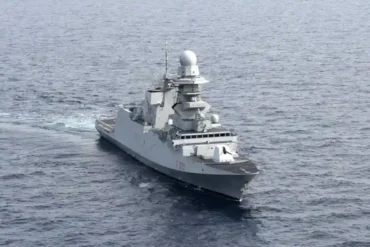
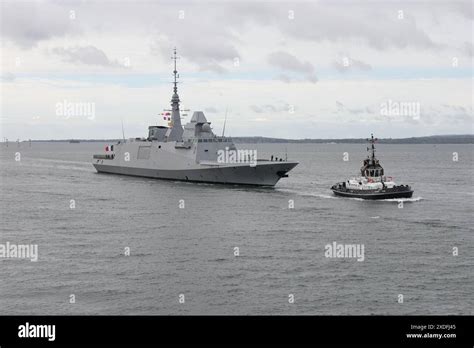
At the center of this recognition stands the FREMM Aquitaine (D650), the lead ship of France’s advanced Aquitaine-class multi-mission frigates. Developed as part of the FREMM (Frégate Européenne Multi-Mission) program jointly undertaken by France and Italy, the class represents one of the most sophisticated surface combatant designs currently in service with European navies.
Construction of Aquitaine began in December 2007 at Naval Group’s shipyard in Lorient, where the vessel was assembled using modular shipbuilding techniques. The ship was launched in April 2010, conducted sea trials beginning in April 2011, and was formally delivered to the French Navy in November 2012. Following extensive operational preparation and crew training, the vessel entered active service in December 2015.
Measuring 142 meters in length with a beam of nearly 20 meters, the frigate displaces more than 6,000 tonnes when fully loaded. Despite its large size and advanced capabilities, extensive automation allows the vessel to operate with a core crew of approximately 108 sailors, significantly fewer than earlier generations of anti-submarine frigates.
The ship is based in Brest, one of France’s principal naval ports on the Atlantic coast, positioning it perfectly for operations across the North Atlantic and European maritime approaches.
Advanced Propulsion and Silent Operations at Sea
One of Aquitaine’s defining features is its CODLOG propulsion system—Combined Diesel-Electric and Gas—which was specifically designed to support quiet submarine-hunting operations.
During low-speed patrols, the frigate operates using electric motors powered by diesel generators, allowing it to cruise at speeds of up to 16 knots with minimal acoustic signature. When higher speed is required, a powerful 32-megawatt gas turbine can propel the ship to approximately 27.5 knots.
This hybrid propulsion arrangement provides both stealth and endurance. The vessel can remain at sea for up to 45 days and travel roughly 6,000 nautical miles at a cruising speed of 15 knots, giving it the operational flexibility required for long-duration patrol missions across vast ocean areas.
Sensor Systems Built for Deep Ocean Detection
Aquitaine’s success in anti-submarine warfare stems largely from its sophisticated sensor architecture, designed to detect some of the quietest submarines in the world.
Among its primary systems is the UMS-4110 hull-mounted sonar, optimized for shallow-water detection. Complementing this system is the powerful CAPTAS-4 variable depth towed array sonar, widely considered one of the most capable anti-submarine sensors currently deployed on surface warships.
The CAPTAS-4 system consists of a long hydrophone array connected to a variable-depth sonar body that can be lowered to depths approaching 300 meters beneath the ocean surface. By operating at extremely low acoustic frequencies, the system can detect submarine contacts at distances exceeding 100 kilometers under favorable oceanographic conditions.
Additional surveillance and combat systems aboard the ship include:
- Thales Herakles multifunction radar, capable of detecting aircraft-sized targets at distances approaching 250 kilometers
- Electronic support measures for signal interception
- Advanced electronic countermeasures and decoy launchers
- The SETIS combat management system, which integrates sensor data and weapon systems across the entire vessel
Together, these technologies allow the frigate to build a highly detailed underwater tactical picture while coordinating with allied naval forces.
Weapons and Aviation Power Extending the Frigate’s Reach
While detection remains the cornerstone of anti-submarine warfare, Aquitaine also carries a formidable array of weapons designed to neutralize threats once identified.
The frigate’s armament includes:
- A 76-mm OTO-Melara naval gun capable of firing approximately 120 rounds per minute
- Eight Exocet MM40 Block 3 or 3c anti-ship missiles, with ranges exceeding 180 kilometers
- Sixteen Aster 15 surface-to-air missiles for air defense
- Sixteen MdCN naval cruise missiles capable of striking land targets nearly 1,000 kilometers away
- MU90 Impact lightweight torpedoes launched from twin torpedo tubes
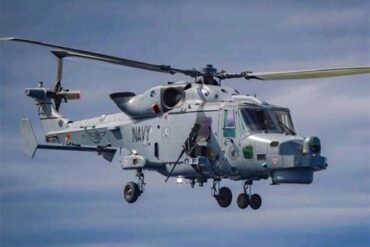
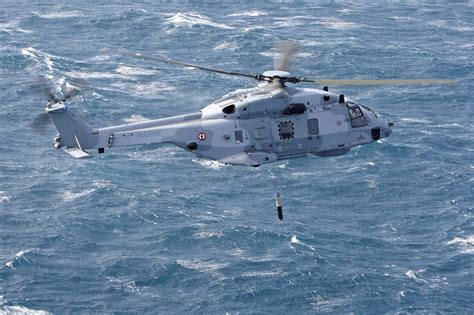
However, one of the most critical components of the ship’s ASW capability is its embarked helicopter. Aquitaine operates the NH90 Caïman Marine, a naval helicopter equipped with FLASH dipping sonar, acoustic sonobuoys, and MU90 torpedoes.
By deploying the helicopter ahead of the ship, operators can extend the frigate’s submarine detection range dramatically. The helicopter can localize underwater contacts and relay targeting data back to the ship, enabling coordinated tracking and engagement of hostile submarines.
NATO Cooperation in the Modern Underwater Battlespace
The recognition of Aquitaine by the U.S. Navy underscores a broader trend within NATO maritime strategy: deepening multinational cooperation in anti-submarine warfare. Modern submarine detection requires coordinated sensor networks, shared intelligence, and the integration of surface ships, aircraft, and submarines operating together across enormous ocean areas.
As submarine fleets continue to expand and new underwater technologies emerge, the importance of these cooperative operations will only grow. The Hook ’Em Award presented to the FREMM Aquitaine therefore represents more than a ceremonial distinction—it serves as tangible evidence of how allied navies combine their capabilities to maintain strategic awareness beneath the world’s oceans.
In an era where the underwater domain is becoming increasingly contested, the performance of ships like Aquitaine demonstrates how advanced technology, skilled crews, and multinational cooperation remain the foundation of maritime security across the Atlantic and Mediterranean theaters.