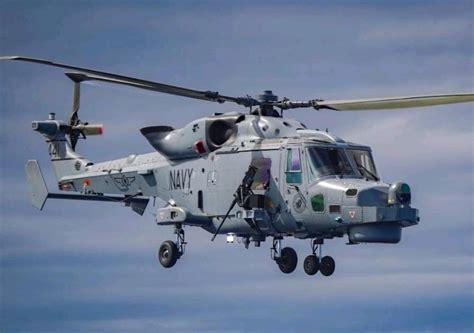
The Philippine Navy is set to significantly bolster its anti-submarine warfare (ASW) capabilities with the planned procurement of six more Leonardo AW159 Wildcat helicopters, a strategic move that underscores the Armed Forces of the Philippines’ commitment to modernizing its maritime defense posture. The acquisition falls under Phase 2 of the ASW Helicopter Acquisition Project, a key component of the Revised AFP Modernization Program. The move comes amid increasing regional naval competition and persistent threats in the country’s vast maritime domain.
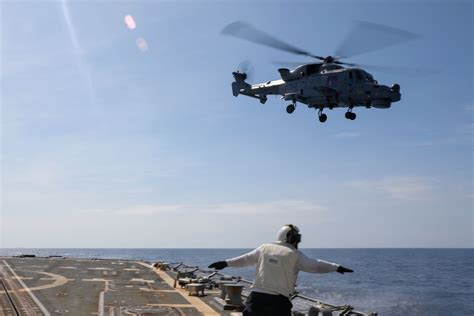
The Department of National Defense (DND) confirmed the initiative through its updated Procurement Monitoring Report, revealing that the six new Wildcats—at a total estimated cost of ₱42.29 billion (approximately $749 million)—will be acquired through a restricted procurement method. This approach limits selection to platforms already in the Navy’s inventory, effectively eliminating the need for a public bidding process. Leonardo, the Italian-British defense firm behind the AW159, is all but assured to receive the contract, given that the Philippine Navy already operates two units of the same model.
Why the AW159 Wildcat Was Chosen Again
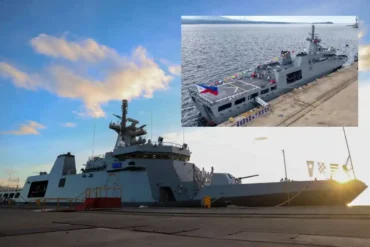
The Navy’s choice to double down on the AW159 Wildcat platform was not without internal scrutiny. In the past, Leonardo faced criticism for limited after-sales support, raising concerns about logistics and sustainment. However, this was ultimately outweighed by several decisive operational factors. The AW159’s proven compatibility with existing José Rizal-class frigates, along with its compact deck footprint, makes it ideal for operations across a broad spectrum of the Philippine fleet, including the newly inducted Miguel Malvar-class frigates and Rajah Sulayman-class patrol vessels. Switching to another platform such as the MH-60R Seahawk would have required expensive structural modifications and retraining, making continuity with the AW159 both practical and cost-effective.
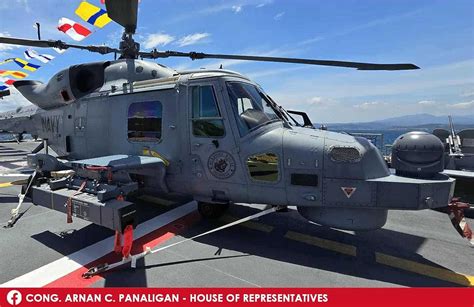
At present, the Philippine Navy’s Naval Air Wing Squadron MH-40 operates two AW159s—tail numbers 440 and 441. These aircraft are assigned primarily to BRP José Rizal (FF-150) and BRP Antonio Luna (FF-151), but have also been tested aboard the BRP Miguel Malvar, expanding their operational reach. One notable deployment occurred on 25 May 2025, when Congressman Arnan Panaligan released imagery showing a Wildcat carrying a Spike NLOS missile launcher aboard the BRP Miguel Malvar, confirming the aircraft’s versatility for over-the-horizon strike missions, beyond its submarine-hunting role.
Evolution of the ASW Helicopter Acquisition Project
The AW159’s introduction into Philippine service began with Phase 1, announced publicly on 24 February 2014, under Horizon 1 of the modernization program. After a competitive bidding process, Leonardo (then AgustaWestland) emerged victorious over Airbus Helicopters and PT Dirgantara Indonesia, whose AS565MBe Panther proposal failed technical compliance.
The contract, valued at ₱5.36 billion, was awarded on 29 March 2016, encompassing two AW159 Mk.220 helicopters, Rafael Spike NLOS missiles, LIGNex1 Blue Shark torpedoes, and Thales Compact FLASH dipping sonar. Delivered to Ninoy Aquino International Airport on 7 May 2019 via Antonov An-124 aircraft, the units were assembled and tested at Danilo Atienza Air Base. With the introduction of these aircraft, the Philippine Navy regained a long-lost ASW capability absent for decades.
Cutting-Edge Technology in a Compact Package
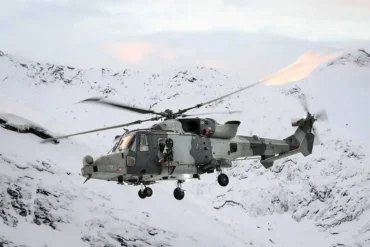
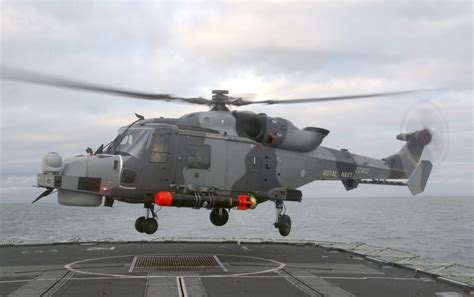
The AW159 Wildcat is a technological leap from its predecessor, the Westland Super Lynx, incorporating 95% new components. Developed under the UK Ministry of Defence’s Future Lynx program, the Wildcat was designed for a 12,000-hour service life. Key performance specifications include:
- Engines: Twin LHTEC CTS800-4N turboshafts, 1,361 hp each
- Speed: Max 311 km/h
- Range: 777 km, with ferry range of 963 km
- Endurance: Up to 4.5 hours with auxiliary fuel
- Radar: Seaspray 7400E AESA
- Sensors: Thales Compact FLASH sonar, Wescam MX-15Di EO/IR
- Armament Options: Blue Shark torpedoes, Spike NLOS missiles, Sea Venom, Martlet, and Mk.11 depth charges
Its fully digital glass cockpit features four multifunction displays, General Dynamics and BAE Systems processors, and is integrated with the Bowman communications suite for secure, encrypted data sharing. Defensive systems include infrared suppressors, missile approach warning systems, and countermeasure dispensers.
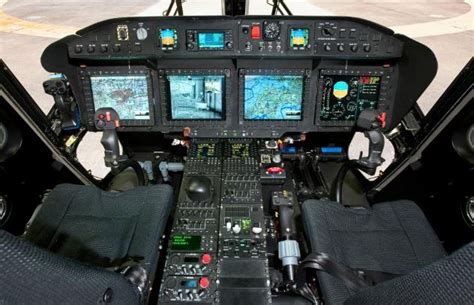
These characteristics enable the Wildcat to excel in anti-submarine, anti-surface, and maritime patrol roles, with configuration flexibility depending on mission profile. In ASW operations, the aircraft can perform three hours with sonar only, or two hours with sonar and one torpedo, demonstrating its mission versatility.
Regional and Global Context: A Growing Trend
The Philippine Navy is not alone in its choice. South Korea also selected the AW159 in 2013, acquiring eight helicopters for its Incheon-class frigates. These platforms are similarly configured with Seaspray radar, Blue Shark torpedoes, and Spike NLOS missiles, indicating a regional preference for the Wildcat’s multi-mission agility.
Algeria followed in 2022, ordering three Wildcats for deployment aboard C28A Adhafer-class corvettes. Their variant is fitted with MU90 torpedoes, FLASH sonar, and LMMs. The shared use of the AW159 among these navies reflects a broader trend toward interoperability and tactical flexibility in littoral and blue-water operations.
Strategic Timing: Alignment with Fleet Growth
The timing of the second-phase acquisition is no coincidence. The Philippine surface fleet is rapidly expanding, with two more Miguel Malvar-class frigates planned, along with two additional José Rizal-class units. The Rajah Sulayman-class patrol vessels have also grown in number to six. Each of these platforms can accommodate the compact AW159, ensuring rotational aircraft availability during maintenance cycles and extended deployments.
The Wildcats are especially suited for this purpose because larger helicopters like the MH-60R Seahawk exceed the deck limits of these ships, which would otherwise require costly upgrades. With the addition of six more AW159s, the Philippine Navy’s airborne ASW fleet would grow to eight, establishing a robust deployment schedule across its maritime domain.
Horizon 3 and the Road Ahead
The AW159 expansion is part of a broader acquisition thrust under Horizon 3 of the AFP Modernization Program, which includes:
- Twelve additional FA-50 fighter jets
- Twelve L-39NG SkyFox trainers
- Two aerial refueling tankers
- Up to two AWACS platforms
- Two more frigates (₱43 billion budget)
- Two corvettes for FY2026
- Ten more fast attack interdiction craft (FAIC)
- Additional shore-based missile systems and self-propelled howitzers
This wide-ranging modernization is driven by the need to counter regional assertiveness in the West Philippine Sea and secure maritime trade routes. The Navy is also eyeing Abukuma-class patrol ships from Japan, with inspection teams scheduled to visit in August 2025.
If Phase 2 of the ASW project is finalized this year, deliveries of the new helicopters could begin as early as 2028, with final integration expected by 2029. Leonardo’s Yeovil facility in the UK—currently sustained by Wildcat and other helicopter programs—has confirmed capacity to handle the Philippine order, though it awaits formal contract signing.
Conclusion: Strategic Multipliers in the Indo-Pacific
The acquisition of six more AW159 Wildcat helicopters is more than a fleet upgrade—it represents a strategic force multiplier for the Philippine Navy, elevating its capacity to conduct persistent anti-submarine patrols, maritime interdiction, and long-range precision strikes. At a time when Indo-Pacific waters are witnessing an uptick in underwater incursions, amphibious training, and power projection, this move sends a clear signal of resolve and preparedness. The success of Phase 1, paired with the continued integration of advanced systems, ensures the Philippine Navy remains agile, capable, and aligned with modern naval warfare trends.