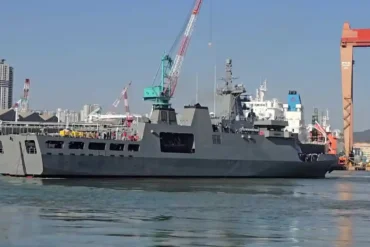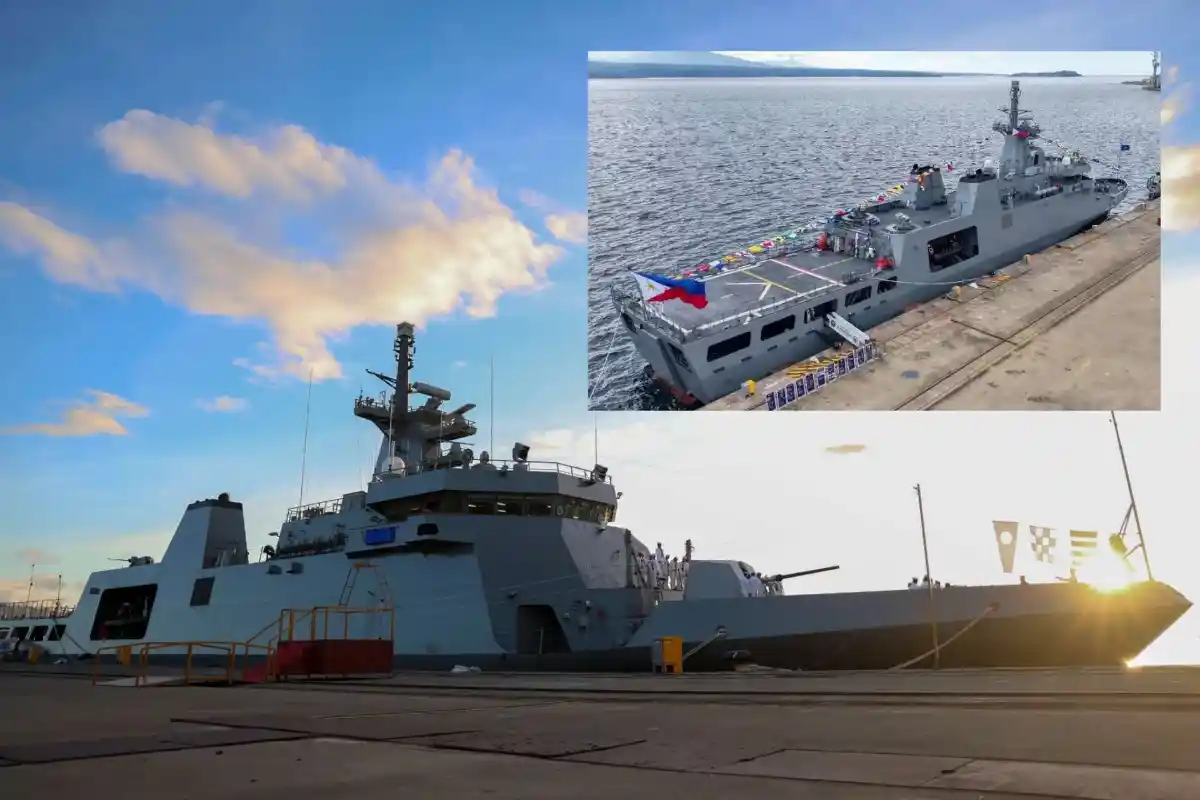
The Armed Forces of the Philippines has formally commissioned the BRP Rajah Sulayman (PS-20), a new offshore patrol vessel (OPV) designed to enhance sustained maritime security operations across the country’s vast and strategically sensitive waters. The ceremony, held on 24 February 2026 at Naval Operating Base Subic in Zambales, marks a significant milestone in Manila’s continuing naval modernization program and its broader effort to reinforce a rules-based maritime posture in the West Philippine Sea.
The commissioning took place alongside the induction of the fast attack interdiction craft BRP Audrey Bañares (PG-910), reflecting a deliberate fleet structure built around layered capabilities. By introducing both a long-endurance offshore patrol vessel and a high-speed littoral combatant into service on the same day, the Philippine Navy underscored its strategic intent to balance persistent blue-water presence with rapid coastal response options.
The addition of BRP Rajah Sulayman strengthens the country’s capacity to maintain maritime domain awareness, conduct extended patrols within its exclusive economic zone (EEZ), and deter coercive actions in contested waters without escalating tensions unnecessarily.
Strategic Symbolism and Historical Legacy Behind BRP Rajah Sulayman
The vessel’s name carries profound historical significance. Rajah Sulayman, the 16th-century ruler of Manila, is remembered for resisting Spanish forces during the 1570 Battle of Manila. By invoking his legacy, the Philippine Navy connects contemporary maritime defense with a longer narrative of sovereignty and resistance. The symbolism is unmistakable: the defense of territorial rights remains an enduring national priority.
Similarly, the naming of BRP Audrey Bañares honors a Philippine Navy commando killed in action in 2013. The pairing of these two vessels during the commissioning ceremony reflects a conscious blending of heritage and modernization. It also signals institutional continuity—past sacrifice informing present capability.
Senior military leadership emphasized that modernization efforts are framed not as aggressive gestures but as responsible measures designed to uphold international law and protect maritime rights. This strategic messaging aligns closely with a doctrine of deterrence through sustained presence, rather than overt power projection.
Rajah Sulayman-Class OPV: A New Pillar of Philippine Maritime Security
BRP Rajah Sulayman is the lead ship of the Rajah Sulayman-class offshore patrol vessels, ordered from HD Hyundai Heavy Industries under a ₱30 billion contract signed in 2022. The class represents one of the most consequential surface fleet acquisitions in recent Philippine naval history.
Measuring approximately 94.4 meters in length with a beam of 14.3 meters and a full-load displacement estimated between 2,400 and 2,450 tons, the vessel occupies a design space between traditional patrol ships and light frigates. This intermediate size provides the endurance and seakeeping necessary for extended operations in rough open waters, while avoiding the heavier logistical burden of larger combatants.
A combined diesel-and-diesel propulsion configuration drives controllable-pitch propellers, enabling a top speed of around 22 knots and an operational range of roughly 5,500 nautical miles at cruising speed. Endurance on station ranges between 20 and 30 days depending on operational tempo and sea conditions. Such endurance is critical in the Philippine context, where maritime patrol areas stretch across thousands of islands and expansive ocean corridors.
The vessel accommodates approximately 72 crew members, with additional berthing for mission specialists, helicopter detachments, or boarding teams. Automated systems reduce manpower demands, improving efficiency during prolonged deployments.
Combat Systems and Defensive Architecture
Although optimized for constabulary and patrol roles rather than high-intensity naval warfare, BRP Rajah Sulayman is equipped with a credible and modern combat suite designed for both deterrence and escalation management.
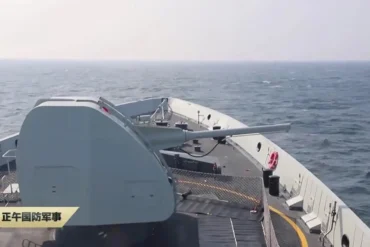
The primary armament is a Leonardo OTO Melara 76 mm Super Rapid naval gun, mounted forward. This versatile weapon is capable of engaging surface targets, providing limited naval gunfire support, and deterring fast attack craft. The gun’s rapid-fire capability and advanced ammunition options make it suitable for both warning shots and defensive engagements.
Supplementing the main gun are two Aselsan SMASH 30 mm remote-controlled weapon stations, offering precision engagement against small, fast-moving surface threats. These are reinforced by 12.7 mm heavy machine guns for close-range defense against asymmetric actors, including unmarked militia boats and potentially hostile fishing vessels.
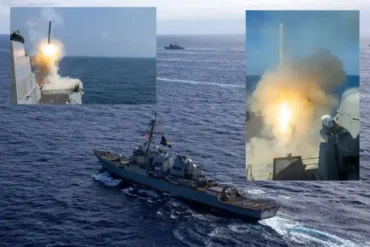
The vessel’s defensive systems include C-Guard decoy launchers, electronic support measures, and radar warning capabilities that enhance survivability against radar-guided threats. Importantly, the class has been designed with growth margins for future upgrades, including short-range surface-to-air missiles, anti-ship missiles, and potentially towed-array sonar systems on selected hulls. This modular approach ensures adaptability as strategic requirements evolve.
Integrated Sensors and Networked Maritime Awareness
The combat system integrates multiple sensor platforms into a unified operational picture. A Leonardo SPS-732 X-band air and surface surveillance radar provides detection of aerial and maritime contacts, while Hensoldt SharpEye navigation radars enhance safe maneuvering in congested waters.
The ship is equipped with a Safran PASEO XLR electro-optical and infrared director, enabling high-resolution target identification at extended ranges, day and night. The integrated Anschütz Synapsis NX bridge system enhances navigation efficiency and crew coordination.
At the core of these capabilities lies a Hanwha combat management system, which fuses data from onboard sensors and external sources into a coherent maritime picture. This integration transforms BRP Rajah Sulayman from a patrol ship into a sensor and command node, capable of sharing real-time information with other Philippine Navy units and allied forces.
Such network-centric capability is central to modern maritime operations. In contested environments, information dominance can prevent miscalculation and strengthen diplomatic leverage.
Aviation and Boarding Capabilities
BRP Rajah Sulayman features a flight deck and enclosed hangar capable of supporting a 10-ton naval helicopter as well as unmanned aerial vehicles (UAVs). Organic aviation assets dramatically extend surveillance range, allowing over-the-horizon reconnaissance and rapid response coordination.
The vessel also includes a stern launch system for two rigid-hull inflatable boats (RHIBs), facilitating visit, board, search and seizure (VBSS) missions. These capabilities are particularly relevant in gray-zone scenarios, where maritime disputes often unfold below the threshold of declared armed conflict.
Layered Fleet Architecture and Distributed Maritime Operations
The commissioning of BRP Rajah Sulayman alongside BRP Audrey Bañares highlights a deliberate layered fleet architecture. The offshore patrol vessel assumes responsibility for sustained open-ocean presence, maritime surveillance, and command coordination. Meanwhile, the fast attack interdiction craft delivers rapid interception capability in littoral zones.
This structure mirrors broader concepts of distributed maritime operations, in which multiple networked platforms share situational awareness while spreading risk across a wider area. Rather than concentrating power in a handful of high-value ships, the Philippine Navy is building resilience through distributed presence.
As additional Rajah Sulayman-class vessels enter service through 2028, they are expected to be assigned across strategic maritime sectors, including the West Philippine Sea, the Philippine Rise, and southern sea lanes vulnerable to transnational threats.
Responding to a Complex Regional Security Environment
The strategic importance of this acquisition cannot be separated from the evolving security landscape in the West Philippine Sea. In recent years, Philippine vessels have encountered water-cannon attacks, aggressive maneuvering, and obstruction by foreign coast guard and maritime militia units around contested features such as Second Thomas Shoal and Scarborough Shoal.
In such circumstances, a robust offshore patrol vessel serves as both shield and witness. It can document incidents with advanced sensors, protect civilian resupply missions, and maintain presence without immediately escalating to high-end missile-equipped combatants.
This calibrated response capability enhances crisis management. By deploying vessels capable of sustained patrol and precise defensive action, Manila gains flexibility. Escalation becomes a choice rather than an inevitability.
Strengthening Maritime Sovereignty Through Capability and Law
BRP Rajah Sulayman represents more than a hardware acquisition; it embodies a strategic philosophy grounded in maritime sovereignty, deterrence, and legal assertion under international law. The vessel’s design emphasizes endurance, surveillance, and controlled response—traits aligned with a doctrine centered on defending rights without provoking unnecessary confrontation.
As the Rajah Sulayman-class expands, integration with coastal radar systems, maritime patrol aircraft, and defense partnerships with countries such as the United States, Japan, and Australia will deepen the Philippines’ maritime security architecture. Each additional hull enhances operational tempo, geographic coverage, and resilience.
The commissioning of BRP Rajah Sulayman signals a decisive shift from reactive patrol patterns to persistent, networked maritime operations. It stands as both a symbol of national resolve and a practical instrument for day-to-day sovereignty enforcement. In an era defined by gray-zone tactics and maritime competition, sustained presence—supported by credible capability—remains one of the most powerful deterrents available to a coastal state determined to safeguard its waters.