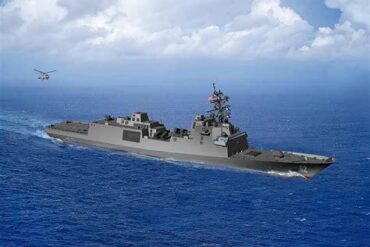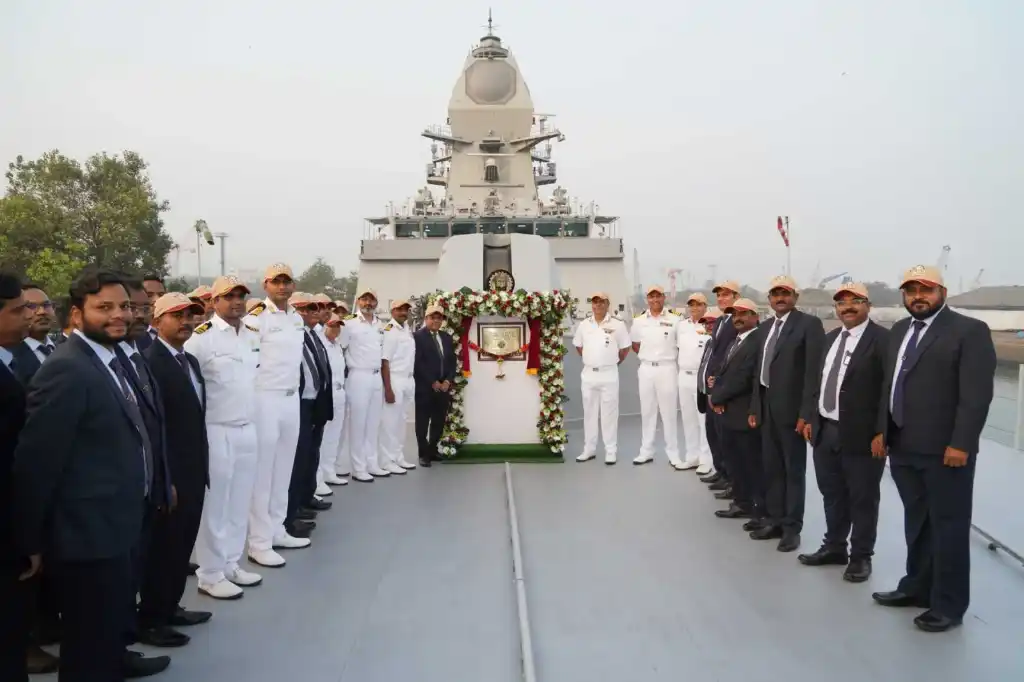
The Indian Navy has formally taken delivery of INS Taragiri, the fourth Nilgiri-class stealth frigate, marking a decisive leap forward in India’s maritime modernization under Project 17A. Delivered at Mazagon Dock Shipbuilders Limited (MDL) in Mumbai on November 29, 2025, the ship strengthens India’s position as a rising naval power capable of producing world-class frontline combatants.
India’s ambitious seven-ship Project 17A frigate program continues to showcase the country’s ability to design, integrate, and deploy advanced warships that meet the evolving challenges of the Indo-Pacific. With Taragiri’s arrival, the program enters a more accelerated phase, reflecting sharply reduced build times and higher indigenous content.
The new frigate is a symbolic rebirth of the original INS Taragiri, a Leander-class vessel that served faithfully for over three decades. Its modern reincarnation represents a generational shift in naval engineering—one defined by stealth shaping, multi-mission adaptability, and network-centric warfare integration.
Stealth Architecture and Advanced Survivability Features
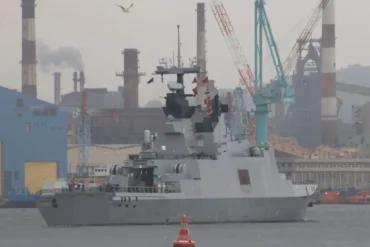
The defining hallmark of the new Taragiri is its deeply engineered stealth profile. The ship’s superstructure is designed with angular geometries, flush-mounted sensors, and heat-suppression technology that reduce radar and infrared signatures. These refinements allow the ship to operate with enhanced discretion across contested zones where detection avoidance can define mission success.
Below the waterline, Taragiri’s hull integrates a hydrodynamically optimized bulbous bow and low-noise propulsion components. These features collectively strengthen acoustic stealth and boost sonar evasion capabilities—critical advantages in submarine-heavy environments.
Weapon Systems Designed for High-Intensity Conflict
Taragiri’s combat suite cements its role as a multi-domain threat to adversaries. The frigate fields a powerful BrahMos supersonic cruise missile battery, enabling precision land and sea strikes at ranges beyond 290 kilometers. Its air-defense envelope is orchestrated through the MF-STAR AESA radar paired with MRSAM vertical-launch missiles, giving the ship a robust shield against aircraft, UAVs, and low-flying anti-ship missiles.
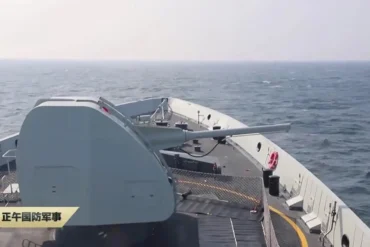
The ship’s close-in weapon systems include the 76mm Super Rapid Gun Mount, twin 30mm automatic cannons, and remotely operated 12.7mm stations. Anti-submarine warfighting strength comes from dual torpedo launchers, RBU-6000 rocket systems, and integrated sonar that allow for aggressive undersea denial operations.

Aviation-Enabled Reach and Operational Flexibility
A full-length flight deck and enclosed hangar support advanced naval helicopters, including the MH-60R Seahawk and India’s indigenous HAL Dhruv. These assets expand the ship’s operational envelope dramatically, enabling long-range ASW missions, maritime surveillance, and coordinated targeting.
Coupled with the Integrated Platform Management System (IPMS), the ship’s aviation operations benefit from automated diagnostics and damage-control functions that enhance survivability during high-risk missions.
Propulsion, Endurance, and Indo-Pacific Deployability
Powered by a Combined Diesel or Gas (CODOG) setup, Taragiri blends efficient long-range cruising with rapid acceleration through gas turbines. With an endurance of more than 5,500 nautical miles, the frigate is primed for extended patrols throughout the Indian Ocean Region, escort duties, and multilateral naval exercises.
Strategic Role in the Indo-Pacific
INS Taragiri is built for conflict, deterrence, and diplomacy. It is expected to join a rotational presence in key maritime corridors, enhance anti-piracy patrols, secure sea lanes, and reinforce India’s commitment to regional stability. As the Indo-Pacific becomes more contested, such assets will anchor India’s expanding security obligations and cooperative missions.
Taragiri follows INS Nilgiri, INS Himgiri, and INS Udaygiri, and stands as the fourth of seven Project 17A frigates. Improved integration workflows reduced its build time from 93 months to 81, and the final three vessels remain on schedule for delivery by August 2026.
A Milestone in Indigenous Naval Manufacturing
With more than 75% indigenous components, Taragiri’s induction reflects India’s accelerating defense ecosystem—one capable of constructing sophisticated warships that compete with global benchmarks. The frigate’s arrival strengthens the Navy’s ability to deter adversaries, dominate critical sea lanes, and project power across a dynamic Indo-Pacific landscape.
As India continues expanding its maritime reach, INS Taragiri stands as both symbol and instrument of the nation’s growing naval confidence and industrial maturity.