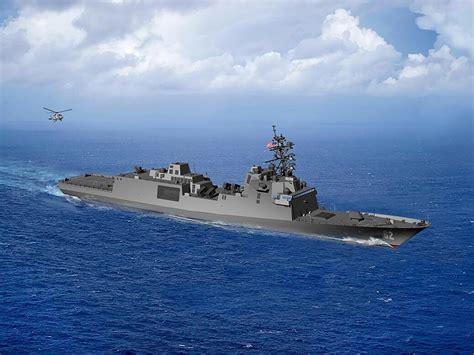
The U.S. Navy is poised to receive the first of its new class of guided-missile frigates—the FF(X)—by 2028, signaling a pivotal evolution in its surface fleet. As announced by Huntington Ingalls Industries (HII) CEO Chris Kastner on January 8, 2026, the construction phase is imminent and aligns tightly with the Navy’s expedited procurement goals. This development not only marks a departure from the troubled Constellation-class program but also reflects a strategic rebalancing of the Navy’s small surface combatant force in response to a rapidly modernizing Chinese navy.
From Setback to Strategy: The Shift Away from Constellation-Class
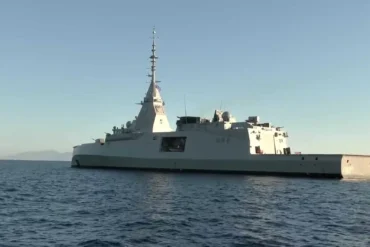
The FF(X) program is a direct consequence of the U.S. Navy’s strategic recalibration. The Constellation-class, derived from the European FREMM multipurpose frigate, had been burdened by redesign demands to meet U.S. standards. Over time, its commonality with the original FREMM design dropped below 15%, contributing to significant delays and cost escalation. The Navy ultimately canceled the majority of the 20-ship Constellation-class program, keeping only the first two hulls and abandoning the rest.
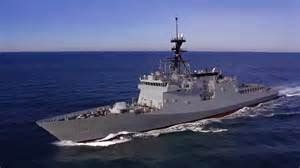
In contrast, the FF(X) aims to capitalize on design stability and speed, borrowing heavily from the U.S. Coast Guard’s Legend-class National Security Cutter (NSC). The deliberate choice to adopt a proven, American-built hull form—instead of reengineering a foreign design—forms the backbone of a strategy to reduce technical risk, ensure schedule discipline, and regain momentum in the frigate portfolio.
The FF(X): Design Heritage and Performance
The FF(X) frigate’s architecture originates from the Legend-class NSC, a platform originally optimized for maritime patrol rather than naval warfare. Despite this, the Navy has committed to adapting the NSC hull to fulfill multi-role combat duties while keeping design changes minimal.
Key specifications of the FF(X) include:
- Length: ~127.4 meters
- Beam: ~16.5 meters
- Displacement: ~4,600 tonnes
- Draft: ~6.9 meters
- Speed: Over 28 knots
- Range: Approximately 12,000 nautical miles (22,000 km)
This makes the FF(X) significantly smaller than the 7,300–7,500 tonne Constellation-class, with trade-offs in internal volume, endurance, and seakeeping. Propulsion will mirror the NSC’s combined diesel and LM2500 gas turbine setup, ensuring operational familiarity and industrial continuity.
Weapon Systems and Mission Focus
In its initial Flight I configuration, the FF(X) will field a deliberately lean weapons and sensor package. This minimalist approach is aimed at avoiding integration delays that plagued its predecessor. Confirmed systems include:
- BAE Systems Mk 110 57 mm main gun
- Two 30 mm autocannons
- Mk 49 launcher with 21 RIM-116 Rolling Airframe Missiles for point defense
- Up to 16 RGM-184A Naval Strike Missiles (NSM) for anti-surface warfare
Crucially, the first batch of FF(X) frigates will not include vertical launch systems (VLS) or anti-submarine warfare (ASW) suites, two staples of modern naval engagements. Instead, the emphasis is on speed to fleet, setting the stage for block upgrades in future variants.
Modular Payloads and Future-Proofing
One of the most forward-looking design elements of the FF(X) is its modular payload architecture. Design changes from the original NSC include a new platform installed above the stern boat deck. This area is optimized for containerized payloads and unmanned systems.
Concept imagery and design briefs hint at the potential inclusion of:
- Directed energy weapons
- Future VLS configurations
- Additional point-defense systems
A shelf-like superstructure addition near the ship’s forward section has also sparked speculation around future sensor and combat system expansion. However, these features are not part of the initial baseline and will be considered in subsequent block improvements once core production stabilizes.
Industrial Impact and Strategic Imperatives
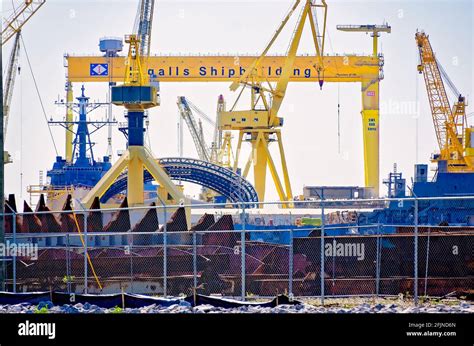
The FF(X) program is being launched into an industrial landscape that has seen NSC production lines go dormant, raising concerns about supply chain reactivation and workforce readiness. Despite this, HII’s leadership expressed strong confidence in meeting the Navy’s 2028 trial target by adhering strictly to frozen requirements and minimizing design drift.
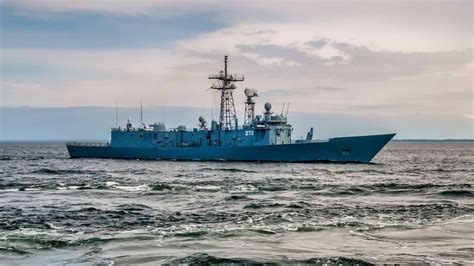
This industrial restart is underpinned by a critical force structure goal: the Navy has acknowledged a requirement for 73 small surface combatants, of which the FF(X) will form the core. This class is expected to fill the capability void left since the 2015 decommissioning of the Oliver Hazard Perry-class, offering a cost-effective platform for presence, escort, and patrol operations.
China’s Naval Expansion and the Urgency of FF(X)
Time is of the essence. The strategic backdrop of the FF(X) is dominated by China’s naval surge. The People’s Liberation Army Navy (PLAN) is currently the world’s largest by hull count, with projections indicating a rise from 395 battle force ships in 2025 to 435 by 2030.
Much of this growth is anchored by frigate production, especially the Type 054A and 054B variants. China has already commissioned more than 40 frigates of the Type 054 lineage, while the U.S. has struggled to replace aging platforms.
In this context, the FF(X)’s accelerated timeline is not merely a matter of procurement but of geostrategic necessity. A modular, scalable frigate that can enter service swiftly—even with limited capability—is better positioned to counter China’s numerical advantage in peacetime presence and potential maritime gray-zone operations.
Balancing Capability with Schedule Discipline
The FF(X) frigate is emblematic of a broader shift within the Pentagon towards predictability and scalability over maximalist capability. While the first hulls may lack sophisticated radar arrays, submarine-hunting tools, or missile-rich VLS cells, they represent a platform with:
- Built-in growth margins
- Open architecture systems
- Proven hull performance
The program’s long-term viability depends on its ability to maintain schedule discipline while leaving room for incremental innovation through block upgrades, not wholesale redesigns.
Conclusion: A New Chapter in U.S. Naval Power
The U.S. Navy’s decision to proceed with the FF(X) class reflects a strategic blend of urgency, restraint, and industrial pragmatism. Set for trials in 2028, the first FF(X) will be the Navy’s first true frigate since 2015. Unlike the ill-fated Constellation-class, FF(X) is designed to be built, not imagined.
Its lean configuration may underwhelm in raw capability, but its modularity, speed of delivery, and upgrade potential could make it a key component in the Navy’s evolving surface warfare doctrine. In an era where naval strength is measured not just in technology but in industrial responsiveness and fleet resilience, the FF(X) could prove to be a masterstroke in maritime strategy.