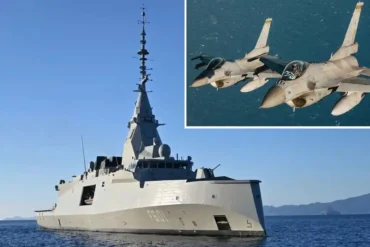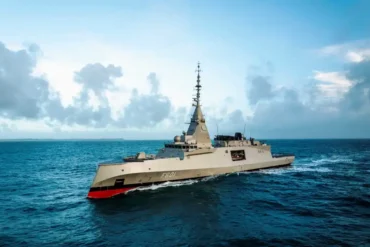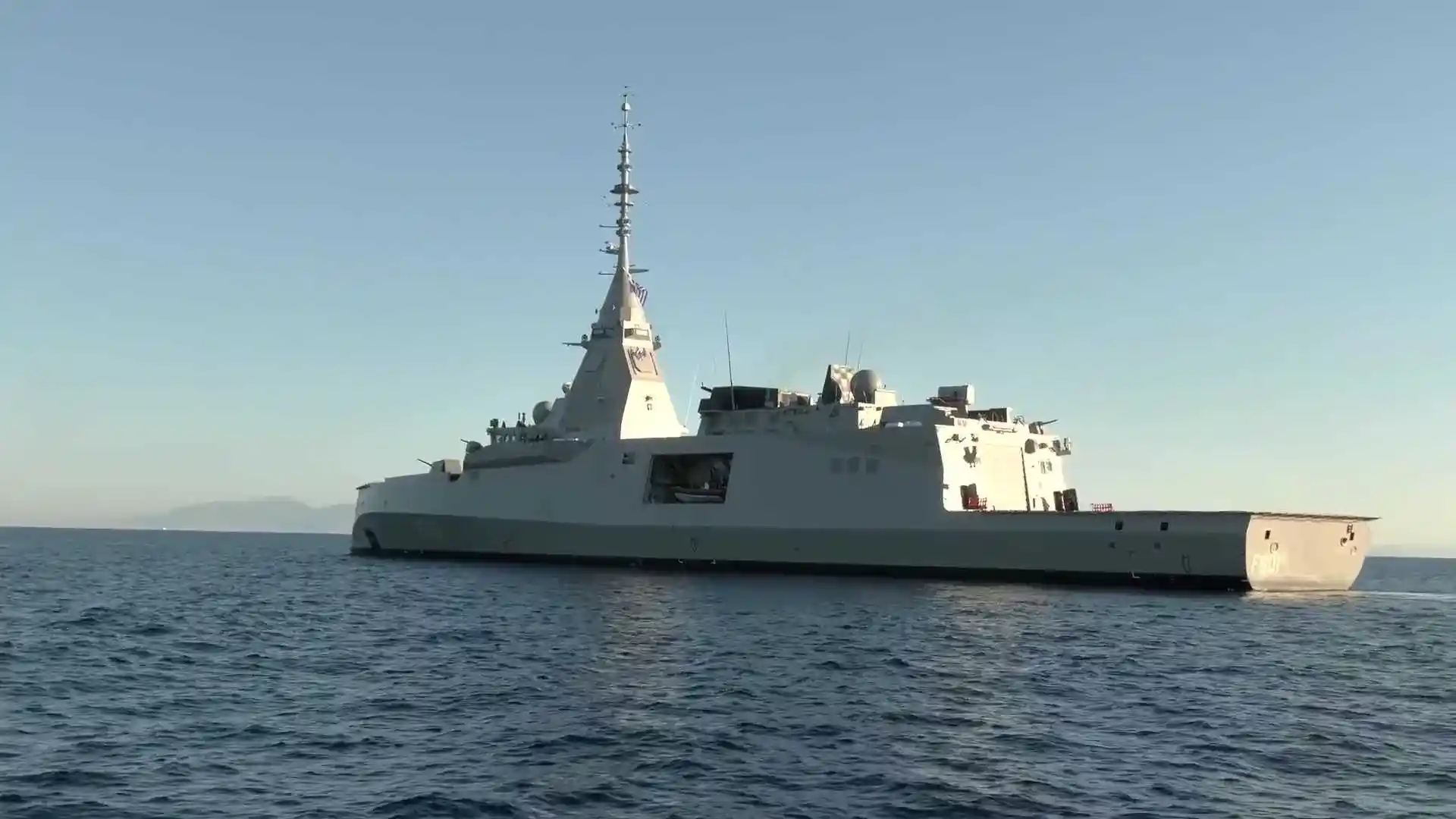
Greece formally ushered in a new chapter of naval capability on January 15, 2026, as the Belharra-class frigate HS Kimon entered national service, becoming the first newly built frigate to join the Hellenic Navy since 1998. The arrival of the vessel in the Saronic Gulf and its subsequent approach to Salamis naval base represented more than a routine fleet addition; it symbolized a long-awaited renewal of surface combatant strength after decades of reliance on aging platforms. For a country whose security outlook is inseparable from maritime geography, the induction of HS Kimon carries operational, political, and strategic weight that extends well beyond ceremonial significance.
The frigate’s entry into Greek waters followed its formal delivery from France, concluding a carefully sequenced process that began with construction, testing, and handover at the Naval Group shipyard in Lorient. As the lead ship of the FDI HN program, HS Kimon inaugurates a four-vessel modernization effort designed to recalibrate Greece’s naval posture in the Aegean and the Eastern Mediterranean. The timing is critical, coming amid persistent regional frictions and an evolving security environment where air, surface, and sub-surface threats increasingly intersect.
From the outset, the arrival was framed as a national milestone. The Hellenic Navy has not inducted a brand-new frigate in 28 years, a gap that underscores the scale of the renewal now underway. While previous upgrades and life-extension programs kept older ships relevant, HS Kimon introduces a generational leap in sensor integration, networked warfare, and multi-domain defense. Its presence at Salamis marked the transition from acquisition to fleet integration, a phase that will define how quickly the ship’s theoretical capabilities translate into operational effect.
The welcoming sequence at sea combined modern military protocol with historical symbolism. As HS Kimon approached its home waters, it was escorted by a replica of an ancient Athenian trireme and the historic armored cruiser Georgios Averof, visually linking classical maritime heritage with contemporary naval power. Political and military leaders, including Prime Minister Kyriakos Mitsotakis, President Constantine Tassoulas, and Defence Minister Nikos Dendias, attended the reception, emphasizing the ship’s national importance. The ceremony, however, deliberately avoided portraying the frigate as immediately combat-ready, instead highlighting its integration into the fleet as a structured, methodical process.
HS Kimon’s journey to Greece followed a defined operational path. After the Greek flag was raised during a naming ceremony on December 18, 2025, the frigate sailed to Brest with its full crew of 128 personnel. There, it underwent armament installation and the first full coupling of its combat systems, sensors, and weapons under realistic conditions. Only after this phase did the ship begin its delivery voyage to Greece, arriving at Salamis to commence national acceptance trials, certifications, and procedural training specific to Hellenic Navy doctrine.
In physical terms, the frigate reflects a balance between size, endurance, and adaptability. Displacing approximately 4,500 tonnes, HS Kimon measures around 122 meters in length with a beam of 18 meters, dimensions that allow effective operation in both open waters and the confined maritime spaces characteristic of the Aegean. Its combined diesel propulsion system delivers close to 32 megawatts, enabling a top speed of roughly 27 knots and a range of about 5,000 nautical miles at cruising speed. With an endurance of up to 45 days, the ship is designed for sustained deployments without immediate logistical support.
What distinguishes HS Kimon from its French counterpart is its enhanced air defense and anti-submarine configuration, tailored to Greece’s specific threat environment. Central to this capability is the Sea Fire radar, a fully digital, fixed-panel system that provides continuous 360-degree coverage and supports simultaneous tracking and engagement of multiple targets. Paired with Aster-30 surface-to-air missiles housed in A50 vertical launchers, the frigate gains a robust area air defense role, extending protection not only to itself but also to accompanying vessels and nearby maritime assets.
The ship’s offensive and defensive layers reflect a comprehensive approach to modern naval warfare. Exocet MM40 Block 3C anti-ship missiles provide long-range surface strike capability, while MU90 lightweight torpedoes equip HS Kimon for anti-submarine warfare in both deep and littoral waters. Close-in defense is ensured through the RAM missile system, a 76 mm main gun, and 20 mm Lionfish remotely operated weapon stations, creating overlapping protective zones against missiles, aircraft, and asymmetric threats. This integration positions the frigate as a true multi-role platform rather than a single-mission asset.
Aviation facilities further extend the ship’s operational reach. HS Kimon can operate an MH-60R Seahawk helicopter, significantly enhancing anti-submarine detection, targeting, and engagement ranges. In addition, accommodation for a Schiebel Camcopter S-100 unmanned aerial vehicle introduces persistent surveillance and reconnaissance capabilities, a critical advantage in monitoring vast maritime areas with limited warning time. Together, these assets allow the frigate to function as a mobile sensor and command node within a broader naval task group.
Greek political leadership has consistently linked the frigate’s induction to deterrence and strategic balance. Officials described HS Kimon as a platform capable of strengthening national sovereignty and contributing to collective security within NATO frameworks. The ship’s arrival was also contextualized within Greece’s wider defense investment trajectory, which includes the acquisition of 24 Rafale fighter jets and a long-term plan to allocate €25 billion through 2036 for military modernization. Central to this vision is the concept of Achilles’s Shield, an integrated architecture combining naval, air, missile, and drone defenses into a unified protective system.
Symbolism extends to the ship’s name. Kimon references a fifth-century BCE Athenian admiral renowned for maritime campaigns that secured Athenian influence across the Aegean. While the historical association does not alter the frigate’s operational role, it reinforces continuity in Greek naval identity, aligning modern capability with a deeply rooted maritime tradition. This blend of heritage and technology was deliberately emphasized during the welcoming ceremony, projecting confidence without overstating immediate readiness.
The induction of HS Kimon also establishes momentum for the remaining vessels in the Belharra-class program. HS Nearchos and HS Formion are scheduled to join the fleet by the end of 2026, while the fourth frigate, HS Themistoklis, is expected in 2028. With the lead ship now home, attention shifts to testing, certification, and crew proficiency, processes that will ultimately determine how effectively the new class integrates into existing naval structures.
In strategic terms, HS Kimon represents more than a single hull. It signals Greece’s intent to restore and expand surface combatant capability after decades of incremental upgrades, aligning naval power with contemporary threat realities. As acceptance trials progress and operational roles are assumed, the frigate will serve as both a proving ground and a benchmark for the ships that follow. In the crowded and contested waters of the Eastern Mediterranean, its arrival marks a decisive step toward a more resilient and technologically advanced Hellenic Navy.