Southwest Airlines built its reputation by doing what legacy airlines often struggled to do: offering simple, low-cost, nonstop travel across the United States without forcing passengers through giant connecting hubs. For decades, that formula turned the Dallas-based carrier into the world’s largest low-cost airline and one of America’s most recognizable aviation brands.
Now, that formula is changing.
Southwest is gradually moving away from its traditional pure point-to-point network model and embracing a more connection-oriented strategy centered around what it calls “high-density stations.” While executives avoid using the phrase “hub-and-spoke,” the underlying direction is unmistakable. Southwest is redesigning its network for a new competitive era.
The shift is not cosmetic. It reflects deep structural changes inside the airline industry, evolving passenger expectations, intensifying domestic competition, and the harsh economic realities of operating a major airline in 2026.
Understanding why Southwest is making this move requires examining how its famous network worked, why it succeeded for decades, and why its long-term sustainability is now under pressure.
Why Point-To-Point Flying Made Southwest Airlines Successful
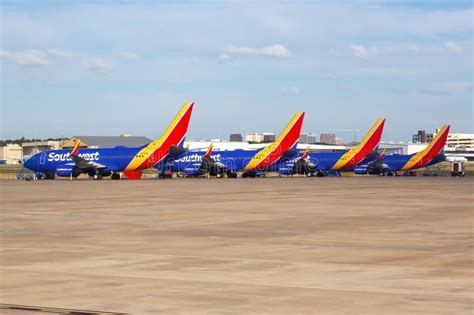
For more than half a century, Southwest’s operational identity revolved around point-to-point flying.
Unlike traditional carriers such as American Airlines, Delta Air Lines, or United Airlines, Southwest did not depend on a classic hub-and-spoke system. Instead of funneling travelers through giant transfer airports, the airline connected cities directly whenever possible.
The appeal was immediate and powerful.
Passengers could fly between destinations without enduring multi-hour layovers, stressful terminal changes, or the uncertainty of missed connections. A traveler heading from Nashville to Denver or Phoenix to Baltimore often enjoyed straightforward itineraries with minimal friction.
This model perfectly aligned with Southwest’s broader business philosophy: keep operations simple, aircraft moving, and costs under control.
Point-to-point flying delivered several operational advantages simultaneously. Aircraft could spend less time parked at gates. Ground crews could execute rapid turnarounds. Pilots and cabin crews operated within streamlined schedules. Fewer connection banks reduced cascading disruption risks across the network.
When delays occurred, the operational damage often remained more localized.
That mattered enormously in an industry where one storm cell, mechanical issue, or staffing shortage can create nationwide chaos.
Southwest’s network architecture also reduced dependence on massive hub infrastructure. Building a dominant connecting hub demands substantial investment in gate capacity, baggage systems, passenger processing, staffing coordination, and schedule management. By emphasizing direct flying, Southwest historically avoided some of those costs.
The formula worked exceptionally well during decades of domestic growth.
Low fares, fast aircraft utilization, and convenient nonstop travel became Southwest’s defining competitive weapons.
The Growing Limits Of The Traditional Southwest Model
The airline industry of the 2020s looks very different from the environment that helped Southwest rise to dominance.
Many of the strongest domestic point-to-point opportunities are already saturated. Competitive routes between desirable American cities are crowded with legacy airlines, ultra-low-cost carriers, and aggressive schedule expansions.
The low-hanging fruit has largely disappeared.
Southwest now faces a marketplace where simply adding another nonstop route no longer guarantees meaningful growth or sustained profitability.
At the same time, operating expenses continue climbing.
Fuel volatility remains a permanent concern across global aviation. Labor costs are rising sharply as airlines negotiate with pilots, mechanics, cabin crews, and airport employees in an increasingly constrained workforce environment.
These pressures affect every carrier, but they carry special implications for Southwest because its historical advantage relied heavily on operational efficiency and cost discipline.
As expenses climb, maximizing aircraft profitability becomes even more critical.
Point-to-point networks, despite their strengths, can sometimes limit an airline’s ability to aggregate passenger demand. A nonstop route between two cities depends heavily on local traffic demand alone. If enough people are not traveling specifically between those cities, maintaining profitable service becomes harder.
Hub systems solve that challenge differently.
They allow airlines to combine passengers arriving from multiple origins onto shared flights heading toward a common destination.
That difference matters enormously when airlines seek network expansion.
Why Hub-And-Spoke Systems Continue To Dominate Global Aviation
Legacy carriers did not adopt hub-and-spoke networks by accident.
The model persists because it solves one of aviation’s most difficult economic problems: how to fill airplanes efficiently across enormous geographic networks.
Under a hub-and-spoke structure, airlines concentrate flights through major connecting centers.
Smaller cities feed passengers into hubs. Those passengers then disperse onward across domestic or international networks.
The system creates powerful economies of scale.
Delta Air Lines uses Atlanta as an operational super-center connecting regional, domestic, and international traffic. American Airlines leverages Dallas/Fort Worth, Charlotte, and Chicago. United depends heavily on hubs like Denver, Newark, and Houston.
Internationally, Emirates transformed Dubai into one of the most influential aviation crossroads in modern history.
The hub model unlocks opportunities that point-to-point systems often struggle to replicate.
Airlines gain access to smaller markets because connecting traffic supports routes that local demand alone could never sustain. Schedule frequencies increase. Network flexibility expands. Premium travelers gain broader itinerary options.
Business travelers, in particular, value connection breadth.
Corporate customers increasingly seek airlines capable of offering extensive destination access, frequent departures, loyalty integration, and convenient one-stop itineraries.
That creates pressure on airlines that depend primarily on direct service between selected city pairs.
Southwest is increasingly confronting that reality.
Southwest’s New “High-Density Station” Strategy Explained
Southwest is not publicly declaring the death of point-to-point flying.
Instead, the airline is building what can best be described as a hybrid operating model.
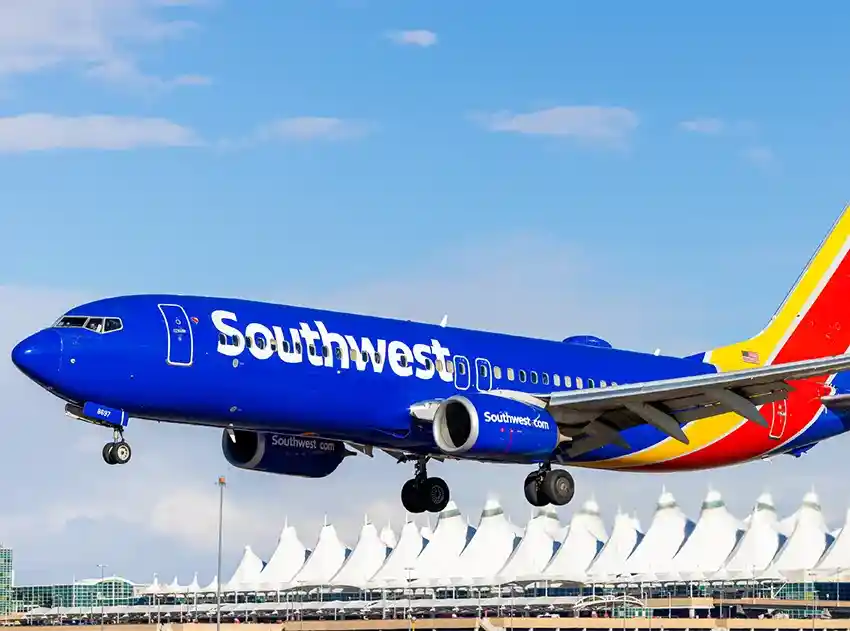
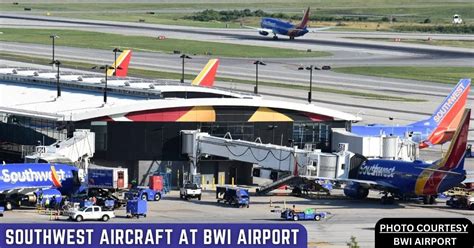
The company refers to major airports like Dallas Love Field, Denver International Airport, and Baltimore/Washington International Airport as “high-density stations.”
The terminology is strategic.
“Hub” carries traditional airline connotations that do not fully align with Southwest’s brand identity. Yet functionally, these high-density stations increasingly resemble mini-hubs built around concentrated departures, stronger connection flows, and coordinated network feeding.
Dallas Love Field already supports more than 200 daily departures. Denver exceeds 180 daily departures. Baltimore surpasses 150 daily departures.
Those are not small operational footprints.
They represent massive traffic concentration points capable of supporting expanded connectivity.
Instead of relying exclusively on direct city-to-city demand, Southwest can increasingly move passengers through these dense operational centers.
A traveler may no longer fly nonstop between every city pair. Instead, convenient one-stop itineraries become more common.
That change expands network possibilities dramatically.
Routes that previously lacked sufficient local demand suddenly become economically viable when supported by connecting traffic from multiple origins.
For Southwest, this is not merely about changing schedules.
It is about redesigning how the airline generates passenger flow.
International Expansion Is Forcing Southwest To Rethink Its Network
One of the strongest drivers behind Southwest’s evolving strategy is international growth potential.
International expansion changes the mathematics of airline networks.
Domestic nonstop flying can often survive on local passenger demand. International operations frequently require broader feed systems to consistently fill aircraft.
That is especially true when airlines explore longer-distance markets.
Southwest’s growing interest in expanded international opportunities introduces new complexity into network planning.
Speculation surrounding future destinations, including potential Iceland services, reflects a broader strategic question: how does Southwest support larger international ambitions using a network designed primarily around domestic point-to-point flying?
The answer increasingly points toward stronger connection architecture.
International routes need passengers arriving from dozens of origin markets, not merely one metropolitan area.
High-density stations provide that feed mechanism.
Passengers from Austin, Phoenix, Nashville, Orlando, Chicago, or Las Vegas can converge through concentrated operational centers before continuing onto longer-haul services.
Without meaningful connection capabilities, scaling international growth becomes considerably harder.
That reality is pushing Southwest toward a model closer to legacy network logic — even if the airline continues preserving substantial nonstop service across major routes.
The Business Traveler Opportunity Southwest Can No Longer Ignore
Another major factor behind Southwest’s strategic evolution is the changing profile of airline demand after the pandemic.
Premium and business travel dynamics have shifted significantly.
Travelers increasingly prioritize flexibility, convenience, broader network access, and efficient itinerary construction.
Pure point-to-point networks can excel for leisure travelers seeking straightforward nonstop flights. Business travelers often demand something more expansive.
They want access to secondary cities, flexible connections, higher departure frequencies, and reliable network depth.
Southwest recognizes that capturing more business traffic requires expanding beyond its traditional operating playbook.
The airline cannot fully compete for high-value corporate demand if travelers cannot easily connect beyond its strongest direct markets.
A hybrid connectivity model changes that equation.
It broadens Southwest’s addressable market without requiring the carrier to abandon its low-cost DNA entirely.
That balancing act may define the airline’s next decade.
The Hidden Costs Of Southwest’s Strategic Transformation
The transition away from pure point-to-point flying is not risk-free.
Operational complexity increases significantly when airlines depend more heavily on connecting traffic.
Baggage systems become more demanding. Staffing requirements expand. Scheduling coordination grows more intricate. Passenger rebooking challenges intensify during disruptions.
Connections introduce vulnerability.
Missed transfers, baggage delays, gate conflicts, and network ripple effects become more common in connection-heavy systems.
Ironically, these are some of the very operational complications Southwest historically avoided.
The airline’s network redesign could therefore erode certain efficiency advantages that helped distinguish it from competitors.
Cost pressures may intensify at major operational centers.
Ground staffing requirements grow alongside passenger volume. Aircraft coordination becomes more sophisticated. Infrastructure demands rise.
There is also competitive positioning risk.
If Southwest drifts too far toward legacy airline operating structures, it risks losing aspects of the simplicity that made the brand uniquely attractive.
Meanwhile, ultra-low-cost carriers such as Frontier continue pursuing aggressively low-cost point-to-point strategies.
Southwest must therefore navigate a delicate middle path.
Too much complexity could weaken cost discipline.
Too little connectivity could constrain future growth.
Southwest Airlines Is Pursuing The “Best Of Both Worlds”
The airline’s long-term vision appears increasingly clear.
Southwest is not abandoning direct flying entirely. The company still understands the enduring consumer appeal of nonstop service, rapid turnarounds, and simplified travel experiences.
Instead, the objective is to combine point-to-point efficiency with selective hub-like connectivity.
That hybrid structure could allow Southwest to preserve strengths that built its reputation while unlocking new revenue streams, stronger passenger flows, and expanded market reach.
Major airports including Dallas Love Field, Denver, Baltimore, Chicago Midway, Las Vegas, Phoenix, Houston Hobby, Orlando, and Nashville are likely candidates to play expanded roles within this framework.
These airports already support substantial Southwest operations.
Leveraging them more aggressively creates opportunities for network optimization without constructing entirely new operational ecosystems.
The airline is effectively evolving rather than reinventing itself.
That distinction matters.
Airline history is filled with carriers that failed because they resisted adaptation too long — or changed so radically they abandoned their competitive identity.
Southwest is attempting something more nuanced.
What Southwest’s Network Evolution Means For Passengers And The Future Of US Aviation
For travelers, Southwest’s transformation could produce mixed outcomes.
Passengers in large metropolitan markets may benefit from more frequencies, expanded route availability, and stronger network connectivity.
Travelers in smaller or lower-demand markets could encounter increased reliance on one-stop itineraries rather than guaranteed nonstop options.
Some routes may disappear.
Others may emerge for the first time because connecting demand makes them commercially sustainable.
The passenger experience itself may gradually evolve as Southwest integrates more sophisticated network coordination into daily operations.
For the broader airline industry, Southwest’s strategic pivot represents something larger than one carrier adjusting schedules.
It signals an acknowledgment that aviation economics are changing.
Even one of the most successful point-to-point airlines in history recognizes that pure nonstop-focused expansion has practical limitations inside today’s competitive environment.
Southwest’s future will likely be defined by how effectively it balances cost discipline, connectivity growth, operational reliability, and brand identity.
The airline dominated American skies by rewriting traditional airline rules.
Now it is selectively borrowing from the very network strategies it once challenged.
That paradox may ultimately define Southwest’s next chapter — not as a carrier abandoning its roots, but as one adapting its famous formula for a more complex aviation future.