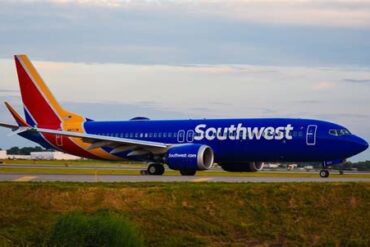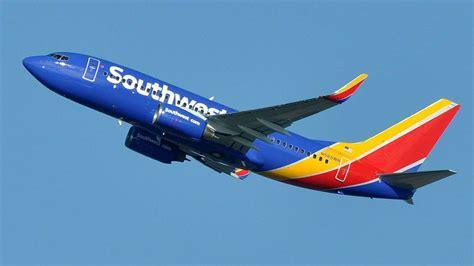
Southwest Airlines, long regarded as the pioneer of the point-to-point network, is now signaling a strategic departure from this model. For decades, the Dallas-based carrier has carved a niche in the U.S. aviation market by operating a lean, direct-service-focused network. But recent moves hint at a paradigm shift. Rising operating costs, competitive saturation, and a desire for greater network flexibility are compelling the airline to pursue a more hub-oriented strategy, though without fully abandoning its roots.
The original point-to-point model allowed Southwest to eliminate unnecessary layovers, minimize turnaround times, and boost aircraft utilization. Unlike traditional legacy carriers such as Delta, United, or American Airlines, which relied on complex hub-and-spoke systems, Southwest focused on direct flights between city pairs. This approach not only streamlined operations but also enabled the airline to offer lower fares and maintain its reputation as a low-cost leader.
However, the post-pandemic landscape has forced a reevaluation.
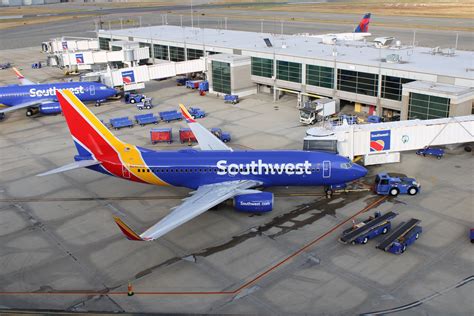
Rising Operational Pressures Are Rewriting the Playbook
Several factors are converging to make the point-to-point model less sustainable for Southwest. Chief among them are labor costs, which have surged across the airline industry following COVID-19. Contract negotiations have pushed up wages across nearly all unionized labor groups, from pilots to ground staff. Add to that the volatile price of jet fuel, and Southwest’s cost structure has taken a substantial hit.
Simultaneously, the competitive landscape in the U.S. has become more crowded. Ultra-low-cost carriers like Spirit and Frontier are aggressively targeting the very same markets that Southwest once dominated. These carriers operate with even leaner structures and often unbundle services further than Southwest, creating a pricing war that narrows profit margins.
Moreover, some of the most lucrative point-to-point routes are already saturated. As Southwest attempts to grow into new, longer-haul or international destinations, the limitations of a purely direct service network become evident. To maintain load factors on these routes, the airline requires connecting traffic from multiple origin points.
The Strategic Pivot: ‘High-Density Stations’ Over ‘Hubs’
To address these evolving dynamics, Southwest is introducing a network concept it refers to as ‘high-density stations.’ These are essentially de facto hubs, designed to mimic the connectivity benefits of hub-and-spoke models while preserving Southwest’s operational efficiency.
These high-density stations include:
- Dallas Love Field (DAL): Over 200 daily departures
- Denver International Airport (DEN): Over 180 daily departures
- Baltimore/Washington (BWI): Over 150 daily departures
These airports serve as central arteries, connecting to dozens of destinations multiple times per day. Rather than openly embracing the term “hub,” Southwest prefers the narrative of expanding access and boosting frequency—terms that resonate more clearly with its brand identity.

Why the Change Makes Business Sense
This shift is not merely a matter of semantics—it’s a critical business evolution. By adopting a more centralized network, Southwest can:
- Improve aircraft load factors by channeling traffic through a few key nodes
- Enable service to longer-haul and international routes
- Compete more effectively with legacy carriers for business travelers
- Expand operational control and flexibility during irregular operations
Southwest has hinted at exploring transatlantic service, with cities like Reykjavík appearing in internal discussions. However, serving such destinations effectively necessitates a reliable flow of passengers from smaller markets—a requirement that can’t be met under the old point-to-point framework alone.
Network Evolution Without Losing Identity
Despite these sweeping changes, Southwest insists it won’t become just another hub-and-spoke airline. The carrier is walking a delicate tightrope, striving to retain its brand promise of simplicity and low fares while strategically modifying its network to suit today’s realities.
At the heart of this strategy is a hybrid model—leveraging the best of both worlds. Popular direct routes like Los Angeles to Las Vegas or Chicago to Nashville will likely remain intact. But markets that require higher yields or more passenger feed will gradually shift toward connections via high-density stations.
Operational Challenges on the Horizon
Moving toward a more centralized model isn’t without its growing pains. Increasing the number of connections will require more robust baggage handling systems, higher staff levels, and improved on-time performance. The current infrastructure at Southwest’s busiest airports may need upgrades to handle the additional pressure of connecting flows.
In particular, ground operations—long the cornerstone of Southwest’s quick-turn reputation—will have to scale in sophistication. Connecting flights mean shorter layovers, tighter schedules, and more variables that can cause ripple delays. The airline will need to invest in technology, staffing, and operational protocols to ensure reliability doesn’t take a hit.
Additionally, as the carrier pursues more international opportunities, it will need to adapt to the regulatory and logistical complexities of cross-border operations—something it has limited experience with compared to its legacy competitors.
Competitive Positioning in a Changing Market
Southwest’s pivot reflects broader trends in the U.S. airline industry, where flexibility and adaptability are becoming paramount. As business travel rebounds and leisure demand remains robust, passengers are increasingly seeking options that combine convenience with affordability.
Legacy carriers have the edge in long-haul connectivity and premium service, but Southwest sees an opportunity in the middle ground—serving major domestic corridors with frequency, affordability, and seamless connections. In doing so, it aims to protect its turf from ultra-low-cost encroachment while nibbling at market share from traditional full-service competitors.
Moreover, the concept of loyalty and value-added services is becoming central to network planning. Business travelers want lounge access, priority boarding, and flexible rebooking options—amenities Southwest has traditionally avoided. But even that may change, with Southwest executives teasing the possibility of premium cabin offerings and airport lounges in future product roadmaps.
A Calculated Step Toward Long-Term Dominance
In sum, Southwest’s move away from pure point-to-point flying is not a retreat, but rather a strategic realignment. It’s a bid to ensure that the airline can continue to grow, evolve, and remain profitable in a market that demands connectivity, flexibility, and scale.
By adapting its network without compromising its operational DNA, Southwest aims to emerge as a next-generation hybrid carrier—one that offers the reliability and reach of a legacy airline with the price point and spirit of a low-cost leader.
For passengers in major cities like Dallas, Denver, or Baltimore, this transition is likely to result in more flight options, smoother connections, and even the possibility of international destinations from their hometown airport. For Southwest, it’s a chance to future-proof its business model, expand its customer base, and maintain its crown as one of the most efficient carriers in the sky.
As the industry watches closely, one thing is clear: the airline that built its name by connecting dots directly is now learning how to thrive by connecting them smartly.