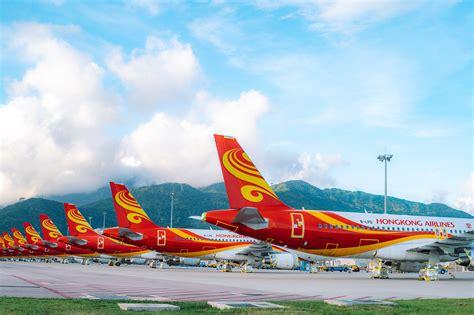
Hong Kong Airlines (HKA), headquartered in Tung Chung, represents a unique case study of a carrier that has navigated through ambitious expansion, geopolitical headwinds, and turbulent restructuring to maintain its place in the Asian aviation landscape. With a current fleet of 36 Airbus aircraft, a rejuvenated commitment to regional growth, and plans to re-enter the long-haul market, HKA’s journey is a testament to endurance and strategic recalibration.
The Origin of Hong Kong Airlines: From CR Airways to Regional Player
The roots of Hong Kong Airlines trace back to 28 March 2001, when aviation entrepreneur Robert Yip founded CR Airways. Initially focused on helicopter operations using a Sikorsky S-76 C+, the airline quickly pivoted to fixed-wing services. By 2003, the carrier began passenger charter operations, launching its first international flights to Laoag in the Philippines using a Bombardier CRJ200. Over the next two years, CR Airways expanded into markets like Siem Reap and gained scheduled route rights into mainland China, signaling its transition from charter operator to scheduled regional airline.
In 2005, ambitions soared with the signing of a Memorandum of Understanding (MoU) to acquire 10 Boeing 787s and 30 Boeing 737-800s, marking a dramatic upscaling of its fleet aspirations. The airline’s strategic direction caught the attention of Hainan Airlines, which acquired a 45% stake in June 2006. This acquisition set the stage for a complete transformation.
The Rebirth and Expansion: Becoming Hong Kong Airlines
By September 2006, CR Airways was rebranded as Hong Kong Airlines, unveiling a bauhinia-inspired logo and a new IATA code, HX. In 2007, a pivotal aircraft order worth US$5.6 billion was placed for 51 Airbus aircraft, encompassing both narrow- and wide-body models. This was a crucial strategic move to align the fleet with global expansion goals.
By 2008, the airline was preparing to launch A330-200 operations into the Middle East and Australia, positioning itself as a premium player in regional and intercontinental markets. With a renewed focus on fleet modernization and brand recognition, HKA entered a high-growth phase.
Strategic Growth and Global Recognition (2010–2012)
In 2010, Hong Kong Airlines gained its Air Operator Certificate (AOC) for the Airbus A330, enabling new services to Beijing and Moscow. It added a freighter variant, the A330F, into its Hangzhou operations and officially joined IATA, enhancing its international credibility.
By 2011, passenger numbers soared past one million, and the airline expanded to 19 destinations. It was awarded a 4-star Skytrax rating, validating its commitment to service quality. Perhaps the most ambitious move came in March 2012 with the launch of an all-business-class service to London Gatwick, using the A330-200. Though the six-month experiment was short-lived, it demonstrated the airline’s willingness to innovate and target premium segments.
Network Realignment and Enhanced Focus on Asia (2012–2016)
Realizing the constraints of overexpansion, Hong Kong Airlines conducted a network review in 2013, realigning toward Asia-Pacific markets. The carrier introduced services to Malé in the Maldives, and by the end of the year had phased out its Boeing fleet to streamline operations. Passenger traffic exceeded four million, showcasing the success of regional strategy.
In 2014, the airline ramped up service frequency to major cities like Beijing and Shanghai and introduced new destinations such as Ho Chi Minh City, Tianjin, and Kagoshima. It also relaunched its Club Bauhinia lounge, reinforcing its brand’s premium appeal.
By 2015, Hong Kong Airlines had become a founding member of BAR HK, initiated construction on a flight training center, and marked a milestone by operating the first departure from HKIA’s Midfield Concourse.
Intercontinental Ambitions and Flagship Services (2016–2018)
The years 2016 to 2018 saw the airline aggressively chasing long-haul markets. In April 2017, it spun off Hong Kong Air Cargo as a dedicated freight unit. The airline leased three Boeing 747-400 freighters via Atlas Air, enhancing its cargo capacity and market competitiveness.
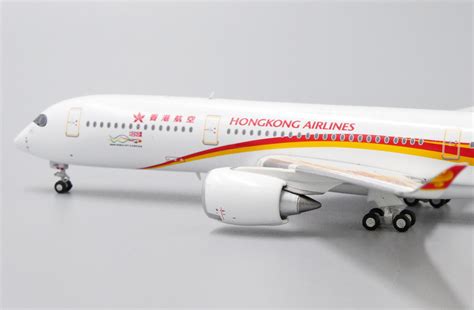
September 2017 marked the delivery of its first Airbus A350-900, which was quickly deployed on key routes like Bangkok. A new premium lounge, Club Autus, opened to coincide with the airline’s enhanced international push.
In December 2017, the airline entered the North American market, launching non-stop flights to Los Angeles and San Francisco. With a new slogan — “Where Hong Kong Begins” — HKA was poised to become a serious long-haul competitor.
Financial Pressures and Strategic Retrenchment (2018–2020)
Despite its promising trajectory, Hong Kong Airlines began facing financial turbulence by late 2018, triggered by escalating US–China trade tensions and the Hong Kong protests. Leadership instability followed, with top executives resigning.
Fleet numbers dropped from 38 to 28 aircraft, and long-haul routes like Gold Coast, Cairns, Auckland, Vancouver, and San Francisco were cut. These moves signaled a strategic withdrawal from loss-making routes to stabilize the business.
By early 2020, the COVID-19 pandemic dealt a crushing blow. The airline laid off 400 employees, instituted unpaid leave, and suspended in-flight services. The fleet was trimmed further as the A320s were grounded in mid-2021. Cargo operations were prioritized to ensure continuity, and passenger services were restricted to regional routes.
Resurgence and a Future-Oriented Vision (2021–2025)
Despite the setbacks, Hong Kong Airlines began a gradual recovery. Passenger services resumed in selective short-haul markets. In November 2024, HKA announced plans to relaunch service to the Gold Coast in January 2025 and signaled the acquisition of three used Boeing 787s to resume long-haul operations to North America.
Additionally, the airline expressed interest in the Comac C919, a Chinese-made narrow-body aircraft, aligning with broader goals of fleet diversification and cost efficiency. Fleet size rebounded from 21 to 30 aircraft, with continued emphasis on Asian network connectivity and cargo performance.
Corporate Structure and Subsidiaries
Originally managed by the State-owned Assets Supervision and Administration Commission (SASAC) of Hainan Province, Hong Kong Airlines came under the umbrella of Liaoning Fangda Group after 2021. The airline’s headquarters are located in One Citygate, strategically close to Hong Kong International Airport.
Key subsidiaries include:
- Hong Kong Air Cargo (freighter services)
- SATS HK (ground handling operations)
- HKA Holidays (tourism packages and travel products)
Community Outreach and Social Commitments
HKA has maintained a visible role in the community. As the official carrier of the Hong Kong Paralympic Committee, the airline also supports initiatives like the Caritas fundraising campaign and World Diabetes Day 2012. It actively runs aviation engagement programs for youth, including “Triumph Sky High” and “Embrace the World.”
In-Flight Services and Passenger Experience
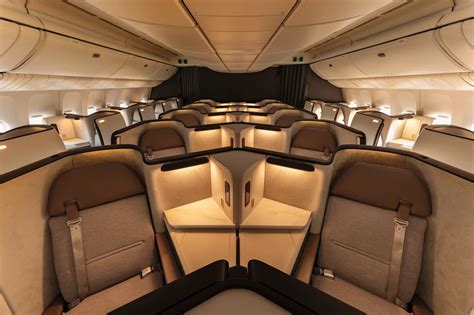
The airline’s business class offering includes 180° lie-flat beds, direct aisle access, and lounge access to Club Autus and Club Bauhinia. While economy class generally lacks personal IFE screens, passengers are offered complimentary tablets with video-on-demand content for long-haul flights.
Loyalty and Codeshare Partnerships
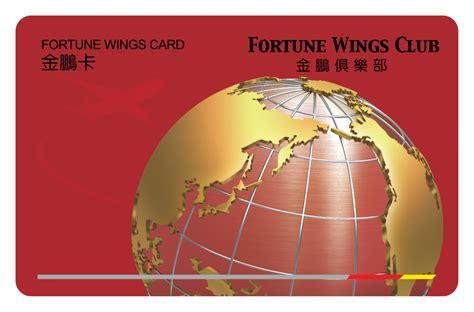
Fortune Wings Club, the frequent-flyer program shared with Hainan Airlines and other affiliates, allows passengers to enjoy a broad network of perks:
- Ticket redemption
- Cabin upgrades
- Lounge access
- Bonus mileage
- Extra baggage allowance
The airline has codeshare agreements with major carriers including EVA Air, Bangkok Airways, Garuda Indonesia, Turkish Airlines, and WestJet, boosting its network reach across Asia, the Middle East, and North America.
Fleet Composition and Future Prospects
As of May 2025, Hong Kong Airlines operates:
- 17 Airbus A320-200s
- 3 Airbus A321-200s
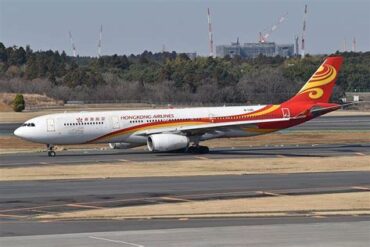
- 11 Airbus A330-300s
- 5 Airbus A330-200Fs (freighters)
The retired fleet includes the A330-200, A350-900, Boeing 737 variants, and Bombardier CRJ series.
Future acquisitions, including Boeing 787s and potentially the Comac C919, indicate a focus on cost-efficient and versatile operations suitable for both regional density and long-haul reentry.
Conclusion: An Airline Shaped by Resilience
From a modest helicopter operator to a globally recognized regional carrier, Hong Kong Airlines has endured market volatility, operational setbacks, and geopolitical pressures. Yet through strategic adaptability, community involvement, and a renewed fleet strategy, HKA is poised to redefine itself as a premium Asia-focused airline with aspirations to recapture the long-haul spotlight.
Its story is not merely about survival—it’s a narrative of resilience, recalibration, and resurgence in one of the world’s most competitive aviation hubs.