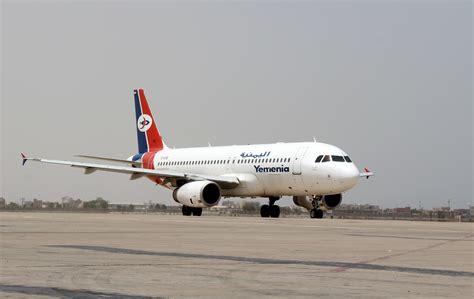
Yemenia, officially Yemen Airways, stands as a symbol of endurance and identity amid decades of political upheaval, conflict, and infrastructural challenge. As the flag carrier of Yemen, its story weaves through colonial legacies, regional conflicts, fleet evolutions, and resilience in one of the world’s most complex aviation environments.
Founded in the 1940s under the reign of King Ahmad bin Yahya, the airline began operations as Yemen Airlines, setting the groundwork for a national aviation ambition that would mature through postcolonial realignments and Cold War pressures. Officially re-licensed as the state carrier on 4 August 1962, Yemenia’s name and form have evolved through a series of organizational transformations reflecting broader political dynamics.
By the late 1960s, the airline was renamed Yemen Arab Airlines under a cooperative arrangement with United Arab Airlines. However, in 1972, it was fully nationalized and reorganized as Yemen Airways Corporation (YAC). Its early operations relied on propliners like the Douglas DC-6Bs and DC-3s, along with leased Boeing 737-200s, forming the backbone of domestic and limited international services.
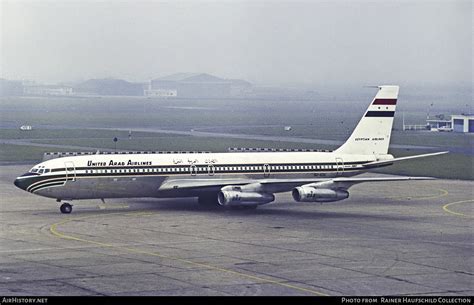
In a major structural shift, 1977 brought about a joint venture between Yemen and Saudi Arabia, relaunching the airline under the name Yemen Airways in 1978. Aircraft such as Boeing 707-320Cs, contracted from British Midland, and maintenance services provided by Pan American World Airways (Pan Am) signaled growing ambition. By 1980, Yemenia operated a diversified fleet including Boeing 727-200s, 737-200s, alongside legacy aircraft, reaching cities across the Middle East and the Horn of Africa.
Growth, Unification, and Fleet Modernization
The unification of North and South Yemen in 1990 marked a defining moment for the carrier. In 1992, Saudi Arabia exited its ownership stake, allowing for a strategic merger with Alyemda (Democratic Yemen’s airline) in 1996. Yemenia absorbed Alyemda’s assets and network, gaining critical capacity and reach. This was accompanied by the acquisition of modern aircraft including Airbus A310-300s introduced between 1995 and 1997.
By the year 2000, Yemenia had emerged as a well-equipped mid-size regional airline. Employing over 4,000 staff, it managed a complex fleet comprised of A310s, Antonov An-26s, Boeing 727s and 737s, de Havilland Dash 7s and DHC-6s, and Lockheed C-130 Hercules aircraft. The addition of the Boeing 737-800 in 2002 and the Airbus A330-200 in 2004 demonstrated a pivot toward long-haul capability.
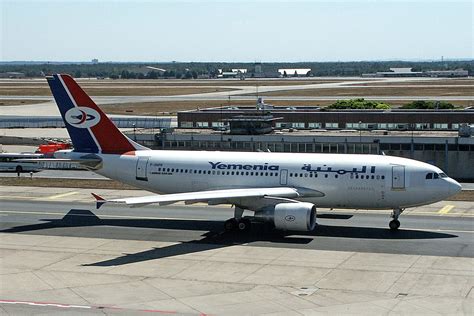
Nevertheless, operational expansion soon met regulatory challenges. In 2008, EU safety restrictions triggered scrutiny over maintenance and oversight, and services to Frankfurt—one of its most prestigious European routes—were suspended and then cautiously reinstated in December 2009. In January 2010, the UK imposed a ban on Yemenia flights over unresolved security concerns.
Collapse and Resurgence Amid War
The outbreak of civil war in Yemen in 2015 resulted in the near-total collapse of Yemenia’s commercial operations. All flights were suspended in March 2015, with only limited service to Aden restored in August of that year. Continuous blockades and restrictions by regional military coalitions left the airline functionally grounded.
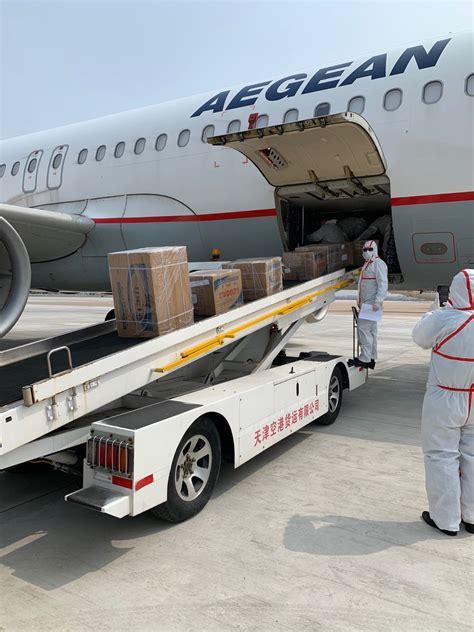
Despite this, Yemenia played a crucial humanitarian role. It operated repatriation flights during the COVID-19 pandemic, providing rare mobility in a country otherwise closed to the world. The carrier retired its aged Airbus A310 fleet in June 2020, and its once diverse network shrank dramatically.
Yet against odds, limited services from Sanaa International Airport resumed in May 2022, a result of fragile ceasefire agreements. The symbolic resumption of direct flights from Sanaa to Jeddah in June 2023 marked a diplomatic milestone. Yemenia was again proving indispensable—not merely as an airline, but as an enabler of national connectivity and identity.
The 2024–2025 Recovery and Crisis
Yemenia faced a significant operational hurdle in May 2024 when three aircraft were seized under opaque legal and political circumstances. Despite this, the airline managed to restart routes to Cairo, Egypt and Mumbai, India by July 2024, rebuilding confidence among diaspora and migrant worker communities.
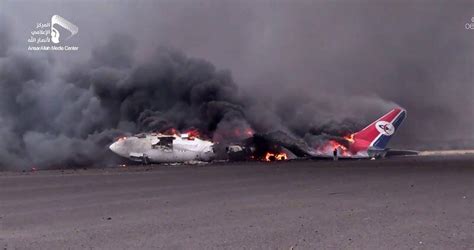
However, its operations were again jeopardized in May 2025, when an Israeli airstrike on Sanaa International Airport destroyed three of its remaining aircraft, including its sole Ilyushin Il-76 cargo jet. This attack critically reduced Yemenia’s capacity and underscored the vulnerability of civilian infrastructure in regional conflicts.
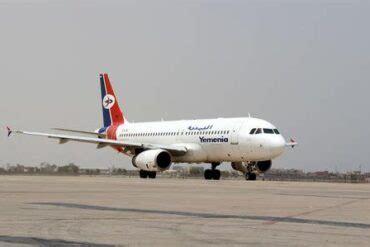
Despite these devastating losses, the airline remains operational with a fleet of four Airbus A320-200s, each configured with 12 business class and 138 economy class seats. Yemenia is also banking on the future, with ten Airbus A350-900s on order, representing its long-term vision of recovery and relevance.
Corporate and Infrastructure Resilience
Yemenia’s corporate headquarters remain officially located in Downtown Sanaa, although its original building was destroyed during the May–June 2011 clashes. In practice, operations are now split between Aden and Seiyun, with significant reliance on international hubs for maintenance and logistics.
The postwar route map, as of July 2024, includes five domestic and six international destinations. While flights from Sanaa, Aden, and Seiyun form the core network, service reliability remains precarious, often subject to shifting political and military conditions.
Fleet Legacy and Development Strategy
Over the decades, Yemenia’s fleet has been a patchwork of old and new, east and west. Historically, it has operated:
- Douglas DC-3, DC-6A/B
- Boeing 727, 737 (200, 800), and 747SP
- Airbus A310, A320, A330-200
- de Havilland DHC-6, Dash 7
- Ilyushin Il-76, used primarily for heavy cargo
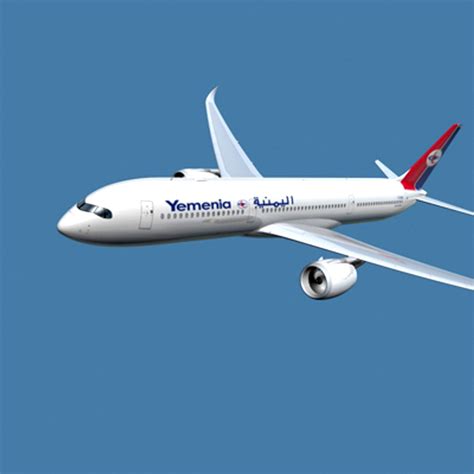
In 2008, Yemenia placed an ambitious order for ten A350-800s, later converted to A350-900s. A separate procurement of ten A320s was made in 2009–2010, with the first arriving in April 2011. Four of these have since been upgraded to the A320neo standard to improve fuel efficiency and range.
Tragedy and Safety Record
Yemenia’s history is not without tragedy. The airline has suffered multiple fatal accidents and incidents, including:
- 1958, 1969, and 1971: Crashes involving Douglas C-47 aircraft.
- 1970s: A series of politically motivated hijackings.
- 2000 and 2001: Runway excursions involving 737s and Dash 7s.
- 2007: Aircraft damaged by gunfire on the ground.
- 2009: The catastrophic crash of Yemenia Flight 626, an Airbus A310, into the Indian Ocean en route to the Comoros. Of 153 people on board, there was only one survivor—a 14-year-old girl.
- 2015: Aircraft destroyed during militia ground assaults.
- 2020: Missile strike on Sanaa airport disabled parked aircraft.
- 2025: Israeli airstrike destroys three aircraft during Gaza-related escalations.
Conclusion: Wings of a Nation in Turmoil
Yemenia’s role in Yemen’s modern history cannot be overstated. It is far more than a transportation service; it is a vessel of national sovereignty, a lifeline for citizens, and a symbol of endurance amid destruction. While most global carriers measure success in profits and expansion, Yemenia’s achievements are measured in survival and service—delivering aid, reuniting families, and upholding national identity in a fractured land.
Looking forward, Yemenia faces monumental challenges: from rebuilding its fleet and restoring public trust to securing international partnerships and airspace rights. Yet its continued existence speaks to a stubborn optimism, one born not of convenience but of national necessity.
In a world of sterile global airline alliances and profit-driven consolidations, Yemenia remains unique—a carrier defined not by market metrics, but by the turbulent soul of the nation it serves.