A Bold Beginning in Vietnam’s Competitive Skies
Founded on 31 May 2017, Bamboo Airways swiftly positioned itself as an ambitious player in Southeast Asia’s aviation market. Backed initially by the FLC Group, the airline envisioned bridging underserved Vietnamese cities with major global destinations, carving a niche between full-service legacy carriers and budget airlines. Its operational debut on 16 January 2019 with a leased Airbus A320 on the Ho Chi Minh–Hanoi route marked a defining moment for Vietnam’s aviation scene.
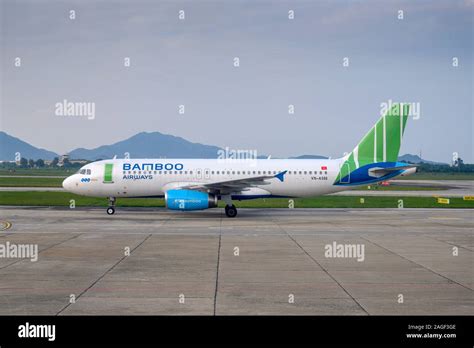
Bamboo adopted a hybrid airline model, blending full-service amenities like free baggage and in-flight meals with low-cost efficiency. It introduced the Bamboo Club, its frequent flyer program, aiming to nurture customer loyalty from the outset. The airline established operational bases at Noi Bai (Hanoi), Tan Son Nhat (Ho Chi Minh City), and Phu Cat (Quy Nhon) to connect Vietnam’s economic and tourist hubs.
Ambitious Fleet Expansion Fueled by Multi-Billion Dollar Orders
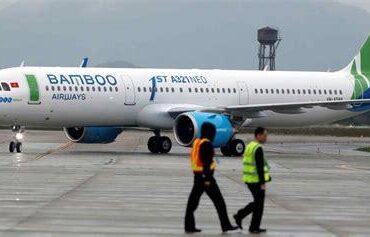
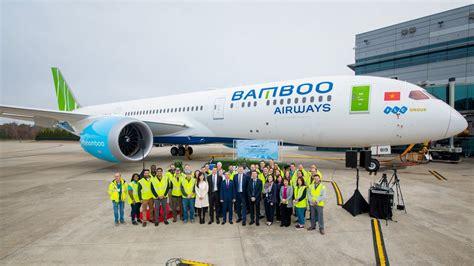
The initial strategy leaned heavily on rapid fleet expansion. Bamboo signed a Memorandum of Understanding in March 2018 to acquire 24 Airbus A321neos, valued at US$3.1 billion. Just months later in June 2018, it made headlines again by ordering 20 Boeing 787-9 Dreamliners, committing over US$5.6 billion to future long-haul growth. By March 2019, Bamboo had raised its Airbus order to 50 aircraft, including 26 additional A321neos worth another US$6.3 billion.
These moves were bold but calculated. The long-range 787-9s were intended for intercontinental routes to Europe and Australia, enabling Bamboo to challenge dominant international players. The first A321neo arrived in December 2018, followed closely by the 787-9 in December 2019. The fleet also briefly included Embraer E190s and E195s, used to serve smaller Vietnamese airports.
Operational Setbacks and Leadership Crisis
Despite early promise, Bamboo’s trajectory was disrupted by corporate turbulence. In March 2022, founder Trịnh Văn Quyết was arrested for alleged stock market manipulation, triggering a temporary confidence crisis. Though the Civil Aviation Authority of Vietnam (CAAV) declared operations remained “smooth,” the situation led to regulatory oversight and the search for new strategic investors.
By Q3 2022, FLC’s stake was diluted to around 21%, with restructuring plans quietly advancing. The pivotal moment came in March 2023, when new investors assumed control, and the airline showcased its first FLC-free aircraft, signaling a new chapter in governance and brand identity.

Him Lam Group’s Takeover and the Road to Recovery
On 21 June 2023, Him Lam Group officially became Bamboo Airways’ new parent company. Rumors of impending bankruptcy were promptly denied, with new leadership emphasizing sustainability over unchecked expansion. Financially, the airline faced enormous pressure, posting a net income of –US$722.5 million in 2022, despite holding US$1.4 billion in assets as of 2020.
Sacombank, a major Vietnamese bank, was linked to Him Lam’s takeover, providing confidence in liquidity and operational continuity. In October 2023, aviation industry veteran Luong Hoai Nam was appointed CEO, tasked with executing a leaner, more resilient business model.
Fleet Downsizing and Realignment
Bamboo Airways’ initial target of operating 100 aircraft by 2028 has been revised drastically. By December 2023, its active fleet had shrunk to just 7 aircraft, all leased:
- 2 × Airbus A320-200
- 1 × A320neo
- 4 × A321-200
This downsizing followed the retirement of several aircraft types:
- Boeing 787-9 (2019–2023), two of which were transferred to Austrian Airlines
- A321neo, phased out despite forming the backbone of early expansion
- Embraer E190 and E195, removed by 2024
- A319-100, retired between 2019 and 2022
The revised strategy focuses on profitable domestic routes and select international charters, reducing cost exposure from long-haul operations.
Network Retrenchment and Strategic Focus
As of February 2024, Bamboo Airways maintains a domestic footprint covering over 20 Vietnamese cities. Its key hubs remain Hanoi, Ho Chi Minh City, and Quy Nhon, with strong presence in tourism-driven regions like Da Nang and Nha Trang.
International ambitions have been scaled back significantly. Once-regular routes to Australia (Sydney, Melbourne), Germany (Frankfurt), the UK (Gatwick, Heathrow), and Singapore have been largely suspended or converted to charter-only operations. Routes to Japan, Taiwan, and Thailand have similarly faced cuts, leaving the airline’s international ambitions in hiatus.
Codeshares and Interline Agreements
In its current configuration, Bamboo Airways seeks stability through partnerships rather than independent route growth. It maintains a codeshare agreement with Myanmar Airways International, offering broader Southeast Asian connectivity. Additionally, interline agreements with Air Canada and Hahn Air allow passengers to book through itineraries beyond Bamboo’s limited network, sustaining relevance among global travelers.
These partnerships are essential to maintaining a presence in the international booking ecosystem, even as direct route offerings decline.
Governance, Headquarters, and Organizational Shifts
Bamboo Airways has undergone a comprehensive corporate transformation. Following Him Lam’s acquisition, key leadership roles were realigned:
- Le Thai Sam – Chairman
- Le Ba Nguyen – Vice Chairman
- Luong Hoai Nam – CEO
In March 2024, the airline moved its headquarters from Cau Giay District (Hanoi) to Ho Chi Minh City, placing its strategic and operational command closer to Vietnam’s commercial epicenter. The Hanoi office was downgraded to a representative office in Long Bien, reflecting this strategic realignment.
Looking Forward: Lessons and Prospects
Bamboo Airways represents one of the most ambitious yet cautionary case studies in modern aviation. Its meteoric rise, driven by aggressive aircraft orders and a vision to rival regional giants, was ultimately unsustainable amid external shocks and internal mismanagement.
Today, the airline’s pivot toward cost-efficiency, route rationalization, and domestic focus may provide the foundation for a more measured and viable future. The new leadership, backed by Him Lam Group’s financial clout and industry expertise, offers a genuine opportunity for recovery — but only if the strategy avoids the overreach that characterized its earlier years.
Vietnam’s aviation sector continues to grow, and a leaner Bamboo Airways may yet play a vital role in connecting underserved regions and offering travelers a competitive alternative to the state-backed Vietnam Airlines and budget rivals like VietJet Air.
Whether Bamboo Airways will reclaim its international ambitions or settle as a robust domestic operator remains uncertain. But one thing is clear: its story continues to evolve, and the airline remains a significant part of Vietnam’s complex aviation tapestry.