The air route authority between the United States and China represents one of the most complex and strategically significant aviation markets globally. Unlike the liberalized “open skies” agreements the U.S. enjoys with many nations, the pathways connecting these two economic powerhouses are governed by a series of bilateral treaties that meticulously regulate flight frequencies, permissible routes, and designated carriers. This framework has fostered a highly competitive environment where airlines from both nations vie for coveted route authorities, often engaging in extensive lobbying efforts to secure access. The evolution of this market, from its nascent stages following the normalization of diplomatic relations to its current, pandemic-altered state, offers a compelling study in international aviation policy, economic interests, and geopolitical dynamics. The journey has been marked by periods of cautious expansion, ambitious growth, and unprecedented disruptions, all underscoring the delicate balance required to manage air connectivity between these two global giants.
The Genesis of Connection: Early Agreements and the Dawn of Trans-Pacific Flights
Prior to the establishment of formal diplomatic relations in 1979, direct air service between the People’s Republic of China and the United States was non-existent, a casualty of the Cold War political climate. While flights operated to Taiwan, mainland China remained isolated from direct U.S. air links. The diplomatic thaw, however, paved the way for a landmark bilateral air agreement signed on September 17, 1980. This pivotal accord laid the groundwork for the first direct commercial flights. In January 1981, a new chapter in aviation history began as CAAC (Civil Aviation Administration of China), then China’s sole airline and regulatory body, and the iconic Pan American World Airways (Pan Am) inaugurated services. CAAC launched its Beijing–Shanghai–San Francisco–New York City route (CA981/982) on January 7, 1981, while Pan Am commenced its New York–Tokyo–Beijing service on January 28, quickly rerouting it via Shanghai. These initial services, often utilizing an intermediate stop in Tokyo, were monumental, symbolizing a new era of engagement. By April 1982, CAAC had expanded its U.S. footprint with a Beijing–Shanghai–San Francisco–Los Angeles service. These early flights, though limited in frequency, were crucial in bridging the vast Pacific.
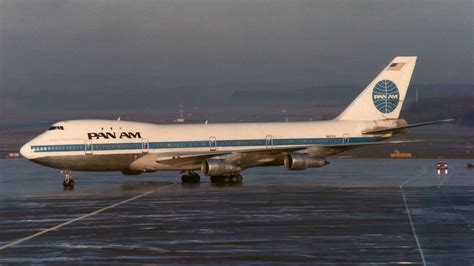
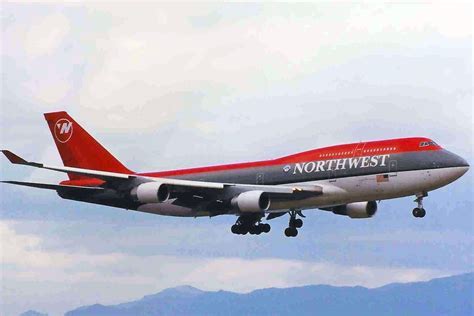
Northwest Airlines joined the trans-Pacific foray in 1984, securing approval for a Seattle–Tokyo–Shanghai route. The reliance on Japanese stopovers was a common feature in these early years, partly due to aircraft range limitations and existing fifth-freedom rights under the Japan-U.S. Aviation Agreement, which allowed U.S. carriers like Pan Am and Northwest to operate services from Tokyo to other Asian destinations. A significant shift occurred in 1985 when a financially strained Pan Am sold its Pacific route authority, aircraft, and equipment to United Airlines. This transaction saw United take over Pan Am’s trans-Pacific routes in February 1986, marking its entry into this burgeoning market. Further changes were afoot in China; in 1988, the monolithic CAAC was restructured and split into multiple airlines, with Air China inheriting CAAC’s U.S. route authority. This reorganization set the stage for increased competition among Chinese carriers in the years to come, with China Eastern Airlines, for instance, inaugurating a Beijing–Shanghai–Los Angeles flight in August 1991.
A Tightly Regulated Sky: The Intricacies of US-China Aviation Treaties
The framework governing US-China air travel stands in stark contrast to the more liberal “open skies” agreements the United States has with numerous countries, including Hong Kong (since 2002). There is no overarching “open skies” pact between the People’s Republic of China and the U.S. mainland, meaning that flight operations are not unrestricted. Instead, the current US-China treaty specifies the exact number of flights permitted for carriers from each nation. This highly regulated environment makes the application process for route authority intensely competitive. Airlines seeking to launch or expand services must navigate a complex approval process, often seeking support from local politicians and the general public to influence government decisions. The limited number of available slots means that each award is highly prized and can significantly impact an airline’s international network and profitability. This scarcity, particularly in the early decades, also contributed to relatively high airfares between the two countries. While the stated long-term goal for both nations has often been an eventual open skies agreement, the path towards such liberalization has been slow and fraught with challenges, reflecting differing market conditions and competitive capacities. Liu Weimin, a director with the Civil Aviation Management Institute of China, noted the apprehension among local carriers about competing head-on with U.S. aviation giants, suggesting that for Chinese airlines, more flights could potentially mean more losses without sufficient passenger uptake, especially in premium cabins where load factors on Chinese carriers were reportedly lower than on their U.S. counterparts. Interestingly, not all route authorities granted to Chinese airlines were always fully utilized, indicating the complexities of operationalizing these hard-won rights.
The Era of Gradual Expansion: Key Agreements and Growing Connectivity (1990s-2000s)
The late 1990s and early 2000s witnessed significant, albeit incremental, steps towards expanding air services. A milestone was achieved on May 1, 1996, when Northwest Airlines operated the first scheduled non-stop flight between the two countries, connecting Detroit and Beijing three times a week. This was followed by China Southern Airlines launching its non-stop Guangzhou to Los Angeles service on July 20, 1997, notably using a Boeing 777-200ER, making it the world’s first airline to operate trans-Pacific flights with twin-engine aircraft under ETOPS (Extended-range Twin-engine Operational Performance Standards). United Airlines also strategically shifted its operations; in April 2000, it discontinued its Shanghai–Tokyo service to launch its first U.S.–China non-stop route from San Francisco to Shanghai, followed by a similar switch from Beijing–Tokyo to non-stop Beijing–San Francisco service in June 2000, all driven by the flight number restrictions under the prevailing agreement.
The 1999 Air Services Agreement was a crucial catalyst, allowing airlines from each country to nearly double the number of weekly flights from 27 to 54, including dedicated cargo flights. It also permitted each country to designate one additional airline, bringing the total to four carriers from each nation. This paved the way for United Airlines to secure additional frequencies. A more comprehensive agreement was signed in July 2004, which, in principle, allowed carriers from each country to serve any city in the other. Prior to this, Chinese carriers were limited to 12 U.S. cities, and U.S. passenger carriers to only five Chinese cities. The 2004 pact also permitted unlimited code-sharing, a significant enhancement from previous limitations. This agreement directly led to the 2005 expansion of flights, including new services like Northwest Airlines’ Tokyo to Guangzhou route (though operated via Japan) and United Airlines’ non-stop Chicago–Shanghai flights. Further expansions occurred in 2006 when the U.S. Department of Transportation (USDOT) awarded American Airlines authority for Chicago-Shanghai and Continental Airlines for Newark-Beijing. United Airlines also won the bid for a highly sought-after Washington, D.C. (Dulles) to Beijing route, which commenced in March 2007.
Negotiations continued, leading to the 2007 agreement, which promised a more substantial liberalization over the subsequent years. This agreement uniquely categorized Chinese cities into three “zones,” each with different air route capacity limits and regulations. Zone 1 comprised Beijing, Shanghai, and Guangzhou; Zone 2 included coastal and economically developed provinces; and Zone 3 covered other provinces, with flights to Zone 3 cities not subject to frequency limitations. Critically, the 2007 agreement laid out a phased increase in flight frequencies, aiming to expand the number of U.S. airlines flying to China from four to nine and the total weekly passenger flights from 54 to 249 by 2011, excluding services to Guam and the Northern Mariana Islands which received nearly unlimited rights. For the 2007, 2008, and 2009 awards, the USDOT decided to award routes in a consolidated manner. In 2007, Delta Air Lines was awarded the Atlanta–Shanghai route. For 2008, United Airlines was granted rights for San Francisco–Guangzhou. The 2009 expansion saw US Airways initially awarded Philadelphia–Beijing (later relinquished), and routes granted to established carriers: American Airlines for Chicago–Beijing, Continental Airlines for Newark–Shanghai, and Northwest Airlines (soon to be Delta) for Detroit–Shanghai. Alongside these awards, the USDOT also stipulated that route authority must be operated for five years before it could be sold, up from the previous one-year requirement.
Accelerating Growth and Diversifying Gateways (2010-2019)
The decade leading up to 2020 was characterized by a significant acceleration in the expansion of air services between the United States and China, with both U.S. and Chinese carriers aggressively adding new routes and increasing frequencies. In 2010, the USDOT approved new routes for American Airlines (Los Angeles–Shanghai) and United Airlines (Los Angeles–Shanghai), while Delta Air Lines reactivated its Atlanta–Shanghai service and secured a new Beijing–Detroit route. Hawaii also emerged as a key destination, with China Eastern Airlines launching Shanghai–Honolulu services in 2011, followed by Air China (Beijing-Honolulu) and Hawaiian Airlines (Beijing-Honolulu) in subsequent years, tapping into the growing Chinese tourism market.
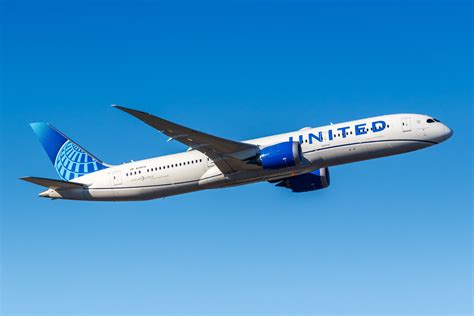
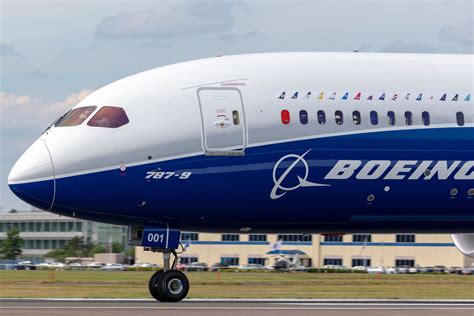
A notable trend during this period was the introduction of services to secondary, yet economically vibrant, Chinese cities. United Airlines was a pioneer in this regard, launching flights from San Francisco to Chengdu in 2014, Xi’an in 2016 (seasonal), and Hangzhou in 2016, utilizing more efficient long-haul aircraft like the Boeing 787 Dreamliner. Chinese carriers also expanded their U.S. networks beyond primary hubs. Air China launched routes such as Houston–Beijing, Washington D.C.–Beijing, and Shenzhen–Los Angeles. China Eastern Airlines added connections like Nanjing–Los Angeles and Qingdao–San Francisco. Hainan Airlines became particularly active, establishing a significant U.S. presence with routes from Beijing to Seattle, Chicago, Boston, San Jose, and Las Vegas, and from Shanghai to Boston and Seattle. They also connected interior cities like Changsha, Chengdu, and Chongqing to Los Angeles and New York. Other Chinese carriers like XiamenAir (e.g., Xiamen/Shenzhen–Seattle, Fuzhou–New York) and Sichuan Airlines (e.g., Chengdu/Hangzhou/Jinan–Los Angeles) also entered the market, further diversifying options for travelers. By 2018, there were an impressive 61 non-stop routes (excluding Hong Kong and Macau) operated by four U.S. carriers and six Chinese carriers, a stark increase from the 10 non-stop flights available in 2006. This robust network facilitated not only tourism but also crucial business travel and cargo transport, reflecting the deepening economic ties between the two nations. Airline alliances such as Star Alliance (United, Air China), SkyTeam (Delta, China Eastern, China Southern), and Oneworld (American) played a vital role in this expansion, offering codesharing and reciprocal frequent flyer benefits to enhance passenger traffic.
The Unprecedented Disruption: COVID-19 and Its Profound Impact
The COVID-19 pandemic, beginning in early 2020, brought about an unprecedented and devastating disruption to the flourishing U.S.-China aviation market. Passenger demand plummeted almost overnight. In early February 2020, major U.S. carriers—American, Delta, and United—announced the suspension of all flights to China. In stark contrast, Chinese carriers such as Air China, China Eastern, China Southern, and Xiamen Airlines continued to operate a significantly reduced schedule, maintaining a skeletal network. By mid-February 2020, the number of weekly passenger flights had cratered from approximately 325 pre-pandemic to a mere 20, all operated by Chinese airlines. As the pandemic’s epicenter shifted, demand for essential travel from the U.S. to China saw a relative increase, leading to a slight rise in weekly flights by Chinese carriers to 34 by March 2020, supplemented by private charter flights.

A critical point of contention arose with the Civil Aviation Administration of China (CAAC)’s “Notice of March 26,” which imposed severe restrictions on international flights. This policy, widely known as the “Five-Ones” Policy, permitted each Chinese airline to maintain only one route to any specific country with no more than one flight per week. Foreign airlines were similarly restricted to one route to China with no more than one weekly flight, based on schedules approved by CAAC on March 12. The USDOT voiced strong dissatisfaction, particularly because the March 12 baseline schedule effectively excluded U.S. carriers, which had already suspended their services. The USDOT argued that this policy was inconsistent with the 1980 Air Transport Agreement and afforded Chinese carriers preferential treatment. Despite U.S. carriers’ intentions to resume services, CAAC approvals were not forthcoming. This led to escalating tensions, with the USDOT issuing Order 2020-5-4 in May, imposing schedule filing requirements on Chinese airlines, and then, on June 3, Order 2020-6-3, which disapproved all flight schedules filed by Chinese carriers, effectively threatening a complete halt of their U.S. operations. In response, CAAC slightly eased its policy, allowing airlines to increase flights if they met certain COVID-19 testing criteria. On June 15, 2020, a fragile truce was reached, permitting each country to operate four weekly flights. Delta and United cautiously resumed limited services, often with a crew-switch stopover in Seoul to navigate China’s quarantine rules. By August 2020, this was increased to eight weekly round-trip flights for each country’s carriers. However, the situation remained fraught, further complicated by CAAC’s “circuit breaker” policy, which mandated flight suspensions or capacity restrictions if a certain number of passengers tested positive for COVID-19 upon arrival. This led to numerous cancellations of U.S. carrier flights by CAAC, prompting retaliatory measures from the USDOT, which suspended an equivalent number of flights by Chinese carriers. This tit-for-tat dynamic persisted through 2021 and 2022, severely limiting air travel and creating immense uncertainty for passengers. The “Circuit Breaker” mechanism was eventually officially halted in November 2022 as China began to pivot away from its strict Zero-COVID policy.
Charting a Course to Recovery: The Slow Rebuilding of US-China Air Links (2023-Present)
China’s decision to ease its stringent entry restrictions on January 8, 2023, marked a significant turning point, theoretically paving the way for the recovery of international travel, including routes to the United States. However, the resumption of flight services has been notably slow and incremental. U.S. carriers began to restore some normalcy, with United Airlines resuming nonstop operations for its San Francisco–Shanghai (SFO–PVG) flights in late January 2023, and Delta Air Lines following suit for its China-bound flights in March 2023. American Airlines also increased its Dallas/Fort Worth–Shanghai (DFW–PVG) services. A new complicating factor emerged from the Russian invasion of Ukraine. U.S. carriers, adhering to government policies, ceased using Russian airspace for their Asia-bound flights. This created a significant operational and cost disadvantage compared to Chinese carriers, which continued to fly over Russia, benefiting from shorter flight times and lower fuel burn, particularly on routes to the U.S. East Coast. This disparity led to U.S. carriers lobbying their government not to grant Chinese airlines additional flight frequencies unless they also agreed to avoid Russian airspace or a level playing field was otherwise established.

The USDOT adopted a strategy of “balanced and incremental” normalization of the U.S.-China air transport market. On May 3, 2023, an order was issued increasing the quota for weekly flights by Chinese carriers from 8 to 12. This was followed by a series of further increases: on August 11, 2023, the USDOT announced that Chinese carriers could operate up to 18 weekly flights from September 1, and 24 from October 29, with reciprocal increases for U.S. carriers. Responding to this, United Airlines announced increased frequencies on its SFO–PVG route and the resumption of daily SFO–Beijing flights. Delta planned to resume daily Seattle–Shanghai services and three-per-week Detroit–Shanghai flights. American Airlines aimed for daily DFW–PVG services by January 2024. Chinese carriers like Air China, China Eastern, and China Southern also expanded their frequencies to U.S. gateways like Los Angeles, New York, and San Francisco. A further significant step came on October 27, 2023, when the USDOT authorized an increase for Chinese carriers from 24 to 35 weekly flights starting November 9, 2023. This allowed for the resumption of services by Hainan Airlines (e.g., Beijing-Boston) and Sichuan Airlines (Chengdu-Los Angeles), and further frequency increases by the major Chinese airlines. The latest development, as of February 26, 2024, saw the USDOT greenlighting an increase for Chinese carriers from 35 to 50 weekly flights effective March 31, 2024. While this represents substantial progress from the nadir of the pandemic, the 50 weekly flights for Chinese carriers (and a similar number anticipated for U.S. carriers) are still far below the over 150 weekly flights each side operated pre-pandemic. United Airlines announced the restoration of Los Angeles-Shanghai services with four weekly flights starting August 2024, increasing to daily by late October 2024, signaling continued, albeit cautious, rebuilding of this vital air corridor.
The Enduring Complexity and Strategic Imperative of US-China Aviation
The journey of air route authority between the United States and China is a testament to the intricate interplay of international diplomacy, economic imperatives, and national interests. From the pioneering flights of the early 1980s to the extensive network that existed pre-pandemic, and through the unprecedented disruptions and slow recovery thereafter, this aviation relationship has consistently reflected the broader geopolitical landscape. The highly regulated nature of the bilateral agreements, standing in stark contrast to “open skies” principles, underscores the cautious approach both nations have taken. While the COVID-19 pandemic exposed the fragility of this connectivity, the subsequent efforts to rebuild flight schedules, albeit incrementally and complicated by new geopolitical challenges like the Russian airspace issue, highlight the undeniable strategic significance of these routes. They are more than just pathways for tourists and business travelers; they are vital conduits for trade, cultural exchange, and diplomatic engagement. The path to full restoration of pre-pandemic flight levels, let alone a more liberalized “open skies” regime, remains long and complex. It will require ongoing negotiation, a commitment to reciprocity, and a delicate balancing of competitive airline interests against overarching national policies. The future of US-China aviation will undoubtedly continue to be a closely watched barometer of the relationship between these two global powers.