Cebu Pacific, operating under the corporate banner of Cebu Air, Inc. (PSE: CEB), stands as a monumental force in the Philippine aviation landscape and a pioneering entity in Asia’s low-cost carrier (LCC) sector. Established on August 26, 1988, and commencing its flight operations on March 8, 1996, Cebu Pacific rapidly transformed air travel in the Philippines, making it more accessible and affordable for millions. Headquartered in Pasay, Metro Manila, with a registered office in Cebu City, the airline has grown to become the largest airline in the Philippines by fleet size and passenger volume, a testament to its successful business model and expansive network. It operates from five key bases: Manila, its primary hub, alongside Cebu, Clark, Davao, and Iloilo, connecting a multitude of domestic and international destinations.
The airline’s journey has been characterized by aggressive expansion, strategic fleet modernization, and a relentless focus on cost efficiency, allowing it to offer competitive fares that have fundamentally altered travel habits. As a subsidiary of the prominent JG Summit Holdings, Cebu Pacific has leveraged strong corporate backing to navigate the complexities of the aviation industry. By 2010, it had already surpassed its legacy competitor, Philippine Airlines (PAL), in terms of total passengers flown on both domestic and international routes, a significant milestone underscoring its market dominance. However, this rapid growth has not been without its challenges; the airline has faced recurrent criticism regarding flight delays, cancellations, and customer service standards, prompting scrutiny and regulatory reviews. Despite these hurdles, Cebu Pacific continues to play a pivotal role in Philippine tourism and commerce, striving to connect islands and nations while evolving its services and operational capabilities.
Under the leadership of Chairman Lance Y. Gokongwei, President & CCO Alexander G. Lao, CEO Michael B. Szucs, and COO Javier Luis Massot Ramis De Ayreflor, Cebu Pacific has demonstrated remarkable resilience and adaptability, particularly in the face of unprecedented global events like the COVID-19 pandemic. The airline’s financial performance, with reported revenues of ₱104.9 billion and a net income of ₱5.40 billion in 2024, reflects its ongoing recovery and strategic positioning in a competitive market. With a current fleet of 80 aircraft serving 62 destinations (including those serviced by its subsidiary Cebgo), and a substantial workforce of 6,120 employees as of 2024, Cebu Pacific remains a dominant and dynamic player in the Asia-Pacific aviation scene.
The Genesis and Ascent of Cebu Pacific: A Historical Overview
The story of Cebu Pacific began with its formal establishment on August 26, 1988. The crucial legislative backing came with Republic Act No. 7151, approved on August 30, 1991, granting Cebu Air, Inc. its franchise to operate. However, it wasn’t until March 8, 1996, that the airline’s vibrant yellow and blue livery first graced the skies, with an inaugural flight connecting Manila to the Queen City of the South, Cebu. This launch coincided with the deregulation of the Philippine airline industry, an opportune moment that Cebu Pacific, under the eventual ownership of John Gokongwei’s JG Summit Holdings, seized to introduce a new paradigm of air travel. The early years were not without turbulence. A tragic incident involving Flight 387 in February 1998, which resulted in the loss of 104 lives, led to a temporary grounding by the government. Demonstrating resilience, the airline re-certified its aircraft and resumed services the following month, determined to rebuild trust and continue its mission. Initially, operations were modest, with 24 daily domestic flights linking Metro Manila, Metro Cebu, and Metro Davao. Yet, by the close of 2001, this had expanded significantly to approximately 80 daily flights serving 18 domestic destinations, signaling the airline’s ambitious growth trajectory.

The dawn of the new millennium saw Cebu Pacific setting its sights beyond Philippine shores. In the 2000s, the airline secured rights to operate international flights to key regional destinations, including Malaysia, Indonesia, Singapore, Thailand, South Korea, Hong Kong, and Guam. The first international foray was a twice-daily service to Hong Kong, launched on November 22, 2001. This was soon followed by thrice-weekly flights to Seoul commencing on March 1, 2002, and services to Singapore on October 1 of the same year. However, the global health crisis triggered by the SARS epidemic led to temporary suspensions of some routes, including Singapore services and a Manila-Subic-Seoul connection. A pivotal moment in Cebu Pacific’s history came on November 10, 2005, with the launch of its revolutionary “Go” fares program. This initiative permanently slashed fares by half, a bold move aimed at boosting revenue by twenty percent. The impact was transformative, with passenger volumes surging by ninety percent. Lance Gokongwei, then President and CEO, famously articulated the vision: to make air travel cheaper than sea travel, encouraging existing flyers to travel more frequently and welcoming first-time flyers aboard. This strategy proved immensely successful, solidifying Cebu Pacific’s identity as a true low-cost carrier. Building on this momentum, the airline resumed its Manila–Singapore flights on August 31, 2006, and innovatively launched a direct Cebu-Singapore route on October 23, becoming the first LCC to serve this sector and directly challenging Singapore Airlines’ subsidiary, SilkAir. Further strengthening its Cebu hub, direct Cebu–Hong Kong flights commenced on October 2, 2006, a route previously dominated by PAL codeshares. Manila–Bangkok flights were also introduced in the same year, marking a period of sustained international expansion.
Expanding Horizons: 2007-2011
The period between 2007 and 2011 marked a phase of vigorous expansion for Cebu Pacific, both domestically and internationally. In April 2008, the airline ventured into Vietnam, launching direct flights to Hanoi and Ho Chi Minh City, tapping into the growing Southeast Asian travel market. A significant strategic move occurred on May 8, 2008, when Francisco Bangoy International Airport in Davao City was inaugurated as Cebu Pacific’s third operational hub. This new hub immediately facilitated direct international flights from Davao to Singapore and Hong Kong, alongside a crucial domestic link to Iloilo, further decentralizing operations from Manila and stimulating regional connectivity. Ambitions for long-haul services were also brewing; in late 2007, Cebu Pacific announced audacious plans to launch non-stop flights to the United States West Coast, Houston, and Chicago by mid-2009, though these initial plans faced regulatory hurdles and did not immediately materialize.
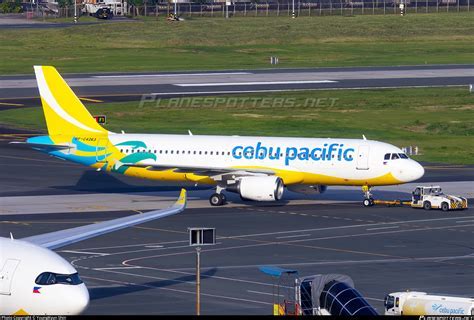
Efforts to establish Clark International Airport as a major international gateway faced initial setbacks when requests for scheduled international flights were denied by some countries, permitting only charter operations. Singapore, however, was an early exception, agreeing to scheduled flights. Following the launch of Clark-Cebu flights in 2006, Cebu Pacific successfully transformed Clark into its fourth hub on November 8, 2008, commencing international services to Hong Kong, Macau, Bangkok, and Singapore. This development was crucial in decongesting Manila’s Ninoy Aquino International Airport and offering travelers from Central and Northern Luzon more convenient options. The airline’s rapid growth did not go unnoticed. On May 28, 2008, Cebu Pacific was distinguished as the world’s number one airline in terms of growth. It also secured the fifth rank in Asia for Budget Airline passengers transported and 23rd globally, underscoring its burgeoning influence in the LCC segment. The expansion continued eastward with the commencement of direct flights to Osaka, Japan, on November 20, 2008, marking its entry into the lucrative Japanese market. Recognizing the evolving digital landscape, Cebu Pacific became a pioneer among Philippine airlines in leveraging social media, creating official fan pages on Facebook and Twitter in August 2009 to engage directly with its growing customer base. A major financial milestone was achieved in October 2010 when the airline completed its initial public offering (IPO), raising ₱23.3 billion from 30.4% of its outstanding shares. This period of dynamic growth culminated in January 2011, when Cebu Pacific celebrated flying its 50 millionth passenger on a flight from Manila to Beijing, a clear indicator of its mass-market appeal and operational scale.
Sustained Growth, Rebranding, and Long-Haul Ventures: 2012-2020
The decade beginning in 2012 saw Cebu Pacific relentlessly pursue network expansion, introduce new aircraft types, and refresh its brand identity. Regionally, the airline broadened its footprint by launching flights to Siem Reap, Cambodia, and Xiamen, China, in 2012, catering to both leisure and business travelers. Domestically, its presence was strengthened with the establishment of new operational bases in Kalibo, a key gateway to Boracay, and Iloilo, a burgeoning economic center in the Visayas, in 2012 and 2013 respectively. The Japanese market, a significant source of tourism and business, saw further penetration with the launch of flights to Tokyo (Narita) and Nagoya in March 2014, followed by Fukuoka in December 2015. A transformative development during this era was Cebu Pacific’s entry into the long-haul, low-cost market, made possible by the delivery of its first Airbus A330-300 aircraft. The inaugural long-haul service commenced on October 7, 2013, with flights to Dubai, catering primarily to the large Filipino expatriate community in the Middle East. This was followed by an ambitious expansion into other Middle Eastern destinations between 2014 and 2015, including Kuwait City, Doha, Dammam, and Riyadh. The airline also ventured into the Australian market, launching flights to Sydney in 2014, followed by Melbourne in 2018. However, market dynamics and operational challenges led to the discontinuation of all Middle Eastern routes except Dubai by 2017.
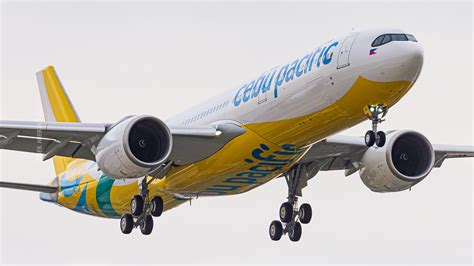
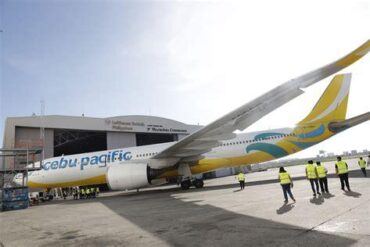
Passenger milestones continued to be a hallmark of Cebu Pacific’s growth, with the airline flying its 100 millionth passenger on January 8, 2015. Recognizing the need to evolve its visual identity, Cebu Pacific unveiled a new logo and livery on June 1, 2015. The refreshed design incorporated the colors of the Philippine flag – blue, red, yellow, and white – symbolizing its national pride and its evolution as a low-cost pioneer. The first aircraft to sport this vibrant new look, an Airbus A320, was received on January 22, 2016. Further expanding its international reach, Cebu Pacific launched flights to Guam in March 2016, marking its first and, to date, only destination in the United States. This route, along with the Siem Reap service, was later suspended in December 2019 due to commercial considerations. Domestically, Laguindingan Airport, serving Cagayan de Oro and Northern Mindanao, was established as the airline’s seventh base on October 20, 2017. On that very same day, Cebu Pacific celebrated another significant achievement: flying its 150 millionth passenger on a flight to Cagayan de Oro. In 2018, Cebgo, its regional subsidiary, further enhanced domestic connectivity by launching flights to the picturesque island of Basco, Batanes, a much-sought-after tourist destination.
Navigating Turbulence and Charting Recovery: 2020-Present
The onset of the COVID-19 pandemic in 2020 brought unprecedented challenges to the global aviation industry, and Cebu Pacific was significantly impacted. The imposition of an enhanced community quarantine in Luzon led to a near-complete suspension of operations for three months. The drastic fall in passenger demand forced the airline into difficult decisions, including a reduction of its workforce by approximately 1,300 employees in 2020 and the temporary storage of fourteen aircraft in Alice Springs, Australia, to preserve cash and manage fleet capacity. Despite these adversities, Cebu Pacific embarked on a robust recovery strategy. In 2021, the airline successfully raised a total of ₱40.5 billion (US $822 million) through various financial instruments, shoring up its balance sheet to navigate the prolonged crisis. Amidst these challenges, Cebu Pacific celebrated its 25th anniversary on March 8, 2021, a milestone that underscored its enduring presence in the industry. As travel demand began its slow but steady rebound, the airline started rehiring retrenched employees in November 2021, signaling a cautious optimism for the future.
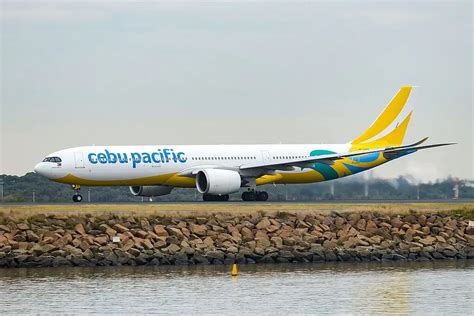
The recovery gained momentum in 2022. In March, Cebu Pacific flew its 200 millionth passenger from Manila to Cebu, a testament to its continued role in connecting Filipinos. By December 2022, the airline was operating at 92% of its pre-pandemic capacity, a remarkable turnaround. That same year, after three consecutive financial years of losses due to the pandemic’s severe impact, Cebu Pacific reported its first full-year post-pandemic profit, highlighting the effectiveness of its recovery measures and the resurgence in travel. International network rebuilding continued into 2023, with the resumption of flights to several cities in China in January, with the notable exception of Beijing. A significant domestic development was the reopening of its Pampanga hub at Clark International Airport on April 21, 2023, further enhancing connectivity options for travelers in Central Luzon. The airline’s efforts were recognized with prestigious accolades; on February 28, 2024, Cebu Pacific received the Best Airline award at the Routes Asia Awards 2024 for its contributions to airport and destination marketing. It was also named Best Low-Cost Airline Brand and Most Sustainable Low-Cost Airline in the Philippines for 2023 by the World Economic Magazine. However, strategic shifts also occurred; in July 2024, plans for further long-haul expansion were shelved. Concurrently, flights to China were reduced, and the Beijing route was terminated due to weak demand amid geopolitical tensions. Instead, Cebu Pacific sharpened its focus on regional expansion within a five-hour flight radius, launching new routes to secondary cities in Southeast Asia like Da Nang (December 2023) and Chiang Mai (October 2024), and returning to Kaohsiung, Taiwan, in August 2024 after a fifteen-year hiatus. Domestic expansion remained a priority, with eighteen new inter-island routes launched from its hubs in Cebu, Davao, and Iloilo, as well as select flights from Clark. International services from these regional hubs were also either introduced or revived, including new direct flights from Cebu to Bangkok (Don Mueang) and Osaka, and relaunched Davao-Hong Kong services alongside a new Davao-Bangkok route. International flights from Iloilo International Airport also resumed after a four-year hiatus. Capping a period of strong recovery, Cebu Pacific flew its 250 millionth passenger from Singapore to Manila on December 11, 2024. Looking ahead, the airline launched direct flights to Sapporo, Japan, on January 16, 2025, further solidifying its presence in East Asia.
Corporate Structure and Strategic Alliances
Cebu Pacific’s operational nerve center is its main headquarters located at the Cebu Pacific Building, 8006 Domestic Road, Pasay, Metro Manila, strategically positioned near its primary hub at Ninoy Aquino International Airport. Its registered office remains in Robinsons Galleria Cebu, reflecting its origins. The airline operates as a key subsidiary of JG Summit Holdings, one of the largest and most diversified conglomerates in the Philippines, providing it with substantial financial backing and corporate governance expertise. The leadership team, crucial for steering the airline’s strategic direction, includes Lance Y. Gokongwei as Chairman, Alexander G. Lao as President & Chief Commercial Officer, Michael B. Szucs as Chief Executive Officer, and Javier Luis Massot Ramis De Ayreflor as Chief Operating Officer.
In terms of partnerships, Cebu Pacific has strategically engaged in alliances to broaden its reach and offer enhanced value to its passengers. Historically, it was the sole Philippines-based member airline of Northwest Airlines’ WorldPerks frequent flyer program, an arrangement that concluded on August 1, 2006. A more significant and enduring partnership was forged on May 16, 2016, when Cebu Pacific became a founding member of the Value Alliance, the world’s largest alliance of low-cost carriers. This alliance brought together several prominent LCCs in the Asia-Pacific region, including Singapore’s Scoot, South Korea’s Jeju Air, Thailand’s Nok Air and NokScoot (NokScoot has since ceased operations), Tigerair (now part of Scoot), Tigerair Australia (ceased operations), and Japan’s Vanilla Air (merged into Peach Aviation). This membership allows for interline ticketing and provides passengers with a wider network of destinations across the region. Currently, Cebu Pacific is the only Philippine carrier that is a member of a global airline alliance, distinguishing its collaborative strategy in the competitive LCC market.
Subsidiaries: Expanding Reach and Capabilities
Cebu Pacific has strategically developed and acquired subsidiaries to enhance its operational scope and service offerings, catering to specific market segments and logistical needs.
Cebgo
Cebgo stands as Cebu Pacific’s dedicated regional subsidiary, playing a vital role in connecting smaller islands and communities across the Philippines. It operates an all-turboprop fleet, primarily composed of modern ATR 72-600 aircraft, which are well-suited for shorter runways and inter-island hops where jet operations may not be feasible or economical. Cebgo was established in May 2015 following Cebu Pacific’s acquisition of Tigerair Philippines. This acquisition allowed Cebu Pacific to consolidate its domestic market position and efficiently serve routes requiring smaller capacity aircraft. Cebgo operates under the Cebu Pacific brand and flight designator (5J), ensuring seamless connectivity with its parent company’s network.

Cebu Pacific Cargo
Recognizing the burgeoning demand for logistics and air freight services, Cebu Pacific launched Cebu Pacific Cargo. This division initially utilized belly-hold capacity on its passenger aircraft but has since expanded to operate dedicated cargo turboprop aircraft. The airline announced in 2018 its formal entry into the dedicated cargo market, aiming to support the Philippines’ growing e-commerce sector and general freight requirements. This strategic move diversifies its revenue streams and strengthens its role in the national supply chain.
Aviation Partnership Philippines (A plus)
Aviation Partnership Philippines (A plus) was initially formed in April 2005 as a joint venture between Singapore Airlines Engineering Company (SIAEC) and Cebu Pacific. It commenced operations in July of the same year, providing line and light maintenance, repair, and overhaul (MRO) services. This partnership ensured high standards of aircraft maintenance for Cebu Pacific and other airline clients. In a strategic move to consolidate its MRO capabilities, Cebu Pacific took full ownership of A plus in November 2020.
AirSWIFT
A recent and significant addition to the Cebu Pacific group is AirSWIFT. On October 7, 2024, Cebu Pacific announced the acquisition of AirSWIFT for PHP 1.75 billion, a deal approved by ALI Capital Corp (the seller, a subsidiary of Ayala Corporation) and Cebu Pacific’s board. AirSWIFT is a boutique airline primarily serving tourist destinations, with a focus on El Nido, Palawan. It operates flights from Manila and Clark to El Nido, and from El Nido to other popular tourist spots such as Boracay, Cebu, Coron, and Bohol. Following the acquisition, AirSWIFT continues its existing flight schedules and services, complementing Cebu Pacific’s extensive network with specialized access to high-end leisure destinations.
1Aviation Groundhandling
In March 2018, Cebu Pacific established 1Aviation Groundhandling Services Corp. This initiative came after the Manila International Airport Authority (MIAA) did not renew the contract of MIASCOR Ground Handling Corp due to incidents involving luggage theft. To ensure efficient and reliable ground handling for its operations, Cebu Pacific took this step. However, in July 2018, Cebu Pacific divested 60% of its shares in 1Aviation to Philippine Airport Ground Support Solutions, Inc. (PAGSS), a company led by Jefferson G. Cheng, while retaining a minority stake.
Financial and Operational Performance: A Story of Growth and Resilience
Cebu Pacific’s journey, as reflected in its business highlights, showcases a remarkable trajectory of growth, punctuated by periods of challenge and strong recovery. Analyzing its financial performance (in PHP billions) reveals a consistent upward trend in revenue for over a decade leading up to the pandemic, growing from ₱19.68 billion in 2008 to a pre-pandemic peak of ₱84.81 billion in 2019. Operating income and net income also generally followed this growth, though with some volatility inherent in the airline industry. The COVID-19 pandemic delivered a severe blow, with revenues plummeting to ₱22.62 billion in 2020 and ₱15.74 billion in 2021, resulting in significant net losses (₱-22.24 billion in 2020 and ₱-24.90 billion in 2021). However, the airline demonstrated strong recovery, with revenues rebounding to ₱56.75 billion in 2022 and further to ₱90.60 billion in 2023, achieving a net income of ₱7.92 billion in 2023. The latest figures for 2024 show continued strength with revenue at ₱104.91 billion and net income at ₱5.40 billion. Total assets have also grown substantially, from ₱32.56 billion in 2008 to ₱238.17 billion in 2024, indicating significant investment in fleet and infrastructure.
Operationally, Cebu Pacific’s passenger numbers tell a compelling story of democratizing air travel. The airline carried 6.67 million passengers in 2008, a figure that soared to 22.47 million by 2019. The pandemic caused a drastic drop to 5.03 million in 2020 and 3.41 million in 2021. Post-pandemic recovery has been swift, with passenger numbers reaching 14.85 million in 2022, 20.87 million in 2023, and 24.54 million in 2024. Available seats followed a similar pattern, growing from 8.54 million in 2008 to 26.01 million in 2019, and recovering to 29.09 million by 2024. The airline has consistently maintained high load factors, generally above 80% in the pre-pandemic era, peaking at 86.39% in 2019. Post-pandemic, load factors have recovered impressively, reaching 84.00% in 2023 and 84.40% in 2024. Revenue Passenger Kilometers (RPK) and Available Seat Kilometers (ASK) also mirror these trends, indicating efficient capacity utilization and strong demand. The fleet size has expanded significantly, from 25 aircraft in 2008 to 98 in 2024, underpinning its network growth and passenger uplift capability. These figures collectively paint a picture of a dynamic airline that has successfully navigated market fluctuations and external shocks to maintain its leading position.
Commitment to Sustainability: Flying Greener
Cebu Pacific has increasingly prioritized environmental sustainability, recognizing the aviation industry’s responsibility to mitigate its climate impact. A cornerstone of its green initiatives is an ambitious fleet modernization program, marketed with the tagline “Experience a Neo Way to Fly.” This involves progressively replacing older aircraft with new-generation, fuel-efficient models, primarily from the Airbus A320neo (New Engine Option) family, with a target completion by 2028. These modern aircraft offer significant reductions in fuel consumption and carbon emissions per passenger. Beyond fleet renewal, Cebu Pacific has become a proponent of Sustainable Aviation Fuel (SAF). The airline initially utilized SAF for aircraft delivery flights. A landmark moment occurred on September 28, 2022, when Cebu Pacific operated its first commercial passenger flight powered by SAF, a service from Singapore to Manila using an Airbus A321neo. This demonstrated the viability of SAF in regular operations. To secure a consistent supply, the airline signed a five-year agreement with Shell Aviation for 25,000 metric tons of SAF.
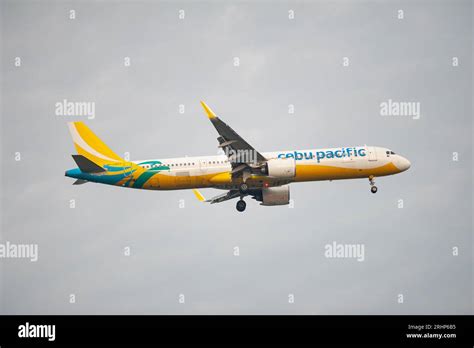
These efforts have garnered international recognition. On November 3, 2022, Cebu Pacific received the prestigious Asia Environmental Sustainability Airline/Airline Group of the Year award from the Centre for Asia Pacific Aviation (CAPA) for its proactive green initiatives. Furthering its commitment, on October 19, 2023, the airline signed another significant five-year agreement with Neste, one of the world’s largest producers of SAF, to bolster its supply. Shortly thereafter, on October 25, 2023, Cebu Pacific completed its second SAF-powered commercial flight, this time from Narita International Airport in Tokyo to Manila, also utilizing an A321neo. The airline’s dedication to sustainability was further affirmed on February 15, 2024, when it earned a Gold rating in the 2023 CAPA-Envest Global Airline Sustainability Benchmarking Report. This recognized its integration of SAF into operations and outstanding performance in reducing carbon emissions. In addition to the CAPA Gold rating, Cebu Pacific improved its S&P Global ESG Score from 38 in 2022 to 41 in 2023, placing it in the 69th percentile among 63 airlines assessed globally, reflecting a tangible commitment to environmental, social, and governance principles.
Extensive Network: Connecting the Philippines and Beyond
Cebu Pacific boasts an extensive network that encompasses 62 destinations, including those served by its regional arm, Cebgo. This vast reach solidifies its position as a critical enabler of tourism, trade, and personal travel both within the Philippines and across the Asia-Pacific region, with select routes extending to the Middle East. The airline’s domestic network is particularly comprehensive, linking major cities with smaller islands and remote provinces, thereby fostering national integration and economic development. Its international services connect the Philippines to key cities in Asia, including popular destinations in Japan, South Korea, China, Hong Kong, Taiwan, Vietnam, Thailand, Singapore, Malaysia, Indonesia, and Australia, as well as Dubai in the United Arab Emirates. The operational backbone of this network is its five strategically located bases: Ninoy Aquino International Airport (NAIA) in Manila serves as its largest and primary hub, handling the bulk of its international and domestic flights. Mactan-Cebu International Airport in Cebu is another major hub, crucial for Visayas connectivity and direct international flights. Clark International Airport in Pampanga acts as an important alternative gateway, particularly for Central and Northern Luzon. Francisco Bangoy International Airport in Davao serves as the main hub for Mindanao, while Iloilo International Airport in Iloilo supports traffic in Western Visayas. This multi-hub strategy allows for efficient routing, increased flight frequencies, and greater convenience for passengers originating from different regions of the Philippines.
The Modern Fleet of Cebu Pacific
As of May 2025, Cebu Pacific operates an all-Airbus fleet, a strategic decision that streamlines maintenance, training, and operational procedures. This modern fleet is a key component of its low-cost operational model and its commitment to fuel efficiency and passenger comfort.
Current Fleet Composition
The airline’s fleet comprises a mix of narrow-body and wide-body Airbus aircraft, tailored to different route requirements:
- Airbus A320-200: 21 aircraft, typically configured with 180 seats. These are the workhorses for many domestic and short-haul international routes. Notably, aircraft RP-C4156, RP-C4160, and RP-C4268 feature a special “Let’s Fly Every Juan” livery, emphasizing the airline’s inclusive branding.
- Airbus A320neo: 22 aircraft in service, with 7 more on order. These new-generation aircraft offer enhanced fuel efficiency and are configured with 188 seats.
- Airbus A321-200: 7 aircraft, providing higher capacity with 230 seats, suitable for denser routes.
- Airbus A321neo: 19 aircraft in service, with a substantial 84 on order. These are a cornerstone of the airline’s fleet modernization, offering 236 seats and improved operational performance. A significant additional order for 70 A321neos with 82 options across the A320neo family was placed in October 2024.
- Airbus A330-900: 11 aircraft in service, with 5 more on order. These wide-body jets are configured with a high-density layout of 459 seats, primarily used for long-haul routes like Dubai and Sydney, as well as high-demand regional flights. The fleet includes RP-C3906, which was an A330-900 prototype, underscoring Cebu Pacific’s relationship with Airbus.
In total, Cebu Pacific currently operates 80 aircraft, with a remarkable 96 aircraft on firm order, signaling aggressive future expansion and fleet renewal.

Fleet Development: A Journey of Modernization
Cebu Pacific’s fleet has undergone a significant transformation since its inception. Initially, the airline operated a mix of Boeing 757-200 and McDonnell Douglas DC-9 aircraft. The transition to a more modern and efficient fleet began earnestly in the mid-2000s. By March 2006, the Boeing 757s were phased out, and on July 26, 2006, the last McDonnell Douglas DC-9 was retired. This paved the way for a strategic shift towards Airbus. In September 2004, Cebu Pacific signed a landmark purchase agreement with Airbus for twelve A319s and the lease of two A320s, selecting CFM56 engines for these new aircraft. The first A320-200 was delivered in May 2005, and subsequent orders increased its A320 family fleet to support expanding operations. Turboprops were introduced in 2007 with an order for six ATR 72-500 aircraft, primarily for regional domestic routes; these were later transferred to its subsidiary Cebgo by 2015 as Cebu Pacific focused on an all-jet mainline fleet.
The move into long-haul operations was facilitated by an order for six Airbus A330-300s in 2007, with the first delivery occurring on June 15, 2013. These were later supplemented by orders for the more advanced A330-900 (A330neo). A major commitment to the A320neo family was made in June 2011 with an order for 30 Airbus A321neos. Delays in engine deliveries for the A321neo led to an interim order for seven A321-200s (A321ceo) in June 2017, with the first A321ceo delivered in March 2018 and the first A321neo in January 2019. The 2019 Paris Air Show saw Cebu Pacific place a monumental order for 31 Airbus aircraft, including five A320neos, sixteen A330-900s, and ten A321XLRs (Extra Long Range), making it a launch customer for the A321XLR. The first A330neo was delivered on November 28, 2021. In a notable first, the airline took delivery of its first Airbus plane assembled in China (Tianjin) in June 2023. The most recent and largest order in Philippine aviation history was an MoU signed in July 2024 for up to 152 A320neo family aircraft, with 70 A321neos firmed up in October 2024, underscoring its long-term fleet strategy focused on growth and efficiency. During periods of A320neo family groundings due to engine issues, the airline demonstrated flexibility by damp-leasing two A320-200s from Bulgaria Air in early 2024.
Former Fleet
Over its history, Cebu Pacific has operated several aircraft types that have since been retired:
- Airbus A319-100: 10 aircraft, operated from 2005 to 2018, eventually sold to Allegiant Air.
- Airbus A330-300: 8 aircraft, operated from 2013 to 2024, replaced by the A330-900 and sold to various airlines.
- ATR 72-500: 6 aircraft, operated from 2008 to 2015, subsequently transferred to Cebgo.
- Boeing 757-200: 3 aircraft, operated from 2000 to 2006, replaced by Airbus A320 family aircraft.
- McDonnell Douglas DC-9-32: 19 aircraft, operated from 1996 to 2005, marking the airline’s initial fleet. One of these aircraft was tragically involved in the Flight 387 crash.

Navigating Criticism and Public Scrutiny
Despite its significant contributions to making air travel affordable in the Philippines, Cebu Pacific has frequently been the subject of public criticism and regulatory scrutiny. Common complaints revolve around issues such as alleged overbooking, frequent and often lengthy flight delays, and abrupt cancellations, sometimes with what passengers perceive as inadequate explanations or support. Customer service responsiveness has also been a recurring point of concern for many travelers. Specific high-profile incidents have amplified these criticisms. For instance, the airline’s handling of the aftermath of a runway excursion incident involving Flight 971 at Francisco Bangoy International Airport in Davao in June 2013 drew considerable flak. Passengers reportedly waited inside the aircraft for an extended period before evacuation, and the subsequent disruption to airport operations caused widespread inconvenience. Another notable period of intense criticism occurred during the Christmas peak season of December 2014, when numerous flight cancellations and delays led to travel chaos for thousands of passengers. This incident resulted in the Civil Aeronautics Board imposing a substantial ₱52 million fine on the airline.
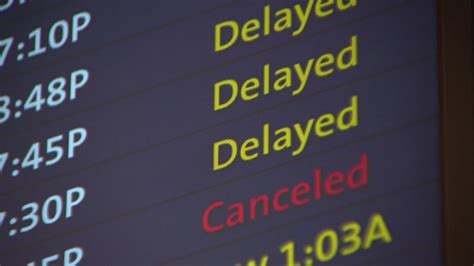
Data on punctuality has also put the airline under a microscope. In January 2018, OAG, a global travel data provider, named Cebu Pacific as one of the world’s least punctual airlines, reporting an on-time performance of just 57.6 percent for 2017. More recently, in March 2023, the launch of a “Super Pass” voucher sale was marred by system glitches, leading to transaction errors and erroneous charges for many customers, sparking widespread frustration. These mounting complaints prompted legislative action. On April 23, 2023, Senator Nancy Binay filed a resolution calling for a full inquiry into the persistent passenger grievances against Cebu Pacific. During a Senate hearing on June 21, 2023, Senator Binay presented a compilation of over 3,000 complaints, detailing issues such as offloaded passengers, unexplained flight changes, and inadequate compensation for disruptions. In response, Cebu Pacific attributed many of the operational challenges to global supply chain issues affecting aircraft parts and maintenance, as well as the grounding of several aircraft due to these disruptions, and issued an apology to affected passengers. Most recently, in October 2024, the airline faced renewed criticism for its handling of baggage delays at Ninoy Aquino International Airport Terminal 3, which were attributed to technical problems with the airport’s baggage handling system but nonetheless impacted Cebu Pacific passengers significantly.
Accidents and Incidents: A Safety Record Under Review
While air travel remains one of the safest modes of transportation, Cebu Pacific, like any major airline, has experienced accidents and incidents over its operational history. These events are critical learning opportunities and are subject to rigorous investigation to enhance safety protocols.
- February 2, 1998: Cebu Pacific Flight 387. This remains the most tragic event in the airline’s history. A McDonnell Douglas DC-9-30, registered as RP-C1507, was en route from Manila to Cagayan de Oro. During its approach to Lumbia Airport, the aircraft crashed into the slopes of Mount Sumagaya in Misamis Oriental, tragically killing all 104 people on board (99 passengers and 5 crew members). The investigation pointed to controlled flight into terrain (CFIT) as the primary cause, with factors including pilot error in navigation and non-adherence to published routes.
- July 18, 2010: Cebu Pacific Flight 509. An ATR 72-500, registered as RP-C7254, experienced a hard landing upon arrival at Manila’s Ninoy Aquino International Airport from Tuguegarao Airport. The aircraft bounced on the runway, prompting the pilots to execute a go-around. During the go-around, they discovered that the landing gear could not be retracted. The aircraft made a priority landing on runway 13. While there were no fatalities or serious injuries, the aircraft was declared a hull loss due to substantial damage.
- June 2, 2013: Cebu Pacific Flight 971. An Airbus A320-200, registered as RP-C3266, carrying 165 passengers and 6 crew members from Manila, veered off the runway upon landing at Francisco Bangoy International Airport in Davao City during heavy rain. No fatalities or serious injuries were reported among the 171 occupants, but the aircraft sustained significant damage, and the incident caused the temporary closure of Davao airport. Investigations later attributed the cause primarily to human error, specifically the pilots’ decision-making in adverse weather conditions. The aircraft was eventually repaired and returned to service after six months.
- August 4, 2017: Cebu Pacific Flight 570. An Airbus A330-300, registered as RP-C3341, experienced a nose gear fault while taxiing for departure at Mactan–Cebu International Airport. The aircraft veered off the taxiway and onto soft ground. There were no injuries to passengers or crew, and the aircraft incurred only minor damage. The runway was temporarily closed until the aircraft could be safely moved. The Civil Aviation Authority of the Philippines (CAAP) classified this as an incident and conducted an investigation.
- October 13, 2017: Cebu Pacific Flight 461. An Airbus A320-200, registered as RP-C3237, veered off to the side of the runway upon landing at Iloilo International Airport during a downpour. All passengers and crew disembarked safely, and no injuries were reported. The incident caused temporary runway closure.
- April 23, 2018: Cebu Pacific Flight 849. An Airbus A320-200, registered as RP-C4105, operating a flight from Manila to Zamboanga with 172 people on board, landed safely at Zamboanga International Airport. However, as it was maneuvering on the turning pad at the end of the runway, the flight crew encountered a nose gear steering fault, immobilizing the aircraft. This led to the closure of the airport for approximately three hours until the aircraft could be towed to the apron.

These incidents have underscored the critical importance of continuous safety enhancements, pilot training, and robust operational procedures, all of which are areas of ongoing focus for Cebu Pacific and aviation regulatory bodies.