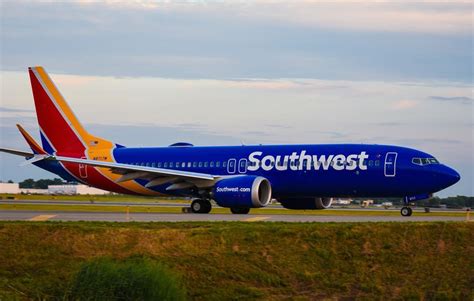
For decades, Southwest Airlines has stood apart from the U.S. aviation industry by adhering to a staunch point-to-point network model, bypassing the traditional hub-and-spoke design favored by legacy carriers. This strategy helped the airline deliver low-cost fares, maximize aircraft use, and reduce turnaround times. However, recent remarks from company executives at the 9th Annual Future of the Consumer Conference, hosted by TD Cowen, reveal that Southwest is preparing to evolve. The airline is shifting toward a hybrid network structure, combining its hallmark point-to-point strengths with more intentional connecting opportunities, particularly on the East Coast.
This strategic pivot is not a departure from Southwest’s identity, but rather an adaptive enhancement aimed at improving aircraft utilization, expanding market access, and capturing a broader customer base. The airline’s leadership, including Chief Financial Officer Tom Doxey, framed the change not as a rejection of Southwest’s foundational principles, but as a data-driven refinement to stay competitive in a more connected, high-demand travel ecosystem.
Why Connectivity Matters: A Shift in Strategic Thinking
Southwest Airlines has always emphasized direct routing, helping it serve leisure and price-sensitive travelers efficiently. But in today’s airline environment—where consumers value flexibility, frequency, and multiple routing options—even a legacy-resistant brand like Southwest must adapt. At the conference, Doxey highlighted that connections offer dual benefits: they improve aircraft utilization rates and create network efficiencies, especially on high-density corridors where the airline has strong penetration.
“It helps us in multiple ways,” Doxey explained. “One, the most obvious is around the utilization that you get on the aircraft—more flying. But the other thing that it can do for us is it can create better connection opportunities and better flow on the East Coast.”
These changes are not merely tactical—they signal a philosophical realignment. The airline is no longer viewing route planning as a binary choice between point-to-point and hub-and-spoke. Instead, hybridization is the operative concept. The move reflects an acknowledgment that the airline must compete more directly with traditional carriers, particularly in congested and competitive Eastern markets like Atlanta, Baltimore, and Orlando.

Red-Eye Flights: Unlocking Overnight Asset Efficiency
Among the most transformative changes under this revised model is the introduction of red-eye flights, which represent a first for the airline. These overnight services, primarily operating from West Coast cities like Las Vegas and Los Angeles to East Coast hubs, allow Southwest to stretch its fleet’s productivity. Red-eyes enable the airline to fly aircraft during what would otherwise be idle hours, making every jet more valuable over a 24-hour cycle.
Critics have long doubted whether Southwest would ever embrace the red-eye concept. Operational complexity, crew scheduling, and customer satisfaction all present challenges. However, Doxey’s comments indicate that the airline sees the value in taking calculated risks to expand its reach and offer seamless East Coast connections come morning.
“Red-eyes can help us move more passengers and give them more options,” he said. “They’ll enhance connections for customers who want to fly early out of places like Baltimore or Atlanta after arriving on a late-night flight from Las Vegas.”
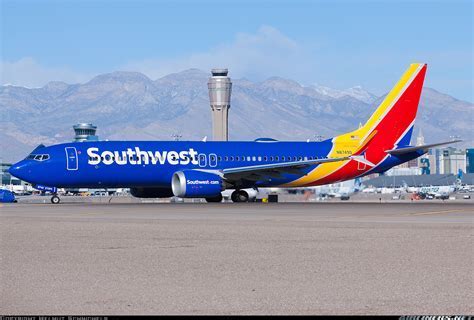
The East Coast: New Frontlines in the Network Expansion
Historically, Southwest thrived by avoiding the East Coast bottleneck—an airspace dominated by giants like Delta and American. But as traffic density increases and travelers demand more routing flexibility, especially in business-heavy markets, Southwest is strategically reevaluating its East Coast operations.
The airline now sees the Eastern Seaboard as a ripe ground for expansion, but only if it can create meaningful, efficient connections to the rest of its system. That means more passengers arriving from red-eyes can transfer onto early morning flights from places like Baltimore, Atlanta, and Orlando. These airports, already functioning as de facto mini-hubs for Southwest, will likely take on enhanced roles as transfer centers.
More connectivity in these regions could also open the door to international partnerships or interline agreements, further expanding Southwest’s reach without altering its fundamental low-cost DNA.

Maintaining the Point-to-Point Advantage
Despite these changes, Southwest remains deeply committed to its core value proposition: affordable, no-frills travel that favors direct routes over complex transfer systems. The airline has made it clear it will not abandon its point-to-point foundation. Instead, this hybridization allows it to enhance efficiency without alienating its loyal customer base.
By making connectivity optional, rather than default, the airline can appeal to both types of travelers: those who prioritize price and time, and those who require more routing options. Executives were adamant that the shift is not ideological but pragmatic, driven by data analytics, fleet utilization metrics, and market demand.
Southwest still operates more point-to-point flights than any other U.S. carrier and intends to protect that market-leading position. However, by threading in well-placed connections, the airline can expand organically into markets where a pure point-to-point approach may have previously fallen short.
Competitive Edge: Scaling Without Sacrificing Identity
With its focus on fleet simplicity, free checked bags, and friendly service, Southwest has long thrived outside the legacy mold. Yet, as domestic air travel rebounds and capacity gets constrained at major airports, the ability to efficiently connect passengers across markets could make or break an airline’s profitability.
Southwest has an opportunity to outmaneuver competitors like JetBlue and Spirit, especially as those carriers undergo mergers or face operational constraints. By subtly layering in connectivity—while maintaining its strong point-to-point routes—Southwest is preparing to scale without sacrificing brand identity.
In a sense, the move resembles strategies undertaken by low-cost carriers in Europe, like Ryanair or easyJet, which now operate multi-bank networks in high-demand cities. Southwest is signaling that it, too, can evolve—just without compromising the efficiency and affordability that made it one of America’s most loved airlines.
The Long Game: From Opportunism to Intentionality
At its core, this transition is about long-term resilience. With new aircraft deliveries, improved scheduling tools, and a broader acceptance of fleet and network complexity, Southwest is positioned to optimize its national footprint. Rather than merely taking opportunistic routes, the airline is building an intentional network framework, where every additional connecting opportunity is a lever to improve revenue per available seat mile (RASM).
By anchoring more flights at strategic airports and embracing overnight flying windows, the airline is laying the groundwork for future growth, including international expansion and a broader competitive stance in key business markets. Crucially, this growth is cost-disciplined, leveraging existing assets instead of requiring dramatic infrastructure overhauls.
Conclusion: Reimagining the Southwest Blueprint
Southwest Airlines is not abandoning what made it successful—it’s reimagining it. By weaving in more connecting flights and red-eye operations, the airline is setting itself up to serve more customers, more flexibly, while extracting greater value from its aircraft and personnel.
In doing so, the airline will remain America’s most prominent point-to-point operator—but one that understands that in a modern, data-driven airline economy, connectivity is not compromise. It’s competitive advantage.