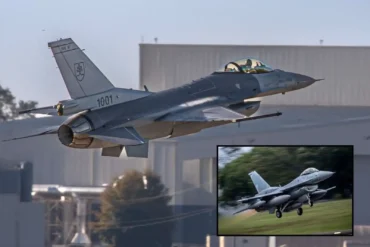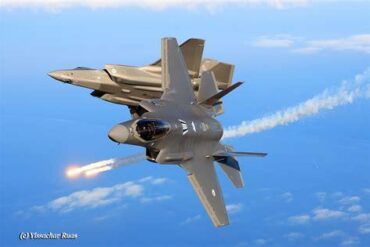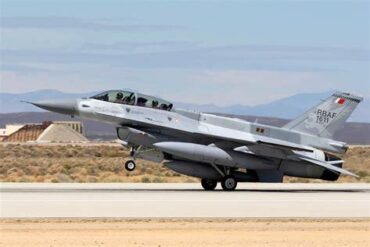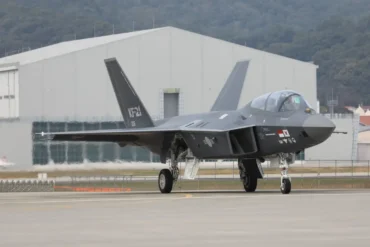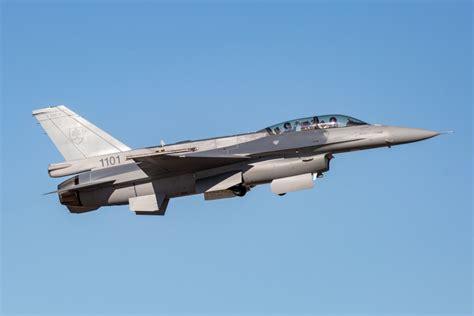
Slovakia is taking concrete steps to reinforce NATO’s eastern flank with modern airpower, confirming on February 17, 2026 that it is exploring the acquisition of four additional F-16 Block 70/72 fighter jets from the United States. The move would expand its current order from 14 to 18 aircraft and significantly accelerate Bratislava’s long-term transition away from Soviet-era aviation toward a fully NATO-integrated combat fleet.
The announcement emerged following high-level discussions in Washington between Slovak Prime Minister Robert Fico and U.S. Secretary of State Marco Rubio. While the agenda also included energy security and geopolitical relations with Russia, the fighter expansion stood out as a defining strategic signal. Slovakia, whose airspace has been protected by allied aircraft since retiring its MiG-29 fleet, is seeking to restore full sovereign control over its skies with a credible and sustainable air combat capability.
This potential expansion is not merely a procurement adjustment. It represents a structural decision about Slovakia’s future force posture in a region where air defense readiness is no longer theoretical but urgent.
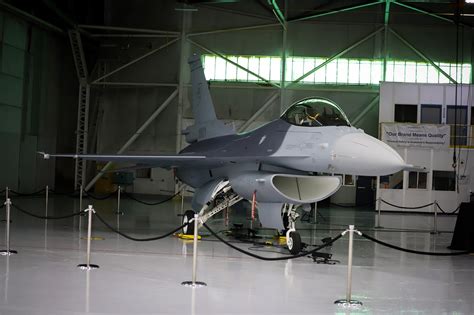
Slovakia’s Transition from MiG-29 to F-16 Block 70/72
Slovakia’s modernization journey began in 2018, when it signed a landmark agreement for 14 F-16 Block 70/72 aircraft, including 12 single-seat fighters and two twin-seat trainers. That contract marked the largest defense investment in the country’s post-independence history and signaled a decisive break from Soviet-designed combat aviation.
The retirement of Slovakia’s MiG-29 Fulcrum fleet occurred earlier than originally planned, particularly after Bratislava transferred the remaining aircraft to Ukraine. Since September 2022, air policing over Slovak territory has been conducted by allied fighters from the Czech Republic, Poland, and later Hungary. While this arrangement demonstrated NATO solidarity, it also underscored a vulnerability: Slovakia lacked an operational fighter force of its own.
Prime Minister Fico emphasized that genuine sovereignty is difficult to claim while national airspace depends on neighboring states. Expanding the fleet to 18 aircraft would provide the operational mass required for continuous air policing, pilot training, and long-term sustainability.
Deliveries of the initial 14 F-16 Block 70 aircraft began in July 2024, with production completed by late 2025 at Lockheed Martin’s Greenville, South Carolina facility. Infrastructure upgrades, pilot training, and maintenance systems are already in place, meaning the addition of four aircraft would expand an existing capability rather than initiate a new program.
Why the F-16 Block 70/72 Matters
The F-16 Block 70/72 is the most advanced evolution of the long-serving F-16 Fighting Falcon. While the aircraft’s lineage dates back to the 1970s, the Block 70/72 configuration integrates modern systems that fundamentally transform its operational profile.
At the heart of the aircraft is the AN/APG-83 Active Electronically Scanned Array (AESA) radar, derived from technologies developed for fifth-generation fighters. AESA radars use electronically steered beams rather than mechanically moving antennas, enabling faster target acquisition, greater detection ranges, and improved resistance to jamming. For a frontline NATO state, this means earlier threat detection and more reliable tracking of hostile aircraft or cruise missiles.
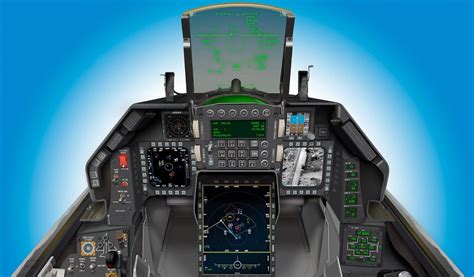
The cockpit features large-area digital displays, a high-capacity mission computer, and advanced electronic warfare systems. Secure Link 16 data connectivity ensures real-time integration with NATO’s broader air command and control architecture. In practical terms, a Slovak F-16 can instantly share radar tracks and targeting data with allied aircraft, ground stations, or airborne early warning platforms.
The aircraft can carry a broad mix of modern munitions, including:
- Beyond-visual-range air-to-air missiles such as AMRAAM-class weapons
- Advanced short-range infrared-guided missiles
- Precision-guided bombs for all-weather strike missions
- Targeting pods for day and night operations
This multi-role flexibility is especially important for smaller air forces that rely on a single fighter platform to cover air defense, interception, and limited strike tasks.
The Strategic Impact of Expanding from 14 to 18 Aircraft
The numerical difference between 14 and 18 fighters may appear modest, but operationally it is substantial. Fighter fleets must account for maintenance cycles, training requirements, upgrades, and unexpected technical issues. With only 14 aircraft, maintaining continuous Quick Reaction Alert (QRA) coverage while sustaining pilot proficiency leaves minimal margin.
An 18-aircraft fleet offers critical depth. It allows Slovakia to:
- Maintain 24/7 QRA readiness
- Sustain training rotations without degrading operational coverage
- Participate in NATO air policing missions abroad
- Absorb maintenance downtime without compromising deterrence
In military aviation, resilience is often defined not by peak numbers but by sustained availability. An expanded fleet strengthens Slovakia’s ability to generate combat sorties during crises and reduces the risk that temporary unserviceability could cripple national air defense.
Reinforcing NATO’s Eastern Flank
The broader context shaping Slovakia’s decision is the evolving security environment along NATO’s eastern frontier. Russia’s war in Ukraine has demonstrated the centrality of air and missile threats, including cruise missiles, ballistic missiles, and long-range drones. Several incidents have already seen missile debris land in neighboring NATO states, intensifying regional air defense vigilance.
By operating the F-16 Block 70/72, Slovakia aligns itself with a growing group of Eastern European operators modernizing their air forces with compatible systems. Bulgaria has also selected the Block 70, while other NATO allies operate advanced F-16 variants. This shared platform architecture simplifies logistics, joint training, and coalition planning.
Slovak F-16s will be capable of contributing to NATO’s Integrated Air and Missile Defence (IAMD) network. Their AESA radars and secure identification systems enable participation in the alliance’s Recognized Air Picture, the shared real-time map of airborne activity across European airspace.
In a crisis scenario, Slovak fighters could escort allied high-value assets such as AWACS surveillance aircraft or aerial refueling tankers, reinforce Baltic or Black Sea air policing rotations, or conduct defensive counter-air operations under NATO command.
Political Significance and Sovereignty
The decision to pursue four additional fighters carries domestic political weight. Debate continues within Slovakia regarding earlier choices surrounding the MiG-29 transfer and defense spending priorities. Critics have questioned whether donating aircraft before full F-16 operational capability was achieved left the country exposed.
However, expanding the fleet reframes the narrative. Instead of focusing on past vulnerabilities, the government positions itself as strengthening sovereignty through modernization. The message is straightforward: national airspace defense should ultimately rest on national assets.
For Washington, the potential follow-on sale reinforces long-term defense ties. Even a relatively small expansion signals strategic continuity and trust. Defense cooperation often extends beyond hardware to training exchanges, logistics integration, and technology sharing. Over decades, these relationships deepen interoperability and political alignment.
Operational Readiness for the 2030s
Looking beyond immediate security concerns, an 18-aircraft F-16 Block 70/72 fleet establishes a credible baseline for the 2030s and beyond. Modern fighter aircraft are long-term investments, often serving for 30 years or more with incremental upgrades.
The Block 70/72 airframe includes structural enhancements designed for extended service life. Combined with software-driven avionics architecture, the platform can accommodate future upgrades, including advanced electronic warfare suites or new-generation munitions.
For a country of Slovakia’s size, fielding a compact but technologically advanced fleet is a pragmatic approach. It avoids the logistical burden of maintaining multiple aircraft types while preserving operational flexibility.
Financial and Industrial Considerations
Any expansion of the F-16 fleet will require careful financial structuring. Defense budgets across Europe face competing pressures, from social spending to energy transition investments. Negotiations with the United States are likely to include discussions on payment schedules, training packages, and long-term sustainment support.
Because Slovakia already operates the Block 70 configuration, adding four aircraft benefits from economies of scale. Training pipelines, maintenance facilities, and spare parts inventories are established. Incremental expansion is therefore more cost-efficient than initiating a new aircraft program.
Moreover, modern fighter procurement often includes industrial offsets or technical cooperation arrangements. While details remain undisclosed, such provisions can enhance domestic aerospace capabilities and technical expertise.
A Clear Signal of Commitment
Should the discussions result in a formal contract, Slovakia’s decision will carry strategic symbolism far beyond four additional airframes. It will mark the point at which the country transitions from allied-dependent air policing to full-spectrum sovereign air defense.
In a region defined by rapid military modernization and ongoing conflict uncertainty, clarity matters. An 18-strong fleet of F-16 Block 70/72 fighters signals stability, preparedness, and long-term commitment to NATO’s collective defense framework.
For Slovakia, the expansion is not about prestige or headline numbers. It is about building a durable, interoperable air combat force capable of defending national airspace and contributing meaningfully to allied operations. On NATO’s eastern flank, where deterrence is measured in readiness and integration, that capability carries weight well beyond its size.