Indonesia is moving closer to acquiring 16 KF-21 Block II multirole fighter jets after renewed high-level negotiations with South Korea, marking a significant attempt to revive Jakarta’s long-paused involvement in one of Asia’s most ambitious next-generation combat aircraft programs. The talks, held in Jakarta in early January 2026, signal a pragmatic recalibration rather than a grand revival, reflecting Indonesia’s intent to secure near-term operational capability while restoring credibility as an international defense partner.
The revised framework under consideration centers on a squadron-sized purchase that aligns more closely with Indonesia’s financial and operational realities. Instead of pursuing earlier, more expansive commitments that proved difficult to sustain, Jakarta is now focusing on a manageable acquisition that could deliver tangible results within the next few years. This shift suggests a maturing defense procurement philosophy—less about prestige numbers, more about deployable capability.
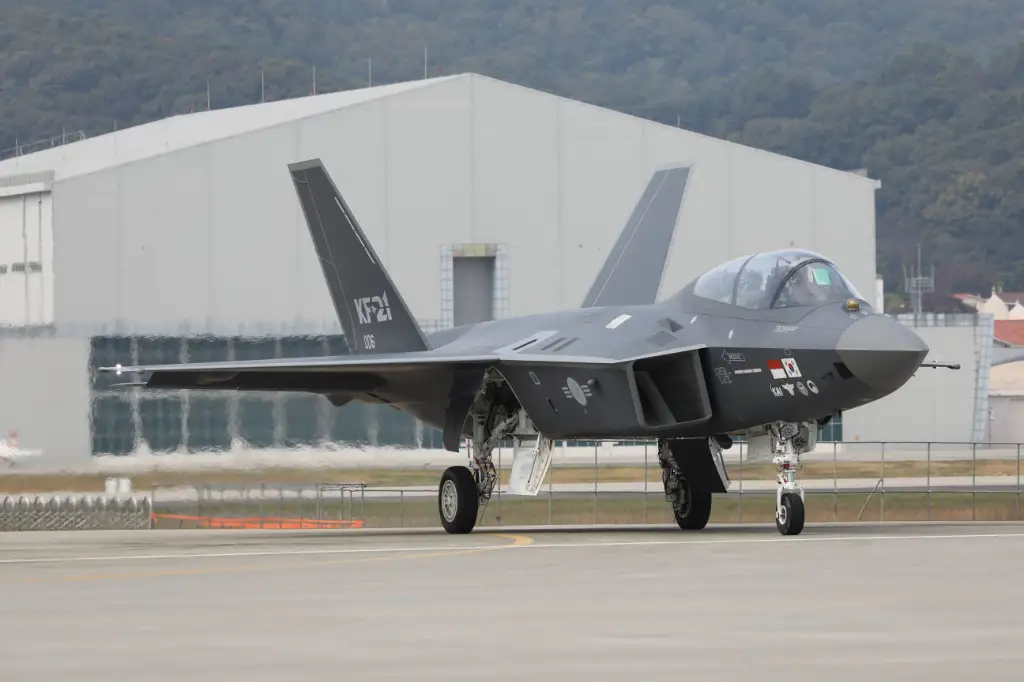
At the heart of the discussions is the KF-21 Boramae, South Korea’s domestically developed fighter designed to bridge the gap between fourth-generation platforms and true fifth-generation stealth aircraft. For Indonesia, the Block II variant represents the most relevant configuration, offering a genuine multirole capability suited to the archipelago’s diverse defense needs, from air policing to maritime strike.
Jakarta Talks Signal a Reset, Not a Return to the Past
The January 7, 2026 meeting at Indonesia’s Ministry of Defence brought together senior Indonesian defense officials, representatives from Korea Aerospace Industries (KAI), and executives from PT Dirgantara Indonesia, Indonesia’s state-owned aerospace company. Chaired by Air Commodore Jon Ginting, the discussions were deliberately closed-door, underscoring their sensitive financial and political nature. Rather than revisiting old obligations line by line, participants focused on constructing a framework that could realistically move forward.
Central to the proposal is the possible use of an export credit facility backed by South Korea, likely through the Export-Import Bank of Korea. While figures and repayment terms remain undisclosed, the mechanism is intended to tie financing directly to deliverables, including the acquisition of the 16 Block II aircraft. This approach reflects lessons learned from earlier phases of the program, where diffuse obligations and delayed payments strained trust on both sides.
The timing of the talks is not accidental. Indonesia’s renewed interest gained visible momentum during Indo Defence 2025, where a KF-21 model was prominently displayed. The message was subtle but clear: despite years of uncertainty, Jakarta has not abandoned the program, and Seoul remains willing to keep the door open.
A Political Nudge from the Top
The current initiative traces its roots to an October 2025 conversation between Indonesian President Prabowo Subianto and South Korean President Lee Jae-myung on the sidelines of the Asia-Pacific Economic Cooperation summit. That private exchange helped unlock political support for a narrower, more feasible deal. By January 2026, the idea had matured into a concrete proposal centered on a single operational squadron.
Under Indonesian Air Force doctrine, 16 aircraft constitute a complete squadron, allowing for meaningful operational deployment without overextending training, maintenance, or basing infrastructure. This scale also fits neatly into Indonesia’s broader force modernization efforts, which seek to replace aging fighters while avoiding logistical sprawl.
What remains unresolved is how this revised plan interacts with Indonesia’s earlier ambition to procure up to 48 KF-21s and hold a larger stake in the program. Officials have offered no clarity on whether those commitments will be formally renegotiated, indefinitely deferred, or quietly retired. For now, ambiguity appears to be the price of forward motion.
Why the KF-21 Block II Fits Indonesia’s Needs
The Block II configuration is where the KF-21 transitions from a primarily air-superiority platform into a true multirole fighter. While Block I focuses heavily on air-to-air combat, Block II expands the aircraft’s mission envelope to include precision strike and maritime operations—capabilities that resonate strongly with Indonesia’s strategic geography.
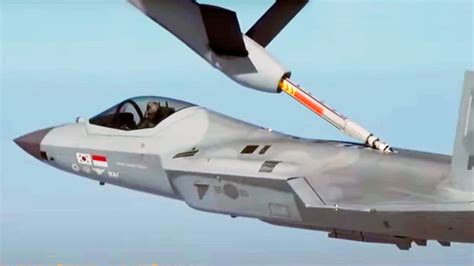
With thousands of islands, vast sea lanes, and contested maritime zones, Indonesia requires an aircraft capable of both defending airspace and projecting power over water. The Block II’s planned weapons integration reflects this reality. Beyond beyond-visual-range air-to-air missiles such as Meteor, the aircraft is intended to carry guided bombs, stand-off munitions, and advanced systems like MBDA’s SPEAR, enabling precision strikes from safer distances.
This flexibility distinguishes the KF-21 from many legacy fighters currently in Indonesian service. Rather than relying on multiple specialized platforms, the Indonesian Air Force could use the Block II as a backbone multirole asset, simplifying fleet management while enhancing operational reach.
Inside the KF-21 Boramae Program
The KF-21 program is structured around a deliberate, phased development philosophy. Block I establishes the airframe, propulsion, and core sensor suite, ensuring reliability and performance in air combat. Block II builds on that foundation by integrating additional weapons and mission systems. A future Block III is envisioned as a more stealth-oriented evolution, potentially featuring internal weapons bays and a reduced radar signature.
The aircraft itself is a twin-engine design powered by two GE F414-GE-400K turbofan engines, assembled in South Korea under license. With a maximum speed of approximately Mach 1.8 and a combat radius exceeding 1,000 kilometers, the KF-21 offers performance that sits comfortably between advanced fourth-generation fighters and fifth-generation stealth jets.
Its sensor suite is anchored by a domestically developed active electronically scanned array (AESA) radar, complemented by an infrared search-and-track system and an integrated electronic warfare package. This combination enables the aircraft to detect, track, and engage threats across multiple domains, even in contested electromagnetic environments.
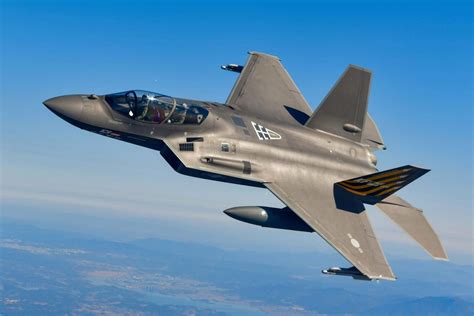
Serial production of the KF-21 began in July 2024, following the prototype’s maiden flight in July 2022. Deliveries to the South Korean Air Force are scheduled to begin in March 2026 under an initial order for 40 Block I aircraft, with Block II production expected to follow once the earlier configuration reaches maturity. For Indonesia, this timeline aligns neatly with its current planning horizon.
Industrial Participation and Lingering Questions
Indonesia’s involvement in the KF-21 program has always been about more than aircraft numbers. PT Dirgantara Indonesia was envisioned as a key industrial partner, with access to manufacturing workshare and technology transfer. A reduced purchase inevitably raises questions about how much of that industrial participation can realistically be preserved.
While no formal statements have been made, the emphasis in recent talks appears to be on restoring continuity rather than maximizing industrial ambition. Even limited participation could still provide valuable experience in advanced fighter production, systems integration, and long-term sustainment—skills that Indonesia’s aerospace sector is keen to retain.
The alternative, after all, would be exclusion. From that perspective, a smaller but stable role may be preferable to an expansive one that never materializes.
Strategic Implications for Southeast Asia
Indonesia’s potential acquisition of the KF-21 Block II carries implications that extend beyond bilateral ties with South Korea. It reflects a broader trend among Southeast Asian air forces toward acquiring advanced, but not prohibitively expensive, combat aircraft that offer credible deterrence without the political baggage sometimes associated with fifth-generation platforms.
For Seoul, the deal would reinforce South Korea’s emergence as a serious defense exporter capable of delivering complex, high-end systems. For Jakarta, it would diversify its fighter fleet while strengthening ties with a technologically advanced partner that shares an interest in strategic autonomy.
The KF-21 also occupies a unique niche in the regional balance. It offers advanced sensors, modern weapons, and growth potential without fully crossing into the stealth-centric paradigm of aircraft like the F-35. That balance may prove attractive to air forces seeking capability without overdependence.
Looking Beyond Block II
One of the more intriguing aspects of the KF-21 roadmap is South Korea’s long-term ambition to develop an indigenous fighter engine under the Advanced Aviation Engine Development Project. Scheduled to run from 2027 to 2040, the initiative aims to produce a powerplant delivering approximately 16,000 pounds of military thrust and up to 24,000 pounds with afterburner—surpassing the current F414.
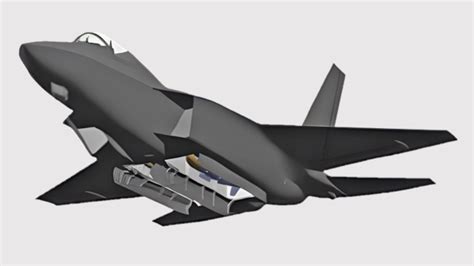
If successful, this engine would underpin the future Block III configuration, further reducing reliance on foreign suppliers and enhancing performance. While Indonesia’s current focus remains squarely on Block II, participation in the program keeps open the possibility—however distant—of accessing more advanced variants down the line.
A Calculated Step Forward
Indonesia’s plan to acquire 16 KF-21 Block II fighters does not represent a dramatic return to earlier ambitions, nor is it a symbolic gesture. It is a calculated step designed to reconcile aspiration with affordability, partnership with pragmatism. By narrowing its focus, Jakarta increases the likelihood that the aircraft will actually enter service, flown by Indonesian pilots and maintained by Indonesian technicians.
In defense procurement, credibility is a currency as valuable as funding. The current talks suggest that both Indonesia and South Korea understand this well. If the revised framework holds, the KF-21 Block II could become not just another entry in Indonesia’s inventory, but a case study in how complex international defense programs can be salvaged through realism, patience, and mutual adjustment.