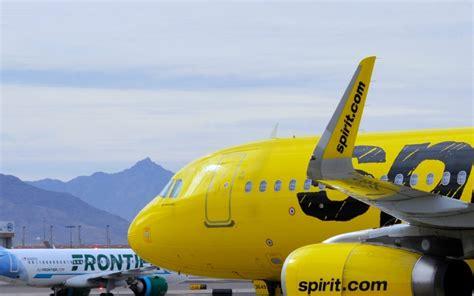
In a dramatic turn for the low-cost airline sector, Spirit Airlines and Frontier Airlines have once again initiated merger talks following a critical $50 million lifeline that has temporarily stabilized Spirit’s increasingly dire financial situation. This renewed dialogue marks the third time the two ultra-low-cost carriers (ULCCs) have entertained the idea of consolidation, and now, with major leadership changes and strategic urgency on both sides, the stakes have never been higher.
The Lifeline That Brought Spirit Back to the Table
Earlier this month, Spirit Airlines narrowly avoided collapse after securing an immediate $50 million in emergency funding. This crucial injection, awarded amid a second bankruptcy filing in 2025, ensured the continuation of operations while setting the stage for a broader reorganization or potential acquisition.
With another $50 million pending, Spirit’s survival still hangs in the balance. But this financial bandage has reenergized negotiations with Frontier Airlines, which previously proposed two bids in the aftermath of the failed JetBlue-Spirit merger attempt.
A History of Near-Misses and Corporate Chess Moves
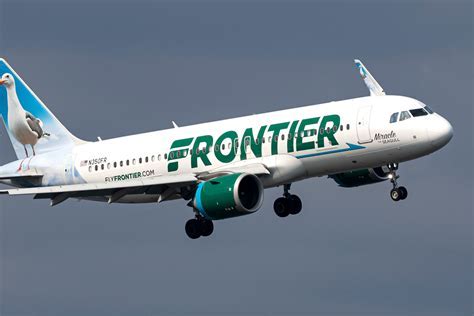
The rekindled merger conversation between Spirit and Frontier is rooted in a history of thwarted deals. In 2022, the two budget carriers nearly merged until JetBlue Airways outbid Frontier, offering a more lucrative deal that was ultimately blocked by federal regulators in 2024 over antitrust concerns. Since then, Frontier has extended multiple acquisition proposals to Spirit—each of which was rebuffed.
What makes this latest chapter notably different is leadership upheaval at Frontier. On December 12, Barry Biffle, Frontier’s long-time CEO, resigned from his position. He had been a known skeptic of pursuing a major merger amid post-pandemic volatility. With his departure and President James Dempsey stepping in as interim CEO, Frontier appears more willing to revisit aggressive growth strategies.
Frontier’s Calculated Risk: Why They Might Say Yes This Time
Despite its own financial constraints, Frontier Airlines holds a relatively stronger market position compared to Spirit. Frontier’s route network, especially across the western U.S., its operational efficiency, and its better brand perception make it the more viable partner in this equation.
For Frontier, the appeal lies in Spirit’s physical assets:
- Aircraft: Spirit currently operates 102 Airbus aircraft. Frontier’s fleet includes 172 planes. A merged entity would own 279 planes, rivaling JetBlue as the sixth-largest U.S. airline.
- Airport Gates: Spirit holds valuable slots at major airports like Fort Lauderdale, Las Vegas, and Orlando, which could significantly boost Frontier’s access.
- Staff and Infrastructure: Combining workforces could create economies of scale, especially in maintenance, operations, and customer service.
What a Merger Could Mean for the ULCC Model
If this merger succeeds, the newly formed airline could become the most expansive ULCC in North America, changing the dynamics of the U.S. aviation sector. However, this comes with challenges. Budget carriers, especially in the U.S., are facing systemic headwinds:
- Post-pandemic travel trends favor full-service carriers like Delta, United, and Alaska Airlines, which offer premium cabins, loyalty programs, and global networks.
- Consumer expectations have shifted, and low-cost airlines now find it harder to compete solely on price.
- Operational scale is critical—regional players struggle for visibility, gate access, and customer loyalty.
Frontier’s leadership recognizes that consolidation may be the only path to survival. Without it, both Spirit and Frontier risk falling further behind, especially as industry giants gobble up market share in both domestic and international routes.
Spirit’s Fragile Future: A Brand on the Edge
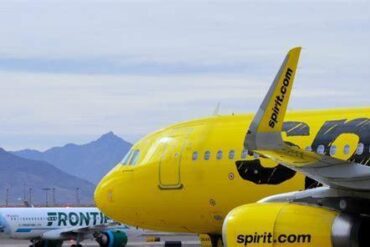
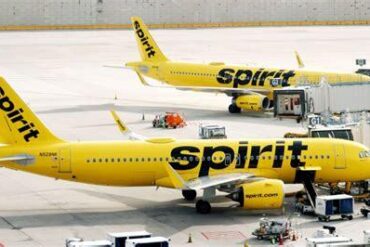
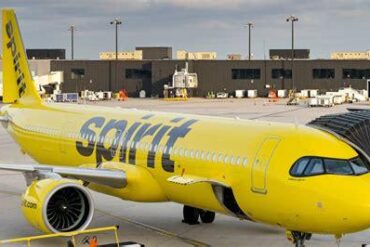
For Spirit Airlines, the future looks especially precarious. The carrier has become a symbol of budget travel distress, plagued by poor customer satisfaction, high cancellation rates, and dwindling investor confidence. Its distinctive yellow livery, once an emblem of low-cost disruption, now represents operational inconsistency and financial instability.
A potential merger would almost certainly lead to the phasing out of the Spirit brand. With Frontier holding more positive brand equity and a cleaner operational record, the combined airline would likely retain the Frontier name and visual identity.
The Regulatory and Competitive Landscape Ahead
Despite recent regulatory hurdles for the Spirit-JetBlue merger, a Frontier-Spirit consolidation might receive a warmer reception. Unlike JetBlue, Frontier doesn’t pose the same antitrust risks. The two carriers operate on complementary route networks, with minimal overlap and shared goals of maintaining low-cost travel access in underserved markets.
Still, scrutiny is inevitable. Federal authorities will examine:
- Consumer impact on pricing and route availability.
- Market dominance in specific regional hubs.
- Labor implications for pilots, flight attendants, and ground staff.
But with budget travel shrinking and consumers drifting toward premium services, regulators may be more lenient if the merger promises to preserve competition against larger, full-service airlines.
A Strategic Imperative or a Desperate Gamble?
At its core, this proposed union is both a survival strategy and a strategic opportunity. For Frontier, acquiring Spirit could provide the scale needed to move from niche operator to national contender. For Spirit, it’s potentially the only route to avoid collapse.
If the merger materializes:
- The combined airline would serve over 100 destinations in the U.S., Latin America, and the Caribbean.
- Operational redundancies could be reduced, improving cost efficiency.
- A unified loyalty program and streamlined booking system would enhance customer experience.
But failure would mean disaster—especially for Spirit. Without merger approval or additional capital, Spirit may run out of runway entirely.
Looking Ahead: High Stakes in a Shifting Market
The next few months will be pivotal. With a $50 million stopgap in place, Spirit has only bought itself time. Negotiations with Frontier must now transition from talks to terms, and fast. The broader industry watches closely as this could mark the most significant low-cost carrier consolidation in a decade.
In the current market, where survival increasingly favors the biggest players, a Spirit-Frontier merger may be less about ambition and more about inevitability. The outcome could reshape the future of affordable air travel in the United States—and determine whether either brand survives the turbulence ahead.