The European low-cost carrier (LCC) landscape may be on the verge of a dramatic shift as US investment firm Castlelake reportedly explores a potential bid for easyJet, following the collapse of its earlier acquisition discussions with Spirit Airlines in the United States. Analysts suggest that Castlelake’s pivot from the American ultra-low-cost sector to Europe signals not only a renewed appetite for undervalued airline assets but also a strategic recognition of the more resilient market dynamics within European aviation.
easyJet, long recognized as one of Europe’s leading budget carriers, recently reported a first-half pre-tax loss of $745 million (£552 million) for the six months ending in March. The airline cited rising fuel costs and softer booking trends—partly linked to geopolitical tensions in the Middle East—as key challenges undermining profitability. Despite this, easyJet retains a substantial portfolio of assets that investors consider highly undervalued, including a large fleet of owned aircraft, coveted airport slots, a growing holiday business, and a robust cash position. These factors have made the airline an attractive target, even as market conditions continue to test the broader aviation sector.
The potential Castlelake bid follows the firm’s unsuccessful attempt to acquire Spirit Airlines earlier this year. That deal’s failure highlighted the growing difficulties facing ultra-low-cost carriers in North America, where rising operational costs, changing consumer preferences, and fierce competition have curtailed profitability. Sources indicate that Castlelake’s failed Spirit discussions may have prompted a strategic realignment, driving the firm to seek opportunities in Europe where LCCs continue to enjoy strong leisure travel demand and relatively stable market structures. Unlike the US, European LCCs such as easyJet, Ryanair, and Jet2 have maintained dominant market positions, making the region increasingly attractive for aviation-focused investors with the expertise to leverage undervalued assets.
Castlelake’s Aviation Expertise and Strategic Edge
Castlelake is no stranger to the aviation sector. The Minneapolis-based investment firm possesses extensive experience in aircraft leasing and aviation finance, including the creation of Merit AirFinance, a platform backed by billions in deployable capital. This background suggests Castlelake may see opportunities beyond operational performance alone, potentially exploiting the financial and strategic value embedded in easyJet’s asset base.
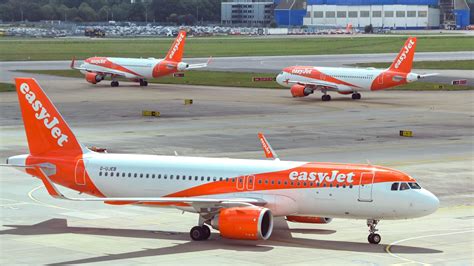
easyJet currently owns 208 of its 356 aircraft outright, a fleet that is expected to appreciate significantly over the next several years. Analysts estimate the value of these aircraft could exceed $10.1 billion (£7.5 billion) by 2028, far outstripping the airline’s pre-speculation market capitalization of $4.1 billion (£3 billion). In the eyes of Castlelake, an investor versed in aircraft finance, this discrepancy represents not just an undervalued opportunity but a core strategic asset capable of generating substantial long-term returns.
Beyond the fleet, easyJet holds highly prized airport slots, particularly at London Gatwick Airport (LGW), positioning it advantageously in one of Europe’s most congested aviation markets. The airline’s growing easyJet Holidays division has become a critical profit contributor, reflecting a broader diversification strategy that strengthens the overall valuation case. Additionally, the company reported a net cash position of $586 million (£434 million), reinforcing arguments that its shares may not fully reflect underlying asset values.
Regulatory Hurdles and Ownership Challenges
Despite these attractions, any Castlelake acquisition would face significant regulatory and structural challenges. European and UK aviation laws impose stringent ownership and control requirements, designed to preserve operating rights and international traffic freedoms. These rules complicate a straightforward takeover by a US-based firm, requiring either an alternative ownership structure or the formation of an offshore investment vehicle to comply with legal thresholds.
Industry reports suggest Castlelake may be exploring a partnership with Mediterranean Shipping Company (MSC), a Swiss shipping conglomerate, as part of a consortium to meet these regulatory obligations. Such a structure could also strengthen the financial rationale for a potential bid, combining Castlelake’s aviation expertise with MSC’s substantial balance sheet. However, even with a viable structure, opposition from existing shareholders and management could influence any transaction. Sir Stelios Haji-Ioannou, the airline’s founder, and his family retain approximately 15% ownership, and the board has repeatedly emphasized that ongoing strategic initiatives, particularly the expansion of easyJet Holidays and long-term profit targets, offer more value than an immediate sale.
Valuation and Strategic Opportunity
The timing of Castlelake’s interest is widely considered opportunistic. easyJet’s shares have fallen more than 20% in 2026, reflecting broader industry headwinds. Analysts point out that the airline’s market capitalization significantly undervalues tangible assets such as aircraft, airport slots, and the holiday division. By controlling a fleet projected to appreciate well beyond current valuations, a strategic investor could unlock substantial value through targeted financial management or operational optimization.
Moreover, Europe’s LCC market exhibits structural advantages over the US ultra-low-cost segment. Despite inflationary pressures and fluctuating fuel costs, the region’s leisure travel demand remains robust, and low-cost carriers have proven capable of sustaining high market share while generating ancillary revenue streams. For an investor like Castlelake, these dynamics provide both stability and growth potential, particularly when paired with the ability to leverage financial expertise in aircraft leasing and fleet optimization.
Potential Operational Implications for easyJet
Should Castlelake pursue a formal bid, operational adjustments might follow. The firm could look to maximize fleet utilization, rationalize route networks, and potentially accelerate the growth of easyJet Holidays to capitalize on higher-margin revenue streams. Additionally, discussions around airport slot expansion or strategic base adjustments, including potential access to London Heathrow, may emerge as part of a longer-term growth strategy. While Heathrow remains constrained, easyJet has previously signaled interest in premium leisure and mixed tourism-business destinations, suggesting any future expansion would likely complement existing bases at Gatwick, Luton, Stansted, and Southend.
European LCC Sector Outlook
The Castlelake interest underscores the continued appeal of Europe’s LCC sector for investors seeking undervalued airline assets. Despite macroeconomic pressures, carriers with strong asset bases, brand recognition, and market dominance, such as easyJet, remain attractive acquisition targets. The potential bid also highlights an emerging trend of cross-border investment in aviation, with US firms increasingly evaluating European opportunities as a counterbalance to the challenges faced in North America.

While uncertainty remains regarding whether Castlelake will formalize an offer, the speculation itself reinforces the notion that European low-cost carriers remain strategically significant. easyJet, with its combination of fleet ownership, airport positioning, and profitable holiday business, exemplifies the kind of undervalued, asset-rich target that appeals to sophisticated aviation investors. Should the acquisition proceed, it could redefine not only easyJet’s trajectory but also set a precedent for transatlantic investment in Europe’s low-cost aviation sector.
In conclusion, Castlelake’s reported interest in easyJet reflects a confluence of market opportunity, undervalued assets, and sector expertise. The potential acquisition, if successfully executed, would mark one of the most notable LCC takeovers in recent European aviation history, offering insights into both the strategic thinking of specialized investors and the resilience of the low-cost carrier model amid ongoing economic and operational challenges.