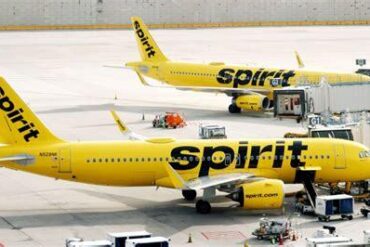
The fate of Spirit Airlines has entered a decisive phase, one that exposes the uneasy boundary between airline rescue and asset extraction. Once a hyper-growth ultra-low-cost carrier, Spirit now finds itself navigating recurring Chapter 11 bankruptcies, persistent operating losses, and a competitive landscape that has grown far less forgiving. Against this backdrop, talks with Castlelake, a heavyweight in aviation-focused alternative investment, have triggered an uncomfortable but necessary question: is this a path to survival, or the prelude to a carefully managed breakup?
Spirit’s troubles are not mysterious. The airline built its model on volume, ancillary revenue, and aggressive fleet expansion just before the pandemic rewired demand patterns and cost structures. Rising labor expenses, supply-chain-driven maintenance costs, and an unforgiving interest-rate environment have since turned leverage into a liability. Failed merger attempts with Frontier Airlines and earlier regulatory pushback on consolidation have only intensified pressure on management to find capital that does not merely postpone the inevitable.
What makes the Castlelake angle so compelling is that it reframes Spirit not as an airline with passengers and routes, but as a dense bundle of aviation assets whose market value may exceed the worth of the business operating them. That distinction matters, especially in bankruptcy court, where survival is optional but value preservation is mandatory.
Spirit Airlines’ Financial Spiral and Strategic Dead Ends
Spirit’s repeated trips through bankruptcy protection reflect more than bad timing. They reveal a structural fragility baked into the airline’s cost base and network strategy. Ultra-low fares leave little margin for error, and the post-pandemic environment has been all error. Aircraft delivery delays disrupted growth plans, while Pratt & Whitney engine inspections sidelined portions of the A320neo-family fleet, tightening capacity and cash flow simultaneously.
The collapse of merger talks with Frontier removed what many investors saw as Spirit’s last industrial solution. Consolidation would have spread fixed costs, rationalized routes, and delivered scale-based bargaining power. Without it, Spirit has been left negotiating from weakness, reliant on debtor-in-possession financing and creditor patience to keep aircraft flying.
By the time Castlelake entered discussions, the question had already shifted from “how does Spirit grow?” to “what is Spirit worth in pieces?”
What Castlelake Really Is, and Why That Matters

Castlelake is not an airline operator, and that fact is central to understanding the risk facing Spirit. The firm specializes in asset-backed private credit, particularly in capital-intensive sectors where collateral is tangible, mobile, and globally tradable. Aircraft, engines, maintenance assets, and ground equipment fit this mandate perfectly.
Through platforms like Merit AirFinance, Castlelake has quietly become one of the most influential financiers in commercial aviation. It lends against aircraft, acquires portfolios from distressed sellers, and structures deals where downside protection comes from liquidation value rather than operating success. This is not predatory by default; it is simply a different logic than that of airlines, which must prioritize network integrity and customer trust.
For Castlelake, Spirit represents a rare concentration of mid-life Airbus aircraft, spare engines, maintenance contracts, airport slots, and gate rights bundled under a distressed balance sheet. In a market where narrowbody demand remains strong, those components are highly liquid.
The Sum-of-the-Parts Logic Behind the Deal

A sum-of-the-parts valuation often reveals uncomfortable truths for legacy management teams. Spirit’s fleet alone, particularly its A321neos, carries significant value when separated from the airline’s debt load. Engines can be leased, aircraft can be sold or parted out, and maintenance reserves can be monetized. Slot pairs at constrained airports and long-term gate leases can be reassigned to carriers desperate for access.
From Castlelake’s perspective, this math can justify an acquisition even if the airline itself never returns to profitability. By contrast, reviving Spirit as a standalone carrier would require sustained fare discipline, cost restructuring, and competitive restraint from rivals—conditions that rarely align in U.S. aviation.
That does not mean liquidation is inevitable. Bankruptcy courts favor outcomes that preserve jobs and service where possible. But they also favor certainty, and asset-backed strategies provide clarity in a way operational turnarounds often do not.
Could Castlelake Actually Save Spirit Airlines?
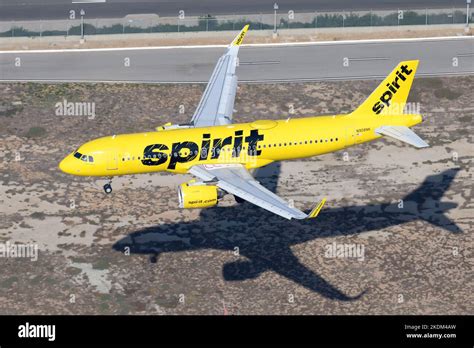
A rescue scenario is not impossible. Castlelake has the capital to stabilize operations, refinance debt, and renegotiate aircraft obligations. With creditor support, Spirit could emerge smaller, leaner, and more disciplined, focusing on profitable routes rather than blanket growth. This would require Castlelake to tolerate airline risk, including labor negotiations, fuel volatility, and competitive fare wars.
The incentive for such patience would hinge on whether a functioning Spirit generates more long-term value than a staged asset sale. In theory, a stabilized airline could later be sold to a strategic buyer once regulatory winds shift. In practice, this would demand a time horizon and risk tolerance atypical of asset-focused funds.
More likely is a hybrid approach: limited operational continuity while high-value assets are quietly repositioned. Aircraft sale-leasebacks, engine monetization, and selective route exits could all occur under the banner of restructuring, even as the airline technically survives.
What Creditors and Courts Will Ultimately Decide
Any Castlelake-led transaction must pass through the scrutiny of a bankruptcy court, where bondholders, lessors, and employee groups will fight for priority. Creditors may favor Castlelake precisely because it can write large checks and deliver predictable recoveries. Labor groups, however, will push back against strategies that hollow out the airline while preserving only a shell.
The court’s mandate is not to save Spirit’s brand, but to maximize estate value. If that value is demonstrably higher through asset sales than through continued operation, sentiment will matter less than spreadsheets. This is the harsh arithmetic of restructuring, and Spirit has reached the stage where narrative no longer outweighs numbers.
A Defining Moment for Spirit’s Identity
Spirit Airlines stands at a crossroads where survival and disassembly are separated by a thin legal line. Castlelake’s involvement does not signal malice; it signals realism. The firm sees what the market sees: a struggling airline whose components may shine brighter apart than together.
Whether Spirit emerges as a smaller carrier or fades into aviation history will depend on how convincingly management can argue that the airline itself is worth more alive than dismantled. Castlelake will listen, calculate, and act accordingly. In that sense, the real verdict is not about intent, but about value—and value, in aviation finance, is brutally precise.