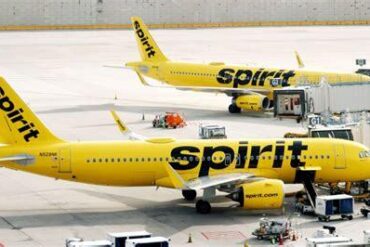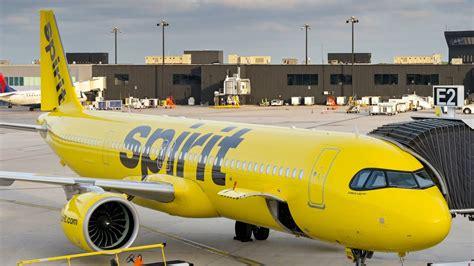
The financial clock is ticking for Spirit Airlines, and the margin for survival has narrowed to mere days. Once a dominant force in the ultra-low-cost carrier segment, the airline now finds itself at the center of a high-stakes standoff involving government officials, creditors, and private investors. With bailout negotiations stalled and operational cash reserves nearly exhausted, the future of the airline hangs in precarious balance.
Cash Crisis Deepens Amid Failed Negotiations
Spirit Airlines’ liquidity crisis has reached a critical tipping point. Internal estimates suggest the airline has only enough cash to sustain operations for a handful of days, a stark reality that underscores the urgency of securing external funding. Discussions around a proposed $500 million federal loan—reportedly tied to a 90% government stake—have faltered, with key creditors refusing to align behind the plan.
The resistance from major financial backers reflects a broader skepticism about the airline’s long-term viability. Investment firms involved in Spirit’s restructuring have raised concerns over valuation, control, and the precedent such a bailout would set. Competing proposals have emerged, but none have gained sufficient traction to move forward, leaving the airline stranded in a dangerous financial limbo.
Fuel Costs and Geopolitical Shockwaves Derail Recovery
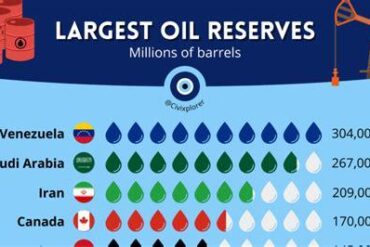
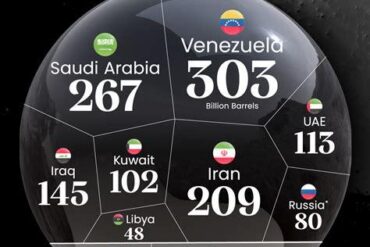
Spirit’s struggles are not solely the result of internal mismanagement or competitive pressures. External forces—particularly a sharp surge in fuel prices—have crippled the airline’s already fragile recovery strategy. The escalation of geopolitical tensions in the Middle East triggered a spike in oil prices, dramatically increasing operational costs at a time when Spirit could least afford it.
Fuel, which represents one of the largest expenses for any airline, has become an insurmountable burden. Despite aggressive cost-cutting measures, including fleet reductions, route cancellations, and workforce downsizing, the airline has been unable to offset the financial damage. What was once a carefully mapped post-bankruptcy recovery plan has unraveled under the weight of global instability.
Government Intervention: A Controversial Lifeline
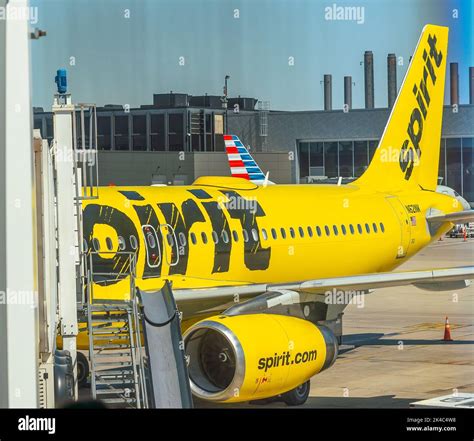
Facing the prospect of imminent collapse, federal authorities have explored extraordinary measures to stabilize the airline. Among the most debated options is the use of emergency powers under a Cold War-era statute to justify direct government intervention. This approach would allow the state to inject capital into Spirit Airlines in exchange for operational control, effectively nationalizing the carrier—at least temporarily.
The rationale behind this strategy extends beyond economic rescue. Officials have suggested that Spirit’s fleet and workforce could be repurposed to support military logistics, transporting personnel and cargo during times of heightened national security demand. This dual-use justification has added a layer of complexity to the already contentious bailout debate.
However, the proposal has sparked fierce opposition. Critics argue that invoking such powers stretches the intent of the law and risks entangling taxpayers in a failing enterprise. The notion of transforming a budget airline into a quasi-military asset has also raised eyebrows across both political and industry circles.
Jobs, Competition, and the Stakes for the Aviation Sector
At the heart of the bailout debate lies a pressing concern: jobs. Spirit Airlines employs between 15,000 and 17,000 workers, many of whom now face the possibility of sudden unemployment. Supporters of government intervention frame the bailout as a necessary step to preserve these livelihoods and maintain stability within the broader aviation ecosystem.
Yet the implications extend far beyond a single airline. Rival low-cost carriers have voiced strong objections, warning that a government-backed rescue would distort competition. By artificially propping up one struggling airline, policymakers risk creating an uneven playing field that could force competitors to cut routes, reduce capacity, or even exit certain markets altogether.
The ripple effects could reshape the budget airline sector in profound ways. Reduced competition often leads to higher fares, fewer options for travelers, and diminished service quality—outcomes that run counter to the very principles that made low-cost carriers successful.
Investor Doubts and Market Realities
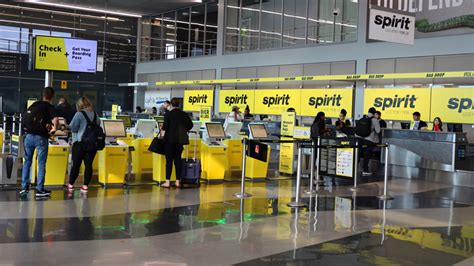
Underlying the entire crisis is a fundamental question: can Spirit Airlines ever return to profitability? Many private investors appear unconvinced. The reluctance of creditors to support the bailout plan signals deep concerns about the airline’s business model, particularly in an environment defined by volatile fuel prices and intense competition.
Some market analysts argue that allowing the airline to fail may be the more economically rational outcome. In their view, the aviation industry is cyclical by nature, and inefficient players must eventually exit to restore balance. This perspective, while harsh, reflects a long-standing belief in market discipline and the dangers of excessive government intervention.
Others counter that the collapse of Spirit would have disproportionate consequences, particularly for budget-conscious travelers who rely on its ultra-low fares. The airline’s disappearance could leave a significant gap in the market, one that competitors may be unable—or unwilling—to fill at the same price point.
The Defense Angle: Strategic Asset or Stretch of Policy?
The idea of reclassifying Spirit Airlines as a strategic national asset has introduced a new dimension to the debate. By positioning the airline as critical to defense logistics, policymakers aim to justify rapid financial support without navigating traditional bailout channels.
This approach, however, is far from universally accepted. Skeptics argue that if the airline were truly indispensable, private capital would already be lining up to save it. The reliance on a defense-based argument may indicate a lack of viable commercial solutions, raising questions about the sustainability of any government-led rescue.
Furthermore, the long-term implications of such a move remain unclear. If the airline fails to stabilize even after receiving federal support, taxpayers could be left absorbing significant losses. The risk of transforming a temporary intervention into a prolonged financial burden is a concern that continues to loom over negotiations.
An Uncertain Horizon for Spirit Airlines
As talks remain deadlocked and time runs out, Spirit Airlines stands at the edge of a financial cliff. The coming days will likely determine whether the airline secures a lifeline or slips into liquidation. Each scenario carries profound consequences—not just for employees and passengers, but for the structure and dynamics of the entire aviation industry.
The situation encapsulates a broader tension between market forces and government intervention, between short-term stabilization and long-term sustainability. Whatever the outcome, the fate of Spirit Airlines will serve as a defining case study in how economies respond to corporate crises in an era of global uncertainty.