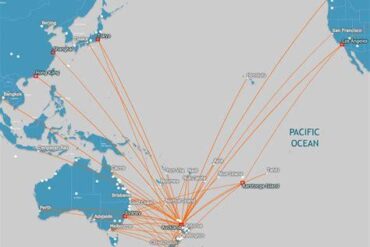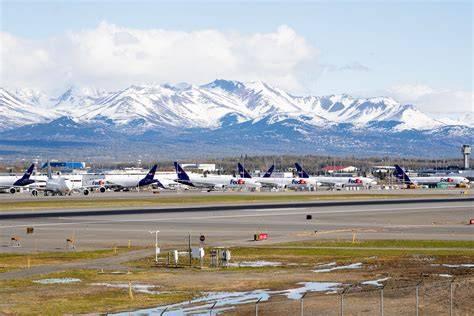
The global air cargo network is full of routes that look strange until the economics behind them are understood. A freighter traveling between major manufacturing centers in Asia and customers across North America might appear to have every reason to fly nonstop. Yet thousands of cargo aircraft routinely make an unexpected stop in Alaska before continuing their journeys. The detour is not really a detour at all. It is one of the most efficient tricks in long-haul aviation.
At the center of this system is Ted Stevens Anchorage International Airport (ANC), an airport that has become one of the world’s most important cargo gateways despite serving a relatively small local population. Anchorage handles roughly 3.5 million tons of cargo annually, and around 80% of trans-Pacific cargo flights are estimated to stop there. Much of that freight does not originate in Alaska, nor is it destined for Alaskan consumers. Instead, Anchorage works as a strategically positioned bridge between continents.
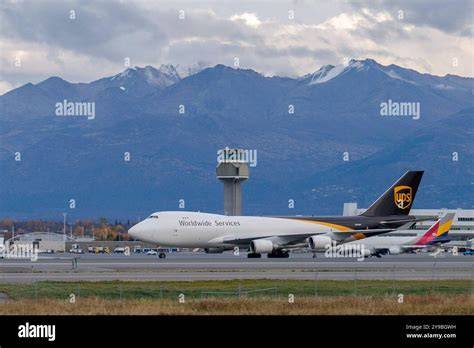
For travelers, Anchorage may look like a remote airport surrounded by mountains, wilderness, and a comparatively modest metropolitan area. For cargo airlines, however, its location is extraordinarily valuable. The airport sits close to the great-circle routes connecting East Asia, North America, and Europe, placing it within a highly efficient operating range of much of the industrialized world.
Anchorage’s Geography Makes It a Natural Trans-Pacific Cargo Stop
The most important reason cargo flights stop at Anchorage is remarkably simple: geography. The airport occupies a position that places it roughly 9.5 hours of flying time from about 90% of the world’s industrialized population. That makes Alaska far less remote from an aviation perspective than it appears on a conventional map.
Traditional maps can also create a misleading impression of Pacific routes. A flat world map makes the shortest path between Asia and North America appear to run straight across the ocean. In reality, long-haul aircraft follow great-circle routes over the curved surface of the Earth. Anchorage sits remarkably close to many of those paths, allowing cargo airlines to use the airport without making a major geographical deviation.
For passenger airlines, a technical stop can be an inconvenience. Passengers generally want to reach their destination as quickly as possible, making nonstop service particularly attractive. Cargo airlines have a completely different priority. Their objective is not simply to minimize elapsed flight time. It is to maximize the amount of profitable freight carried while maintaining acceptable costs, reliability, and operating flexibility.
Fuel is one of the biggest factors in that equation. Jet fuel is heavy, and an aircraft needs more fuel to carry a heavier aircraft over a longer distance. That creates a circular problem for freighter operators: carrying more fuel allows a longer nonstop flight, but the fuel itself occupies weight and reduces the amount of cargo that can be loaded.
A stop at Anchorage can break that cycle.
Why Cargo Airlines Trade Fuel Weight for Revenue Cargo
Consider a heavily loaded widebody freighter preparing to cross the Pacific. If the airline wants to fly nonstop from Asia to a distant destination in the United States, it must depart with enough fuel for the entire journey, including appropriate reserves. That fuel can represent a substantial amount of aircraft weight.
Instead, the airline can plan a technical stop in Anchorage. The aircraft departs Asia with a fuel load optimized for the first leg rather than the entire trans-Pacific journey. Once it reaches Alaska, it can refuel before continuing toward its North American destination.
The difference can be enormous. Industry estimates cited in discussions of Anchorage cargo operations suggest that stopping there can enable an aircraft to carry as much as 100,000 additional pounds of revenue-generating cargo compared with a comparable nonstop mission. The exact advantage depends on aircraft type, route, weather, winds, payload, fuel prices, and operational requirements, but the underlying principle remains powerful.
The airline is essentially exchanging a short ground stop for additional payload capacity. Landing fees, handling costs, crew expenses, and several minutes or hours of additional journey time can be outweighed by the revenue from carrying more freight.
That is why modern aircraft have not simply made Anchorage irrelevant. Range is useful, but payload economics are often more important.
Anchorage Is One of the World’s Busiest Cargo Airports
Anchorage’s cargo statistics become even more remarkable when compared with its local market. Airports such as Memphis International Airport and Louisville Muhammad Ali International Airport are closely associated with enormous package-sorting operations run by FedEx and UPS. Their cargo volumes are supported by major domestic distribution networks and large integrator hubs.
Anchorage operates differently.
A huge proportion of the cargo moving through ANC is transit freight rather than cargo generated by Alaska itself. Aircraft arrive, receive fuel and ground services, undergo inspections or maintenance checks when required, potentially change crews, and then depart for another destination. Some freight can also be transferred between aircraft under appropriate operating arrangements.
This means Anchorage can rank among the world’s largest cargo airports without having the population or consumer economy normally associated with such enormous freight volumes.
An electronics shipment manufactured in China might touch Anchorage before heading to a distribution center in the United States. An automotive component produced in Japan could follow a similar path. High-value e-commerce merchandise, machinery, pharmaceuticals, and other time-sensitive goods can all pass through the airport while spending very little time physically in Alaska.
For the people purchasing those products, Anchorage is practically invisible. For cargo planners, it is a critical waypoint.
Special Cargo Rights Add Another Layer of Advantage
Geography explains much of Anchorage’s success, but it is not the entire story. Regulatory flexibility has also played an important role in turning the airport into a major international cargo platform.
Anchorage benefits from relatively liberal cargo transfer arrangements that allow foreign cargo carriers greater flexibility when moving freight through the airport. These rights can permit international operators to transfer cargo between aircraft while on the ground, depending on the applicable agreements and operating circumstances.
That flexibility matters because global freight networks are rarely static. Cargo demand changes from week to week, aircraft availability shifts, and airlines must constantly adjust capacity to match changing flows.
An airport that allows carriers to refuel, exchange crews, reposition aircraft, and reorganize freight with fewer regulatory complications becomes much more valuable than a simple fuel stop.
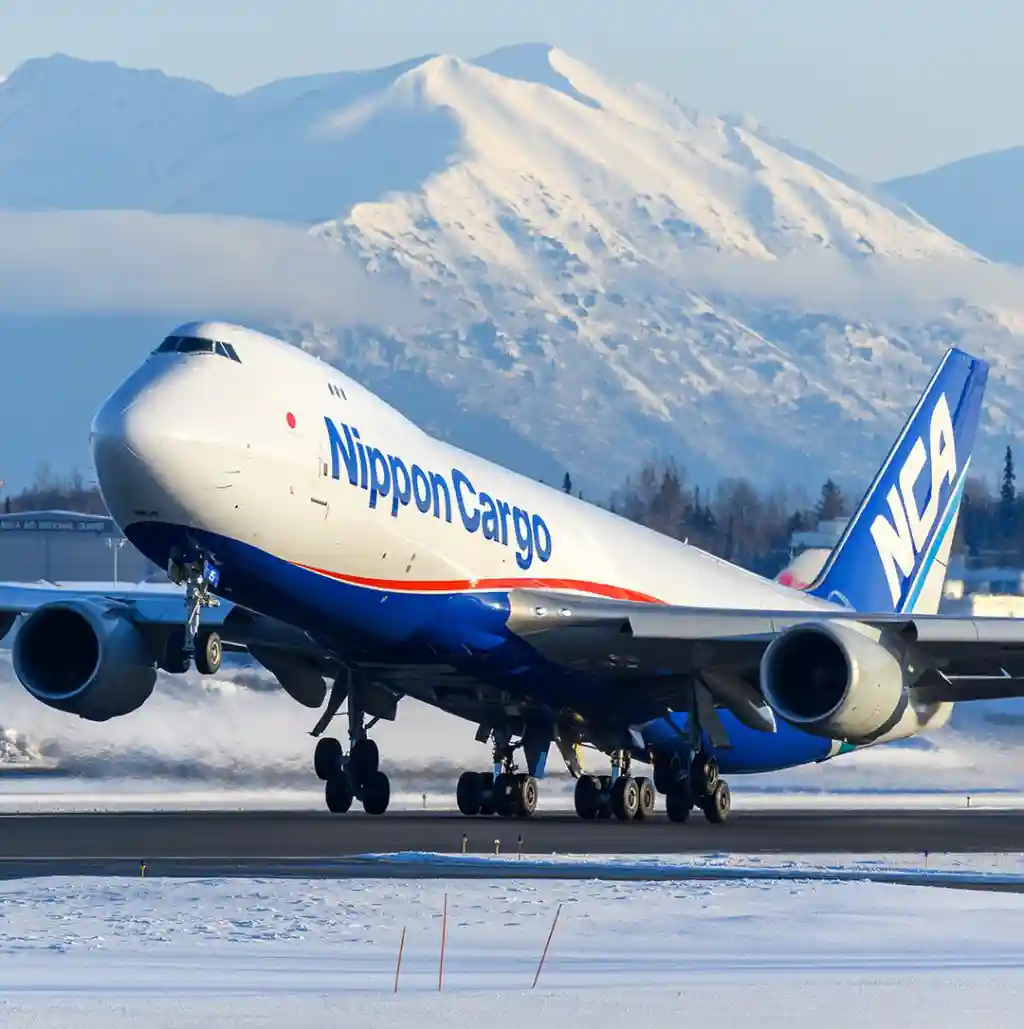
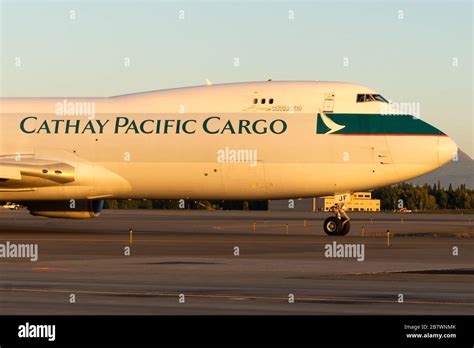
Cathay Pacific Cargo is a useful example. The carrier has maintained a substantial presence at Anchorage, with its freighter operation making the airport an important station within its global network. Anchorage’s importance to Cathay Pacific is not based on a large local customer base. Its value comes from connecting the airline’s Asian network with destinations across North America.
A Cargo Giant That Does Not Need a Giant Local Market
One of Anchorage’s most interesting characteristics is the difference between cargo volume and local economic value per ton.
A traditional cargo hub can generate significant economic activity because freight is sorted, warehoused, processed, repackaged, and redistributed. Every stage can create additional jobs and revenue. Anchorage’s model is more focused on keeping aircraft moving.
Some industry estimates have placed Anchorage’s direct economic yield at roughly $0.12 per ton of cargo handled, compared with approximately $0.38 at Memphis and $0.41 at Louisville. While such figures vary according to methodology and the year examined, they illustrate an important distinction.
Anchorage handles extraordinary physical quantities of freight, but much of that cargo is not staying in Alaska long enough to generate extensive downstream logistics activity.
The airport’s business model therefore resembles an enormous aviation pit stop. The objective is speed and efficiency. Aircraft arrive carrying freight, receive fuel and services, and leave again. The cargo may barely pause while the aircraft is prepared for its next leg.
That does not make Anchorage economically unimportant. Quite the opposite. The airport supports a substantial ecosystem of fuel providers, ground handlers, mechanics, maintenance companies, logistics specialists, customs personnel, airport employees, and other aviation businesses.
Harsh Alaskan Weather Makes the Operation Even More Impressive
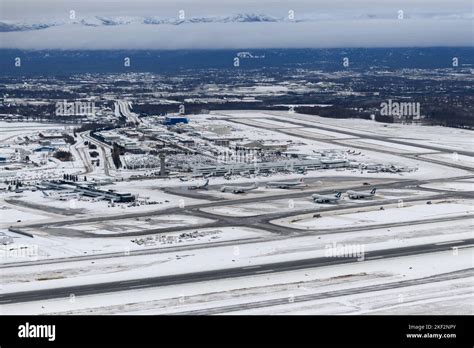
Operating such a high-volume cargo gateway in Alaska is not easy. Anchorage faces winter conditions that would challenge airports in many other parts of the world. Freezing temperatures, snow, ice, strong winds, and rapidly changing weather can all complicate aircraft operations.
Yet cargo airlines cannot simply stop because winter has arrived.
International freight networks operate on tightly coordinated schedules. A delay in Anchorage can potentially affect aircraft rotations, connecting flights, warehouse schedules, crew assignments, and delivery commitments thousands of miles away. This creates enormous pressure on airport operators and ground crews to keep the operation moving.
Snow removal is therefore a critical part of daily airport operations. De-icing procedures, runway maintenance, aircraft inspections, fueling, and ground handling must all function reliably even during difficult weather.
The human side is equally important. Modern widebody freighters require highly trained technicians, and recruiting skilled aviation mechanics can be particularly challenging in remote or demanding operating environments. As cargo traffic expands, maintaining an adequate workforce becomes just as important as expanding runways, aprons, and warehouses.
Anchorage has continued to invest in its cargo infrastructure, with major projects intended to increase capacity and improve the airport’s ability to support future international freight growth.
Why Boeing 777F and 747-8F Range Has Not Destroyed Anchorage’s Role
It might seem logical that modern freighters would eventually eliminate the need for an Alaskan stop. Aircraft such as the Boeing 777F and Boeing 747-8F have impressive range and significantly improved fuel efficiency compared with earlier generations.
But longer range does not automatically mean airlines should fly farther without stopping.
The central issue is payload economics. A freighter capable of crossing the Pacific nonstop may still be more profitable when it makes a technical stop and carries additional revenue cargo. The aircraft’s maximum range is only one variable in a much larger calculation involving fuel prices, cargo rates, winds, aircraft weight, crew limitations, airport costs, and schedule requirements.
Wind can also change the economics of a particular route. A strong headwind can increase fuel consumption, while favorable winds can reduce it. Weather conditions can affect routing, and airlines must maintain appropriate fuel reserves. Anchorage provides an additional operational option that allows dispatchers to build a route around these changing conditions.
Crew planning is another consideration. Long-distance cargo operations must comply with flight-time and duty regulations. A stop can provide an opportunity to restructure crew operations while keeping the aircraft within the broader network schedule.
Modern freighters have therefore changed the economics of Anchorage rather than simply eliminating the airport’s purpose. The aircraft became more capable, but the cargo business became more sophisticated too.
E-Commerce Has Made Anchorage Even More Important
The growth of global e-commerce has strengthened the importance of fast and reliable air cargo networks. Consumers increasingly expect products manufactured thousands of miles away to arrive within days rather than weeks.
That expectation places pressure on airlines to move high-value and time-sensitive freight efficiently across continents.
Manufacturing has also become increasingly international. A single finished product may contain components produced in several countries before reaching a final assembly plant. The supply chain can involve dozens of companies and multiple transportation modes. Air cargo provides the speed needed when inventory shortages, production schedules, or consumer demand make slower transportation impractical.
Anchorage fits naturally into that system because it provides a strategically located checkpoint between Asia and North America.
The airport does not need millions of local consumers to justify its cargo traffic. It simply needs to remain an efficient place for aircraft to land, refuel, service themselves, and continue flying.
Anchorage Is the Invisible Middle of the Global Supply Chain
The most fascinating thing about Ted Stevens Anchorage International Airport may be how little attention it receives from the people who depend on it.
A passenger stepping onto a flight to Tokyo or Los Angeles understands the airport as a destination. A cargo aircraft operator sees something completely different: a carefully positioned piece of infrastructure capable of transforming the economics of a trans-Pacific mission.
That distinction explains why roughly 80% of trans-Pacific cargo flights are associated with a stop at Anchorage and why the airport can consistently rank among the world’s busiest cargo gateways. Its importance is not based on Alaska’s population. It comes from the extraordinary combination of geography, payload economics, international cargo rights, infrastructure, and operational expertise.
Every time a freighter lands at Anchorage, the aircraft may spend only a limited amount of time on the ground. Yet that brief stop can influence the movement of enormous quantities of goods between continents.
The next time an online order arrives from Asia, an automotive component reaches a North American factory, or an electronic device appears on a store shelf, its journey may have included a place that few consumers ever consider. Anchorage is not simply an airport in Alaska. It is one of the quietest and most important links in the trans-Pacific air cargo system.