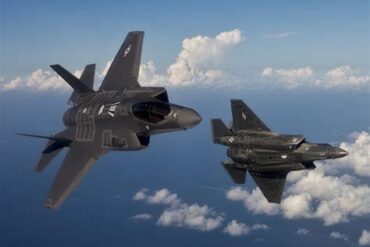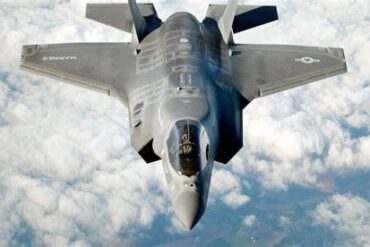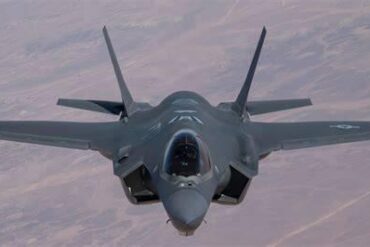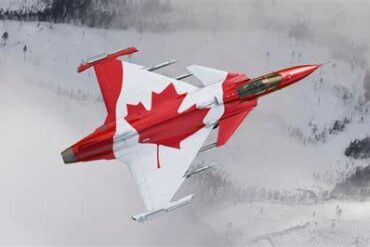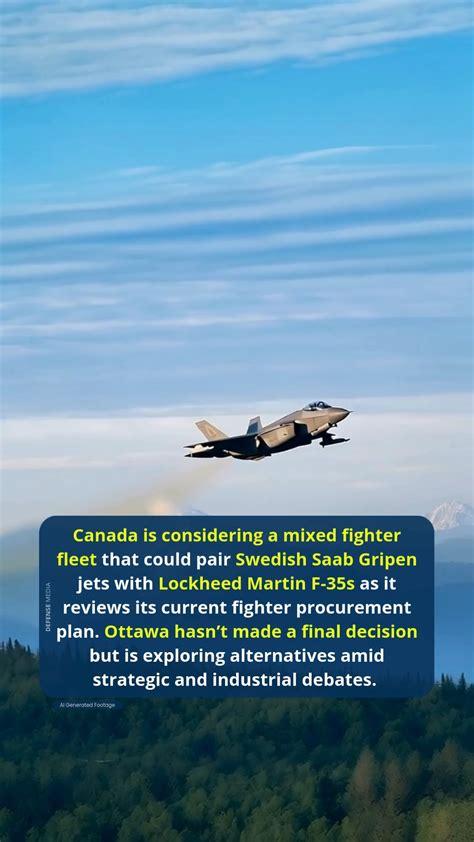
Canada’s fighter modernization program has entered an unusual phase, with the country’s new defense procurement leadership examining whether the Royal Canadian Air Force should continue toward an all-F-35A Lightning II fleet or introduce Saab’s JAS 39 Gripen E alongside the American stealth fighter. At the center of the debate is Stephen Fuhr, a former CF-188 Hornet pilot whose long-standing criticism of the F-35 acquisition has made his new role particularly significant. Fuhr now leads the Canadian Defense Investment Agency (DIA), an organization created to accelerate military procurement, placing him in a position where his past arguments about the Joint Strike Fighter intersect directly with one of Canada’s largest defense decisions.
Fuhr’s appointment is notable because his relationship with the F-35 program predates his current position by many years. After retiring from the Canadian Armed Forces in 2009, he became a prominent critic of Canada’s planned purchase of the Joint Strike Fighter. According to CBC reporting cited in the supplied material, his public comments during a 2011 television interview generated strong reactions among former military colleagues. His central criticism was not necessarily that the F-35 lacked advanced combat capabilities, but that the program had experienced serious development, cost and schedule problems. That history now creates an unusual institutional dynamic: a former fighter pilot who once challenged Canada’s decision to acquire the F-35 is involved in evaluating what the country’s future fighter fleet should look like.
The debate has become more consequential because Canada has already committed money to the F-35 program. Ottawa originally selected 88 F-35As as the replacement for its aging CF-188 Hornet fleet, but the supplied procurement figures indicate that only a portion of those aircraft are currently covered by firm, paid contracts. Long-lead production funding has also been committed for additional aircraft, while a larger portion of the original 88-aircraft plan remains open to potential changes. That distinction is important because it means the debate is not simply about cancelling an entire fighter program. Canada could retain a substantial F-35 force while using the remaining procurement space to establish a second fighter fleet.
Stephen Fuhr’s F-35 History Shapes Canada’s Procurement Debate
Fuhr’s earlier opposition to the F-35 was built around concerns about the aircraft’s development history and the financial assumptions surrounding the Joint Strike Fighter program. During the program’s early years, the F-35 encountered numerous delays, cost pressures and technical difficulties, giving critics substantial material with which to challenge the acquisition strategy. Fuhr reportedly used American program records to argue that the fighter had repeatedly missed projected milestones and that Canada needed to be cautious about committing its entire future fighter force to one expensive platform.
His professional background makes the debate more complicated than a conventional procurement contest. Fuhr previously served as a CF-188 pilot, giving him operational experience with the type of fighter mission Canada needs to perform. After leaving military service, he also provided strategic consulting services to Boeing, which was a major competitor during Canada’s fighter replacement competition. Boeing ultimately lost that competition to Lockheed Martin’s F-35, meaning Fuhr’s professional history includes connections to both the operational world of Canadian fighter aviation and one of the companies that challenged Lockheed’s position.
His appointment by Prime Minister Mark Carney in May therefore places a former F-35 critic inside the organization responsible for accelerating major defense acquisitions. That does not, by itself, establish what decision he will ultimately recommend. A procurement official must consider operational requirements, contractual obligations, industrial benefits, training, infrastructure, interoperability and long-term sustainment rather than simply revisiting an old argument. Nevertheless, his background helps explain why the possibility of a Gripen-F-35 mixed fleet has attracted attention.
Saab’s GlobalEye Decision Provides an Important Precedent
The strongest indication of Canada’s current procurement thinking may come not from the fighter competition itself but from another major aviation acquisition. Canada selected Saab’s GlobalEye airborne early warning and control aircraft instead of Boeing’s E-7 Wedgetail, according to the supplied material. The decision, announced at the CANSEC defense exposition in May, reportedly initiated negotiations for a program worth more than $3.6 billion.
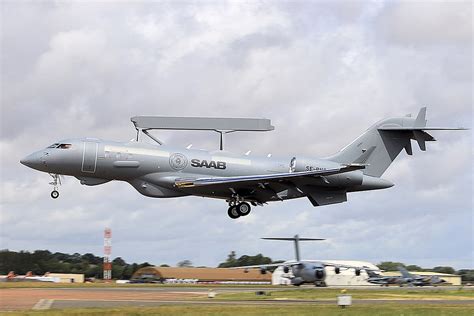
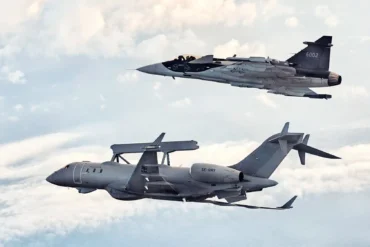
The GlobalEye decision is relevant because it demonstrates that Ottawa is willing to choose a Saab platform when its combination of capability, operating economics and fleet practicality fits Canadian requirements. The aircraft is based on a smaller Bombardier business jet rather than the Boeing 737-derived airframe used by the E-7. That difference produces a fundamentally different operating model, with a smaller aircraft requiring less infrastructure and potentially lower operating costs.
The supplied figures put the E-7’s purchase price at approximately $400 million per aircraft, compared with about $350 million for GlobalEye, while estimated hourly operating costs are dramatically different. The E-7 has been estimated at roughly $25,000 to $30,000 per flight hour, whereas GlobalEye has been cited at approximately $6,000 to $9,000. Such figures illustrate why acquisition price alone can be misleading when a military is planning to operate aircraft for several decades.
The same principle is now being applied to the fighter debate. An aircraft that costs slightly less to purchase but dramatically less to operate can allow a country to maintain a larger number of aircraft, conduct more training sorties and keep more airframes available for routine missions. For a country as geographically large as Canada, those factors can matter as much as maximum performance in a limited number of high-end combat scenarios.
F-35A and Gripen E Create a High-Low Fighter Structure
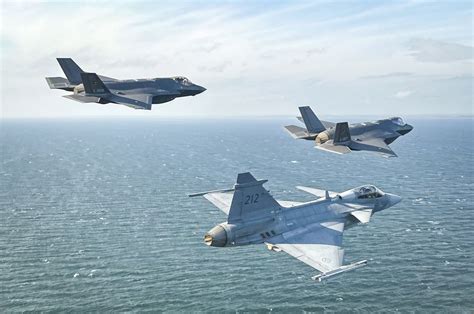
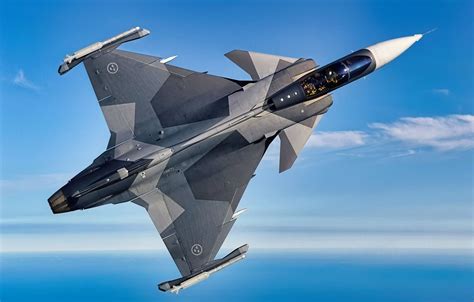
The proposed Canadian fighter arrangement would effectively create a high-low fleet. The F-35A would provide Canada’s most sophisticated stealth and sensor capabilities, while the Gripen E would perform a much larger share of routine missions where stealth penetration is unnecessary.
The supplied cost figures illustrate the attraction. The F-35A has a cited factory price of roughly $92 million, while the Gripen E is listed at approximately $85 million. The more substantial difference appears in estimated operating costs. The material places the F-35A at approximately $38,000 to $44,000 per flight hour, compared with roughly $4,700 to $9,900 for the Gripen E.
Those numbers should not be treated as perfectly interchangeable accounting figures because military operating-cost estimates vary according to methodology, fleet size, maintenance assumptions and what expenses are included. They nevertheless demonstrate the central economic argument behind a mixed fleet. Canada’s fighter force does not spend every day conducting stealth penetration missions against sophisticated integrated air defenses. Much of its peacetime workload involves air sovereignty, training, interception, patrols and NORAD duties.
Using an F-35 for every one of those missions could consume expensive aircraft hours when a less costly fighter could perform the same task. A mixed fleet would instead reserve the F-35 for missions where its unique characteristics provide the greatest operational value.
Canada Has Used Mixed Fighter Fleets Before
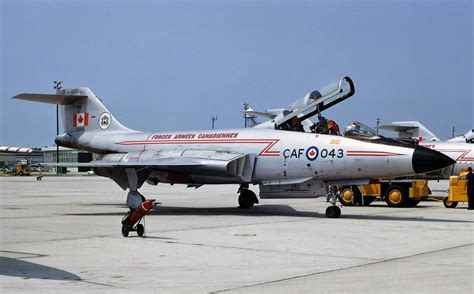
The concept is not without historical precedent in Canadian service. During the Cold War, the RCAF operated different fighter types for different missions, including the CF-101 Voodoo for interception and the CF-104 Starfighter for NATO strike duties. The fleet structure reflected the different requirements of domestic air defense and overseas alliance operations.
Canada later moved toward a much larger common fighter fleet with the CF-188 Hornet. Standardizing around one aircraft simplified training, maintenance and logistics while giving the RCAF a versatile platform capable of performing multiple roles. The question confronting Canadian planners today is whether the technological and financial environment has changed enough to make a return to a two-fighter structure worthwhile.
The answer depends heavily on how Canada defines its future requirements. A single fighter type offers logistical simplicity, common training and a unified support structure. A mixed fleet introduces additional infrastructure, spare-parts chains, simulators, weapons integration requirements and pilot training pipelines. Those costs cannot be ignored when calculating the apparent savings from a cheaper fighter.
NORAD Makes Canada’s Fighter Requirements Different
Canada’s enormous geography adds another layer to the procurement decision. The Royal Canadian Air Force is responsible not only for expeditionary combat operations but also for maintaining Canada’s contribution to NORAD, the binational North American aerospace defense organization.
Canadian fighters may be required to conduct long-range patrols, intercept unidentified aircraft, respond to aerospace alerts and maintain sovereignty over enormous areas with relatively little supporting infrastructure. Those missions can place a premium on availability and operating efficiency.
A mixed fleet could theoretically divide those responsibilities. A smaller number of F-35As could provide the high-end capability required against sophisticated threats, while a larger Gripen force could conduct routine patrols and interception missions at lower operating cost. Such an arrangement could also increase the number of aircraft available for day-to-day tasks without requiring Canada to purchase an entirely stealth-based fleet.
The concept resembles the high-low approach used elsewhere in military aviation, where expensive, highly specialized aircraft are combined with larger numbers of less costly platforms. The attraction is straightforward: not every mission requires the most sophisticated aircraft available.
Gripen’s Arctic Operating Concept Is Central to the Debate
The Gripen E’s operating philosophy is particularly relevant to Canadian geography. Saab developed the Gripen family around the Swedish requirement to maintain combat aircraft under difficult conditions and operate from dispersed locations. Sweden’s historic Bas 60 and Bas 90 concepts emphasized the use of multiple dispersed operating locations, including road bases, rather than depending entirely on large permanent airfields.
That approach has obvious parallels with the Canadian Arctic, although the two countries have very different geography and infrastructure. Canada’s northern territory contains enormous distances, severe weather and relatively few military airfields. Maintaining aircraft close to potential areas of concern can therefore become a logistics problem in its own right.
Gripen was designed around relatively small ground crews and rapid turnaround operations. Saab has also emphasized the aircraft’s ability to operate from dispersed locations with limited support. In a Canadian context, those characteristics could make the aircraft attractive for northern deployments where moving a large maintenance footprint would be difficult.
The F-35 has different requirements because its low-observable characteristics, sophisticated sensors and integrated systems demand a more specialized maintenance ecosystem. That does not make the aircraft unsuitable for Arctic operations, but it means Canada must consider the infrastructure and sustainment requirements associated with maintaining a high-end stealth fleet across a vast country.
Sovereignty and Dependence Are Also Part of the Calculation
The debate is not exclusively about dollars and flight hours. Canada must also consider how much operational autonomy it wants over its future fighter fleet.
The F-35 is part of a highly integrated international program involving the United States and numerous partner nations. Its software, mission systems, logistics network and sustainment ecosystem are consequently tied to a broader American-led architecture. Canada gains access to advanced capabilities and an enormous multinational support structure, but it does not independently control every element of the aircraft’s technology.
The Gripen represents a different industrial and strategic model. Saab has promoted the fighter around flexibility, local support and national operating autonomy. For Canada, that could provide greater freedom in areas such as weapons integration, deployment concepts and sustainment decisions, although any actual Canadian Gripen program would still involve extensive contractual and industrial arrangements with Sweden and other suppliers.
Claims about an American “kill switch” should be treated cautiously. The existence of extensive American control over elements of the F-35 ecosystem is a documented feature of the multinational program, but that does not establish the popular claim that Washington possesses a simple switch capable of remotely disabling Canadian aircraft. The more substantive sovereignty question concerns access to software, logistics, classified systems, upgrades and decision-making authority over the aircraft’s future configuration.
The Mixed-Fleet Option Does Not Mean the F-35 Is Finished
Despite the attention surrounding Fuhr’s background, the emergence of a Gripen option does not automatically mean Canada’s F-35 program will disappear. The country has already made financial commitments, and the F-35 provides capabilities that the Gripen does not replicate directly.
Its stealth characteristics, sensor fusion and fifth-generation combat architecture are specifically designed for operations against advanced air defenses and modern fighter threats. Replacing those capabilities entirely with a less expensive fourth-generation-derived platform would represent a major change in Canada’s military strategy.
A mixed fleet offers a different path. Canada could retain enough F-35As to provide a sophisticated high-end capability while purchasing a larger number of Gripen Es for missions where affordability, availability and dispersed operations are more important. The remaining question is whether the additional complexity of operating two fighter types is justified by those advantages.
The procurement decision will therefore involve more than Fuhr’s personal history. It will require the Canadian government and the RCAF to balance existing F-35 commitments, NORAD requirements, NATO obligations, Arctic defense, industrial participation, infrastructure, training, weapons integration and decades of sustainment costs.
Canada’s Fighter Decision Is Becoming a Question of Fleet Design
The most significant development is that Canada’s fighter debate is no longer simply about F-35 versus Gripen. It is increasingly about what kind of fighter force Canada wants to operate over the next several decades.
An all-F-35 fleet would maximize commonality and provide a powerful fifth-generation capability, but it would also expose the RCAF to the cost and infrastructure demands of operating a sophisticated stealth aircraft for routine missions. A Gripen-heavy structure would emphasize lower operating costs, dispersed operations and fleet size, but would introduce a second fighter type and reduce the proportion of Canada’s force equipped with the F-35’s most advanced capabilities.
A mixed fleet attempts to divide those responsibilities. The F-35 could provide the specialized high-end capability, while Gripen could supply the numbers needed for daily sovereignty missions. Canada’s earlier experience with multiple fighter fleets provides historical precedent, while Saab’s GlobalEye victory demonstrates that Swedish aerospace technology has already established a foothold in Ottawa’s current procurement strategy.
Stephen Fuhr’s role makes the debate particularly closely watched, but the ultimate decision will depend on Canada’s military requirements and the government’s assessment of cost, capability and sovereignty. For now, the F-35 remains part of Canada’s committed fighter modernization program, while the possibility of adding the Gripen E introduces a fundamentally different question: whether Canada’s future air force should prioritize a single exquisite fighter fleet or combine elite stealth capability with a larger, cheaper and more easily dispersed force.