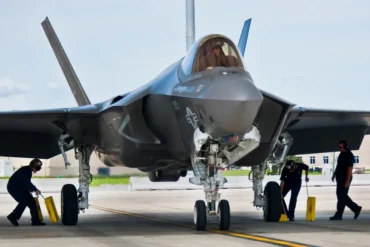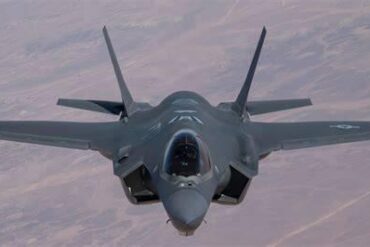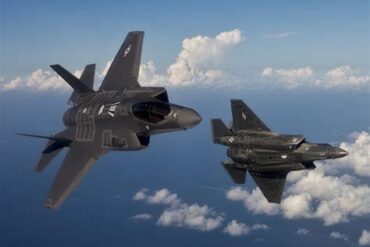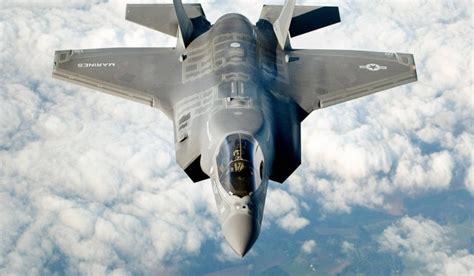
The cost of Lockheed Martin’s F-35 Lightning II program in 2026 sits at the uncomfortable intersection of accounting, geopolitics, engineering ambition, and national pride. It is a number that refuses to behave. Ask for the price of an F-35 and you will be given a figure that sounds reassuringly finite, only to discover that it is merely the opening sentence of a much longer financial novel. By 2026, the program has matured enough for production costs to stabilize, yet complex enough that total ownership costs continue to climb.
The confusion is not accidental. Fighter jets are not consumer products, and the F-35 is not even a conventional fighter. It is a stealth aircraft, a sensor platform, a flying data node, and a long-term military ecosystem wrapped in a single airframe. Every one of those layers carries its own cost curve, and those curves do not move in unison. Understanding the real cost of the F-35 in 2026 means separating what governments pay upfront from what they commit to over decades of operation.
This matters because the F-35 is no longer an American experiment. It is the backbone of air power planning across NATO and allied air forces well into the second half of the century. When countries argue that costs are rising while Lockheed Martin insists they are falling, both sides are telling the truth, just not about the same slice of the program.
Understanding What “Cost” Actually Means for the F-35
The first trap in any discussion about the F-35 program cost is assuming that a single number can describe it. In reality, the program is structured around layers of expense, each governed by different contracts, timelines, and political incentives. The most commonly cited figure is the flyaway cost, which reflects the price of the aircraft as it leaves the factory, excluding weapons, long-term support, and most training infrastructure.
By 2026, flyaway costs have benefited from years of production learning curves. Lockheed Martin states that for production lots 15 through 17, the F-35A flyaway cost averages $82.5 million, while the F-35B comes in at $109 million and the carrier-capable F-35C at $102.1 million. These numbers are real, audited, and defensible. They also represent only the beginning.
Once an aircraft is expected to fight, costs expand rapidly. Sensors must be activated, software blocks installed, weapons integrated, simulators built, maintainers trained, and bases modified. In 2026, most defense ministries estimate that turning a flyaway F-35A into a fully combat-ready jet adds between $15 million and $40 million per aircraft, depending on national requirements.
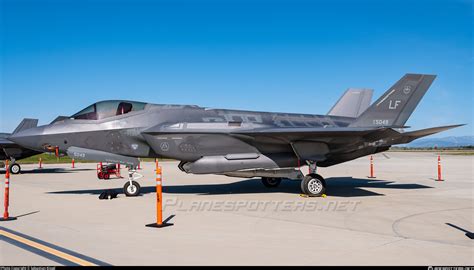
The result is that an operational F-35A typically lands in the $95 million to $120 million range, before a single hour is flown in national service. That figure alone places it in direct competition with modern 4.5-generation fighters, undermining the persistent narrative that the F-35 is uniquely unaffordable at acquisition.
Flyaway Costs in 2026 and Why They Are Falling
From a manufacturing perspective, the F-35 program has finally reached a phase that defense economists recognize as stable. Early production lots were plagued by rework, retrofits, and supply chain inefficiencies. By 2026, those growing pains are largely behind the program. Tooling is amortized, suppliers are locked in, and production volumes remain high enough to keep unit prices down.
Lockheed Martin’s claim that flyaway costs are falling is not marketing spin. It reflects a genuine reduction in marginal production costs per aircraft. The F-35A’s sub-$85 million price point compares favorably with aircraft like the F-15EX, which now exceeds the F-35A in flyaway cost despite leveraging a mature airframe. This reversal has surprised critics who expected stealth aircraft to remain permanently more expensive.
What flyaway costs do not capture is inflationary pressure elsewhere in the system. Software development, cybersecurity, advanced munitions, and sustainment labor costs all rise faster than traditional manufacturing expenses. As a result, the cheaper airplane does not automatically translate into a cheaper program.
Why Countries Say the F-35 Is Getting More Expensive
The contradiction between falling unit prices and rising program totals becomes clear when looking at national procurement cases. Canada’s F-35 program is the clearest example. In 2022, Ottawa committed to purchasing 88 F-35A fighters, initially estimating the program at around $19 billion. By the mid-2020s, that figure had climbed to approximately $27.7 billion, triggering political backlash.
The aircraft themselves did not suddenly become more expensive. Instead, cost growth came from infrastructure upgrades, long-term sustainment planning, inflation, and revised assumptions about operational tempo. Simulators, maintenance depots, software support contracts, and weapons stockpiles all grew in price as Canada refined what it actually wanted the aircraft to do.
Switzerland offers a similarly instructive case. In 2020, the Swiss government selected the F-35 explicitly on cost grounds, stating that it offered the best value among competitors. By 2026, Bern has begun trimming planned orders as updated cost estimates reflect broader lifecycle commitments. The aircraft did not betray its spreadsheet; the spreadsheet evolved.
The Hidden Cost Drivers: Sustainment and Lifecycle Expenses
The single largest contributor to the F-35’s intimidating headline figures is sustainment. Flying the aircraft over decades is far more expensive than buying it. The U.S. Government Accountability Office estimates that the United States alone will spend close to $2 trillion sustaining thousands of F-35s through approximately 2088. This number dominates media coverage, often without context.
That figure is driven partly by a longer service life. Earlier projections assumed retirement dates roughly a decade sooner. Extending service life by eleven years naturally adds enormous operating costs, even if annual expenses remain stable. The number sounds alarming because it represents half a century of global operations compressed into a single line item.
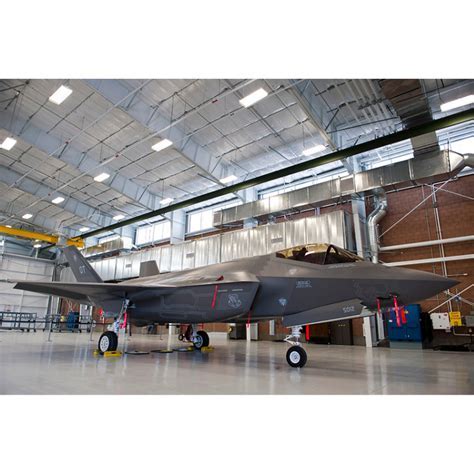
Sustainment costs also reflect the aircraft’s complexity. Stealth coatings require specialized maintenance. Software upgrades are continuous rather than episodic. Supply chains are global and tightly controlled. These realities make the F-35 more expensive to operate than simpler 4th-generation jets, even as its capabilities far exceed them.
Flight Hours, Simulators, and a Counterintuitive Savings
One of the most misunderstood aspects of F-35 operating costs is flight hours. Critics often cite high cost-per-flight-hour figures without acknowledging how the aircraft is actually used. According to the Swiss government, the F-35A requires roughly 20% fewer flight hours than comparable aircraft and about 50% fewer takeoffs and landings than legacy fighters.
This reduction is possible because of the F-35’s reliance on high-fidelity simulators. Pilots spend more time training virtually, preserving airframes and reducing wear. While simulator infrastructure is expensive upfront, it lowers long-term flying costs and extends service life. The result is a cost profile that looks heavy early on but flattens over time.
Partner Nations and the Politics of Discounts
Not all F-35 customers pay the same price. The program was structured from the beginning to reward industrial participation. The United Kingdom, as the sole Level 1 partner, produces approximately 15% of the non-engine components and enjoys the most favorable export terms. British firm BAE Systems sits alongside Lockheed Martin and Northrop Grumman as a core contractor.
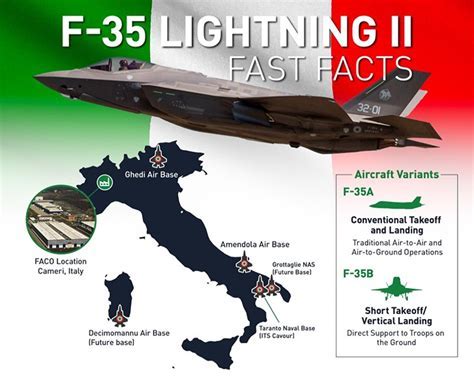
Italy and the Netherlands, as Level 2 partners, benefit from domestic assembly and deeper industrial access. Italy even hosts a final assembly and check-out facility, further reducing costs tied to logistics and delivery. Lower-tier partners like Canada receive fewer industrial offsets and pay closer to standard Foreign Military Sales rates.
These differences are rarely visible in headline figures but materially affect national program costs over time.
Why Comparing the F-35 to 4th-Generation Fighters Misses the Point
The persistent comparison between the F-35 and aircraft like the Saab Gripen E, Rafale, or Eurofighter Typhoon remains analytically flawed. These jets occupy different roles. The F-35 is designed to penetrate heavily defended airspace, fuse battlefield data, and act as a force multiplier for other platforms.
Canada’s internal evaluation illustrates this gap clearly. A leaked report showed the F-35 scoring 95% overall, while the Gripen E achieved just 33%, reflecting differences in stealth, sensor fusion, and survivability. The price debate often masks a strategic debate about dependence, sovereignty, and alliance politics rather than pure cost.
Almost Every Fighter Program Runs Over Budget
Context matters. The F-35 is expensive, but it is not exceptional in that regard. The Eurofighter Typhoon entered service years late and roughly 75% over original budget projections. India’s Rafale deal famously doubled from early estimates, shrinking planned fleet size dramatically. Brazil’s Gripen program has seen multi-year delays and cost growth.
What makes the F-35 stand out is scale. It is the largest fighter program in history, so its overruns are correspondingly visible. Smaller programs hide similar inefficiencies behind lower absolute numbers.
What the F-35 Cost in 2026 Really Buys
By 2026, the true cost of the F-35 program reflects what it has become: a long-term investment in air dominance rather than a simple aircraft purchase. Flyaway prices are competitive. Combat-ready costs align with advanced peers. Sustainment expenses are high because the aircraft is expected to operate for generations.
The F-35 is expensive because it replaces multiple aircraft types, reduces the need for specialized escorts, and reshapes how air forces fight. In the Royal Air Force, the F-35B is known as the “assassin,” clearing the path for the Eurofighter Typhoon, the “thug,” to deliver heavy firepower. That division of labor has strategic value that does not fit neatly into a unit cost table.
In 2026, the F-35 does not offer cheap air power. It offers comprehensive air power at a price that reflects ambition. Nations that buy it are not paying for a jet alone. They are buying entry into a shared operational future that extends well beyond the balance sheet and deep into how wars will be fought for the rest of the century.