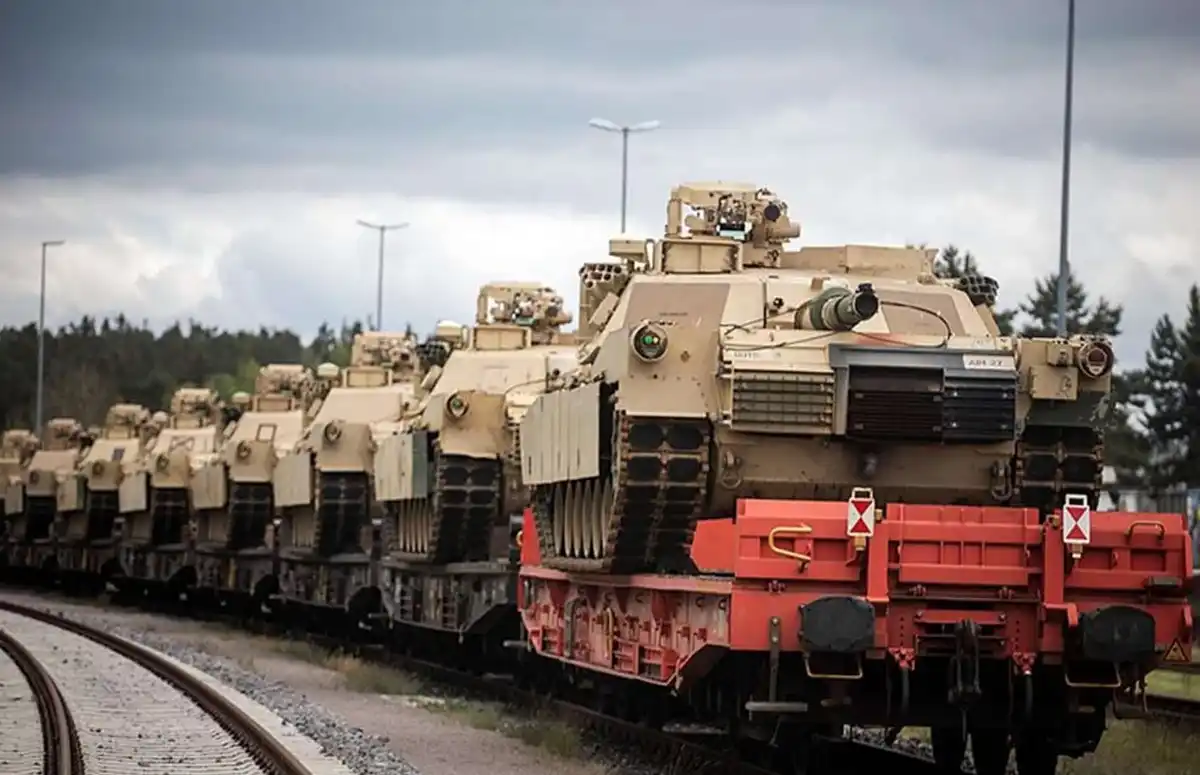
The United States has approved a $185 million Foreign Military Sale (FMS) designed to keep Ukraine’s most capable Western-supplied ground and artillery systems in continuous combat service. Rather than introducing new weapons, the package targets a quieter but decisive factor in modern warfare: sustainment. By funding Class IX spare parts and related support, Washington is reinforcing the repair, maintenance, and availability of M1A1 Abrams tanks, M2 Bradley infantry fighting vehicles, HIMARS rocket launchers, and M777 155mm howitzers already operating under heavy battlefield stress.
Authorized by the State Department and disclosed by the Defense Security Cooperation Agency (DSCA) on February 6, 2026, the sale—logged as DSCA case 25-105 and transmitted to Congress—reflects a strategic shift from headline-grabbing deliveries to the less visible mechanics of endurance. In a war defined by constant attrition, drones, mines, and artillery fragmentation, the side that repairs faster fights longer. The U.S. assessment is blunt: operational relevance depends on keeping platforms running.
Class IX support may sound mundane, but it determines whether a vehicle returns to the line or becomes a donor for cannibalization. Engines, tracks, optics, electronics, hydraulic components, radios, weapon parts, and line-replaceable units are the difference between readiness on paper and firepower on demand. The DSCA notice emphasizes improved logistics, higher operational rates, and faster repair cycles—language that translates directly into more tanks rolling, more guns firing, and more launchers ready when commanders call.
Ukraine’s Western-supplied inventory has grown into a diverse, high-performance fleet with distinct sustainment needs. According to U.S. Department of Defense accounting, Ukrainian forces operate 31 Abrams tanks, more than 300 Bradleys, over 400 Strykers, and more than 900 M113s, supported by substantial ammunition stocks. On the fires side, Ukraine fields over 40 HIMARS launchers and more than 200 155mm howitzers, including the lightweight but technologically sophisticated M777. Each system brings unique advantages—and unique failure points—under constant combat use.
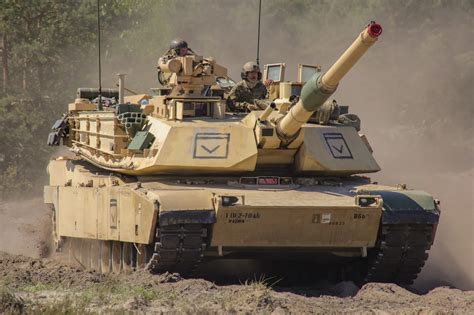
Abrams Sustainment: Power, Precision, and the Cost of Readiness
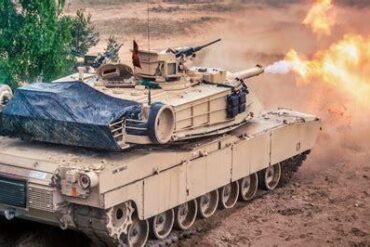
The M1A1 Abrams is not merely a tank; it is a system of systems built around precision, protection, and mobility. Its 120mm M256 smoothbore cannon, advanced fire-control, and stabilization allow crews to engage accurately on the move, day or night. That overmatch matters when seconds decide an engagement. Yet the Abrams’ strengths impose sustainment demands, particularly its 1,500-horsepower gas turbine engine, which delivers exceptional acceleration and reliability but requires specialized parts, filtration, and maintenance discipline.
In Ukrainian service, Abrams tanks are exposed to a punishing mix of vibration fatigue, shrapnel damage, and dust ingestion—conditions that stress optics, electronics, seals, and powertrain components. The Class IX package ensures access to the spares that keep turrets traversing smoothly, guns stabilized, engines producing power, and sensors aligned. Without those parts, even the most formidable tank becomes static steel. With them, Abrams units retain the ability to exploit breakthroughs and anchor defenses with credible shock action.
Bradley IFVs: The Workhorse That Needs Constant Care
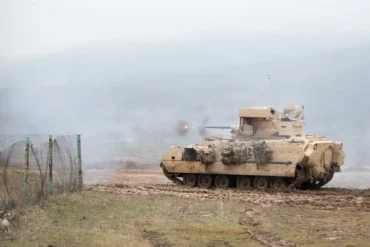
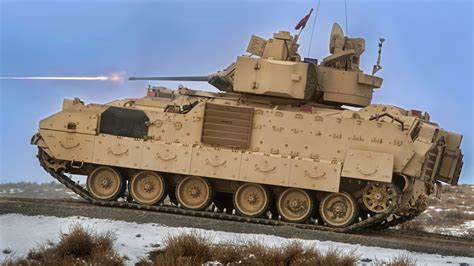
The M2 Bradley infantry fighting vehicle has emerged as a battlefield workhorse because it bridges mobility, protection, and firepower. Armed with a 25mm chain gun, 7.62mm coaxial machine gun, and TOW anti-tank missiles, Bradley provides suppressive fire for dismounts while retaining the reach to threaten armor. Its value in Ukraine lies in enabling maneuver under fire—closing with the enemy, breaking contact, and exploiting fleeting opportunities created by artillery and drones.
That utility depends on reliability. High-wear components in the feed system, stabilization, suspension, and tracks must be replaced routinely. Sensors and electronics suffer under constant movement and blast effects. The approved sustainment funding targets exactly these vulnerabilities, allowing Ukrainian maintenance teams to keep Bradleys mission-capable without resorting to ad hoc fixes. The result is consistency: vehicles that start when ordered, shoot accurately, and protect crews when the fight turns close.
HIMARS and M777: Precision Fires Demand Precision Maintenance
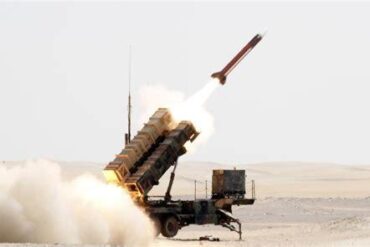
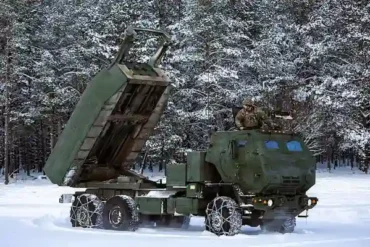
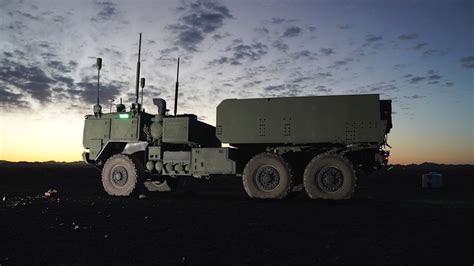
Ukraine’s ability to contest Russian artillery and logistics has hinged on precision fires, and no system symbolizes that shift more than HIMARS. The wheeled launcher’s strength lies in its speed—rapid emplacement, launch, and displacement before counterfire can arrive. But that tempo stresses hydraulics, launch pod handling systems, communications, and digital interfaces. A launcher sidelined by a failed component is firepower lost at the worst moment.
Similarly, the M777 155mm howitzer combines light weight with digital fire control, enabling fast emplacement and accurate fires at ranges approaching 30 kilometers with standard ammunition. The gun’s performance depends on electronics, recoil systems, and sighting equipment that must be maintained meticulously. Class IX spares ensure that launchers and guns remain in the firing schedule, not parked behind the lines awaiting parts.
Why Sustainment Is the Strategic Center of Gravity
This FMS underscores a hard lesson of industrial-scale warfare: availability beats novelty. Adding a new platform garners attention, but sustaining existing ones delivers results. In Ukraine’s case, Western systems operate alongside legacy equipment, creating a hybrid force that stretches logistics. Predictable access to parts reduces downtime, shortens repair queues, and prevents the erosion of combat power through attrition.
DSCA’s statement that no additional U.S. government or contractor personnel are planned for deployment is equally significant. The intent is not to outsource maintenance but to empower Ukrainian sustainment capacity. Approved vendors will supply parts; Ukrainian crews and technicians will keep the machines fighting. That approach builds resilience, reduces dependence, and aligns with a long-term strategy of self-sustaining defense.
A Measured Investment With Outsized Impact
At $185 million, the package is modest compared to the cost of fielding new battalions. Its impact, however, is multiplicative. Every repaired tank returns shock action to the line. Every serviced IFV moves infantry under armor. Every ready launcher or howitzer restores pressure across the battlespace. Sustainment compresses the enemy’s window of opportunity by denying the gaps created when systems fall out of service.
In practical terms, this means faster battle damage repair after drone strikes, quicker turnaround for vehicles worn by constant movement, and fewer instances where a critical system is sidelined for want of a single component. It also signals confidence in Ukraine’s ability to integrate Western logistics practices under fire—a vote of trust backed by parts, not platitudes.
Endurance as Policy
The approval of this sustainment package reflects a mature understanding of modern conflict. Wars are not won solely by the arrival of advanced weapons; they are won by the ability to keep those weapons operational amid relentless pressure. By focusing on Class IX support for Abrams, Bradley, HIMARS, and M777 systems, the United States is reinforcing the unglamorous backbone of combat power.
Availability is the quiet metric that decides outcomes. With this package, Washington is betting that keeping Ukraine’s Western-supplied platforms rolling, firing, and surviving will matter more than any single delivery. In a fight measured by days and weeks of sustained contact, that bet is grounded in reality—and in the mechanics that turn steel into combat power.