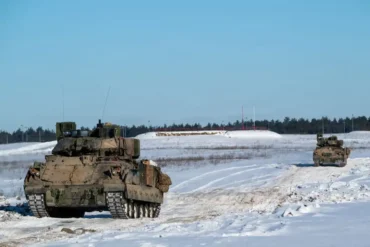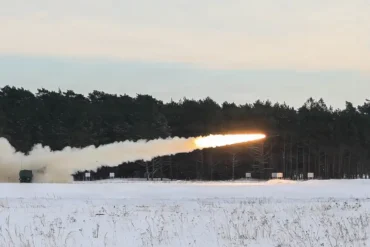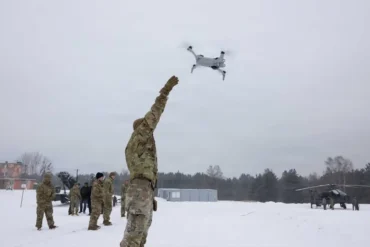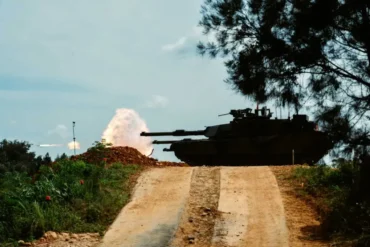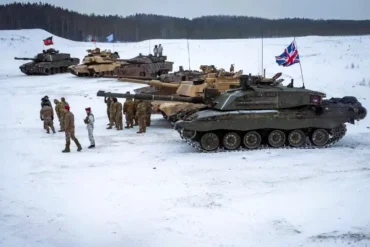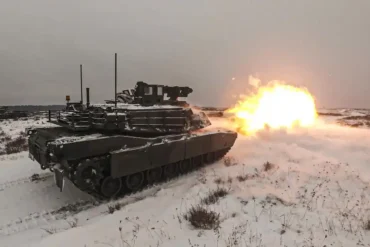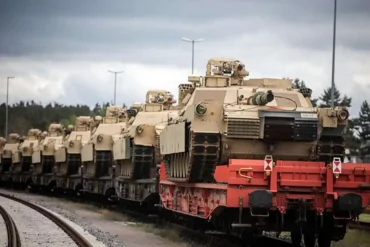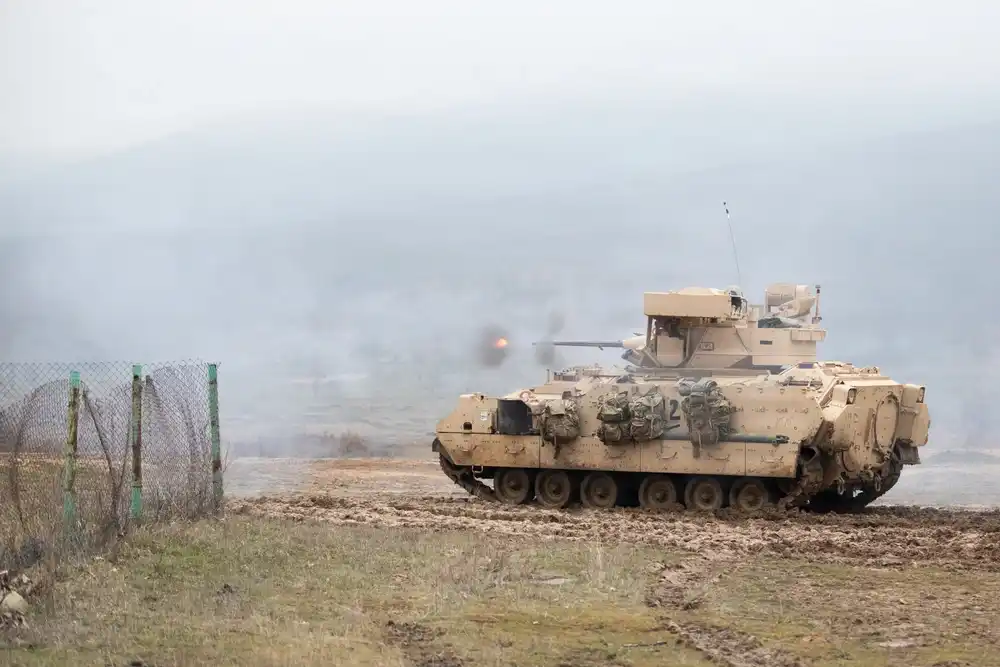
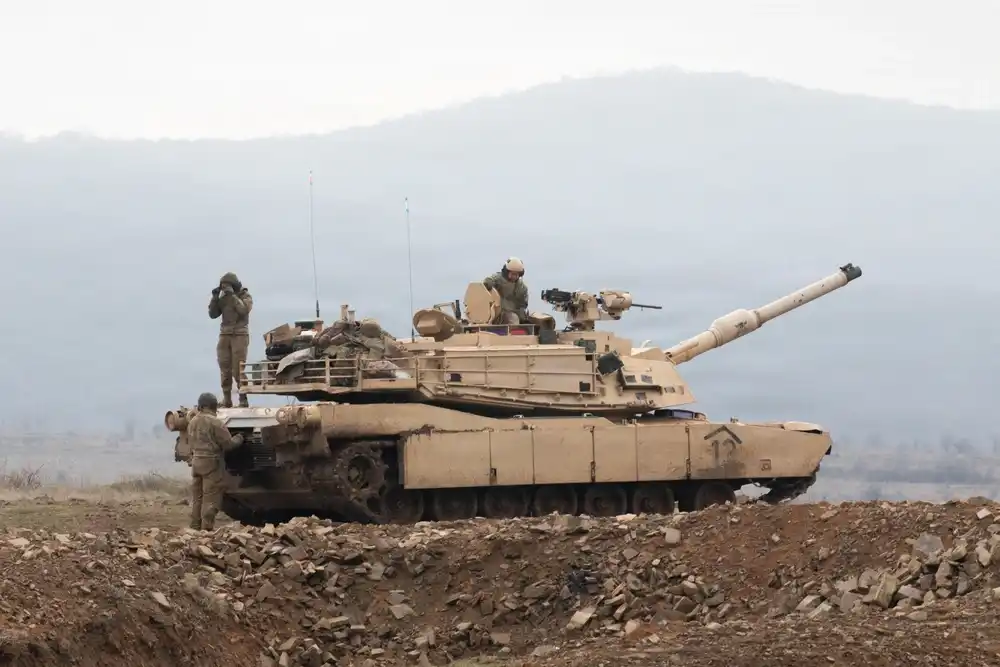
The U.S. Army has intensified its armored training posture in Europe with a combined arms live-fire exercise in Bulgaria, placing M1A2 Abrams main battle tanks and M2A3 Bradley infantry fighting vehicles side by side in a realistic, high-intensity maneuver environment. Executed by elements of the 1st Infantry Division, the exercise highlights Washington’s sustained focus on heavy armored readiness as NATO sharpens deterrence along its eastern flank.
Conducted at the Novo Selo Training Area on January 24, 2026, the maneuver brought together tank crews, mechanized infantry, and command elements in a coordinated live-fire scenario. Soldiers from Charlie Company, 1st Battalion, 16th Infantry Regiment, part of the division’s 1st Armored Brigade Combat Team, rehearsed synchronized movement, direct-fire engagements, and command-and-control under battlefield-like pressure. The intent was not symbolic. It was practical, technical, and operational, designed to validate combat readiness where steel, fuel, communications, and decision-making meet friction.
By running live rounds rather than relying solely on simulation, the unit stress-tested its ability to operate in contested terrain while maintaining tempo and cohesion. These drills are built to expose gaps—whether in fire coordination, sustainment, or communications—before they matter in combat. The result is a force better prepared for the unforgiving physics of modern armored warfare.
Heavy Armor at the Center of Modern Deterrence
The exercise underscores a renewed emphasis on combined arms maneuver, a doctrine that synchronizes armor, infantry, fires, and command systems to overwhelm adversaries through speed and precision. In Europe’s evolving security environment, where conventional ground combat has reasserted its relevance, heavy armor is no longer a relic of Cold War planning. It is a core instrument of deterrence.
Novo Selo’s terrain offered an ideal proving ground. Mixed topography allowed crews to practice long-range gunnery, bounding overwatch, and rapid transitions between offensive and defensive postures. Live-fire iterations compelled leaders to manage risk, timing, and target discrimination while coordinating across platforms. These are not academic skills. They are perishable, and they demand constant rehearsal.
The M1A2 Abrams: Precision, Protection, and Lethality
At the heart of the maneuver was the M1A2 Abrams, the U.S. Army’s premier heavy armor platform. Armed with a 120 mm smoothbore cannon, the Abrams delivers long-range, high-probability kills against armored and fortified targets. Its advanced fire-control system, stabilized sights, and thermal imaging allow accurate engagement on the move, day or night, in degraded visibility.
The tank’s survivability is equally decisive. Composite armor, integrated defensive systems, and battlefield networking give crews a fighting chance against modern threats. The commander’s independent thermal viewer enables rapid target handoff, allowing the gunner to engage one threat while the commander scouts the next. During live-fire drills, this hunter-killer capability becomes muscle memory, shaving seconds that can decide outcomes.
Beyond hardware, the Abrams represents a system of systems. Digital command-and-control links connect tanks to Bradleys, headquarters, and supporting fires, compressing the sensor-to-shooter timeline. Exercises like Novo Selo ensure these links hold under stress, when radios compete with engine noise and decisions must be made at speed.
The M2A3 Bradley: The Essential Bridge Between Armor and Infantry
Operating in concert with the Abrams, the M2A3 Bradley proved its enduring value as the connective tissue of armored formations. Designed to transport and fight alongside mechanized infantry, the Bradley brings a versatile weapons mix: a 25 mm chain gun, coaxial machine gun, and TOW anti-tank missiles capable of defeating heavy armor at range.
The A3 variant’s digital architecture enhances situational awareness, integrating sensors, navigation, and communications into a shared operational picture. This allows infantry squads to dismount at the right place and time, supported by precise fires. In combined arms operations, the Bradley does more than keep up with tanks; it enables them to maneuver decisively by securing terrain and countering threats tanks alone cannot address.
Live-fire coordination between Abrams and Bradleys is complex by design. It forces units to deconflict fires, manage movement corridors, and maintain constant communication. When executed well, the pairing creates a layered threat that is difficult to counter.
Lessons Forged Across Decades of Combat
Both platforms carry the weight of experience. Conceived for large-scale warfare in Europe, the Abrams and Bradley proved their dominance during Operation Desert Storm, then adapted through years of urban combat and counterinsurgency in Iraq and Afghanistan. Successive upgrades strengthened armor, sensors, and networking, ensuring relevance against peer and near-peer adversaries.
The Bulgaria exercise reflects a doctrinal pivot back toward high-intensity conflict, informed by hard-earned lessons. Urban operations sharpened crew coordination and survivability tactics. Counterinsurgency honed intelligence integration and precision. Now, those lessons are fused with large-unit maneuver, producing a more lethal and resilient force.
Command, Control, and the Reality of Sustainment
Combined arms live-fire events are as much about logistics as lethality. Heavy armor consumes fuel, ammunition, and maintenance hours at a relentless pace. Novo Selo’s drills tested sustainment chains, from ammunition resupply to vehicle recovery under simulated combat conditions. These details rarely make headlines, yet they determine how long a unit can fight.
Command-and-control was equally central. Leaders managed dispersed elements, synchronized fires, and adjusted plans in real time. Digital systems help, but discipline and clarity remain decisive. Live-fire exposes friction—misaligned timings, congested routes, delayed reports—and forces units to solve problems under pressure.
Strategic Signaling on NATO’s Eastern Flank
Beyond training value, the exercise carried strategic weight. The visible presence of U.S. heavy armor in Bulgaria reinforces NATO’s collective defense posture and demonstrates the Alliance’s capacity to deploy and sustain combat power forward. For regional allies, it strengthens interoperability and confidence. For potential adversaries, it signals readiness backed by capability, not rhetoric.
Eastern Europe’s security calculus increasingly centers on conventional deterrence. Armored brigade combat teams, able to move quickly and fight decisively, are a cornerstone of that equation. Exercises like Novo Selo translate policy commitments into tangible combat readiness.
A Clear Message Through Steel and Fire
The combined arms live-fire maneuver conducted by the 1st Infantry Division in Bulgaria was not an isolated event. It was a deliberate rehearsal of modern armored warfare, integrating proven platforms, trained crews, and realistic conditions. The Abrams and Bradley, refined by decades of conflict and continuous modernization, remain central to U.S. Army lethality in Europe.
As NATO adapts to a more contested security environment, the ability to deploy, integrate, and sustain heavy forces forward is decisive. Novo Selo’s live-fire echoes a simple truth: deterrence is strongest when readiness is visible, practiced, and real.