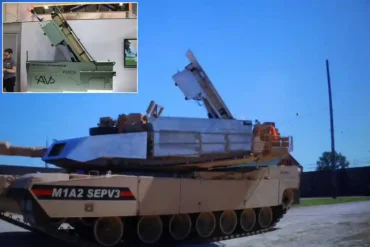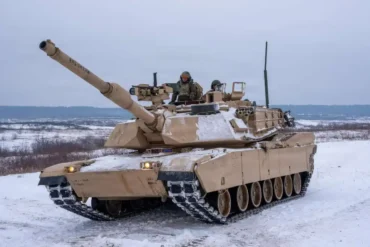
Taiwan has taken a decisive step in strengthening its military posture near Taipei and key coastal regions with the arrival of a second batch of 42 U.S.-made M1A2T Abrams tanks, bringing its total number of operational units to 80. Delivered under heavy security to the Army’s Armored Training Command in Hukou, Hsinchu County, these new armored assets are part of a larger strategic effort to modernize Taiwan’s defense capabilities in light of growing military pressure from China.
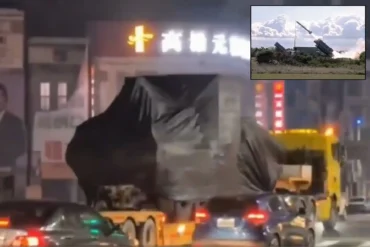
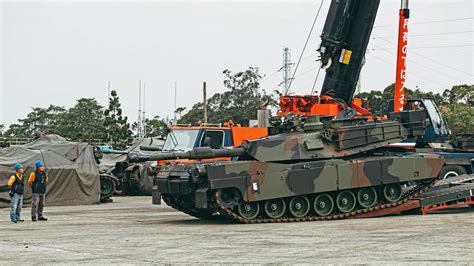
The tanks, which landed at the Port of Taipei late on July 27, 2025, were transported in the early hours of July 28 via civilian flatbed trailers, protected under black waterproof tarps. The convoy, escorted by military police and local law enforcement, moved discreetly along the West Coast Expressway amid tight traffic control measures. Although their arrival was delayed by a passing typhoon, the movement proceeded without incident and represented the latest milestone in Taiwan’s long-term Foreign Military Sales (FMS) agreement with the United States.
M1A2T: A Taiwan-Specific Abrams Variant Optimized for Island Defense
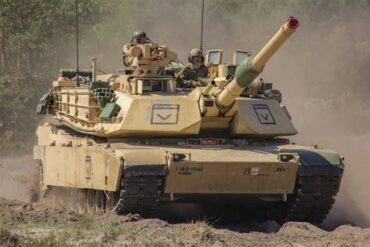
The M1A2T is a uniquely customized version of the M1A2 SEP v2 Abrams, tailored specifically for Taiwan’s operational environment and legal requirements. Produced at Anniston Army Depot and the Joint Systems Manufacturing Center in Lima, Ohio, these tanks exclude depleted uranium armor, replacing it with composite materials and explosive reactive armor (ERA) tiles in compliance with export restrictions. While the U.S. Army employs the Trophy active protection system on its Abrams fleet, the M1A2Ts do not include it; instead, they feature electronic and structural enhancements optimized for the Taiwanese battlefield.
Powered by a Honeywell AGT1500C gas turbine engine capable of 1,500 horsepower, each tank boasts a top speed of 67 km/h and a maximum operational range of 426 km. Weighing between 68 to 72 tonnes, depending on configuration, the tank retains high mobility on Taiwan’s diverse terrain. The vehicle’s chassis mirrors the older M1A1 platform, but the turret incorporates updates from the M1A2 SEPv2, plus a localized Auxiliary Cooling and Power System (ACPS) installed at the turret’s rear.
Armament and Targeting: A Technological Edge Against PLA Armor
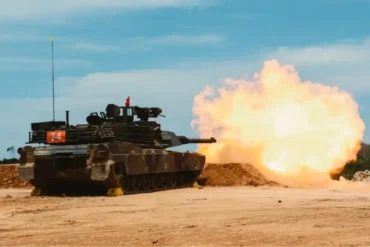
At the core of the M1A2T’s combat power is its 120mm M256 L/44 smoothbore main gun, capable of firing a range of munitions including KE-W A1 APFSDS-T rounds that can penetrate up to 850mm of armor. Secondary weapons include:
- A coaxial 7.62mm M240 machine gun
- A loader-mounted M240 machine gun
- A 12.7mm M2 heavy machine gun integrated into a Low-Profile Common Remotely Operated Weapon Station (LP-CROWS)
Each tank also includes six-barrel 66mm smoke and fragmentation grenade launchers on both sides of the turret. Its advanced hunter-killer fire-control system allows the commander and gunner to engage separate targets using thermal sights, laser rangefinders, and ballistic computers that update fire solutions 30 times per second. The inclusion of Ammunition DataLink supports programmable rounds like the M1147 Advanced Multi-Purpose (AMP), enhancing versatility against infantry, light armor, and fortifications.
Real Combat Drills: Han Kuang 41 and Tactical Validation
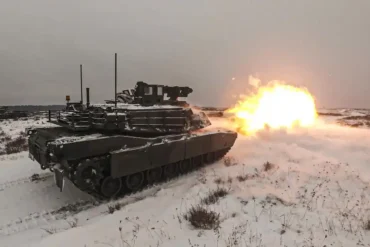
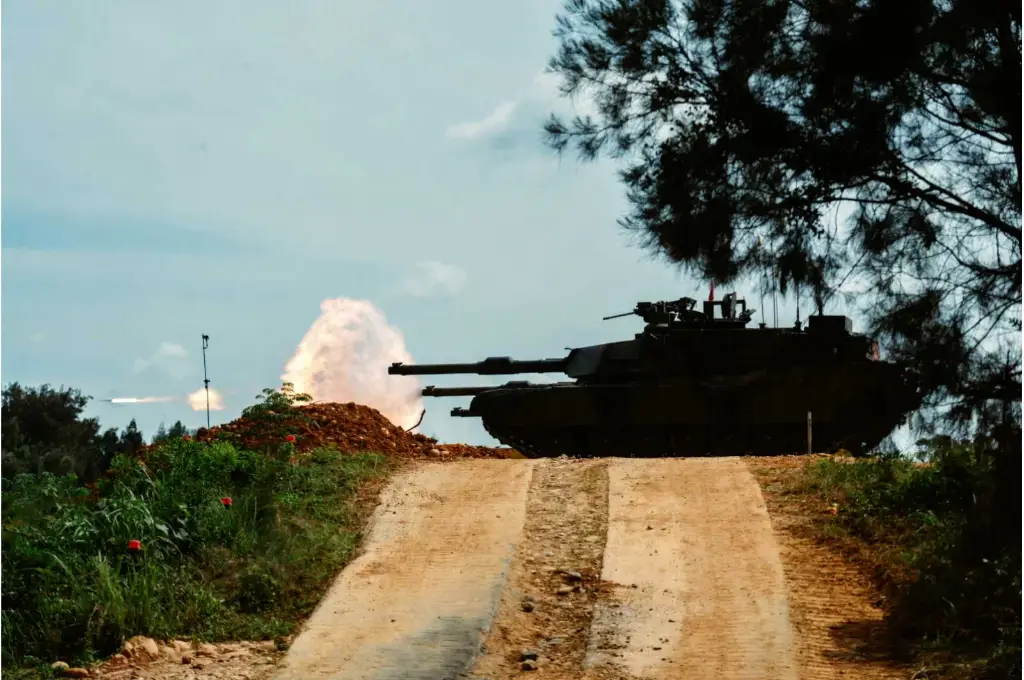
The tanks were first field-tested during Han Kuang 41, Taiwan’s premier annual military exercise. On July 10, 2025, four M1A2Ts conducted live-fire drills at the newly developed Kengzikou training range. They fired 19 rounds at both stationary and moving targets modeled after Chinese PLA armor, achieving direct hits from both static and mobile positions. Observing the event in person, President Lai Ching-te highlighted the tanks’ precision and underscored their critical role in boosting Taiwan’s defensive readiness.
Infrastructure Investments and Training Evolution
The arrival of these tanks coincides with rapid development of support infrastructure and training ecosystems. The Kengzikou range, completed in May 2025, is capable of safely accommodating 120mm tank rounds with a ballistic ceiling of 609 meters and a 5.56 km safety radius. A sub-caliber range and tactical driving course are being constructed at Chang’an military camp, expected to be completed by 2026.
The Ministry of National Defense has allocated NT$648.93 million for these developments, with progress currently 5.51% ahead of schedule. Training is structured into initial, intermediate, and advanced levels, covering everything from basic operation to complex battlefield maneuvers. Sessions are conducted jointly at Chang’an and Kengzikou until the full training suite is operational.
Deployment: Securing the Northern Corridor and Red Beaches
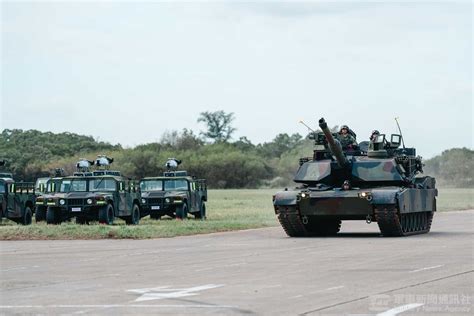
Operational deployment of the M1A2Ts has been prioritized for units tasked with protecting key entry points into northern Taiwan. The 584th Armored Brigade, based in Hsinchu, secures the Red Beaches, considered one of the most likely amphibious invasion sites. The 269th Mechanized Infantry Brigade, stationed in Linkou, is responsible for defending key approaches to Taipei, Taoyuan, Zhubei, and surrounding areas. The geographic distribution ensures a layered defense posture, where the tanks act as rapid-response units capable of counter-attacking PLA forces that breach coastal defenses.
The M1A2Ts are integrated into Taiwan’s five-layer coastal defense architecture, which includes:
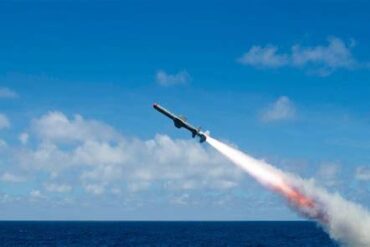
- Pre-landing missile strikes using systems like the Hsiung Feng III
- Artillery interdiction with platforms such as HIMARS and Thunderbolt-2000
- Aerial support from AH-64E Apache helicopters
- Inland missile fire from static installations
- Armored counter-assaults led by M1A2Ts
This multi-layered doctrine is designed to stretch PLA logistics, delay advances, and deny fast occupation of urban and critical zones.
Decommissioning Legacy Armor and Final Deliveries
To make way for the Abrams fleet, Taiwan has begun decommissioning outdated armor. CM-12 tanks are being disassembled for parts, while M60A3 units are receiving limited engine upgrades. CM-11s, a hybrid of American and indigenous components, are being phased into storage. This transition marks a generational leap in firepower, survivability, and command-and-control capability.
With the latest delivery, Taiwan has now received 80 out of the 108 M1A2T tanks ordered. The final batch of 28 units is expected by early 2026, completing the deal authorized in 2019 by the U.S. State Department. The full package includes:
- 14 M88A2 Hercules armored recovery vehicles
- 16 M1070A1 heavy transporters
- 16 M1000 trailers
All units are newly manufactured rather than drawn from existing U.S. stocks. American liaison officers are stationed at the production facilities in the United States, monitoring quality and inspecting deliveries on a bi-monthly basis.
Strategic Outlook: Toward 2040 and Beyond
The M1A2T fleet is expected to remain in service through 2040, serving as the cornerstone of Taiwan’s armored deterrence strategy. Formal commissioning into frontline units is anticipated by late 2025, with a potential ceremony involving U.S. defense officials and members of General Creighton Abrams’ family. The symbolic value of the ceremony would underscore not only the technological leap but also the enduring U.S.-Taiwan security partnership.
As regional tensions intensify, the deployment of these 42 new M1A2T tanks sends an unambiguous signal. Taiwan is not only modernizing—it is adapting, training, and positioning its forces to counter a rapidly evolving threat landscape. With each tank that rolls into operational status, Taipei is fortifying the message that it will meet force with precision, firepower, and strategic depth.