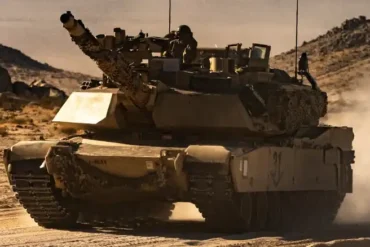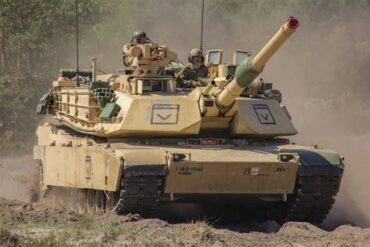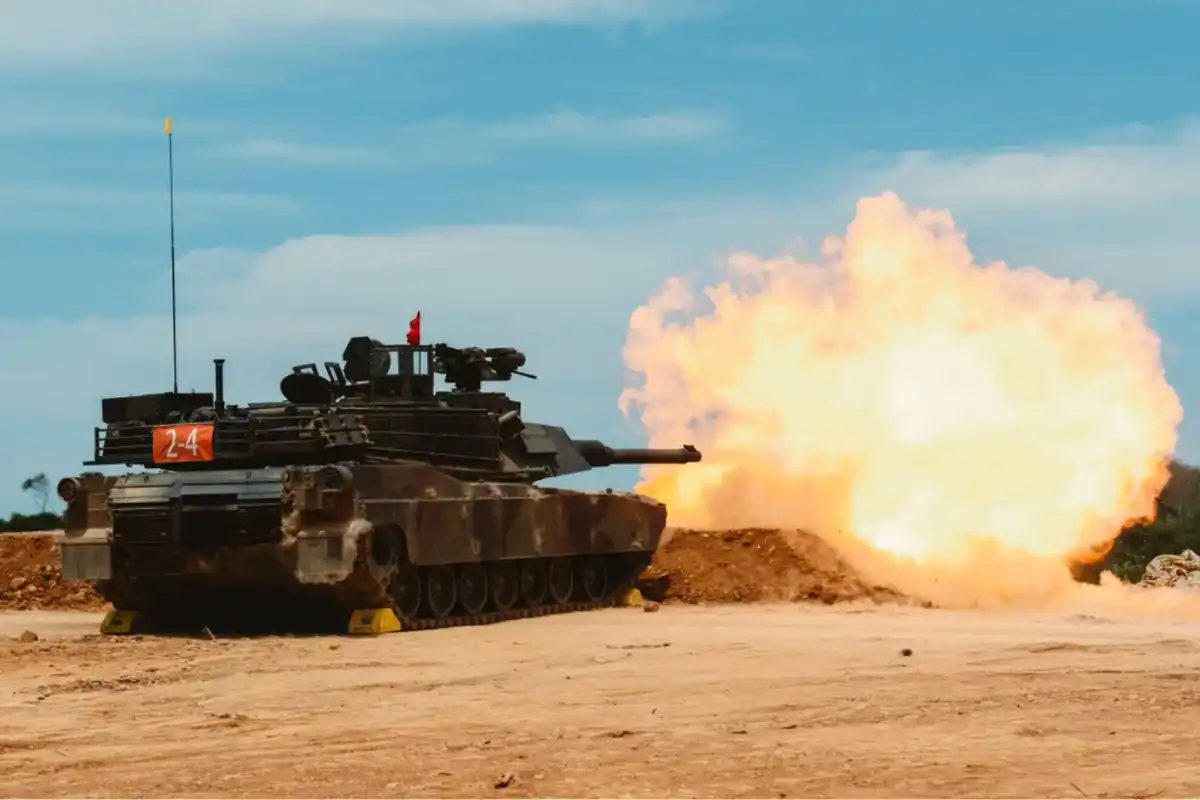
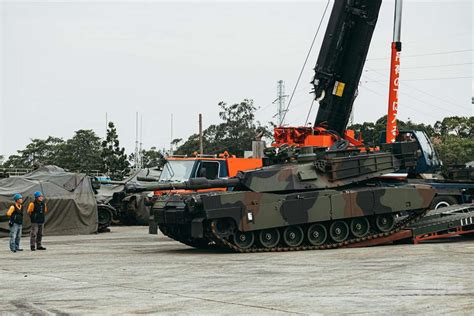
The United States has completed production of the final M1A2T Abrams main battle tanks destined for Taiwan, formally closing a 108-vehicle program that represents the most significant upgrade to the Taiwanese Army’s heavy armor capability in decades. According to reporting from Taiwan’s Liberty Times, the last batch of 28 tanks has rolled off U.S. production lines and is scheduled to ship by sea before the end of March, bringing a long-gestating procurement effort to its industrial conclusion and shifting focus decisively toward operational integration.
This milestone arrives at a moment of heightened cross-strait tension, where armored forces are no longer seen as relics of Cold War land warfare but as critical instruments of deterrence and counteroffensive resilience. For Taipei, the Abrams program has always been about more than numbers. It is about restoring brigade-level shock power, credibility in ground combat, and the confidence that Taiwan’s Army can still impose unacceptable costs in a contested battlespace increasingly shaped by drones, precision fires, and electronic surveillance.
The completion of production also reflects the durability of U.S.–Taiwan defense cooperation under the Foreign Military Sales framework. Despite political pressure, supply-chain constraints, and the complexity of exporting a modern heavy tank, the program has stayed on track, delivering a tailored variant of one of the world’s most combat-proven armored platforms.
By the time the final shipment arrives, Taiwan will have transitioned from initial reception into the demanding phase that truly determines combat value: training, sustainment, and fleet-wide integration. Heavy armor is unforgiving of shortcuts, and the Abrams rewards only those armies willing to invest in doctrine, logistics, and crew proficiency. Taiwan has signaled that it understands this bargain.
Closing the Production Line and Opening the Operational Chapter
The final 28 M1A2T tanks complete a procurement that has unfolded in carefully sequenced deliveries. Taiwan had already received 80 vehicles in earlier batches, with allocations split between training establishments and frontline units such as the 584th Armored Brigade and the 269th Mechanized Infantry Brigade. These initial deliveries allowed the Army to build instructor cadres, maintenance teams, and gunnery standards before the fleet reached full strength.
With production now complete, attention shifts to integration at scale. This phase is often underestimated, yet it is where armored programs succeed or fail. Crews must transition from simulator proficiency to live-fire confidence, battalion staffs must learn to command digitalized formations, and logistics units must sustain a platform that is powerful but demanding. Taiwan’s compressed readiness timeline suggests a sense of urgency shaped by its strategic environment, where deterrence is measured not by intent but by visible capability.
Recent reporting indicates that the second batch of 42 tanks delivered last year has already conducted live-fire exercises and is expected to reach operational status by June 2026. Public emphasis on gunnery accuracy and collective drills is not accidental. In a region where signaling matters, demonstrating armored lethality serves both domestic reassurance and external deterrence.
What Makes the M1A2T Abrams a Step Change for Taiwan
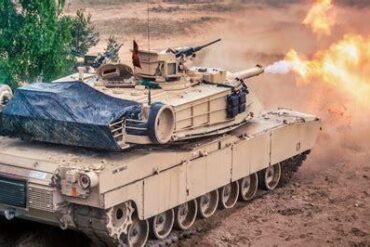
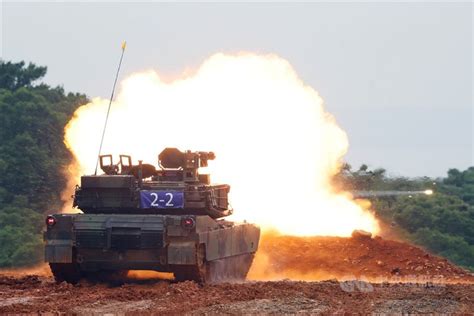
The M1A2T is a Taiwan-specific variant derived from the M1A2 SEP v2 configuration, adapted to meet export requirements and local operational needs. At its core is the 120 mm M256 L/44 smoothbore cannon, a weapon that instantly elevates Taiwan’s direct-fire anti-armor capability to a level unmatched in its existing inventory. Compatible with modern armor-piercing fin-stabilized discarding sabot rounds and high-explosive anti-tank ammunition, the gun gives Taiwanese crews the reach and lethality required to defeat advanced threats at meaningful combat ranges.
The inclusion of the export-oriented KE-W A1 APFSDS-T round is particularly significant. With penetration figures often cited around 850 mm of rolled homogeneous armor under test conditions, this munition provides a credible answer to modern armored vehicles and hardened targets. In practical terms, it restores the Army’s confidence that it can win tank-on-tank engagements rather than merely delay them.
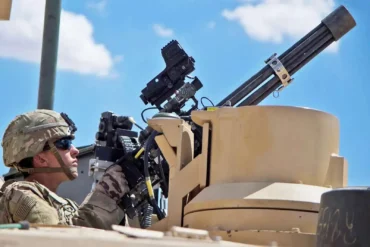
Secondary armament enhances flexibility. Coaxial and loader-operated 7.62 mm M240 machine guns are paired with a 12.7 mm M2 Browning mounted in a low-profile remotely operated weapon station. This configuration allows crews to engage infantry, drones at low altitude, and light vehicles without exposing themselves, a crucial advantage in an era where even brief exposure can be punished by precision fire.
Fire Control, Sensors, and the Value of First-Round Hits
The Abrams’ true advantage lies not only in armor and firepower but in the marriage of sensors, computing, and crew workflow. The M1A2T supports advanced hunter-killer functionality, enabling the commander and gunner to search, designate, and engage targets independently. Thermal sights, laser rangefinders, and ballistic computers work together to generate dozens of firing solutions per second, dramatically increasing the probability of a first-round hit while on the move or in poor visibility.
For Taiwan, this capability is operationally decisive. In a battlespace saturated with drones and long-range sensors, exposure time is lethality. The faster a tank can detect, engage, and relocate, the greater its chances of survival. Accurate fire on the first shot reduces the need for prolonged engagement, limiting vulnerability to artillery and loitering munitions.
The tank’s Ammunition DataLink further enhances versatility by supporting programmable rounds such as the M1147 Advanced Multi-Purpose munition. This allows crews to tailor effects instantly, shifting between airburst, delay, and point-detonation modes. The result is a platform capable of engaging infantry in cover, breaching obstacles, and neutralizing fortified positions without changing ammunition types mid-fight.
Protection, Power, and the Reality of Heavy Armor
Protection on the M1A2T reflects export constraints while remaining formidable. The tank uses advanced composite armor supplemented by explosive reactive armor tiles rather than depleted uranium layers found on some U.S. Army variants. While it does not field an active protection system such as Trophy, survivability is bolstered by disciplined tactics, electronic situational awareness, and the Abrams’ sheer resilience against kinetic and chemical threats.
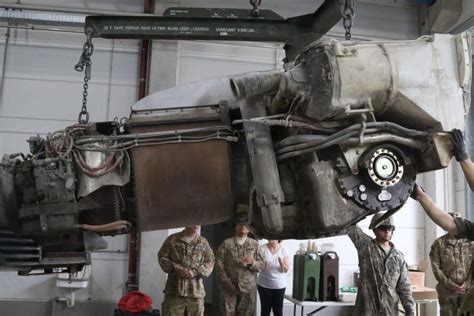
A key enabler of sustained operations is the Auxiliary Cooling and Power System, which allows onboard electronics to function without running the main engine. This reduces fuel consumption, thermal signature, and acoustic detection while keeping sensors and communications fully operational. In defensive scenarios, where tanks may lie in wait for extended periods, this feature quietly enhances survivability.
The Abrams’ mobility is driven by the Honeywell AGT1500C gas turbine, delivering 1,500 horsepower and allowing road speeds of approximately 67 km/h. With an operational range of around 426 kilometers, the tank offers rapid redeployment across Taiwan’s road network, though at the cost of high fuel consumption and maintenance demands. These realities underline why sustainment, not just procurement, defines combat effectiveness.
Integration into Taiwan’s Force Structure
The arrival of the M1A2T is reshaping Taiwan’s armored force architecture. These tanks form the heavy punch of modernized combined arms brigades, operating alongside upgraded M60A3 platforms while older CM11 and CM-12 tanks are gradually retired or relegated to reserve roles. This transition reflects a deliberate effort to concentrate quality rather than spread modernization thinly across legacy fleets.
Complementing the tracked heavy armor is the Cloud Leopard 105 mm wheeled armored vehicle program, intended to provide speed, flexibility, and coverage across multiple sectors. Together, these systems suggest a layered approach to ground defense, mixing brute force with maneuver and responsiveness rather than betting exclusively on any single platform.
Digital networking ties this structure together. The integration of Taiwan’s battle management systems and the Inter-Vehicular Information System allows real-time data sharing, faster target handoff, and coordinated maneuver. In modern warfare, this invisible architecture often matters as much as armor thickness.
Training, Ranges, and Building Real Readiness
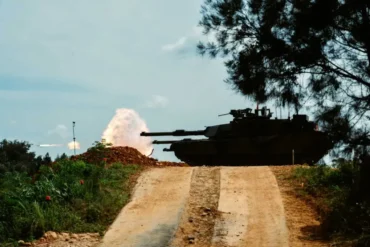
Taiwan has invested heavily in training infrastructure to support the Abrams. Crew conversion began in early 2025 at the Hukou Armor Training Command, supported by U.S.-trained instructors. Live-fire proficiency followed quickly. During the Han Kuang 41 exercises, M1A2T tanks conducted both static and on-the-move firing at the newly completed Kengzikou Range in Hsinchu County, reportedly achieving full hit accuracy across 19 fired rounds.
The Kengzikou facility itself is a statement of intent. Designed with a 609-meter ballistic ceiling and a 5.56-kilometer safety radius for 120 mm ammunition, it allows realistic training that many countries simply cannot conduct at home. Government investment exceeding NT$648 million underscores the recognition that advanced platforms demand equally advanced training environments.
Strategic Meaning in a Contested Indo-Pacific
From a strategic perspective, the completion of the M1A2T program complicates any adversary’s planning. Heavy armor is unlikely to sit exposed on beaches. Analysts increasingly assess that Taiwan’s Abrams will be held inland, poised for counter-penetration and urban denial missions where their firepower and protection can be concentrated against landing forces and armored thrusts.
In such scenarios, the Abrams does not operate alone. Its effectiveness depends on air defense against drones, artillery suppression, engineering support, and rapid recovery assets to prevent disabled vehicles from becoming static targets. Taiwan’s challenge is integration across domains, not merely possession of advanced hardware.
For Washington, the program reinforces a broader pattern of enabling partners with survivable, high-end capabilities rather than symbolic upgrades. For regional observers, it signals that Taiwan is preparing for the hardest scenarios, investing in platforms designed to fight and endure rather than merely exist on paper.
The final M1A2T rolling out of U.S. production does not mark an end, but a transition. The steel is finished, the contracts fulfilled, and the numbers complete. What follows is the harder work of turning machines into muscle memory, doctrine into instinct, and deterrence into something that can be measured not in statements, but in capability.