The A-10 Warthog: Built for One Relentless Purpose
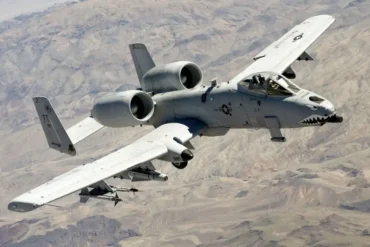
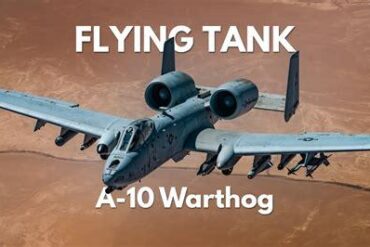
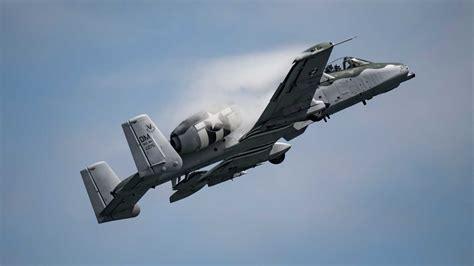
The Fairchild Republic A-10 Thunderbolt II, more famously known as the Warthog, was never designed to be elegant, fast, or even particularly modern. It was engineered with a singular, uncompromising purpose: to destroy armored ground targets—especially tanks—with ruthless efficiency. Every inch of its design reflects this mission, from its wide straight wings to its titanium-armored cockpit.
Unlike sleek multirole fighters that balance air-to-air and air-to-ground roles, the A-10 is unapologetically specialized. It thrives in the chaotic, low-altitude environment of close air support, where precision and persistence matter more than speed. The aircraft’s ability to loiter over the battlefield, absorb damage, and deliver repeated strikes makes it a uniquely terrifying adversary for armored units.
The answer to whether the A-10 can destroy a tank is not theoretical. It has been proven repeatedly in combat. During Operation Desert Storm, A-10s were credited with destroying over 900 Iraqi tanks, cementing their reputation as one of the most effective tank-killing platforms ever deployed.
The GAU-8 Avenger: A Flying Tank Killer
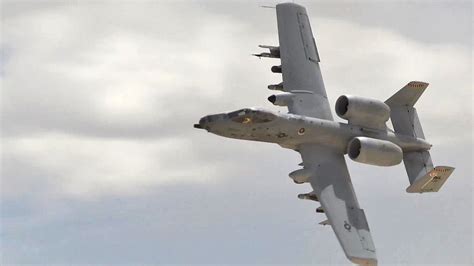
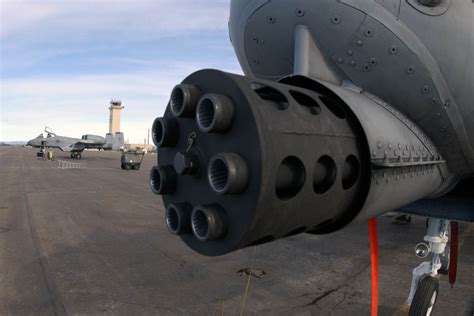
At the heart of the A-10 lies its defining feature: the GAU-8/A Avenger, a 30mm seven-barrel rotary cannon so massive that the aircraft was essentially built around it. This is not just a weapon mounted on the plane—it is the plane’s core identity.
The GAU-8 fires at an astonishing 3,900 rounds per minute, unleashing a torrent of armor-piercing shells that can shred even heavily armored vehicles. Each round is designed for maximum penetration, often using depleted uranium, a material chosen for its extreme density and self-sharpening properties upon impact.
The sheer scale of the system is staggering. The ammunition drum alone can carry over 1,100 rounds, allowing the A-10 to make multiple attack passes in a single sortie. When fired, the cannon produces the iconic “BRRRT” sound—a chilling signature that has become synonymous with destruction on the battlefield.
How the A-10 Destroys Tanks in Real Combat
Destroying a tank is not simply about raw firepower—it requires precision, timing, and tactical awareness. The A-10 excels in all three.
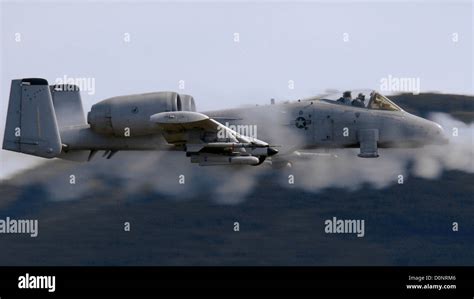
Pilots typically approach their targets in a shallow dive, carefully aligning their aim using onboard targeting systems. The aircraft’s relatively slow speed—by fighter standards—becomes a critical advantage here. It allows pilots to fine-tune their aim, ensuring that each burst of fire lands exactly where it will do the most damage.
A short burst from the GAU-8 is often all it takes. The armor-piercing rounds penetrate the tank’s outer shell and unleash catastrophic internal damage. One of the most lethal effects is spalling, where fragments of the tank’s own armor break off inside the vehicle at high velocity, turning the interior into a deadly storm of shrapnel.
Even modern tanks equipped with Explosive Reactive Armor (ERA) are not immune. Sustained bursts or repeated attack runs can overwhelm these defenses, eventually breaching the underlying armor.
Beyond the Gun: A Full Arsenal of Tank-Killing Weapons
While the GAU-8 is the star of the show, the A-10 is far from a one-trick weapon. Its versatility dramatically increases its effectiveness against armored targets.
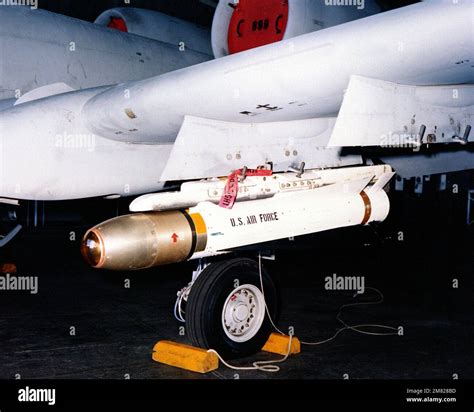
The aircraft can carry a wide range of air-to-ground munitions, including:
- AGM-65 Maverick missiles, capable of precision strikes against individual tanks
- JDAMs (Joint Direct Attack Munitions) for GPS-guided bombing
- Paveway laser-guided bombs for pinpoint accuracy
- Hydra 70 rocket pods for area suppression
- Cluster munitions designed to saturate armored formations
This layered arsenal allows the A-10 to adapt to different battlefield conditions. If a tank is concealed or heavily defended, a Maverick missile can strike from a safer distance. If multiple vehicles are clustered together, bombs or rockets can neutralize them in a single pass.
Combat-Proven Dominance: Real Battlefield Results
The A-10’s reputation is not built on theory—it is forged in combat. During the Gulf War, the aircraft achieved a mission-capable rate of over 95%, flying thousands of sorties and engaging enemy armor with devastating consistency.
Pilots reported scenarios where entire armored columns were dismantled in hours. In one account, an A-10 pilot destroyed 23 tanks in a single day, marking each kill on the cockpit with a grease pencil. Tanks attempting to flee left visible tracks in the desert, making them easy prey for follow-up strikes.
The aircraft continued to prove its value in later conflicts, including operations in Afghanistan, Iraq, and the Balkans. Even in environments with evolving threats, the A-10 consistently delivered high-impact close air support, often turning the tide of ground engagements.
Why Tanks Struggle Against the Warthog
Tanks are formidable machines, designed to withstand heavy fire and dominate ground warfare. Yet against the A-10, they face a uniquely difficult challenge.
First, the attack comes from above—a direction where most tanks have thinner armor. Second, the A-10’s ability to maneuver and re-engage allows it to exploit weaknesses repeatedly. Third, the sheer kinetic energy of its ammunition means that even near misses can cause disabling damage.
The psychological impact cannot be ignored either. The unmistakable sound of the GAU-8 firing often signals imminent destruction, forcing crews into defensive positions that limit their effectiveness.
In essence, the A-10 turns the battlefield into a vertical threat environment, where traditional armor advantages are significantly reduced.
The Role of Precision and Battlefield Coordination
The A-10 does not operate in isolation. Its effectiveness is amplified by coordination with forward air controllers and ground forces, who help identify and designate targets.
This collaboration ensures that each strike is both accurate and strategically meaningful. The pilot is not simply firing at visible targets but engaging priority threats that directly impact the ground battle.
Modern targeting systems further enhance this capability, allowing for real-time adjustments and increased accuracy even in complex environments. The result is a platform that combines brute force with surgical precision.
Limitations: When the A-10 Faces Real Threats
Despite its formidable capabilities, the A-10 is not invincible. Certain conditions can limit its effectiveness against tanks.
Heavy surface-to-air missile (SAM) presence can restrict its ability to loiter and conduct repeated attack runs. Urban environments introduce obstacles that obscure targets and complicate engagement angles. Adverse weather can reduce visibility, making visual targeting more difficult.
Additionally, modern advancements in tank protection, such as improved reactive armor, can require multiple passes or sustained fire to achieve a kill.
These limitations do not negate the A-10’s effectiveness, but they highlight the importance of mission planning and airspace control in maximizing its impact.
A-10 vs Modern Alternatives: Still Relevant?
In an era dominated by stealth fighters, drones, and precision-guided munitions, the A-10 might seem like a relic. Yet it continues to hold a unique place in modern warfare.
Fast jets can deliver precision strikes, but they often lack the ability to loiter and visually confirm targets. Attack helicopters can engage tanks effectively, but they are more vulnerable and carry less sustained firepower. Drones offer persistence but typically lack the destructive volume of a manned platform like the A-10.
The Warthog bridges these gaps. It combines endurance, survivability, and overwhelming firepower in a way that few platforms can replicate. When the mission demands repeated, close-range attacks on armored targets, the A-10 remains exceptionally effective.
The Final Verdict: Can the A-10 Destroy a Tank?
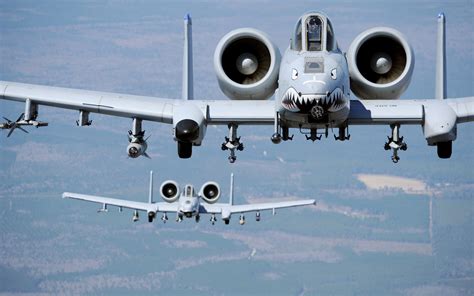
The answer is unequivocal: yes, the A-10 Warthog can destroy tanks—and it does so with devastating efficiency.
Its combination of the GAU-8 Avenger cannon, advanced targeting systems, and versatile weapon loadout makes it one of the most lethal anti-armor platforms ever created. Real-world combat has repeatedly demonstrated its ability to dismantle armored forces under a wide range of conditions.
What sets the A-10 apart is not just its firepower, but its purpose-built design. It was created to hunt and destroy tanks, and decades of operational history prove that it fulfills that role with unmatched reliability.
Even as warfare evolves, the Warthog’s legacy endures. When armored columns move and ground forces call for support, the unmistakable roar of the A-10 still signals one thing: destruction is moments away.