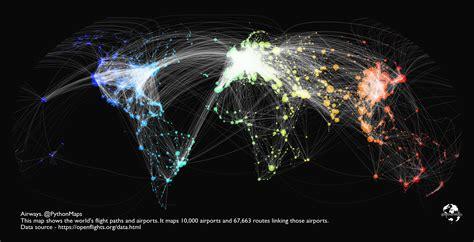
Commercial aviation has transformed the planet into a connected network of airports, airways, and long-distance routes. However, some flights still venture into places where the nearest piece of land may be thousands of miles away. These journeys cross enormous oceans, empty stretches of the Southern Hemisphere, and regions where emergency landing options are extremely limited.
The world’s most remote flight paths represent the ultimate test of modern aviation capability. They require advanced aircraft technology, precise navigation, strict operational planning, and highly experienced flight crews. While passengers may experience these flights as ordinary long-haul journeys, every mile over open ocean involves careful calculations involving fuel reserves, weather systems, alternate airports, and international safety regulations.
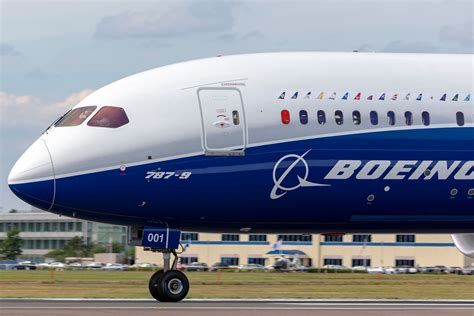
Today, aircraft such as the Boeing 787 Dreamliner, Boeing 777, and Airbus A350 regularly perform missions that would have been impossible for earlier generations of aviation. Improved engine reliability and extended diversion rules have allowed twin-engine aircraft to safely operate thousands of miles from the nearest airport.
What Makes a Flight Path Truly Remote?
A flight does not become remote simply because it is long. Some of the longest flights in the world, such as routes connecting major cities across continents, may remain relatively close to populated areas throughout the journey. True remoteness depends on how far an aircraft travels from a suitable diversion airport.
A diversion airport is not simply any runway on a map. Airlines must consider whether an airport can safely handle the aircraft type, whether emergency services are available, whether the runway length is sufficient, and whether local weather conditions allow a landing.
This is where Extended Diversion Time Operations (EDTO), previously known as ETOPS, plays a critical role. These regulations determine how far twin-engine aircraft can fly from an approved alternate airport after considering the possibility of an engine failure.
Modern aircraft have dramatically expanded these limits. A Boeing 787 or Airbus A350 can operate routes far from land because their engines are significantly more reliable than previous generations. Airlines must still maintain strict maintenance programs and carefully plan every route, but the technology has made remote flying a normal part of global aviation.
Four-engine aircraft such as the Airbus A380 and Boeing 747 historically had fewer restrictions because multiple engines provided additional redundancy. However, even these aircraft required detailed route planning when operating across remote oceans.
The most isolated flights today are therefore not always the longest. Instead, they are the routes where aircraft spend the greatest amount of time surrounded by empty space.
Pacific Ocean Crossings Between The United States And Hawaii
One of the classic examples of an isolated commercial flight is the journey between the mainland United States and Hawaii. Flights from Los Angeles International Airport (LAX) to Honolulu International Airport (HNL) cover approximately 2,560 miles (4,120 kilometers), while services from San Francisco to Honolulu travel roughly 2,400 miles (3,860 kilometers).
Compared with ultra-long-haul routes connecting continents, these distances may appear modest. However, the geography creates a unique challenge. Once aircraft leave the western coast of the United States and enter the central Pacific, diversion options become extremely limited.
The Pacific Ocean contains many islands, but most are not practical emergency alternatives for large commercial aircraft. Some locations lack suitable runways, while others do not have the infrastructure required for handling an aircraft emergency.
For much of the journey, crews operate under the assumption that Hawaii or the mainland represents the only realistic destination. This makes fuel planning, weather monitoring, and aircraft reliability especially important.
The risks involved became clear during several aviation incidents, including the 1989 emergency involving a Trans World Airlines Boeing 767 operating between Hawaii and the mainland United States. After discovering a serious fuel leak, the crew determined that returning to Hawaii was the safest option. The aircraft successfully landed after a carefully managed emergency flight.
Events like this reinforced the importance of modern long-range aviation procedures. Remote routes depend not only on aircraft technology but also on disciplined decision-making by pilots and dispatch teams.
The South Pacific: Some Of The Planet’s Emptiest Skies
The South Pacific contains some of the most isolated commercial flight paths on Earth. Unlike the North Atlantic, where aircraft frequently pass near Greenland, Iceland, and other populated regions, the southern Pacific contains enormous areas of open water with very few airports.
One of the most remarkable examples is the route between Sydney, Australia, and Santiago, Chile. Operated by Qantas, this journey covers approximately 7,060 miles (11,360 kilometers) and crosses one of the least populated regions of the planet.
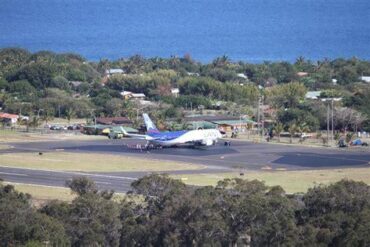
During parts of the flight, aircraft may be thousands of miles from mainland Australia or South America. Easter Island is sometimes considered during route planning, but its airport capabilities and location mean it cannot always serve as a practical alternative.
The challenge is not simply crossing the ocean. Weather conditions can change rapidly, and alternate airports may become unavailable due to storms or operational issues. Dispatchers must evaluate these conditions before departure and adjust routes when necessary.
Another extraordinary South Pacific route connected Santiago and Auckland. Covering around 6,020 miles (9,690 kilometers), this flight crossed a vast region where aircraft operated far from major population centers.
Routes like these demonstrate how modern aircraft have changed the possibilities of global travel. Decades ago, many of these journeys would have required intermediate stops. Today, advanced aircraft allow airlines to connect distant cities with nonstop services.
Sydney To Johannesburg: A Southern Ocean Aviation Challenge
The route between Sydney and Johannesburg represents another example of extreme aviation isolation. Covering approximately 6,860 miles (11,040 kilometers), the flight crosses the Southern Indian Ocean, where suitable diversion airports are separated by enormous distances.
Historically, Qantas operated this route using the Boeing 747, a four-engine aircraft capable of carrying large numbers of passengers across remote regions. When the airline introduced the Boeing 787-9, route planning became more complex because the aircraft had to follow approved EDTO requirements.
Aircraft type can influence the exact path of a flight. A four-engine aircraft and a twin-engine aircraft traveling between the same cities may follow slightly different routes because their diversion requirements are different.
Later, the Airbus A380 returned to some Qantas operations, providing additional flexibility. However, even with four engines, airlines continue to monitor weather, fuel calculations, and airport availability.
The route highlights an important reality of remote aviation: regulations may change depending on the aircraft, but the level of preparation remains extremely high.
Why Polar Flights Are Not Always The Most Remote
Flights across the Arctic often appear to be among the most isolated journeys in the world. Aircraft traveling between North America and Asia frequently cross northern Canada, Alaska, Greenland, or Siberia, where communities are sparse and weather conditions can be severe.
However, many polar routes actually have more emergency options than passengers might expect. Military facilities, regional airports, and northern communities provide possible diversion locations when carefully evaluated.
Airlines operating these routes consider airports that may rarely receive commercial flights but can still support emergency landings. This network of possible alternatives means some Arctic flights are less isolated than routes crossing the Southern Hemisphere.
Antarctica presents a completely different challenge. Scheduled commercial aircraft generally avoid crossing the Antarctic continent because of the extreme environment, limited infrastructure, unpredictable weather, and lack of suitable emergency airports.
This is why some South Pacific and Southern Ocean flights can actually be more isolated than dramatic-looking polar routes.
Technology That Makes Remote Flying Possible
Modern aviation technology has changed remote flying from an extraordinary event into a routine operation. Aircraft today are equipped with advanced navigation systems, satellite communication, improved weather forecasting tools, and highly efficient engines.
Satellite-based tracking has also changed how people understand these journeys. Aviation enthusiasts can now watch aircraft cross the middle of oceans in real time, revealing just how much of the planet remains empty even in the age of global connectivity.
For pilots and airline operations teams, every remote flight involves thousands of decisions. Fuel requirements must account for possible diversions. Weather patterns must be analyzed continuously. Aircraft performance must be monitored carefully.
The passenger experience may feel simple: board the aircraft, watch a movie, sleep, and arrive at another continent. Behind that experience is a complex system designed to make the world’s most isolated routes safe and reliable.
The Future Of The World’s Most Remote Flight Paths
As aircraft technology continues to improve, airlines will likely explore even more ambitious routes. New-generation aircraft with greater range, lower fuel consumption, and improved efficiency are making nonstop connections between distant cities increasingly practical.
Aircraft such as the Airbus A350, Boeing 787, and future ultra-long-range designs are expanding the boundaries of commercial aviation. However, geography will always remain a challenge. Oceans, deserts, and polar regions will continue to demand careful planning.
The world’s most remote flight paths are not simply journeys between two airports. They are demonstrations of engineering, regulation, and human expertise working together.
From the Pacific Ocean to the Southern Indian Ocean, these routes prove that modern aviation can safely connect some of the most distant corners of the Earth, even when thousands of miles of empty space lie beneath the wings.