The Royal Air Force maintains a network of far-flung bases whose isolation enhances their strategic value. These installations, spread across the British Isles and distant overseas territories, enable sustained power projection, rapid response operations, and the kind of situational awareness essential to both NATO and UK national defense. Their remoteness is not a hindrance—it is the point. Each location serves as a vital anchor for reconnaissance, deterrence, intelligence, and rapid operational deployment across regions where proximity creates advantage. In an age defined by unpredictable geopolitical pressures, these bases form a strategic shield, shaping the RAF’s global posture with quiet persistence.
This article explores seven of the most remote RAF-linked bases—operational air stations, radar sites, and joint facilities—and examines the unique purpose each serves in today’s evolving security landscape.
RAF Lossiemouth: Northern Shield of the Home Islands
Situated in the Scottish Highlands, RAF Lossiemouth stands as the northern sentinel of UK air defense. Although not geographically distant like the RAF’s overseas bases, its placement on the windswept northeast coast delivers natural isolation and elevated strategic importance. After the closure of RAF Leuchars in 2015, Lossiemouth became Scotland’s sole operational RAF station, transforming it into a concentrated hub of fast-jet capability.
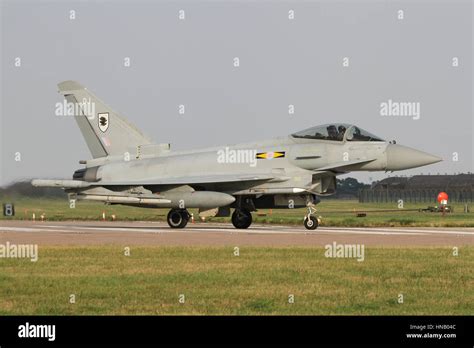
Four Eurofighter Typhoon squadrons call Lossiemouth home, operating under the Quick Reaction Alert (QRA) mission, which ensures immediate response to unidentified or hostile aircraft approaching British airspace. These Typhoons regularly intercept Russian military aircraft probing the GIUK Gap—the Greenland-Iceland-UK air corridor that has carried strategic significance since the Cold War. The base also hosts the RAF’s Poseidon P-8 maritime patrol aircraft fleet, deepening the UK’s antisubmarine warfare footprint in the North Atlantic. With demanding weather, continuous operations, and the responsibility of policing vast tracts of airspace, Lossiemouth remains the RAF’s most remote operational stronghold within the British Isles.
RRH Benbecula: Silent Radar Guardian of the Outer Hebrides
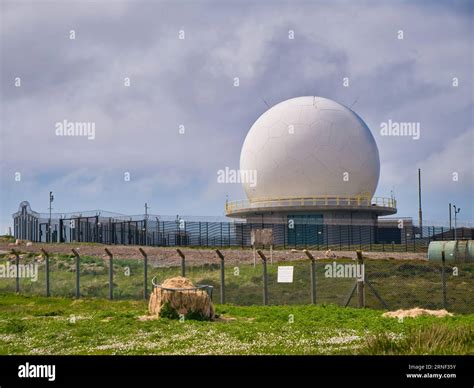
Perched roughly 60 miles from mainland Scotland, Remote Radar Head (RRH) Benbecula sits within the haunting, wind-carved landscapes of the Outer Hebrides. While no longer a full airbase in the traditional sense, the radar site continues to play an indispensable role in the Air Surveillance and Control System (ASACS), forming part of the 24/7 monitoring network that secures British and NATO airspace.
Benbecula’s Lockheed Martin TPS-77 radar sweeps the skies above the North Atlantic, providing long-range detection capability aimed squarely at the GIUK Gap. Russian long-range aviation routinely tests the region’s defenses, making early detection a critical element of national security. The site’s unmanned status belies its importance; its remote position enables an unbroken radar horizon, extending UK visibility deep into transatlantic air routes while remaining resilient against potential interference. Benbecula’s sparse surroundings provide a natural electromagnetic sanctuary, making the station a quiet—but vital—watchtower.
RAF Gibraltar: Gateway to the Mediterranean
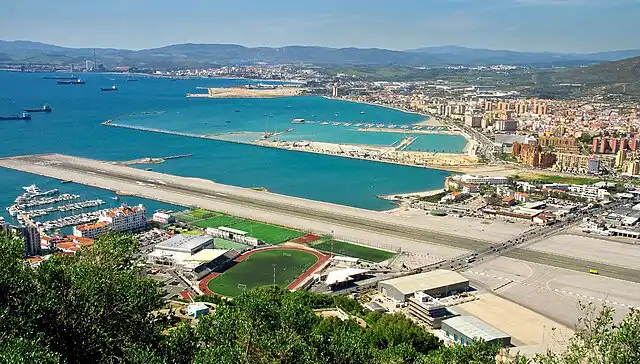
More than 1,000 miles from the UK mainland, RAF Gibraltar occupies one of the most geopolitically valuable parcels of land on Earth. Gibraltar’s commanding position at the Strait of Gibraltar allows control over naval and air traffic entering or exiting the Mediterranean. The rock itself has withstood sieges, wars, and diplomatic storms, yet its runway—famously intersected for decades by a public road—has remained an unwavering pivot point between Europe, Africa, and the Middle East.
Although no permanent RAF aircraft are based here, Gibraltar functions as an essential staging ground for transport aircraft such as the C-17 Globemaster III and A400M Atlas. Its role as a refueling and stopover point keeps British military mobility seamless across hemispheres. The base’s dual civilian-military operation gives it additional complexity, requiring precision in planning and coordination without compromising security needs. With the recent completion of the tunnel diverting ground traffic away from the runway, operational efficiency has improved while preserving Gibraltar’s iconic character.
RAF Akrotiri, Cyprus: Forward Edge of Middle Eastern Operations
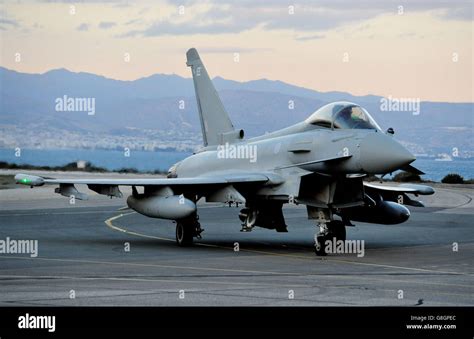
Positioned roughly 2,000 miles from the UK, RAF Akrotiri is one of the UK’s most active overseas airbases and a central node for operations in the Eastern Mediterranean. Retained under the 1960 independence settlement with Cyprus, the base forms part of the British Sovereign Base Areas and serves as a launchpad for surveillance missions, fast-jet operations, and rapid crisis response.
From Akrotiri, British Typhoons have intercepted Iranian missiles and drones and have been key participants in coalition operations across the Middle East. The base’s geographic proximity to Syria, Lebanon, Israel, and the Suez corridor amplifies its operational value. It also hosts RAF 84 Squadron, a search and rescue unit with decades of service in the region’s demanding conditions. Whether supporting humanitarian missions or coordinating intelligence-gathering flights, Akrotiri stands as a forward outpost that anchors UK military influence in a volatile yet vital geography.
Diego Garcia: Strategic Anchoring Point in the Indian Ocean
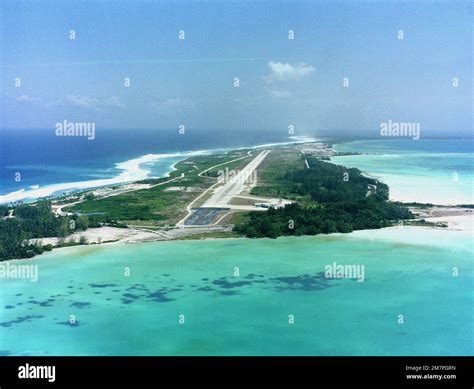
Located 6,000 miles from the UK, Naval Support Facility Diego Garcia sits deep in the British Indian Ocean Territory but functions predominantly as a US-operated installation. Though technically not an RAF base, Diego Garcia remains a critical platform for British operations due to its status as a shared facility and its unparalleled position in the heart of the Indian Ocean.
The atoll is often described as an “unsinkable aircraft carrier,” hosting American bombers, maritime patrol aircraft, and prepositioned military stockpiles. The RAF does not permanently station aircraft here, yet British forces maintain a presence through Naval Party 1022, ensuring administrative and sovereign functions remain intact. RAF aircraft use the airfield for transit flights and joint exercises, contributing to the base’s role in regional security frameworks that touch East Africa, the Middle East, South Asia, and Southeast Asia. With rising great-power competition in the Indo-Pacific, the strategic necessity of Diego Garcia continues to grow.
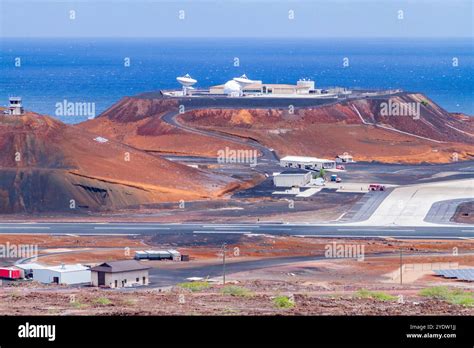
Ascension Island (RAF Ascension / Wideawake): Mid-Atlantic Lifeline
Some 4,000 miles from both the UK and the Falkland Islands, RAF Ascension Island—known operationally as Wideawake Airfield—serves as a mid-oceanic stepping stone for transatlantic air operations. Its importance surged during the Falklands War and has remained high ever since, particularly for maintaining sovereignty and security across the South Atlantic.
Ascension’s isolation makes it invaluable as a refueling location and communications hub. Its facilities support satellite tracking, radar surveillance, and joint UK-US space monitoring missions. The base’s joint nature has expanded with the involvement of the US Space Force, which manages key space domain operations from the island. RAF assets rely on Ascension for logistical support on their long-haul routes to the Falklands, ensuring uninterrupted connectivity to the southernmost British territories.
RAF Mount Pleasant: The South Atlantic Fortress
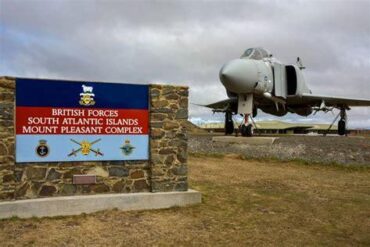
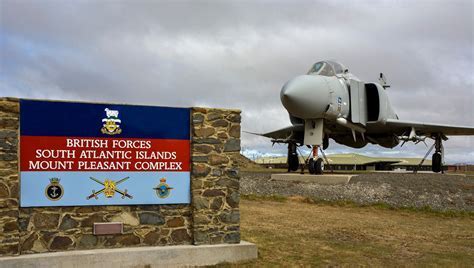
The most remote major RAF station on Earth lies 8,000 miles from the UK—RAF Mount Pleasant in the Falkland Islands. Born from the lessons of the 1982 Falklands War, the base ensures the defense of the islands and deters any potential aggression against British South Atlantic territories. Its importance cannot be overstated; without Mount Pleasant, rapid reinforcement of the Falklands would be nearly impossible.
Home to a permanent detachment of four Eurofighter Typhoons, an A400M Atlas airlifter, and a Voyager tanker, the base maintains constant readiness. Its runways and hangars host regular flights linking the islands with RAF Brize Norton via Ascension Island, forming the logistical lifeline of the region. Beyond defense, Mount Pleasant supports humanitarian missions, scientific operations in the South Atlantic, and the broader activities of British Forces South Atlantic Islands (BFSAI). The isolation of the Falklands gives the airbase its defining strategic edge—distance itself becomes a formidable defensive asset.
Strategic Isolation as a Force Multiplier
Across these seven installations, a pattern emerges: the RAF’s most remote bases are not merely scattered outposts but strategic keystones that shape British defense architecture on a global scale. Their distances—from 60 miles offshore to 8,000 miles over open ocean—grant perspectives, leverage, and reach unavailable anywhere else. They secure maritime chokepoints, monitor geopolitical flashpoints, and maintain deterrence in regions where presence equals influence.
Even as modern threats evolve, the strategic role of isolation remains remarkably consistent. These bases—quiet radars on lonely islands, bustling hubs in contested airspace, and shared international strongholds—ensure that the UK’s global posture remains resilient. Through them, the RAF maintains a thread of connection across oceans and continents, weaving distance into a powerful instrument of defense and stability.