India’s ongoing efforts to modernize its air force have brought the advanced F-15EX Eagle II into consideration as a potential addition to its fleet. As one of the most capable fourth-generation++ fighters, the F-15EX offers India enhanced operational capabilities to counter regional threats while bridging the gap toward future fifth-generation acquisitions. However, its lack of stealth and high cost present significant challenges. This article delves into India’s engagement with the F-15 Eagle series, covering strategic rationale, historical context, and future prospects.
India’s Interest in the F-15EX for Air Force Modernization
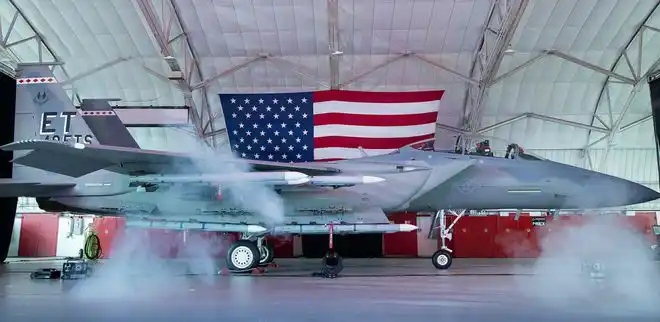
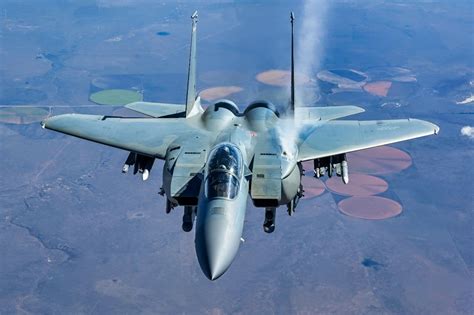
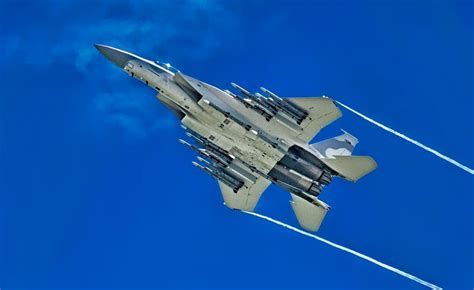
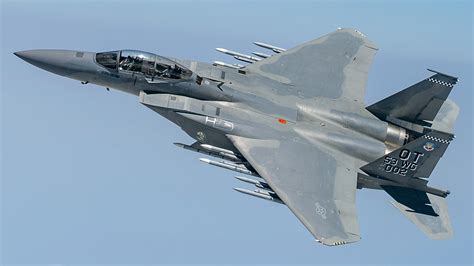
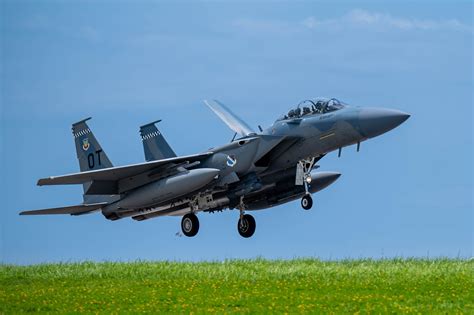
The United States has aggressively marketed the F-15EX Eagle II to India, emphasizing its capability as an air superiority and strike platform. Equipped with the AN/APG-82(V)1 AESA radar, AN/ALQ-250 electronic warfare suite, and an upgraded mission computer, the F-15EX is a formidable aircraft for air-to-air and air-to-ground missions. It can carry up to 22 AIM-120C5 missiles, functioning as a missile truck for networked warfare—a significant advantage in contested airspace.
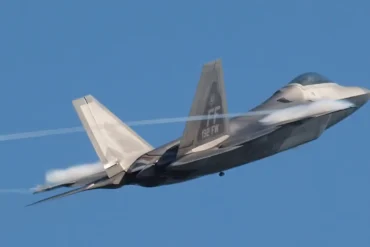
However, the non-stealth nature of the F-15EX limits its effectiveness against adversaries with advanced fifth-generation fighters such as China’s J-20. Consequently, India views the F-15EX as a transitional solution until it can procure fifth-generation aircraft, including a potential acquisition of the F-35 Lightning II.
Local Manufacturing and the ‘Make in India’ Initiative
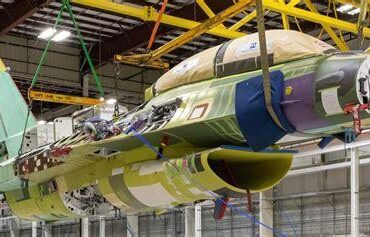
Aligning with its Aatmanirbhar Bharat (Self-Reliant India) initiative, India has taken steps to localize F-15EX component production. In 2022, Dynamatic Technologies Ltd. partnered with Boeing to manufacture front fuselage sections of the F-15EX, marking India’s increasing role in the global defense supply chain.
While full technology transfer remains unlikely, this collaboration strengthens Indo-U.S. defense ties and supports India’s push toward defense indigenization. However, acquiring the F-15EX would still necessitate long-term U.S. dependency for spare parts, upgrades, and maintenance.
Strategic Rationale and Operational Limitations
Countering Regional Threats
Given escalating tensions with China and Pakistan, the F-15EX presents India with a viable platform for high-intensity conflict scenarios. Its long-range strike capabilities and payload capacity make it an ideal aircraft for deep penetration strikes and air dominance missions. Additionally, its ability to integrate with network-centric warfare systems allows it to operate effectively in modern battlefields.
However, analysts caution that in an engagement against stealth-enabled adversaries, the F-15EX’s radar cross-section makes it vulnerable to detection. China’s J-20, supported by AWACS platforms, could exploit this weakness, reducing the effectiveness of the F-15EX in high-threat environments.
Complementing India’s Existing Fleet
India’s mixed aircraft fleet comprises the Su-30MKI, Rafale, Tejas Mk1A, and the upcoming AMCA (Advanced Medium Combat Aircraft). The F-15EX, if acquired, would serve as a high-end air superiority fighter, supplementing these platforms.
However, with a price tag of approximately $3 billion for 24 units, budgetary concerns remain a major consideration. India must assess whether investing in the F-15EX is a better alternative compared to acquiring additional Rafales, advancing its Tejas Mk2 program, or focusing on the indigenous AMCA development.
Historical Context: F-15 vs. Indian Su-30 in Exercises
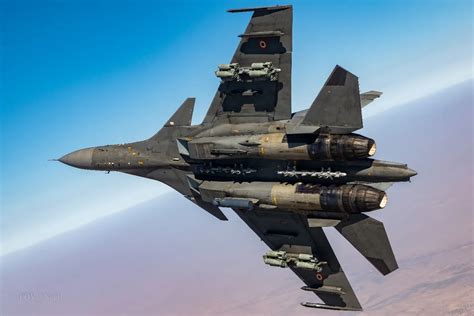
India’s experience against the F-15 platform dates back to 2004, when Indian Su-30MKI fighters outperformed U.S. F-15Cs in close-combat exercises. The superior maneuverability of the Su-30MKI played a decisive role, though the F-15C’s advanced radar and electronic warfare capabilities provided an edge in beyond-visual-range (BVR) engagements.
This historical performance underscores the need for India to evaluate not just raw performance specifications but combat adaptability when considering the F-15EX.
Challenges and Future Prospects
Cost vs. Capability Debate
The high procurement and operational costs of the F-15EX present a serious challenge. While it provides exceptional firepower and endurance, its lack of stealth makes it a less viable long-term investment compared to alternatives such as the Rafale F4 or even the indigenous Tejas Mk2. Given India’s budgetary constraints, prioritizing the AMCA program or additional Rafale acquisitions could provide a more cost-effective solution.
U.S. Technology Dependence
India’s military doctrine emphasizes strategic autonomy, making dependence on U.S. approvals for upgrades and maintenance a key concern. Unlike Russian or indigenous platforms, the F-15EX would require continued cooperation with the U.S. Department of Defense and Boeing, which could be subject to geopolitical shifts and export restrictions.
Potential Integration with F-35
Should India eventually procure the F-35, the F-15EX could serve as a complementary fighter, mirroring the U.S. Air Force’s own operational strategy. The F-15EX would take on missile truck roles, maximizing India’s BVR engagement capabilities while stealth fighters like the F-35 handle first-strike and deep penetration missions. However, this would require significant investment in networked warfare infrastructure.
Conclusion
India’s exploration of the F-15EX Eagle II highlights its ambitions to modernize the Indian Air Force while balancing cost, capability, and domestic production. While the fighter brings advanced sensors, weapon capacity, and durability, its non-stealth design and high cost raise concerns about its viability compared to other alternatives. India’s decision will ultimately depend on its strategic priorities, future procurement plans, and geopolitical considerations.
Frequently Asked Questions (FAQs)
1. Why is India considering the F-15EX when it already has Rafales and Su-30MKIs?
India is considering the F-15EX as a high-end air superiority fighter with long-range strike capabilities and BVR combat advantages. It would act as a force multiplier, supplementing Rafales and Su-30MKIs, and providing additional firepower until future acquisitions like the AMCA or F-35 materialize.
2. What are the major drawbacks of the F-15EX for India?
The F-15EX lacks stealth capabilities, making it vulnerable against adversaries like China’s J-20. Additionally, its high cost, coupled with long-term dependency on U.S. support, presents logistical and operational challenges.
3. Could India manufacture the F-15EX under the ‘Make in India’ program?
India has already begun producing F-15EX fuselage components through Dynamatic Technologies Ltd., but full-scale indigenous production is unlikely. A technology transfer agreement with Boeing remains uncertain, limiting India’s ability to produce the fighter independently.