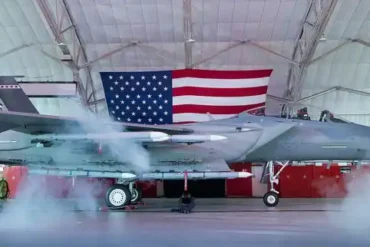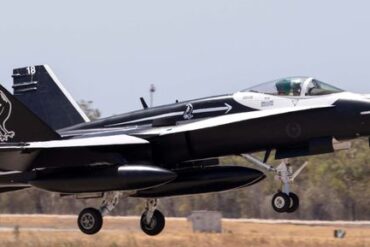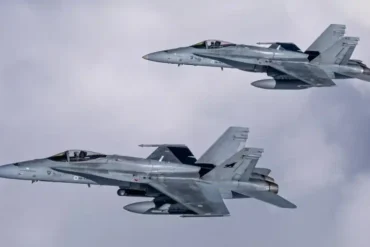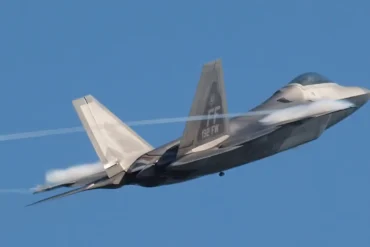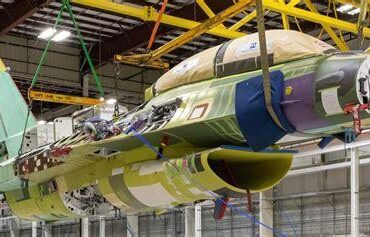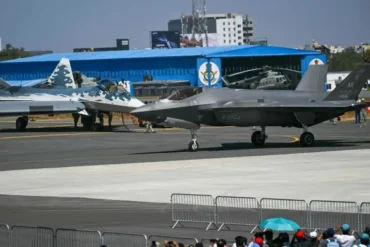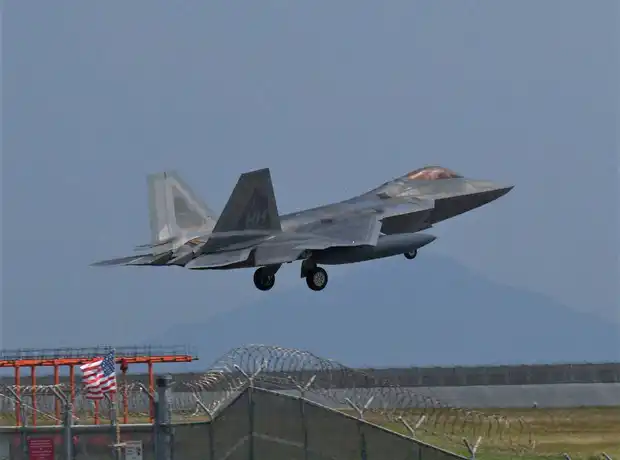
The F-22 Raptor, one of the most advanced fifth-generation stealth fighters, has played a pivotal role in the U.S. Air Force’s Pacific strategy. Its deployment to Japan, particularly in Okinawa, has been a key element in maintaining air superiority in the region. As of March 2025, the presence of the F-22 in Japan continues to reflect the evolving U.S. defense posture in the Indo-Pacific.
Recent Rotational Deployments and Tactical Role
The F-22 fleet in Japan has been part of a structured rotational deployment, primarily based at Kadena Air Base in Okinawa. Since 2024, these rotations have intensified, working alongside F-35A and F-16 squadrons to compensate for the phased retirement of older F-15C/D fighters.
In January 2025, the F-22 Raptors participated in joint readiness drills alongside the F-16, demonstrating rapid-response capabilities in the Western Pacific. These exercises emphasize the F-22’s stealth characteristics and supercruise capabilities, ensuring dominance over contested airspace.
One of the primary reasons for the F-22’s continuous deployment in Japan is its role in countering the growing presence of China’s J-20 stealth fighter. The People’s Liberation Army Air Force (PLAAF) has increased its J-20 operations near Taiwan and the East China Sea, with over 100 J-20s stationed at Fujian’s Wuyishan Air Base. In response, the U.S. has positioned the F-22 in Japan to maintain a strategic edge in stealth and aerial combat capabilities.
Historical Deployment and Strategic Implications
The first F-22 deployment to Japan occurred in 2007, marking a major milestone in the U.S. Indo-Pacific defense policy. However, this move was met with local protests in Okinawa, reflecting concerns over increased U.S. military presence. Despite opposition, the F-22’s deployment solidified its role in regional deterrence, ensuring that U.S. air superiority remained uncontested.
Another critical factor in the F-22’s restricted global presence is U.S. export regulations. Under the Obey Amendment to the 1998 Defense Authorization Act, the sale of F-22 Raptors to foreign nations, including Japan, has been strictly prohibited. Despite Japan’s strong interest in acquiring the F-22, cost concerns and technology transfer restrictions forced it to pivot towards purchasing the F-35A instead.
Could Japan Acquire Retired F-22s? Feasibility and Challenges
One of the most debated topics in U.S.-Japan military cooperation is the possibility of Japan acquiring retired F-22s. The U.S. Air Force has announced plans to retire 33 early-production F-22s due to high maintenance costs and aging airframes. Military analysts have suggested that Japan could potentially purchase and upgrade these aircraft, bolstering its air force capabilities.
However, multiple hurdles exist:
- Legal Constraints: The F-22 export ban remains a significant barrier, requiring Congressional approval to lift restrictions.
- Upgrading Costs: Modernizing early-model F-22s would require extensive overhauls, with per-unit costs nearing the original production price.
- Operational Costs: The F-22 has one of the highest operational costs in the U.S. fighter fleet, at approximately $60,000 per flight hour.
F-22’s Performance and Tactical Limitations
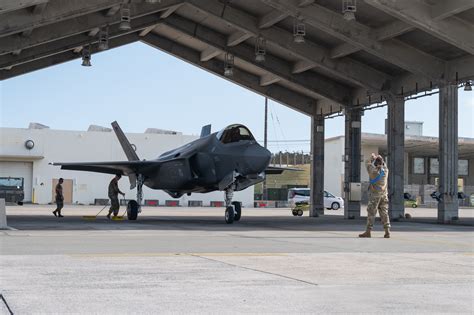
Despite being regarded as the world’s premier air superiority fighter, the F-22 has faced challenges in simulated combat scenarios. In multiple Red Flag exercises, older fourth-generation aircraft like the F-16 and EA-18G have managed to outperform the F-22 in specific conditions, particularly in electronic warfare environments.
A notable incident in April 2024 at Kadena Air Base raised concerns over the F-22’s reliability. During routine operations, an F-22 suffered landing gear failure, resulting in a nose-first impact on the runway. Such incidents highlight concerns over aging components and sustainment difficulties.
When compared to China’s J-20 Mighty Dragon, the F-22 faces certain disadvantages:
- Inferior Infrared Search and Track (IRST): The J-20 incorporates a more advanced IRST system, giving it an edge in beyond-visual-range (BVR) detection.
- Lack of Two-Way Data Sharing: The F-22’s datalink limitations restrict communication with other aircraft, unlike the J-20’s advanced networking capabilities.
- Aging Radar and Avionics: The F-22’s AN/APG-77 radar is still powerful but may require upgrades to remain competitive against newer threat systems.
Future of the F-22 and U.S. Air Force Strategy
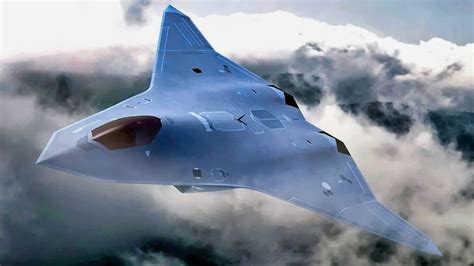
With the planned introduction of the Next Generation Air Dominance (NGAD) program, the U.S. Air Force intends to phase out the F-22 in favor of a more advanced sixth-generation fighter. However, due to delays in NGAD development, the F-22 remains a crucial deterrent in the Indo-Pacific theater.
Concerns over readiness rates also impact the F-22’s long-term viability. In 2024, the F-22’s mission-capable rate dropped to 40.19%, whereas the F-35A maintained a higher readiness rate of 51.4%. This discrepancy has fueled discussions over whether additional funds should be allocated to upgrade the F-22 or shift focus entirely to the F-35 program.
Conclusion
The F-22’s presence in Japan underscores the United States’ commitment to regional security, serving as both a deterrent against China’s expanding air force and an asset for joint military operations with Japan. However, rising maintenance costs, operational limitations, and future advancements in Chinese aviation technology cast uncertainty over the long-term viability of the F-22 in the Pacific. Whether Japan can acquire retired F-22s remains uncertain, as policy decisions, budget considerations, and technological advancements will shape the future landscape of air superiority in the Indo-Pacific.
FAQ
1. Why does the U.S. deploy F-22 Raptors in Japan?
The F-22’s deployment in Japan is part of the U.S. Indo-Pacific strategy to counter China’s military expansion. It provides stealth superiority, rapid deployment capabilities, and a strategic presence in the region.
2. Can Japan purchase F-22s from the United States?
Due to U.S. export restrictions, Japan cannot buy new F-22s. However, there is speculation that Japan may acquire retired F-22s, though challenges such as high costs and legal constraints make this unlikely.
3. How does the F-22 compare to China’s J-20?
The F-22 excels in maneuverability, stealth, and supercruise, while the J-20 has superior networking, infrared tracking, and extended range. The effectiveness of each depends on operational scenarios and technological advancements.