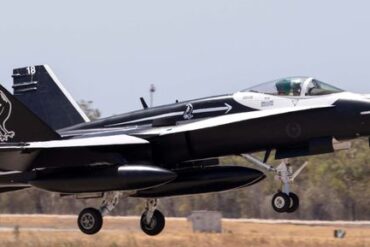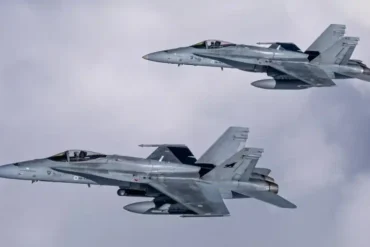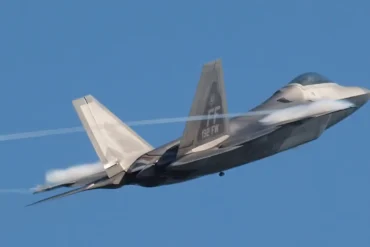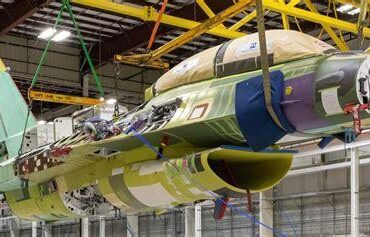
The Philippines has been actively modernizing its air force, with the procurement of F-16 fighter jets from the United States emerging as a pivotal step. This acquisition aligns with the country’s broader defense strategy aimed at enhancing air superiority and regional security, particularly in the South China Sea. The decision to purchase F-16V variants underscores the Philippines’ commitment to upgrading its military capabilities in partnership with the U.S.
Background and Procurement Developments
The Philippines initially sought to acquire F-16 fighter jets in 2021, when the U.S. approved the sale of 12 aircraft, along with advanced missiles and support systems, at an estimated cost of $2.43 billion. However, budgetary constraints delayed the deal. By early 2025, President Ferdinand Marcos Jr. reaffirmed the Air Force’s need for a new multirole fighter fleet, leaning toward the purchase of 12 to 24 F-16V jets, contingent on financing options and U.S. military aid.
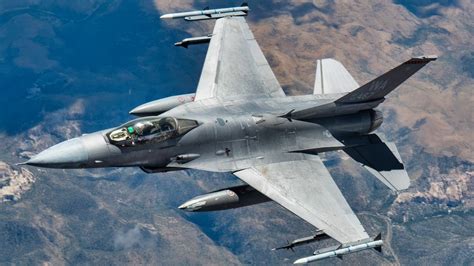
Financial and Strategic Considerations
- U.S. Military Assistance: The United States is expected to provide up to $500 million in foreign military financing (FMF) to facilitate the acquisition.
- Enhanced Cooperation: The deal is likely to be structured under the Enhanced Defense Cooperation Agreement (EDCA), reducing the financial burden on Manila.
- Joint Training Opportunities: The integration of the F-16V into the Philippine Air Force (PAF) will enhance interoperability with U.S. forces, strengthening regional deterrence efforts.
The Tactical Value and Limitations of the F-16V
Advantages of the F-16V
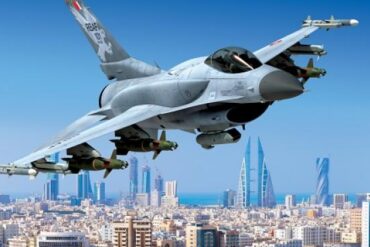
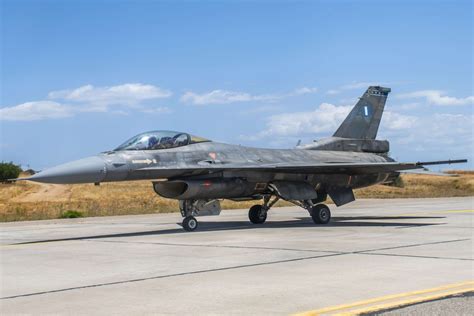
The F-16V (also known as F-16 Block 70/72) represents the most advanced variant of the fourth-generation fighter. It is equipped with state-of-the-art Avionics, including:
- Active Electronically Scanned Array (AESA) Radar: Enhances target detection range and tracking capabilities.
- Advanced Electronic Warfare (EW) Systems: Improves survivability in contested environments.
- Multirole Capabilities: The F-16V can execute air-to-air combat, ground strikes, and anti-ship missions, making it a versatile asset.
- Superior Weapon Load: Compatible with AIM-120 AMRAAM, AGM-88 HARM, and JDAM precision-guided munitions.
Limitations of the F-16V in Modern Warfare
Despite its advanced upgrades, the F-16V has certain shortcomings:
- Vulnerability to Fifth-Generation Fighters: While highly capable, it remains inferior to stealth aircraft like China’s J-20 or U.S. F-35.
- Survivability in High-Threat Environments: The South China Sea features advanced air defense systems (ADS), including China’s HQ-9 and Russian-made S-400.
- Operational Costs: The F-16V has higher maintenance costs compared to light combat aircraft (LCA).
Strategic Base Upgrades and Deployment Plans
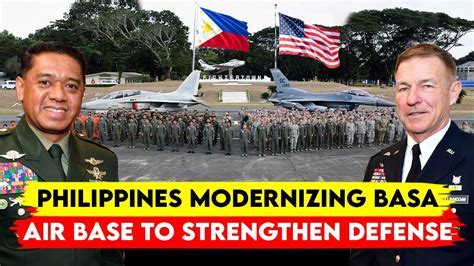
To accommodate the F-16V, the Philippines is upgrading air bases, particularly Basa Air Base in Luzon. This facility is critical due to its proximity to the South China Sea and Taiwan Strait, allowing for:
- Enhanced Air Policing Missions in disputed territories.
- Rotational U.S. Deployments, strengthening joint operations.
- Improved Runway and Hangar Facilities to support modern combat aircraft.
Comparison with Other Fighter Jet Contenders
The Philippines evaluated multiple fighter jet options before leaning toward the F-16V. Other contenders included:
1. Saab JAS 39 Gripen E/F
- Pros: Lower operational costs, superior electronic warfare capabilities.
- Cons: Limited availability of U.S. military assistance.
2. Korea Aerospace Industries KF-21 Boramae
- Pros: Advanced design, future stealth capabilities.
- Cons: Not yet operational, high development risks.
3. HAL Tejas (LCA) from India
- Pros: Cost-effective, suitable for air policing.
- Cons: Lacks advanced beyond-visual-range (BVR) missile integration.
Ultimately, the F-16V was favored due to U.S. logistical support, established combat history, and strategic advantages.
Challenges and Future Outlook
Budgetary Constraints
The $2.43 billion procurement cost represents a significant portion of the Philippine defense budget, necessitating:
- Flexible Financing Options (e.g., U.S. loan assistance, phased payments).
- Additional Military Grants from Washington.
Regional Security Ramifications
Deploying F-16Vs could escalate tensions in the South China Sea, drawing reactions from:
- China, which has warned against increased Philippine-U.S. military cooperation.
- ASEAN Neighbors, some of whom prefer neutral diplomatic stances.
Long-Term Air Force Modernization
The Philippines aims to build a robust air defense force by:
- Expanding Fighter Fleet: Gradual acquisition of up to 24 F-16Vs.
- Integrating Airborne Early Warning & Control (AEW&C) Systems.
- Developing Local Aerospace Industry Partnerships.
Conclusion
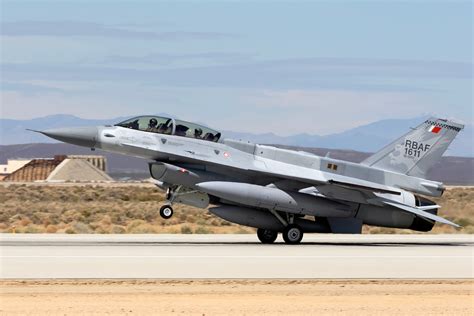
The Philippines’ F-16 acquisition represents a milestone in its military modernization strategy. Beyond enhancing aerial capabilities, it strengthens U.S.-Philippines defense ties, ensuring a more formidable presence in the Indo-Pacific region. While financial and geopolitical challenges persist, the F-16V remains the optimal choice for securing airspace sovereignty and deterring threats in the South China Sea.
Frequently Asked Questions (FAQ)
1. Why did the Philippines choose the F-16V over other fighter jets?
The Philippines prioritized the F-16V due to U.S. military aid, superior combat capabilities, and interoperability with allied forces.
2. What challenges does the Philippines face in operating the F-16V?
Key challenges include budgetary constraints, training pilots for modern aerial warfare, and addressing geopolitical tensions in the region.
3. How will the F-16V impact the security of the South China Sea?
The deployment of F-16Vs enhances the Philippines’ defense posture, deters aggression, and strengthens joint military operations with the U.S.