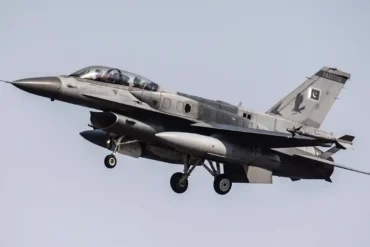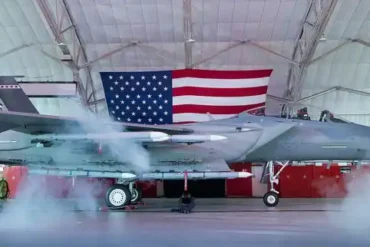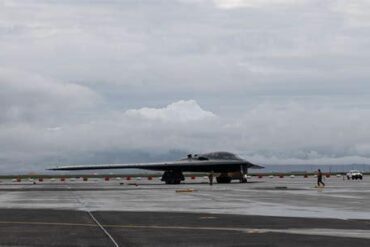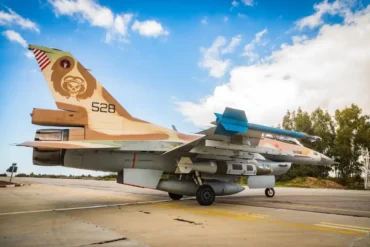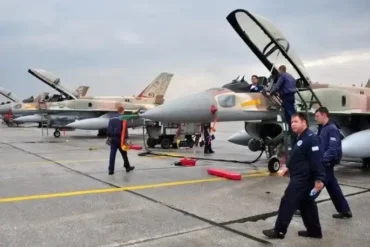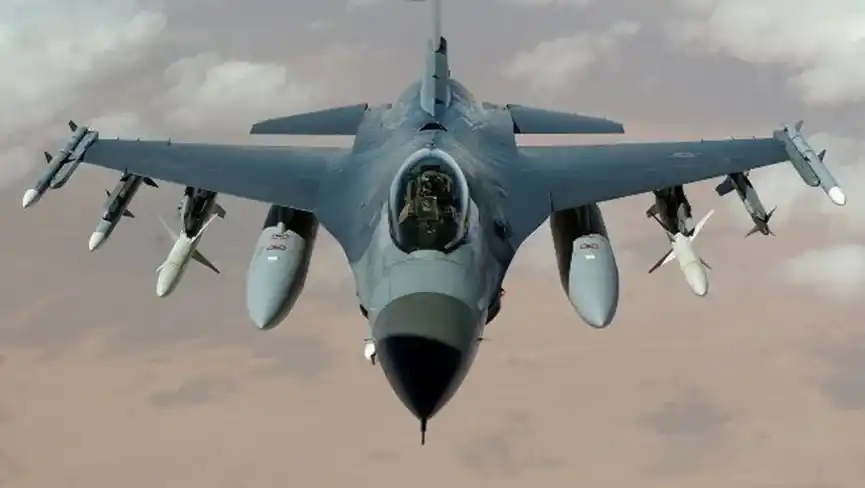
The F-16 Fighting Falcon has long been one of the most pivotal assets in the arsenal of the Pakistan Air Force (PAF). Over the years, its role in both regional security and Pakistan’s strategic military considerations has been profound. This article takes an in-depth look at the history, evolution, combat records, and the international political dynamics surrounding the use of Pakistan’s F-16 fleet. Additionally, it explores the future trajectory of these aircraft in light of geopolitical changes and technological advancements.
Historical Procurement and Evolution of Pakistan’s F-16s
Early Procurement and Strategic Context
In the early 1980s, amid rising tensions between the United States and the Soviet Union during the Cold War, Pakistan’s strategic alignment with the U.S. led to the acquisition of the F-16 Fighting Falcon. As part of the Peace Gate program, Pakistan sought to bolster its air superiority capabilities to counter the Soviet Union’s influence in Afghanistan. At that time, F-16s were seen as a crucial asset for maintaining a tactical edge over its regional rival, India, while also engaging in the broader geopolitical context of the Cold War.
U.S. Sanctions and Fallout
In the 1990s, the dynamics surrounding the F-16 took a sharp turn due to Pakistan’s nuclear weapons program. The Pressler Amendment in 1990, which linked U.S. military aid to Pakistan’s non-proliferation commitments, led to a suspension of military supplies, including the F-16s. During this period, Pakistan faced significant challenges as several of the F-16s it had purchased were never delivered or were partially embargoed, leaving a gap in its aerial defense capabilities.
However, after the September 11, 2001, terrorist attacks and the War on Terror, Pakistan’s role as a strategic partner to the U.S. was once again emphasized, leading to the resumption of military supplies, including the F-16s. This period marked the gradual restoration of Pakistan’s aerial power with both new deliveries and the upgrade of existing models.
The F-16 Modernization Efforts
By the mid-2000s, Pakistan began to modernize its F-16 fleet. The most significant upgrade came in 2006, with the acquisition of F-16C/D Block 52+ models, which were equipped with advanced avionics, radar systems like the APG-68, and air-to-air missiles such as the AIM-120C. This modernization allowed the F-16s to remain competitive on the battlefield and provided Pakistan with multi-role capabilities that could engage in both air defense and offensive operations.
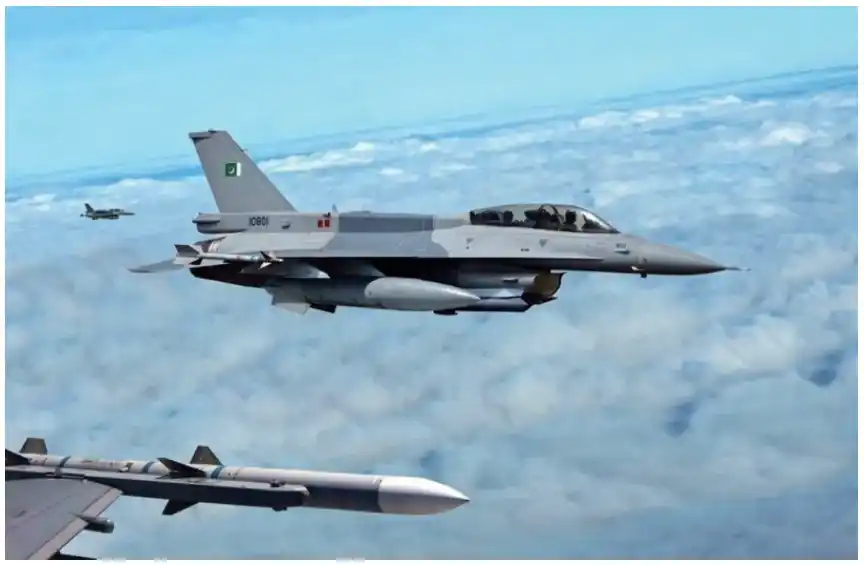
Despite these advancements, the U.S. government imposed strict conditions on the use of these aircraft, particularly around their deployment against India. This led to the Pakistan Air Force facing operational constraints, as it was restricted from deploying the F-16s in conflicts that could escalate into larger regional conflicts.
Combat Records and Strategic Significance
F-16s in the Afghanistan Conflict
The 1980s saw the F-16 Fighting Falcon serving as a key tool for Pakistan to assert air superiority over Soviet and Afghan forces. Pakistan’s F-16s were instrumental in air-to-air combat and close air support missions against Soviet-backed forces in Afghanistan. Notably, during the Afghanistan War, F-16s were credited with shooting down several Soviet MiGs and Su-22s, showcasing their air combat capabilities.
The 2019 India-Pakistan Air Skirmish
In one of the most significant recent engagements, the 2019 Kashmir Airstrikes brought the F-16’s capabilities into the global spotlight once again. The Indian Air Force accused Pakistan of using its F-16s to launch AIM-120C missiles against Indian MiG-21s during the Balakot airstrike. Though Pakistan vehemently denied the claims, the U.S. government launched an investigation into the incident, raising the stakes regarding the adherence to international arms control agreements.
This incident underscored the F-16’s strategic role in the Indo-Pakistani conflict, especially in air superiority and precision strike missions. It also highlighted the F-16’s utility in asymmetric warfare where Pakistan could leverage its advanced air capabilities against a superior adversary like India.
Regional Strategic Balance
The strategic importance of the F-16 fleet is not limited to combat operations but also its role in the broader South Asian balance of power. India’s continuous opposition to the sale of American military equipment to Pakistan stems from concerns over the enhanced capabilities these assets provide to Pakistan, especially in a region marked by tensions and frequent military confrontations.
While the United States justified these sales by emphasizing their role in counterterrorism operations, the reality was that the F-16s bolstered Pakistan’s ability to project power in the region, including the disputed Kashmir region.
U.S. Control Mechanisms and Pakistan’s Response
Technological Control and Dependency
One of the defining aspects of the relationship between the U.S. and Pakistan regarding the F-16 fleet has been the technological control exerted by the U.S. government. Through the End-User Agreement (EUA), the U.S. monitors the use of F-16s in real-time, ensuring that these advanced systems are used in ways that align with U.S. strategic interests.
This has led to significant operational limitations for Pakistan. For example, the lack of spare parts due to U.S. restrictions has often resulted in delayed maintenance, affecting the fleet’s overall availability rate. On average, Pakistan’s F-16 fleet operates at a 60-70% readiness rate, and logistical challenges frequently constrain their operational deployment.
Diversification of Combat Assets
In response to U.S. restrictions, Pakistan has increasingly diversified its military assets. This includes the indigenous development of the JF-17 Thunder (also known as “Shenyang J-10CE”), a Chinese-Pakistani multi-role combat aircraft designed to reduce Pakistan’s reliance on foreign suppliers. The JF-17 has been viewed as a potential successor to the older F-16 models, with comparable performance in several areas but at a much lower cost.
Nevertheless, the F-16 remains a cornerstone of Pakistan’s air defense due to its superior payload capacity, range, and multirole capabilities. Even as Pakistan diversifies its air force, the F-16 continues to play a crucial role in regional deterrence.
Future of Pakistan’s F-16 Fleet
2025 Outlook: Limited U.S. Support
As of 2025, the U.S. government has announced an aid package for Pakistan, amounting to $400 million, intended for the maintenance and monitoring systems related to its F-16 fleet. However, this does not include funds for the purchase of new aircraft or the large-scale modernization of the fleet. This reflects both budgetary constraints and a shift in U.S. foreign policy towards a more balanced approach with India and Pakistan.
The “De-F16ization” Trend
In the face of ongoing U.S. control over its air assets, Pakistan has increasingly focused on the development and procurement of alternative combat aircraft. The JF-17 Block 3 and the J-10CE have emerged as crucial players in this transition. These platforms, while still in the early stages of replacing the F-16s, represent Pakistan’s effort to reduce dependency on American defense systems and assert greater autonomy in its defense strategy.
Despite these moves, the F-16 Fighting Falcon will likely remain integral to the Pakistan Air Force for the foreseeable future due to its unmatched combination of combat range, payload capacity, and combat versatility.
Conclusion
The history of Pakistan’s F-16s is a compelling narrative of geopolitical maneuvering, military evolution, and international relations. These aircraft have been at the center of Pakistan’s military capabilities for decades, performing crucial roles in both regional conflicts and counterterrorism efforts. While facing significant challenges due to international control mechanisms, Pakistan’s F-16s continue to shape the balance of power in South Asia.
Looking ahead, the Pakistan Air Force will likely continue to leverage its F-16s while transitioning toward new technologies and alternative platforms like the JF-17 and J-10CE. However, the legacy of the F-16 as a symbol of Pakistan’s air superiority will endure, even as it adapts to the changing landscape of military aviation in a volatile South Asian environment.