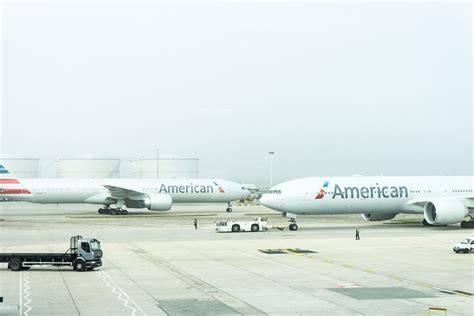
Two American Airlines regional jets nearly crossed paths while operating under exactly the same flight number and air traffic control callsign, creating an unusual aviation safety incident that occurred less than two days before an almost identical event involving two of the carrier’s Boeing 737-800s.
The first incident occurred on August 12, when two Bombardier CRJ-700s operated by PSA Airlines were simultaneously airborne as American Eagle flight AA5083. The aircraft spent approximately 26 minutes in the air at the same time, despite being assigned the same operational identifier. Air traffic controllers recognized the duplication and took steps to distinguish the aircraft as their flight paths brought them into the same general airspace.
The incident is particularly notable because the same basic problem surfaced again only a day later. On August 13 and into August 14, two American Airlines Boeing 737-800s were simultaneously operating as AA2482 near Phoenix Sky Harbor International Airport. In that case, the aircraft were also on the same radio frequency while one descended toward Phoenix and the other climbed away from the airport.
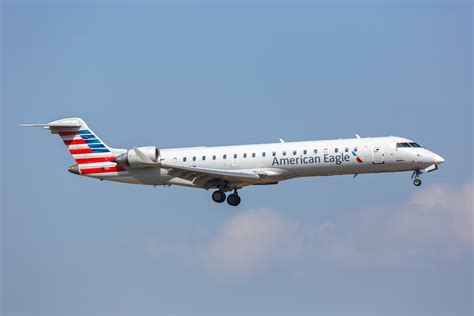
How Two CRJ-700s Became AA5083
AA5083 is scheduled as a round-trip service between Philadelphia International Airport (PHL) and Rhode Island T.F. Green International Airport (PVD) in Providence. The route is operated by PSA Airlines, a wholly owned subsidiary of American Airlines Group that flies regional services under the American Eagle brand.
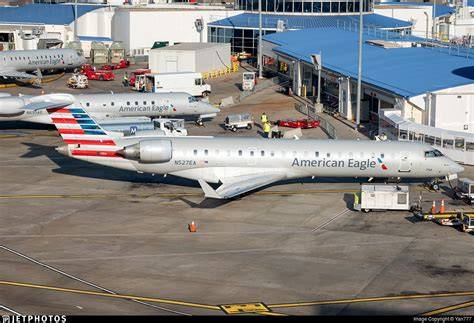
On August 12, the Philadelphia-to-Providence sector was scheduled to depart at 7:35 PM and arrive at 8:54 PM. Instead, CRJ-700 N527EA departed Philadelphia at 9:20 PM, eventually reaching Providence at 10:04 PM. The substantial delay created an operational problem for the return sector.
American did not wait for N527EA to arrive before launching the scheduled Providence-to-Philadelphia flight. A second CRJ-700, N539EA, departed Providence at 9:38 PM. Critically, that aircraft was also operating as AA5083.
As a result, the two aircraft were airborne simultaneously for approximately 26 minutes. N539EA was already flying toward Philadelphia while N527EA was still completing its delayed inbound journey from Philadelphia to Providence.
Why Both Aircraft Were Called “Bluestreak 5083”
The situation becomes more interesting when we look beyond the passenger-facing flight number. PSA Airlines uses the ICAO designator JIA and the official radio telephony designator “Bluestreak.” Consequently, the aircraft did not identify themselves to controllers simply as “American 5083.”
Both aircraft were effectively calling themselves “Bluestreak 5083.”
That created the potential for significant confusion, particularly if both aircraft appeared on the same controller’s frequency and their positions began to converge. A controller hearing “Bluestreak 5083” could not rely on the callsign alone to determine which aircraft was transmitting.
Fortunately, the controller recognized the duplicate identification and warned both crews. The aircraft were differentiated operationally as the inbound and outbound Bluestreak 5083. No loss of required separation was reported, and there were no injuries or damage.
The response followed the principle established in the FAA Aeronautical Information Manual, which requires controllers who become aware of similar or identical callsigns to take action to distinguish the aircraft and reduce the possibility of operational errors.
The Same Problem Hit AA2482
The remarkable part of the story is that AA5083 was not an isolated event. Less than two days later, American encountered an almost identical callsign problem involving two Boeing 737-800s.
American uses AA2482 for the round-trip service between Chicago O’Hare International Airport and Phoenix Sky Harbor International Airport. On August 13, Boeing 737-800 N946NN was scheduled to fly from Chicago to Phoenix, arriving at approximately 10:43 PM.
Weather delays pushed its departure from Chicago back by nearly two hours. Instead of leaving at the scheduled 9:00 PM time, N946NN departed at 10:53 PM and eventually landed in Phoenix at 12:13 AM.
The problem was that American had already dispatched another aircraft to operate the return flight. Boeing 737-800 N925AN departed Phoenix at 11:58 PM, while N946NN was still approaching the airport.
Two AA2482 Aircraft Shared the Same Frequency
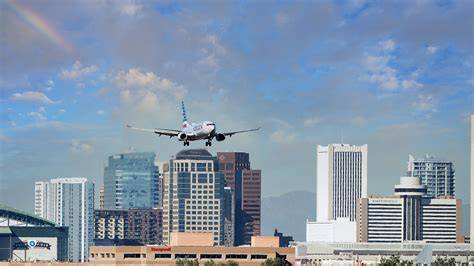
For roughly 15 minutes, both Boeing 737s were therefore operating as AA2482.
The situation became particularly sensitive because the aircraft were approaching each other vertically. According to flight-tracking data, the arriving 737 was descending through approximately 11,000 feet, while the departing aircraft was climbing toward roughly 9,000 feet.
Both were communicating on the same frequency.
Controllers responded by explicitly distinguishing the aircraft, referring to one as “American 2482 on the arrival” and the other as “American 2482 on the departure.” The aircraft remained vertically separated, preventing the duplicate callsign from developing into a loss-of-separation event.
The FAA subsequently opened an investigation into the Phoenix incident. American stated that required separation was maintained and emphasized the professionalism of the pilots and controllers who identified and managed the situation.
What Causes Duplicate Callsigns?
There is nothing inherently unsafe about using the same commercial flight number for an outbound and return flight. Airlines routinely schedule a single flight number across sequential sectors because the aircraft normally completes the first leg before beginning the second.
The vulnerability appears when irregular operations disrupt that sequence.
A delayed inbound aircraft may remain in the air after the airline has decided that the return service cannot wait. Dispatchers can then assign another aircraft to protect the next departure. If the replacement aircraft retains the same operational identification while the original aircraft remains airborne, two aircraft can suddenly appear under the same callsign.
That appears to be the common thread connecting the AA5083 and AA2482 incidents.
Aviation safety expert and former United Airlines dispatcher Steve Arroyo told the Associated Press that a failure somewhere in the airline’s dispatch process likely allowed the overlapping identifiers to develop. The precise circumstances remain subject to investigation, but the operational sequence illustrates how quickly a routine schedule disruption can become an air traffic control challenge.
FAA Procedures Provide Several Safeguards
The aviation system has multiple defenses against callsign confusion. FAA procedures require controllers to notify pilots when identical or similar aircraft identifications are operating on the same frequency. Controllers are also expected to avoid abbreviating the affected callsigns and to emphasize distinguishing information.
If necessary, an aircraft can be instructed to use a different callsign temporarily. Controllers must also notify their supervisor when duplicate flight-identification numbers are simultaneously operating within the same sector.
Airlines have preventive tools as well. The FAA permits scheduled operators to use an additional letter as the final character of an aircraft identification, allowing an operational identifier such as AA5083X to distinguish one aircraft from another without necessarily changing the passenger-facing flight number.
Duplicate Callsigns Are an Industrywide Risk
The problem is not unique to American Airlines. NASA’s Aviation Safety Reporting System has previously recorded an incident involving two Embraer E170s from an unnamed U.S. airline that appeared on the same runway at the same time while using the same callsign.
Internationally, the risk has also received considerable attention. A UK Civil Aviation Authority study examining 482 callsign-confusion reports found that 66% involved aircraft from the same airline, while 27% involved identical callsign suffixes.
EUROCONTROL has developed a Call Sign Similarity Software Tool specifically to help airlines identify potentially confusing combinations before flights operate.
That makes American’s two incidents within such a short period particularly striking. Neither event resulted in a reported loss of separation, but both demonstrate how schedule disruptions can expose weaknesses that are difficult to see during normal operations.
The key lesson from AA5083 and AA2482 is not that duplicate callsigns are inherently dangerous. Rather, it is that a flight number designed for sequential operations can become problematic when irregular operations place two aircraft in the sky simultaneously. Controllers and pilots successfully caught both situations before they escalated, but the repetition raises an important operational question: whether an additional dispatch safeguard could prevent the next duplicate callsign from ever reaching the frequency.