The White House has formally urged Congress to approve an additional $30.1 billion for United States aviation infrastructure, a request delivered with unusual urgency because Republicans lose control of the legislature on January 3, 2027. Transportation Secretary Sean Duffy and Office of Management and Budget Director Russell Vought signed the November 13 appeal to congressional leaders, framing the money as the difference between a functioning national airspace and a system that keeps failing at the worst possible moments. The proposal does not invent a new program; it renews a request Duffy first made on September 22, 2026, weeks before voters handed Democrats their midterm victory on November 3. What has changed is the calendar, now measured in weeks rather than years, and the political reality that any unfinished business will land on the incoming majority’s desk.
A Narrow Window and an Uncertain Legislative Path
The administration is asking lawmakers to move during the final Republican-controlled session, before leadership gavels change hands in January. That compressed timeline leaves little room for committee markups, floor debate and reconciliation between chambers, and the legislation’s prospects remain genuinely uncertain. A change in congressional leadership carries no automatic guarantee of rejection either; aviation safety is one of the few policy areas where bipartisanship survives, and lawmakers from both parties have constituents who endure delays at congested hubs. The funding campaign began long before this week’s developments. Duffy called for additional investment on September 22, shortly after a major Northeast air traffic control disruption, and Senator Eric Schmitt introduced the Modern Skies Act on September 28, backed by major airlines and industry organizations. The White House’s latest intervention is therefore an escalation of an existing push rather than a fresh initiative, and its sponsors now have weeks rather than months to convert support into appropriations.
Inside the $30.1 Billion Spending Plan
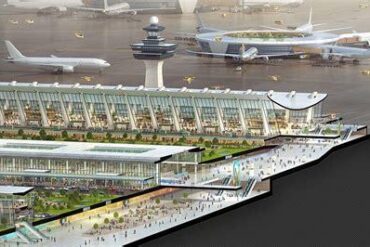
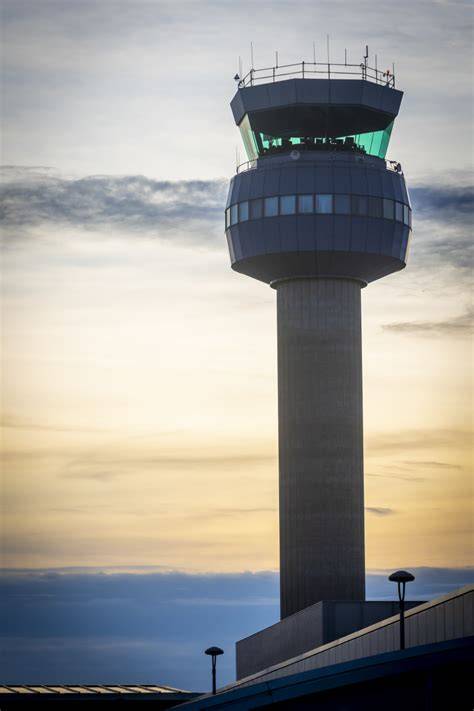
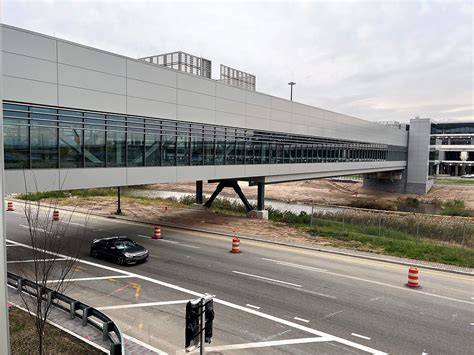
The request would lift federal aviation modernization funding to roughly $42.6 billion when combined with the $12.5 billion Congress approved earlier. Unlike that initial tranche, which concentrated on air traffic control improvements and controller recruitment, the new proposal places heavy emphasis on airports. Of the total, $18 billion would support airport infrastructure, including $10 billion to modernize or replace aging terminals. A further $10.1 billion would fund air traffic control modernization, automation and cloud computing, while $2 billion would replace and improve control towers themselves. Officials argue these upgrades cannot be completed within existing appropriations, and that the gap between ambition and budget has become a structural problem rather than a scheduling one.
Decades of Deferred Maintenance in the National Airspace
The FAA’s infrastructure problems accumulated over decades of patchwork repairs. Some facilities still depend on aging computers whose replacement components have reportedly been purchased through auction websites, a detail that underscores how far the agency has drifted from commercial technology standards. The FAA recently announced plans to eliminate floppy disks used to distribute weather and other critical information at more than 400 air traffic control facilities by the end of 2028. These technological limitations compound long-standing concerns about staffing shortages, congestion and delays that have become routine for travelers. Modernization is nonetheless already underway: according to Duffy, 68% of the FAA’s legacy copper telecommunications network has been replaced with high-speed fiber infrastructure. The additional funding would accelerate upgrades to controller workstations, automation platforms and telecommunications while expanding airport capacity. The challenge is implementing those changes across one of the world’s busiest aviation networks without causing further operational disruption.
A Nationwide Ground Stop Underscores the Urgency
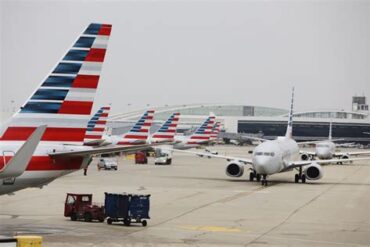
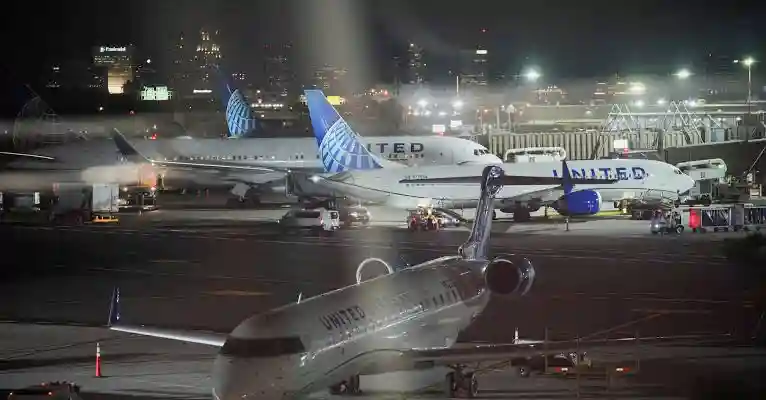
The appeal landed on the same day as an extraordinary disruption. The FAA issued a nationwide ground stop, instructing departing aircraft to remain on the ground until further notice, citing “extraordinary circumstances and safety reasons” with international arrivals handled individually. The cause had not been officially established at the time of writing. The incident follows September’s Northeast air traffic control meltdown, when simultaneous telecommunications failures disrupted thousands of flights: a circuit failed at a Philadelphia facility while an Amtrak construction crew accidentally severed a fiber-optic cable in New Jersey. Ground stops affected Newark, Philadelphia and New York’s airports, with knock-on delays reaching Boston.
Why Officials Say the Investment Cannot Wait
In their letter, Duffy and Vought wrote that “this investment is critical to complete the modernization of our national airspace”, an argument the September meltdown and Friday’s ground stop make difficult to dismiss. The FAA’s modernization program aims to reduce these vulnerabilities through resilient telecommunications, upgraded technology and improved infrastructure, and the disruption provides a timely backdrop to the administration’s case that further investment cannot wait. Whether Congress agrees before the gavel changes hands will determine how quickly the copper gives way to fiber, the floppy disks disappear, and the terminals that frustrate millions of passengers each year finally receive the capital they have long needed.