Global Airlines has been ordered into compulsory liquidation, ending a turbulent chapter for one of aviation’s most improbable start-ups. The Gazette published official notice that a winding-up order was granted on November 4, with the matter only entering the public record today. The ruling hands control of the company’s affairs to a court-appointed official receiver, and with it, the future of the airline’s solitary Airbus A380. For a carrier that promised to redefine transatlantic travel with a single superjumbo, the order marks the end of ambition and the beginning of a complex asset-recovery process.
How British Courts Pushed Global Airlines Into Liquidation
In the United Kingdom, creditors may petition the courts to liquidate a company that cannot pay its debts, and Global Airlines found itself on the receiving end of exactly such a petition. Several hearings followed as the judiciary weighed what should happen to the Airbus aircraft sitting in storage, with the most recent session held in October. The case drew supporting creditors, a legal designation for individuals and organisations owed money who back the petition against a business. Among them were Tom Stokely and Prashant Uttamchandani, both former directors of Global Airlines, represented by the law firm Katten Muchin Rosenman. Their efforts secured the winding-up order, and an official receiver has now been assigned to sell off the company’s assets.
James Asquith remains a director of Global Airlines, and he had up to five working days to apply for the winding-up order to be cancelled. The appearance of the notice in The Gazette strongly suggests no such application was made. Under UK insolvency law, a compulsory liquidation follows a predictable path: directors lose control of company affairs, the official receiver investigates the company’s financial position and debts, assets are secured, creditors are invited to submit claims, employees are dismissed with compensation entitlements calculated, and finally assets are sold with proceeds distributed. Simple Flying has contacted Global Airlines for further comment.
The A380 at Tarbes: A Superjumbo Awaiting an Expensive Fate
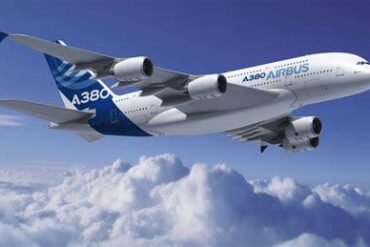
Global Airlines’ principal asset is a single Airbus A380, registration 9H-GLOBL, which joined the fleet in January 2024 and spent a short period operating under Hi Fly Malta through a wet-lease arrangement that allowed a handful of charters between the UK and New York. The jet has been in long-term storage at Tarbes-Lourdes-Pyrénées Airport (LDE) since July 2025, and court-appointed liquidators are expected to put it on the market.
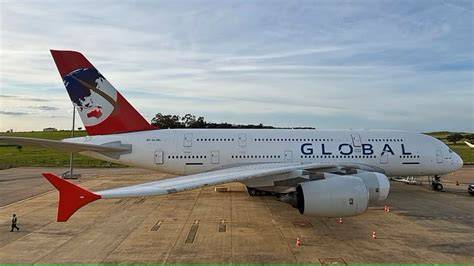
Recouping money from an aircraft of this size will be anything but straightforward. The A380 has been parked at LDE awaiting a mandatory and costly 12-year D-check, an exhaustive heavy maintenance inspection that any prospective buyer must absorb before the jet can legally fly again. That looming bill complicates valuation, narrows the pool of realistic bidders, and gives liquidators little room to manoeuvre in a market where second-hand superjumbos command a fraction of their original cost.
The Ambitions Global Airlines Will Never Realise
Few start-ups in commercial aviation have been as strange or as flawed as Global Airlines, yet the carrier was not without vision. Its First Flights webpage listed planned destinations including the Maldives, Toronto, Vancouver, and Mexico City, with the most heavily publicised route running between the UK and the Maldives. Asquith described the archipelago as “my dream holiday” and hoped to wedge the airline into a gap in the market created by the relatively small number of services linking London Heathrow (LHR) to the islands.

Another ambition now permanently out of reach was fleet growth. In 2025, Global Airlines applied its livery to an Airbus A340 operated by Hi Fly, but the gesture was purely promotional and the carrier never came close to owning a second aircraft. The winding-up order closes the book on those plans, leaving the official receiver to turn one stored A380 into whatever value it can realise for creditors.