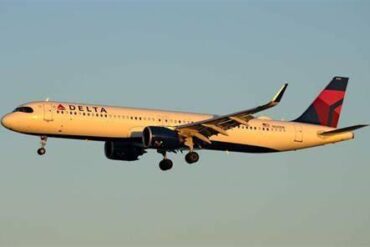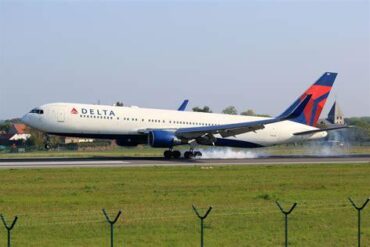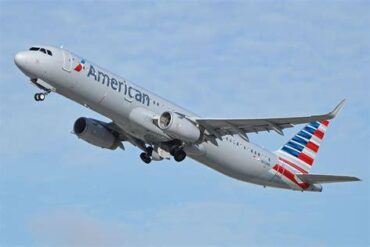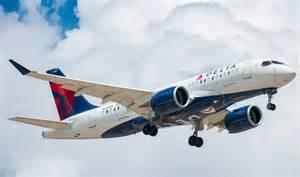
Across the United States, the Airbus A319 remains a familiar sight at major hubs, a stubby twinjet that once defined the backbone of short-haul flying for the country’s three largest carriers. American Airlines, Delta Air Lines, and United Airlines together operate well over 250 examples, positioning the type in a critical slot above their regional jets and beneath their larger narrowbodies. Yet the aircraft, which made its commercial debut back in 1996, is now firmly into middle age. The retirement math is becoming unavoidable, and the three legacy giants have chosen remarkably different paths to solve the same problem.
The divergence is striking. Only Delta has committed to a direct, right-sized replacement in the form of the Airbus A220, while American and United have conspicuously avoided the A220, the Airbus A319neo, the Boeing 737 MAX 7, and the Embraer E2. The question of why one airline ordered 145 of a type that its closest rivals refuse to touch says as much about commercial strategy and labor agreements as it does about aerodynamics. Delta’s A220 order, split between 45 A220-100s and 100 A220-300s, is not simply a fleet renewal; it is the product of a once-in-a-generation set of circumstances that will likely never be replicated.
The 109-seat A220-100 is genuinely smaller than an A319-100, sitting much closer in capacity to Delta’s Boeing 717-200s. It is the 130-seat A220-300 that maps almost perfectly onto the 132-seat A319-100, offering nearly identical capacity in a far more modern and efficient airframe. On paper, this looks like an obvious solution that American and United should have copied years ago. In practice, the economics that made the A220 compelling for Delta were born of desperation in Montreal and a bargain that regulators in Washington ultimately allowed to stand.
The Circumstances That Made The Delta A220 Order A Bargain
Delta first ordered the aircraft in 2016, when it was still being marketed by Bombardier as the CSeries. At the time, the CSeries was a promising but troubled program: technologically advanced, but with a thin order book and a manufacturer desperate to break into the lucrative US market. Bombardier needed a marquee American customer to validate the aircraft, and Delta exploited that leverage ruthlessly. The original order covered 75 CS100s, now the A220-100, at a price so aggressive that Boeing responded by filing an anti-dumping petition against Bombardier, a trade dispute that was later overturned.
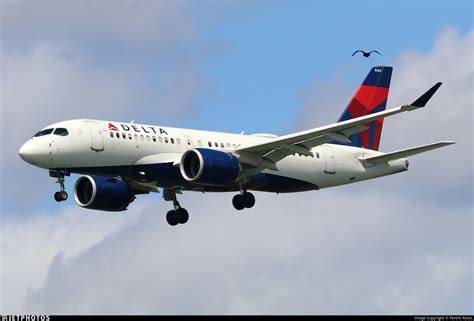
That price is the single most important fact in this entire story. Capital cost dominates the economics of acquiring and operating an aircraft type, and Delta secured terms that are unlikely ever to be matched again. The aircraft is genuinely excellent for its intended missions, but excellence alone does not persuade a board to sign a check. Delta’s A220 works because it was cheap to buy, and the same aircraft would be a far harder sell for American or United, who would have to pay market rates and absorb substantial integration costs including new pilot types, new maintenance programs, new simulators, and new spares inventories.
Delta’s experience with the type has been excellent enough that the airline has since added 70 orders in total. The original deal covered only 75 CS100s and A220-100s, but every subsequent order has been for the larger, A319-sized A220-300. The airline has also converted 30 A220-100 orders to the larger variant, a telling vote of confidence in the bigger airplane. The A220-100 is a competent aircraft in its own right, but the A220-300 carries more seats without burning meaningfully more fuel and suffers no significant range penalty for the missions most airlines actually fly.
Why The A321neo And 737 MAX 10 Are The Real A319 Replacements
Here is where the conventional narrative breaks down. Watching Delta take delivery of brand-new A220s creates the impression that American and United are falling behind, but both carriers have already ordered the aircraft that will retire their A319s. The real replacement for the A319-100 is not a smaller airplane at all; it is the Airbus A321neo and the Boeing 737 MAX 10. Both airlines have been upgauging aggressively because these larger narrowbodies deliver dramatically better per-seat economics than any of their smaller siblings.
American Airlines has ordered 206 A321neos while also acquiring ten used examples, and it holds orders for 115 737 MAX 10s. United Airlines has ordered 210 A321neos, 224 737 MAX 9s, and 167 737 MAX 10s. Both carriers have also ordered the 737 MAX 8, but in much smaller numbers, 103 for American and 123 for United, reflecting the broader retreat from mid-size narrowbodies. These order books are not accidental; they represent a deliberate bet that bigger airplanes flown more often will outperform smaller airplanes flown less often.
What will actually happen is a cascading displacement throughout each network. The new large narrowbodies will take over the carriers’ highest-demand routes, pushing mid-size aircraft down the network, which in turn pushes the A319-100s out entirely and toward the scrapyard. Delta has executed precisely this playbook, ordering 100 737 MAX 10s and 189 A321neos. Its A220s are not replacing A319s one for one; they are slotting in as the new small end of the mainline fleet while the largest aircraft absorb the busiest routes.
The Long Retreat From Small Narrowbodies
Over the past fifteen years, Delta has ordered 145 A220s and leased 88 717s from Southwest Airlines at an exceptionally low price. American ordered 32 A319-100s new from Airbus and otherwise confined its narrowbody purchases to the A321-200, A321neo, 737-800, 737 MAX 8, and 737 MAX 10. United took only the A321neo, 737-800, 737-900ER, 737 MAX 8, and 737 MAX 9 while holding orders for the MAX 10. The trend is unmistakable: US airlines favor larger narrowbodies, and even the mid-size 737-800 and 737 MAX 8 have fallen out of favor.
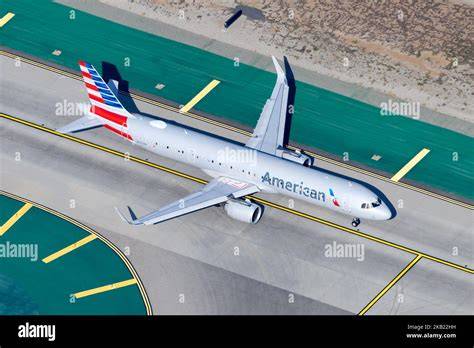
These aircraft simply deliver superior economics to the shrinks in their families, because the added fuel burn is far outweighed by increased revenue potential. The traditional tradeoffs, shorter range and weaker runway performance, have been largely neutralized by the A320neo and 737 MAX families. Only a handful of mainline stations present genuinely challenging conditions, so the theoretical penalties rarely materialize in daily operations.
Airlines once bought smaller aircraft to right-size capacity on slower days, but the US legacy carriers have instead built fare segmentation into the core of their commercial strategy. Releasing varying numbers of differently priced tickets, including basic economy fares, allows airlines to fill larger airplanes on slow days without sacrificing yield. United CEO Scott Kirby has publicly credited this shift with eliminating the need for a small narrowbody to meet demand. Tellingly, United ordered 45 737-700s in 2016, added another 20 units, then converted every order to the 737-800 and 737 MAX 9 within the same year.
The Scope Clause Secret Behind Delta’s Small Airplane Strategy
Delta’s enthusiasm for small narrowbodies has a second pillar that has nothing to do with fuel burn: its pilot agreement. The contract contains scope clauses that limit regional flying contracted to Delta Connection carriers. The largest aircraft permitted under the Delta Connection banner are 76-seaters, and there are hard caps on how many of these economical regional jets the airline may operate, since they beat both 70-seaters and 50-seaters on cost per seat.
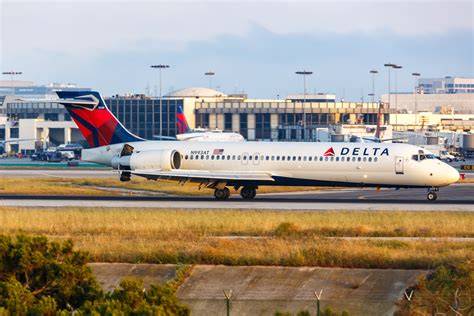
Crucially, Delta’s scope agreement allows the airline to add additional 76-seaters whenever it introduces a new small mainline narrowbody type. The 717s, beyond being cheap to acquire, unlocked extra 76-seat regional flying for Delta Connection, and the A220 order did exactly the same. Given the sheer scale of US regional operations, that trigger is worth an enormous amount of money, and it transformed two opportunistic fleet purchases into strategic masterstrokes.
Why American And United Cannot Simply Copy The Delta Playbook
An opportunity like 88 717s being offloaded rapidly by Southwest was a one-time event, as was the pricing on Delta’s initial A220 order. American Airlines specifically lacks a trigger in its scope clauses that would add 76-seaters when it acquires a new small mainline type; its 76-seater fleet is tied directly to overall mainline fleet size instead. For American, the A220 would have to justify itself purely on its own merits, which is difficult when larger variants perform so well.
United does have the same trigger clause as Delta, meaning an A319-sized aircraft would unlock additional 76-seaters. But United is currently focused on substantial network-wide growth through frequency increases and upgauging, and an order for 100-plus A220s does not fit that strategy, especially with an order book dominated by larger variants. Delta itself continues to upgauge and has shied away from the 737 MAX 8 so conspicuously that it may never order the variant at all.
The result is a fleet landscape in which Delta flies a right-sized replacement for its A319s today while American and United wait for A321neos and 737 MAX 10s to do the job by displacement. Both approaches can work, but only one of them depended on a cash-strapped manufacturer, a trade dispute, and a labor contract clause lining up at precisely the right moment.